

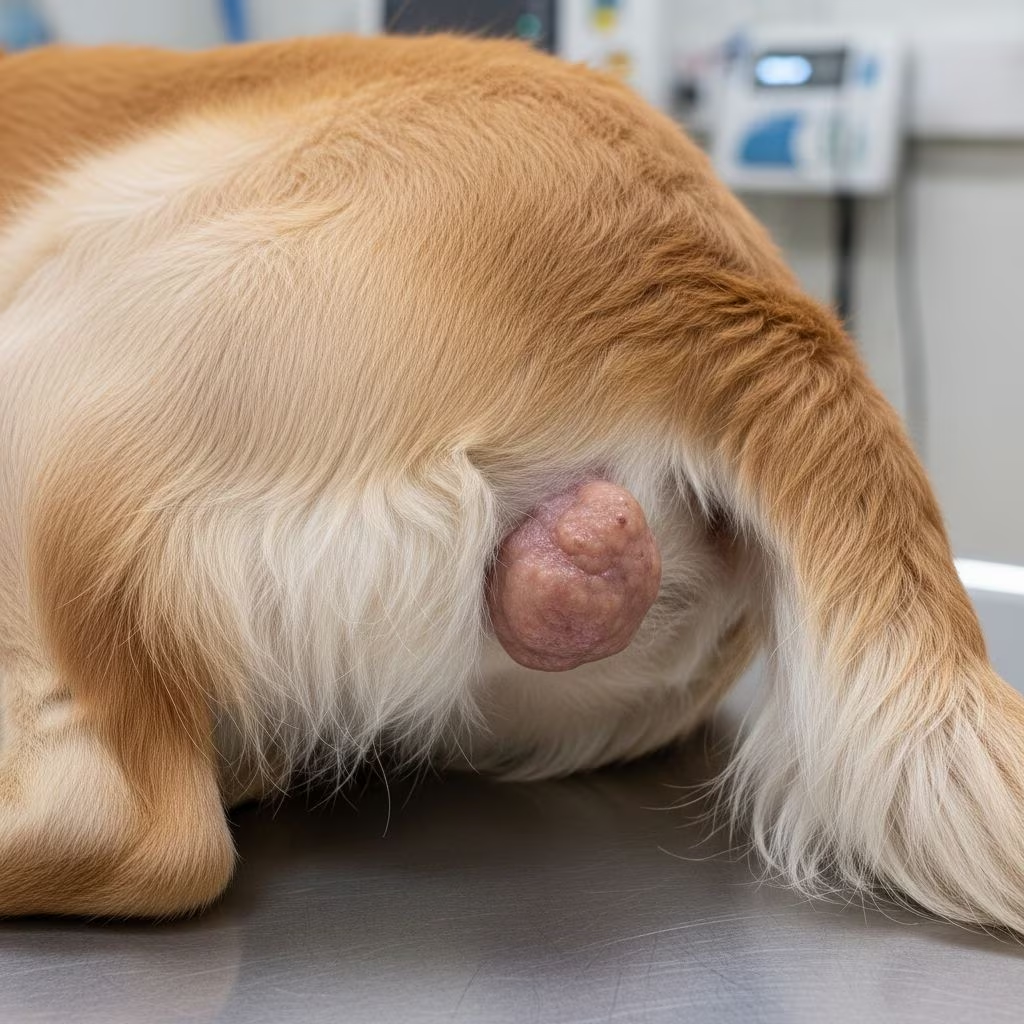
Perianal adenoma represents one of the most frequently encountered benign tumors in canine medicine, primarily originating from the sebaceous glands encircling the anus. These growths, also termed circumanal or hepatoid adenomas, constitute up to 80% of all perianal neoplasms in dogs and pose unique challenges due to their location and hormonal influences.5 While generally non-malignant, they demand prompt attention to avert complications such as ulceration or interference with normal defecation.
Understanding the Biology of Perianal Adenomas
These tumors arise from specialized apocrine glands in the perianal region, which are responsive to androgens like testosterone. In dogs, particularly intact males, prolonged exposure to these hormones promotes hyperplasia and eventual tumor formation.2 The perianal zone, including areas around the anus, prepuce, tail base, and groin, hosts these glands, explaining the varied presentation sites. Unlike malignant counterparts, adenomas remain localized, rarely metastasizing, though some variants exhibit mild invasiveness into surrounding tissues.4
Histologically, perianal adenomas feature well-differentiated cells resembling hepatoid (liver-like) structures, hence the alternative nomenclature. They typically manifest as firm, raised nodules that grow slowly over time. Breeds such as Siberian Huskies, Cocker Spaniels, Pekingese, Samoyeds, and German Shepherds show predispositions, likely due to genetic factors amplifying hormonal sensitivity.16
Risk Factors and Prevalence Patterns
The strongest risk factor is intact male status, with unneutered dogs over five years old comprising the majority of cases. Testosterone drives glandular proliferation, making neutered males and females far less susceptible—though not immune.27 Age plays a pivotal role; middle-aged to senior dogs (7+ years) represent most diagnoses, aligning with cumulative hormonal exposure.
- Primary Risk: Intact males (90%+ of cases)
- Breeds at Higher Risk: Arctic breeds (Husky, Samoyed), Spaniels, brachycephalics (Pekingese)
- Secondary Factors: Genetic predisposition, chronic inflammation
- Rare in: Females, neutered dogs, cats (lacking perianal sebaceous glands)5
Prevalence data indicate these tumors in up to 20% of older intact males during routine exams, often discovered incidentally before symptoms emerge.4
Recognizing Clinical Signs Early
Early-stage perianal adenomas may be asymptomatic, appearing as small, pink, hairless lumps under one inch in diameter near the anus.4 As they enlarge, owners notice visible swellings, sometimes pedunculated or forming a thickened ring around the anus. Surface ulceration, bleeding, or secondary infection introduces foul odor, excessive licking, and scooting behaviors.
More advanced signs include defecation difficulties: straining (tenesmus), constipation, obstipation, or blood-streaked feces (hematochezia).13 Dogs may exhibit perianal pruritus, swelling, or pain, leading to behavioral changes like lethargy or reduced activity. In rare paraneoplastic cases, hypercalcemia manifests as increased thirst/urination, anorexia, or weakness—though less common than in malignancies.36
| Symptom | Early Stage | Advanced Stage |
|---|---|---|
| Mass Appearance | Small, firm nodule | Large, ulcerated, bleeding |
| Behavior | Asymptomatic | Scooting, licking, straining |
| Defecation Issues | None | Constipation, tenesmus, blood |
| Other | Incidental finding | Infection, odor, discomfort |
Diagnostic Approaches for Confirmation
Veterinary evaluation begins with a thorough physical exam, revealing perianal masses via external inspection or rectal palpation for smaller lesions.3 Fine-needle aspiration (cytology) provides initial clues but often fails to distinguish benign from malignant due to overlapping features; thus, incisional or excisional biopsy is gold standard.5
Additional diagnostics rule out differentials like anal sac adenocarcinoma, mast cell tumors, or abscesses:
- Imaging: Ultrasound or radiographs assess invasion, lymph node involvement
- Bloodwork: Checks for hypercalcemia, anemia from chronic bleeding
- Cytology/Biopsy: Confirms hepatoid adenoma histology
Histopathology post-biopsy grades the tumor as benign adenoma, atypical/invasive adenoma, or adenocarcinoma, guiding therapy.4
Treatment Strategies: From Conservative to Surgical
Treatment hinges on tumor size, symptoms, and patient factors. Small, asymptomatic adenomas in intact males may regress post-neutering due to testosterone withdrawal—effective in 40-50% of cases.27 Hormone therapy (e.g., anti-androgens) offers alternatives for poor surgical candidates.
Surgical excision remains definitive for larger or symptomatic tumors. Wide margins ensure complete removal, especially for ulcerated or recurrent growths. Cryosurgery or laser ablation suits smaller lesions, minimizing bleeding in this vascular area.1
- Neutering: First-line for intact males; monitor post-procedure
- Local Excision: For solitary masses <2cm
- Wide Resection: Invasive or recurrent tumors
- Adjuncts: Antibiotics for infection, pain management
Post-op care includes e-collars to prevent self-trauma, stool softeners, and follow-ups. Recurrence is low (<10%) with neutering and complete excision.4
Prognosis and Long-Term Management
Benign perianal adenomas boast excellent prognoses: >95% cure rates with surgery and neutering.5 Complications like infection prolong recovery but rarely threaten life. Malignant transformation to adenocarcinoma is infrequent (5-10%), more likely in late-diagnosed, large tumors in neutered dogs—warranting vigilant monitoring.6
Owners should schedule semi-annual exams for at-risk dogs, palpating perianal areas during grooming. Early intervention prevents progression to obstructive or infected states.
Prevention Through Proactive Care
Neutering before age 5 dramatically reduces incidence by eliminating androgen drive.2 Routine veterinary check-ups facilitate incidental detection. Maintain anal gland health via expression if needed, and monitor for breed predispositions. While not fully preventable, these steps minimize risks.
Frequently Asked Questions (FAQs)
Is perianal adenoma cancerous in dogs?
No, it’s a benign tumor, though rare malignant forms exist. Biopsy confirms type.4
Can female dogs get perianal adenomas?
Yes, but far less commonly than intact males (under 10% of cases).5
Will neutering cure my dog’s perianal adenoma?
It resolves small tumors in many intact males but surgery is needed for larger ones.2
What breeds are prone to this condition?
Siberian Husky, Cocker Spaniel, Samoyed, Pekingese.1
How much does treatment cost?
Varies; neutering $200-500, surgery $1,000-3,000+ depending on complexity.
Key Takeaways for Dog Owners
- Monitor perianal area for new lumps, especially in older intact males.
- Seek vet care promptly for straining or scooting.
- Neutering is the best preventive measure.
- Benign nature means high success with treatment.
References
- Perianal Gland Adenomas — Brooklyn Veterinary Group. Accessed 2026. https://www.brooklynvetgroup.com/11/117/Perianal_Gland_Adenoma.htm
- Perianal Adenoma in Dogs: Causes, Symptoms, and Treatment — College Hills Vet. Accessed 2026. https://collegehillsvet.com/perianal-adenoma-in-dogs-causes-symptoms-and-treatment/
- Tob, Perianal Gland Adenoma — WVS Academy. Accessed 2026. https://wvs.academy/case-reports/tob-perianal-gland-adenoma/
- Perianal Adenoma in Dogs — PetMD. Accessed 2026. https://www.petmd.com/dog/conditions/skin/perianal-adenoma-dogs
- Perianal Adenoma in Dogs | Symptoms, Treatment & Prevention — Embrace Pet Insurance. Accessed 2026. https://www.embracepetinsurance.com/health/perianal-adenoma
- Skin Perianal Tumors — Veterinary Society of Surgical Oncology (VSSO). Accessed 2026. https://vsso.org/skin-perianal-tumors



