Finding the Perfect Dog Crate Size for Your Pet
Learn how to measure your dog accurately and select an appropriately sized crate.
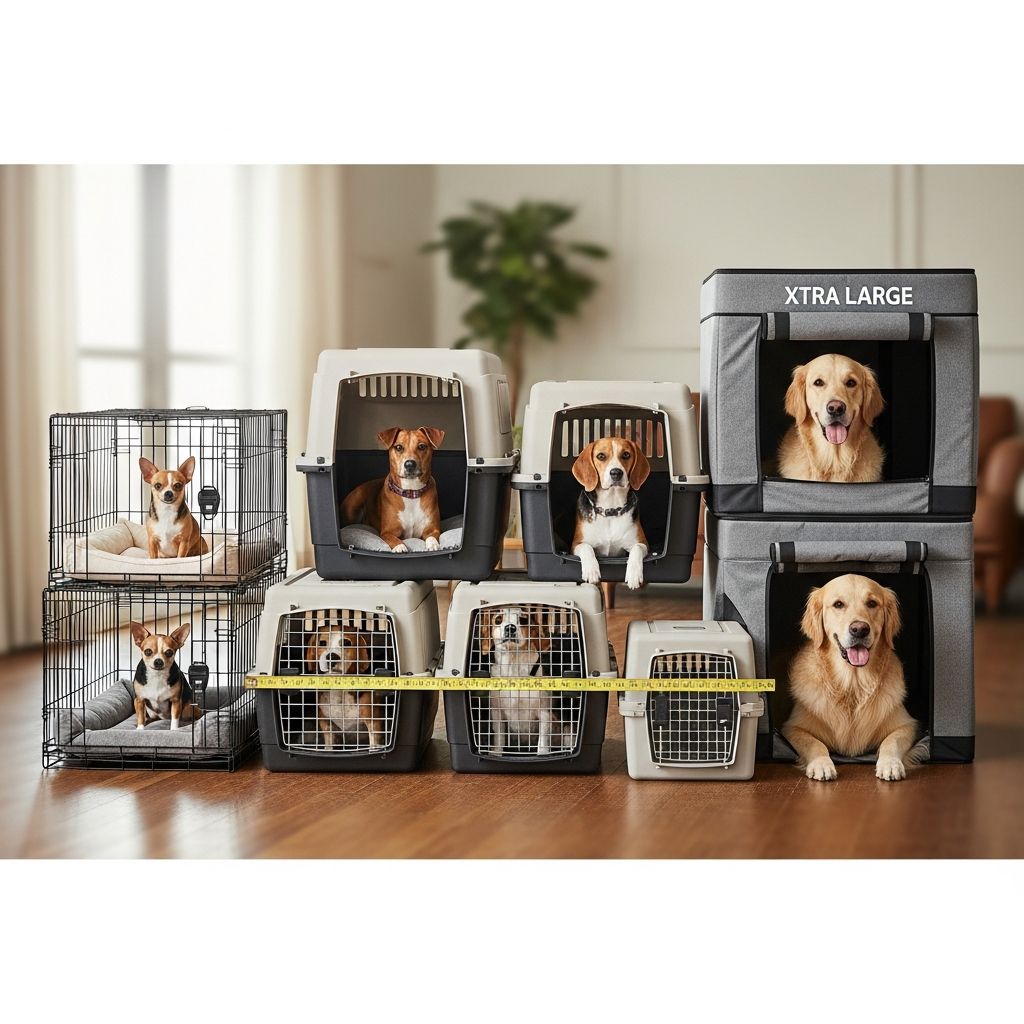
Selecting an appropriately sized crate is one of the most important decisions pet owners make when establishing a safe space for their dogs. A crate serves multiple purposes—providing security, aiding in house training, and creating a den-like refuge where dogs naturally feel comfortable. However, choosing the right size requires understanding your dog’s measurements and knowing what dimensions work best for different breeds and ages. This guide walks you through the measurement process and helps you navigate the various crate options available.
Understanding Why Crate Size Matters
The dimensions of a dog crate directly impact your pet’s well-being and the effectiveness of crate training. A crate that is too small restricts movement and can cause physical discomfort, while one that is excessively large defeats the purpose of creating a secure, den-like environment. Dogs naturally seek enclosed spaces where they feel protected, and the right-sized crate taps into this instinctive behavior. When properly sized, a crate becomes a place your dog willingly enters and genuinely enjoys, rather than a confining space they resist.
Beyond comfort and psychology, proper crate sizing is essential for house training. Dogs are naturally reluctant to soil the area where they sleep and rest. A crate that allows your dog to stand, turn around, and lie down comfortably—but not so much extra space that they can designate a separate bathroom area—reinforces house training principles. Additionally, for traveling or veterinary visits, having a crate that fits your dog properly ensures safety and reduces anxiety during transport.
Essential Measurement Techniques for Your Dog
Accurate measurements are the foundation of selecting the right crate. Taking time to measure your dog properly eliminates guesswork and prevents purchasing mistakes. Here are the key measurements you need to obtain:
Measuring Body Length
To determine the appropriate length for your crate, have your dog stand naturally in a relaxed position. Using a flexible measuring tape or even a piece of string, measure from the tip of your dog’s nose to the base of the tail. This measurement represents your dog’s linear body length. Once you have this number, add 2 to 4 inches to provide comfortable stretching room. The additional space allows your dog to fully extend their body when lying down without feeling cramped. For larger breeds, you may add up to 6 inches to ensure adequate legroom. Record this final measurement—this is your minimum crate length requirement.
Measuring Height Accurately
Height measurement requires your dog to be in a standing position on a flat surface. Measure from the floor to the top of your dog’s head, including their ears if they stand upright. This measurement tells you the vertical space your dog needs when standing in the crate. Dogs should be able to stand fully upright without their head touching the crate ceiling. Add 2 to 4 inches to this measurement to allow for comfortable head clearance and natural posture. Some dogs carry their ears in a relaxed position, while others have ears that stand erect—be sure to measure with your dog in their natural stance, not stretched tall or compressed.
Accounting for Additional Items
Many dog owners add comfort items like crate pads, beds, or blankets inside the crate. If you plan to include these items, factor their thickness into your height measurement. A comfortable pad can add 1 to 3 inches of height, which reduces the effective standing room inside the crate. Adjust your height measurement accordingly to ensure your dog still has adequate clearance even with these items in place.
Crate Size Categories and Their Applications
The pet industry has standardized crate sizing to accommodate all dog types, from tiny toy breeds to giant dogs. Understanding these categories helps you quickly identify appropriate options for your pet.
| Crate Size Category | Height Range | Length Range | Weight Capacity | Typical Breeds |
|---|---|---|---|---|
| XX-Small | 9 inches | 16 inches | Up to 10 lbs | Chihuahua, Pomeranian, Yorkshire Terrier |
| Extra Small | 11 inches | 18 inches | Up to 15 lbs | Miniature Dachshund, Maltese, Pekingese |
| Small | 16 inches | 22 inches | Up to 25 lbs | Cavalier King Charles, French Bulldog, Scottish Terrier |
| Medium | 20 inches | 24 inches | Up to 30 lbs | Beagle, Miniature Schnauzer, Welsh Corgi |
| Intermediate | 23 inches | 30 inches | Up to 50 lbs | Cocker Spaniel, Shetland Sheepdog, Border Collie |
| Large | 25 inches | 32 inches | Up to 70 lbs | Chow Chow, Samoyed, Whippet |
| Extra Large | 28 inches | 36 inches | 90+ lbs | German Shepherd, Golden Retriever, Labrador Retriever |
Crate Selection for Puppies: Growing Into Their Space
Puppies present a unique challenge because they grow rapidly, sometimes doubling in size within a few months. Purchasing a crate sized for an adult dog when your puppy is small creates excess space that undermines house training. Conversely, buying multiple crates as your puppy grows is expensive and impractical.
The solution is selecting a crate that will accommodate your puppy’s adult size and using a divider panel. Divider panels are removable barriers that reduce the usable space inside the crate, allowing you to adjust the size as your puppy grows. Before bringing your puppy home, research your dog’s breed to determine its expected adult height and weight. Ask your breeder about anticipated growth during the first 2 to 3 months, as this helps you purchase the appropriate adult-sized crate from the beginning.
As your puppy grows, gradually extend the divider panel to increase usable space. This approach keeps the crate appropriately sized throughout your dog’s development, maintaining effectiveness for house training while ensuring your dog never outgrows their crate during this critical growth period.
Special Considerations for Different Dog Sizes
Small Breed Crating
Small dogs, generally those weighing between 1 and 30 pounds and standing 6 to 18 inches tall, need crates that provide snug, secure environments without cramping movement. These breeds often appreciate the cozy feel of a properly sized crate. Pay particular attention to height—many small breeds have proportionally large heads relative to their body size, so verify that your dog can comfortably stand upright. Small breeds typically need crates in the XX-Small through Small categories, though some may require Medium sizes depending on their individual measurements.
Medium Breed Considerations
Dogs in the medium range, typically 18 to 22 inches tall and weighing 30 to 50 pounds, represent a significant portion of pet dogs. Common medium breeds include retrievers, herding dogs, and various sporting breeds. When measuring medium-sized dogs, be especially careful with the height measurement, as many medium breeds have significant variation between males and females. A female of a breed may be considerably shorter than a male of the same breed, potentially affecting which crate size is appropriate.
Large and Giant Breed Needs
Large breeds (22 to 25 inches tall, 50 to 90 pounds) and giant breeds exceeding these dimensions require Extra Large or custom crates. These dogs need sufficient length to stretch out fully and enough height for comfortable standing. Giant breed owners should invest in quality crates designed specifically for larger dogs, as standard crates may not provide adequate space or support. Additionally, some owners of large dogs who travel frequently prefer slightly shorter crates that encourage their dogs to rest and relax during travel rather than stand at full height.
Different Crate Types and Their Sizing Implications
Various crate materials and designs each have different sizing characteristics. Wire crates, typically used in home settings, come with divider panels that make them versatile for puppies and adjustable for multi-dog households. Plastic crates, often used for air travel and veterinary visits, provide different dimensional relationships and security benefits. Soft-sided fabric crates offer portability but may have different internal space compared to their external measurements.
Regardless of crate type, the fundamental principle remains the same: your dog should comfortably stand, turn around, and lie down inside. Wire crates generally provide the most flexible sizing options through their divider systems, making them ideal for growing puppies or households with multiple dogs requiring different sizes.
Measuring Your Puppy for Future Needs
When purchasing a crate for a puppy, you need information about your dog’s expected adult size. Consult with your breeder about typical adult dimensions for your puppy’s lineage. If breeding information isn’t available, research your dog’s breed through the American Kennel Club or other reputable breed organizations. Most breed standards specify height and weight ranges, giving you a reliable estimate of your puppy’s eventual size.
Keep in mind that male dogs typically grow larger than females of the same breed. If you have a female puppy, factor in that she may be at the smaller end of breed standards, while a male sibling could grow considerably larger. This distinction affects whether you should purchase the smaller or larger end of a crate size range.
Practical Tips for Taking Accurate Measurements
- Use proper tools: A flexible measuring tape provides the most accurate measurements. If a measuring tape isn’t available, use a piece of string, mark the length with your fingers, and then measure the string against a ruler or standard measuring tape.
- Measure on a flat surface: Place your dog on level ground, not on carpet or uneven surfaces that might affect height measurements.
- Use high-value treats: Keep treats or favorite toys nearby to help your dog remain still during measurements. Quick, consistent measurements are more accurate than drawn-out processes where your dog shifts position.
- Measure multiple times: Take measurements at least twice to ensure consistency. If measurements vary significantly, your dog may have been in different positions (standing vs. slightly sitting), requiring a third measurement.
- Account for natural variation: Measure your dog in their natural stance, not stretched tall or compressed downward. This represents how they’ll actually position themselves inside the crate.
- Record everything: Write down your measurements along with your dog’s age, breed, and expected adult size if applicable. This information becomes valuable if you need to purchase additional crates in the future or have multiple dogs.
Common Mistakes in Crate Selection
Many well-intentioned dog owners make predictable errors when selecting crates. Purchasing a crate that’s too large is perhaps the most common mistake. Owners reason that extra space provides more comfort, but an oversized crate actually undermines house training and reduces the den-like security dogs crave. Another frequent error is not accounting for items like crate pads or beds when measuring height, resulting in a crate where your dog’s head actually touches the ceiling once bedding is added.
Some owners purchase crates based solely on their dog’s current weight without considering height, leading to crates where their dog can stand but not fully stretch. Others fail to research their puppy’s expected adult size, purchasing a small crate for a puppy that will become a large adult dog, necessitating a second crate purchase. Planning ahead and measuring carefully prevents these costly and inconvenient mistakes.
Transitioning Your Dog to Their Crate
Once you’ve selected the appropriately sized crate, introducing your dog to their new space requires patience and positive reinforcement. Even a perfectly sized crate won’t be effective if your dog hasn’t been properly acclimated to it. Begin by leaving the crate door open and allowing your dog to explore at their own pace. Place treats and toys inside to create positive associations. Gradually progress to closing the door for brief periods while you remain nearby, then extend the duration and distance.
Consider adding a crate cover using a blanket or commercial crate cover, which enhances the den-like quality by creating visual security. This simple addition often helps dogs feel safer and more settled in their crate, particularly for anxious dogs or in high-activity home environments.
Frequently Asked Questions About Dog Crate Sizing
Should I purchase a larger crate to allow my puppy room to grow?
No. Instead, purchase the crate sized for your puppy’s expected adult dimensions and use a divider panel to control the space as they grow. This approach maintains the benefits of crate training throughout your dog’s development.
What if my dog is between two crate sizes?
When your dog’s measurements fall between standard crate sizes, choose the larger size. Your dog should never feel cramped, and a slightly larger crate can be made more appropriately sized through divider panels or strategic bedding placement.
Can I use the same crate for multiple dogs of different sizes?
Yes, if the crate is appropriately sized for your largest dog and you use divider panels to create smaller sections for smaller dogs. However, during unsupervised periods, it’s generally safer for each dog to have their own properly sized crate.
Does crate size affect house training effectiveness?
Absolutely. A properly sized crate leverages your dog’s natural instinct not to soil their sleeping area, accelerating house training. An oversized crate allows your dog to designate a bathroom area away from their bed, undermining training efforts.
Are breed standards reliable for measuring puppies?
Breed standards provide excellent general guidelines, but individual dogs vary. Consult with your breeder whenever possible, as they know your puppy’s specific lineage and can provide more accurate growth predictions.
References
- Dog Crate Sizing Guide — Diggs Pet. 2024. https://www.diggs.pet/blogs/posts/dog-crate-sizing-guide
- How To Measure For Your Dog’s Crate or Kennel — K9 Ballistics. 2024. https://k9ballistics.com/blogs/guide-to-dogs/how-to-measure-for-your-dogs-crate-or-kennel
- How to Choose the Best Crate for Your Dog — American Kennel Club. 2024. https://www.akc.org/expert-advice/lifestyle/choose-best-crate-dog/
- What Size Crate Should I Get? — MidWest Homes for Pets. 2024. https://www.midwesthomes4pets.com/resources/cratesizing/
- Crate & Carrier Sizing Chart — PetSmart. 2024. https://www.petsmart.com/help/sizing-charts-H0012a.html
Similar Articles








Read full bio of Sneha Tete