

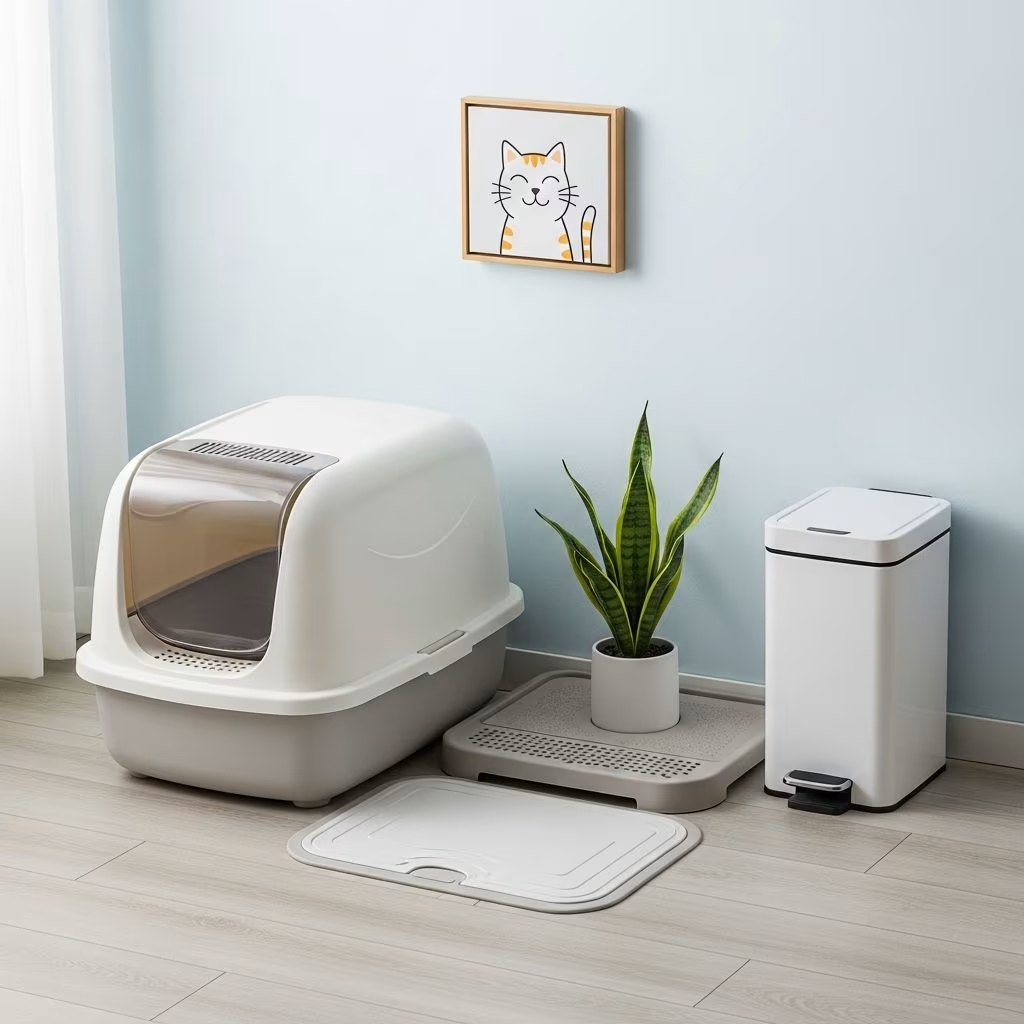
Setting up the right litter box environment is essential for your cat’s health and your home’s cleanliness. A well-designed setup encourages consistent use, minimizes accidents, and reduces odors. This guide draws from veterinary insights and practical feline behavior knowledge to help you create an optimal litter station tailored to your cat’s needs.
Understanding Your Cat’s Litter Preferences
Cats are naturally fastidious creatures with specific instincts for elimination. In the wild, they bury waste to avoid predators, so domestic setups must mimic this security. Factors like box size, litter texture, and location influence usage. Research shows that improper setups lead to avoidance behaviors, with studies indicating up to 10% of cats experience litter box issues due to suboptimal conditions.
Observe your cat’s habits: some prefer deep digging, others shallow scratching. Kittens and seniors need low-entry designs, while sprayers benefit from high walls. Start with basics and adjust based on feedback like hesitation or tracking.
Selecting the Ideal Litter Box Type
Choose a box that matches your cat’s size and mobility. The minimum length should equal your cat’s nose-to-tail measurement when stretched out, ideally 1.5 times larger for comfort.
- Open trays: Best for accessibility, suitable for multi-cat homes or timid pets. Low sides (3-4 inches) aid kittens and arthritic cats.
- Covered or hooded boxes: Offer privacy and odor control but ensure easy escape routes to prevent ambushes in multi-pet households.
- Top-entry boxes: Reduce litter scatter; ideal for active adults but challenging for elderly or obese cats.
- Self-cleaning models: Automate scooping for convenience, though they require monitoring to avoid malfunctions trapping cats.
- DIY storage bins: Cut low entries into large plastic bins for big cats, providing ample space unavailable in commercial options.
For multiple cats, variety prevents competition. A 2017 study found cats prefer boxes allowing multiple entry points for safety.
Choosing the Best Litter for Your Setup
Litter type affects clumping, odor control, and tracking. Fill to 3-4 inches for clumping varieties to allow covering waste; 2-3 inches for non-clumping.
| Litter Type | Pros | Cons | Best For |
|---|---|---|---|
| Clumping Clay | Excellent odor control, easy scooping | Dusty, tracks easily | Adults preferring fine texture |
| Non-Clumping Clay | Affordable, low dust | Requires full changes | Budget-conscious owners |
| Crystal/Silica | Superior absorption, lightweight | Can be sharp on paws | Low-tracking needs |
| Recycled Paper Pellets | Dust-free, biodegradable | Less clumping | Respiratory-sensitive cats |
| Natural Pine/Wood | Eco-friendly, natural scent | Strong smell initially | Environmentally aware homes |
Transition gradually: mix 10% new litter with 90% old, increasing over days to avoid rejection. Avoid scented litters if your cat shows aversion, as they can irritate sensitive noses.
Strategic Placement for Success
Location impacts usage more than you think. Place boxes in quiet, accessible spots frequented by your cat, not isolated areas like basements.
- Avoid high-traffic zones with loud noises or dogs.
- In multi-story homes, one box per floor plus extras.
- Separate boxes by at least several feet to prevent territorial disputes.
- Ensure 24/7 access, especially for night-time needs.
Proximity to food/water is a myth to debunk—cats prefer separation by instinct. Optimal spots: spare rooms, laundry areas (if spacious), or near hangouts like living rooms sans chaos.
Essential Accessories for a Complete Station
Enhance functionality with tools that streamline maintenance and reduce mess.
- Sturdy scoops: Metal with solid handles for durability.
- Waste disposal: Small lidded bins or Litter Genie systems for sealed odor control.
- Mats: Textured, multi-layer designs trap litter; open-ended for easy dumping back.
- Air purifiers: HEPA filters nearby neutralize smells.
- Entry aids: Ramps or platforms for seniors.
Stock daily: grocery bags line bins for quick disposal.
Daily and Weekly Cleaning Routines
Scooping once or twice daily prevents buildup, with full changes every 1-2 weeks depending on use.
- Scoop solids and clumps immediately.
- Stir litter to distribute urine absorption.
- Wipe box interiors weekly with mild soap; avoid harsh chemicals.
- Empty completely, wash, dry, and refill.
For multi-cat homes, spot-clean more frequently. Sifting boxes suit pellets but need periodic deep cleans.
Handling Multi-Cat Households
Follow the rule: one box per cat + one extra. Distribute across floors and spaces. Monitor for bullying—covered boxes can hide aggressors. Some cats designate boxes for specific functions, so provide options.
Special Considerations for Kittens, Seniors, and Special Needs Cats
Tailor to life stages:
- Kittens: Shallow, small boxes to build confidence.
- Seniors/arthritic: Low or no sides, ramps, see-through high walls.
- Obese/large breeds: Extra-large bins.
- Medical issues: Consult vets; softer litters for post-surgery.
Troubleshooting Common Litter Box Problems
Accidents signal issues—don’t punish, investigate.
| Problem | Possible Causes | Solutions |
|---|---|---|
| Avoidance | Dirty box, wrong litter, stress | Clean daily, try new litter gradually, add boxes |
| Urinating outside | Small box, UTI, territory marking | Larger box, vet check, spay/neuter |
| Excessive tracking | Fine litter, no mat | Coarser litter, quality mat |
| Odor persistence | Infrequent scooping, poor litter | Scoop 2x/day, enzyme cleaners |
Behaviors like standing to pee need tall sides. A study links box aversion to predation instincts, emphasizing open sightlines.
FAQs
How often should I clean the litter box?
Scoop daily, full clean weekly for singles; more for multiples.
Can I use human toilet for cats?
No—lacks security and tracking control.
What if my cat stops using the box suddenly?
Rule out medical issues first; vet visit essential.
Are automatic boxes safe?
Yes, if monitored; provide manual backups.
Best litter for odor control?
Clumping clay or crystals excel.
This setup fosters harmony, preventing the 65% of shelter surrenders linked to elimination issues. Invest time upfront for long-term ease.
References
- The Complete Guide to Cat Litter Boxes – The Comforted Kitty — YouTube. 2023. https://www.youtube.com/watch?v=ndfhN9rnfd4
- The Best Cat Litter Box Set Up – All About Litter Boxes — YouTube (references https://www.sciencedirect.com/science/article/pii/S016815911730151X). 2023. https://www.youtube.com/watch?v=coavVYf0-dA
- Cat Litter Box Tips – Do’s & Don’ts of Litter — Purina. 2024-01-15. https://www.purina.com/articles/cat/behavior/litter/cat-litter-box-tips
- Your complete guide to cat litter boxes — Pet Valu. 2024. https://www.petvalu.ca/cat-litter-box-guide
- How to Teach Cat Litter Box: A Comprehensive Guide — Uahpet. 2023. https://www.uahpet.com/blogs/post/how-to-teach-cat-litter-box-a-comprehensive-guide
- 4 golden rules of setting up your cat’s litter box — Katzloo. 2023. https://katzloo.com.au/blogs/tips-and-tricks/litter-box-setup-golden-rules



