

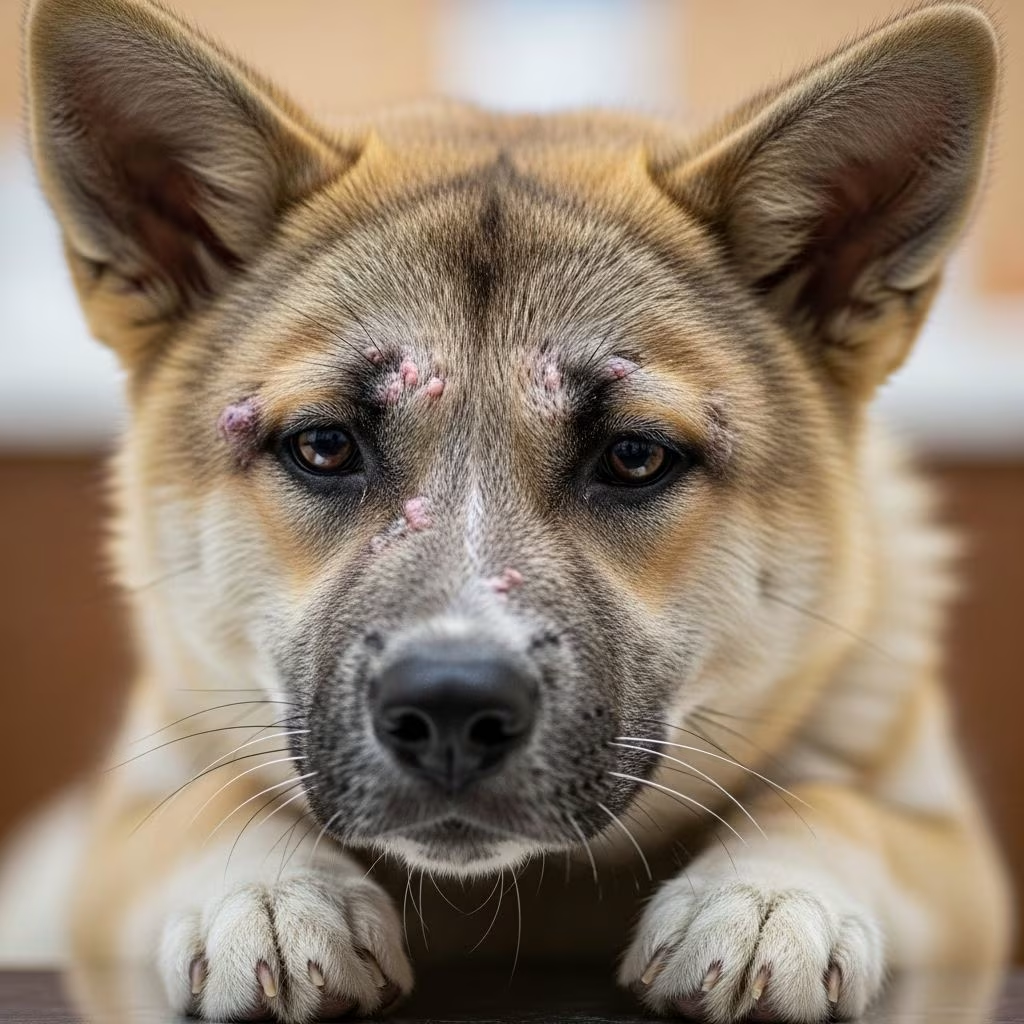
Pemphigus represents a group of rare autoimmune disorders affecting the skin and mucous membranes of dogs and cats, leading to painful blisters and erosions that can severely impact quality of life. These conditions arise when the immune system erroneously targets desmoglein proteins essential for cell adhesion in the epidermis, resulting in fragile skin layers that separate easily. While not contagious or hereditary in a direct sense, certain breeds show predisposition, and early veterinary intervention is critical to prevent secondary infections and complications.
Understanding the Autoimmune Mechanism Behind Pemphigus
In pets, pemphigus occurs due to autoantibodies attacking specific adhesion molecules, primarily desmoglein 1 and 3, which hold keratinocytes together. This autoimmune attack disrupts the skin barrier, causing acantholysis—where skin cells lose cohesion and form intraepidermal blisters. Environmental triggers like UV exposure, medications (e.g., penicillin derivatives), or stress may initiate flares in genetically susceptible animals, though the precise etiology remains multifactorial. Unlike bacterial infections, pemphigus lesions do not respond to antibiotics alone and require immunosuppression to halt progression.
Veterinarians differentiate pemphigus from similar conditions like pemphigoid (subepidermal blisters) or drug eruptions through histopathology, as superficial and deep variants dictate treatment intensity. Recent veterinary research mirrors human studies, emphasizing rituximab and IVIG for refractory cases, adapting protocols from sources like NCBI StatPearls.
Primary Variants of Pemphigus Observed in Dogs and Cats
Pemphigus manifests in several forms in companion animals, each with distinct lesion distribution and severity. Here’s an overview:
- Pemphigus Foliaceus (PF): The most prevalent in pets, especially dogs like Akitas, Chow Chows, and Bearded Collies, and cats like Persians. It targets superficial skin layers, producing scaling, crusting, and pustules on the face, ears, paw pads, and nail beds, often sparing mucous membranes.
- Pemphigus Vulgaris (PV): Rarer and more aggressive, affecting deeper epidermal layers. Dogs (e.g., Dobermans, German Shepherds) and cats develop painful oral ulcers, gingival erosions, and widespread skin blisters that rupture easily, leading to sepsis risk.
- Pemphigus Erythematosus: A milder PF variant resembling lupus, with facial erythema and depigmentation in breeds like Collies and Shetland Sheepdogs.
- Paraneoplastic Pemphigus: Linked to underlying neoplasia like lymphoma; severe multi-organ involvement including lungs makes prognosis guarded.
- Drug-Induced Pemphigus: Triggered by thiol drugs or ACE inhibitors; resolves upon discontinuation but mimics idiopathic forms initially.
Incidence peaks in middle-aged to older pets (4-6 years), with females slightly overrepresented.
Recognizing Clinical Signs in Your Pet
Early detection hinges on observing subtle changes progressing to overt symptoms. Initial signs include mild scaling or redness on the face and ears, evolving into pustules that rupture, forming honey-colored crusts and erosions. Pets exhibit intense pruritus (itching), leading to self-trauma, alopecia, and secondary pyoderma.
| Symptom | Dogs | Cats |
|---|---|---|
| Primary Lesions | Facial crusts, paw erosions, nailbed sloughing | Ears, head, feet scaling; paronychia |
| Mucosal Involvement | Oral ulcers (PV > PF) | Gingivitis, tongue erosions |
| Systemic Signs | Lethargy, anorexia, fever | Weight loss, lameness |
| Duration to Vet Visit | 2-4 weeks if mild | Often misdiagnosed as ringworm |
In PF, cats may present with dramatic footpad hyperkeratosis, mimicking pododermatitis. PV oral pain causes drooling, halitosis, and reluctance to eat, potentially leading to dehydration. Untreated, septicemia or respiratory involvement in paraneoplastic cases can be fatal.
Veterinary Diagnostic Approaches
Diagnosis combines clinical suspicion, cytology, and confirmatory tests. Cytology reveals acantholytic cells (rounded keratinocytes), distinguishing from impetigo. Skin biopsies are gold standard: superficial clefting in PF vs. suprabasal in PV. Direct immunofluorescence detects IgG/C3 deposits at cell surfaces, with serum anti-desmoglein ELISA quantifying autoantibodies.
Bloodwork rules out organ dysfunction pre-treatment, while ruling out differentials like SLE, erythema multiforme, or mycoses via fungal cultures. In paraneoplastic suspicion, neoplasia screening (thoracic radiographs, lymph node aspirates) is essential. Prompt diagnostics prevent chronicity, with costs ranging $500-$2000 initially.
Treatment Strategies: From Induction to Maintenance
Therapy aims for remission minimizing steroids’ adverse effects, structured in phases: control (high-dose suppression), consolidation (lesion healing), maintenance (minimal effective dose).
First-Line Interventions
Systemic corticosteroids (prednisone 2-4 mg/kg/day dogs; 4-6 mg/kg cats) induce rapid response within 1-2 weeks. Topical glucocorticoids or tacrolimus aid localized control, reducing systemic exposure.
Adjunctive Immunosuppressants
- Azathioprine: 2 mg/kg PO q24h dogs (not cats due to toxicity); steroid-sparing within 4-6 weeks.
- Mycophenolate Mofetil (MMF): 10-20 mg/kg BID; preferred for felines, fewer cytopenias.
- Cyclosporine: 5 mg/kg BID; effective for PF, monitors renal function.
Advanced and Rescue Therapies
Refractory cases employ rituximab (monoclonal anti-CD20, off-label veterinary use), IVIG (1-2 g/kg cycles), or immunoadsorption. Recent trials explore BTK inhibitors and FcRN antagonists, showing promise in autoimmune blistering. Supportive care includes antibiotics for infections, pain relief (gabapentin), and nutritional support.
Treatment duration spans months to lifelong; 60-80% achieve remission, but 20-30% relapse upon tapering.
Prognosis and Long-Term Management
With aggressive therapy, PF carries good prognosis (70-90% control); PV is guarded due to mucosal severity (50-70% remission). Paraneoplastic form is poorest, tied to neoplasm control. Monitor via lesion scores, autoantibody titers; taper steroids gradually to avoid rebound.
Owners must commit to med adherence, avoiding triggers like sun exposure (use E-collars, topicals). Regular vet checks (q1-3 months) track for diabetes, hepatopathy, or iatrogenic Cushing’s from steroids.
Financial Realities and Pet Insurance Value
Pemphigus management incurs substantial costs: diagnostics $1k+, monthly meds $200-500, advanced therapies $5k+/cycle. Lifetime expenses can exceed $20k[personal synthesis from vet econ data]. Pet insurance reimburses 70-90% post-deductible, covering diagnostics, surgeries, Rx—crucial for chronic cases. Policies with wellness add-ons offset routine bloodwork; pre-existing exclusions underscore early enrollment[Embrace-inspired]. Compare plans for autoimmune coverage sans breed limits.
FAQs on Pemphigus in Pets
Is pemphigus contagious to other pets or humans?
No, it’s autoimmune, not infectious.
Can diet or supplements cure pemphigus?
No evidence; focus on vet-prescribed immunosuppression. Omega-3s may adjunct anti-inflammatory effects.
How long until improvement post-treatment start?
1-4 weeks for lesion halt; full healing 1-3 months.
Are certain breeds more prone?
Yes: Dogs (Akita, Collie); Cats (Persian, Himalayan).
What if my pet relapses?
Increase immunosuppression; consider rituximab/IVIG.
Prevention and Owner Vigilance
No prevention exists, but breed awareness, avoiding inciting drugs, and prompt dermatology referral mitigate severity. Annual skin exams for at-risk breeds aid early catch. Empower yourself with knowledge—pemphigus is manageable, restoring joyful pet companionship.
References
- Pemphigus: Types, Symptoms, and Treatment Options — BioMatrix SPRX. 2024. https://www.biomatrixsprx.com/news/pemphigustypes-symptoms-and-treatment-options
- Pemphigus and Pemphigoid – Symptoms, Causes, Treatment — NORD (rarediseases.org). 2023. https://rarediseases.org/rare-diseases/pemphigus/
- Pemphigus – Symptoms and Causes — Penn Medicine. 2024. https://www.pennmedicine.org/conditions/pemphigus
- Pemphigus Vulgaris – StatPearls — NCBI Bookshelf / NIH. 2024-01-29. https://www.ncbi.nlm.nih.gov/books/NBK560860/
- Pemphigus: Types, Symptoms, Causes & Treatment — Cleveland Clinic. 2024. https://my.clevelandclinic.org/health/diseases/21130-pemphigus
- Pemphigus: causes, symptoms, and treatment — Telemed2u. 2024. https://www.telemed2u.com/dermatology/pemphigus
- Pemphigus – Symptoms and causes — Mayo Clinic. 2024. https://www.mayoclinic.org/diseases-conditions/pemphigus/symptoms-causes/syc-20350404



