

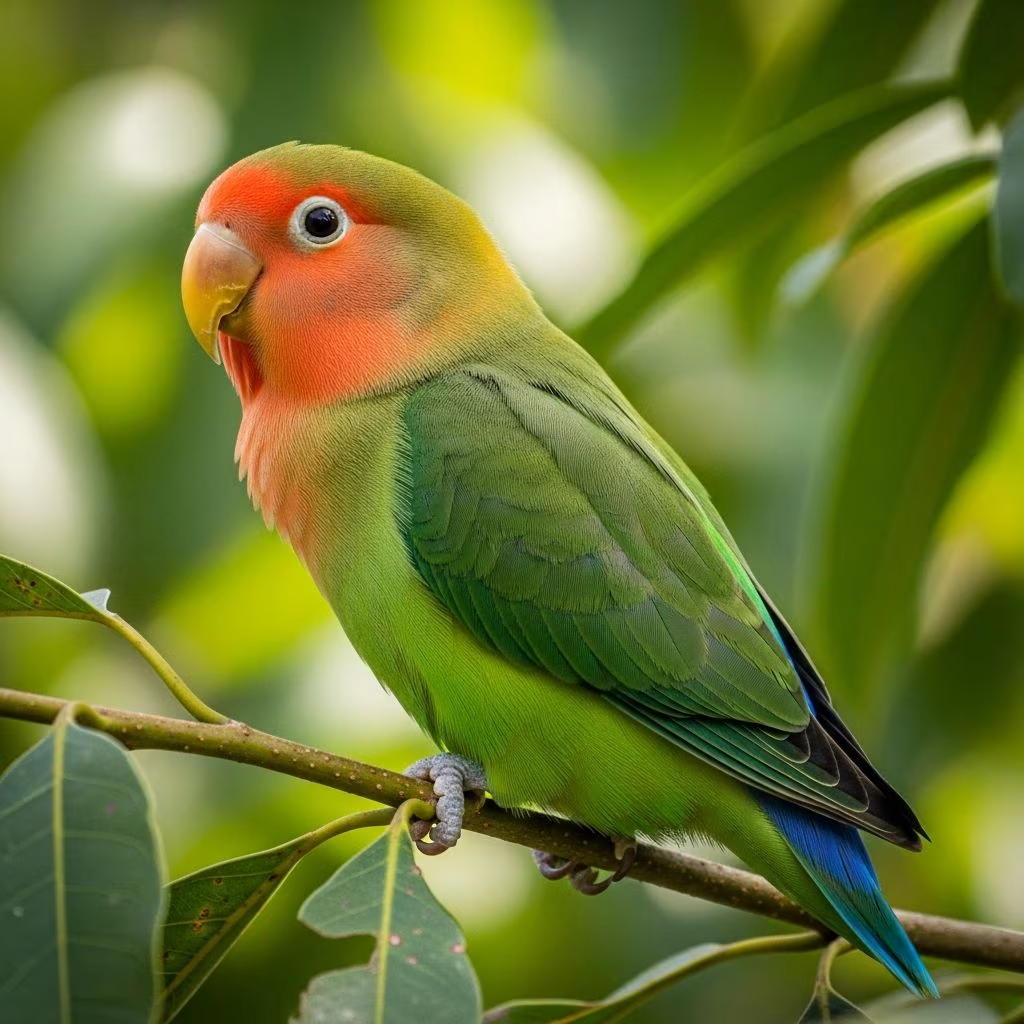
Understanding the Peach-Faced Lovebird
Peach-faced lovebirds (Agapornis roseicollis) are among the larger members of the lovebird family and stand as one of the most captivating pet bird species available today. Despite their modest size of just 6 inches in length, these remarkable creatures embody a personality that rivals much larger parrot species. The peach-faced lovebird resembles a miniature parrot with a vibrant personality to match, making them an ideal choice for bird enthusiasts seeking a dynamic and engaging companion.
The typical peach-faced lovebird displays predominantly green plumage with a distinctive blue rump and characteristic peach-colored face and throat that gives the species its memorable name. However, the peach-faced lovebird has undergone extensive color mutations through selective breeding, resulting in a stunning array of variations. Today, prospective owners can choose from lutinos, pieds, Dutch blues, cream-inos, olive greens, and violets, alongside the classic normal green coloration. These color variations range from creamy white to nearly black, encompassing virtually every shade of green, blue, yellow, violet, and pied combinations. With more than 15 distinct color mutations available, peach-faced lovebirds truly offer something for every aesthetic preference.
The Remarkable Personality of Peach-Faced Lovebirds
Peach-faced lovebirds are undeniably party animals that approach life with boundless enthusiasm and infectious energy. These pint-sized dynamos can transform any mundane object or situation into an entertaining game, whether they’re engaged in their favorite pastime of paper shredding, hanging upside-down from their perches, swinging from toys Tarzan-style, or cuddling affectionately with their owners. The defining characteristic of peach-faced lovebirds is their inability to remain still; they are in constant motion except when eating, drinking, or sleeping. Even when vocalizing, these birds throw their entire bodies into each chirp, demonstrating their commitment to full-body expression.
One of the most striking aspects of peach-faced lovebird personality is their boldness and fearlessness. Size means absolutely nothing to these confident little birds—they will enthusiastically challenge creatures they believe they can intimidate, from macaws to cockatiels, with equal determination. These lovebirds possess an intrinsic desire to be the dominant bird and will stop at nothing to achieve that status within any flock or household. This assertive nature means that owners must establish clear authority through consistent training and boundary-setting, such as regularly requiring birds to step up on command and preventing them from perching on shoulders.
Despite their sometimes aggressive tendencies, peach-faced lovebirds demonstrate remarkable versatility in their emotional expression. These birds possess what many owners describe as split personalities, capable of switching from bold and domineering to adorable and affectionate within moments. They will crawl into shirt pockets for comfortable naps, occasionally peeking out to ensure they haven’t missed any household action, and will snuggle under their owner’s chin until falling asleep. This duality in temperament makes them endlessly entertaining and unpredictable companions.
Gender Differences in Behavior and Temperament
Male and female peach-faced lovebirds exhibit notable temperament differences, so much so that they often appear to be entirely different species. Males typically display a sweet and reserved disposition, remaining noticeably smaller and thinner than their female counterparts. Female peach-faced lovebirds, conversely, tend to be spunkier, more prone to nipping, and often argumentative in nature. Additionally, females are typically larger and noticeably stouter, and display increased aggression and territoriality, particularly around their cages during breeding season.
Sexing peach-faced lovebirds can prove challenging since males and females are alike in plumage coloration. However, experienced observers note that when perched, the female’s abdomen sits closer to the perch due to her stockier build. Behavioral cues become more apparent during breeding season, making this the most reliable identification period for determining sex.
Vocalizations and Communication
Peach-faced lovebirds are not known for being particularly loud birds, which makes them suitable for apartment dwellers and those sensitive to noise. However, they are prone to bouts of chattering and whistling, particularly during morning hours, evening time, and when excited or seeking attention. While these birds can produce loud, high-pitched screeches when demanding attention, their normal chirps and squawks remain at moderate volume levels. Their tendency to chatter regularly means owners should expect consistent but manageable noise levels.
The talking ability of peach-faced lovebirds is exceptionally limited, with estimates suggesting that perhaps one in one thousand birds may acquire a few words. However, these intelligent creatures excel at learning tricks and may master skills such as playing dead, pushing a toy truck on command, or placing coins into a toy bank. With imaginative training and consistent effort, lovebird owners can teach these birds an impressive variety of tricks and behaviors. Interestingly, some research suggests that females may be more apt to mimic sounds or speech than males, though this remains relatively rare across the species.
Proper Nutrition and Feeding Practices
Peach-faced lovebirds are notorious for being extremely finicky eaters, presenting unique nutritional challenges for their owners. While a pelleted diet is nutritionally superior and preferred by veterinarians and nutritionists, lovebirds frequently demonstrate stubborn resistance to accepting pelleted food unless they were specifically weaned onto it as babies. To convert even the most obstinate peach-faced lovebird to a pellet-based diet, gradual mixing of pellets with seeds over an extended period proves most effective.
Beyond their basic diet, peach-faced lovebirds require mineral blocks in their cages at all times, though they do not actually need grit. Female birds preparing to breed or actively laying eggs will chew on mineral blocks almost constantly, deriving essential nutrients necessary for egg production. Sprouted seeds, fruits, and vegetables should comprise approximately 30% of the diet year-round to ensure nutritional completeness and prevent health issues associated with seed-only diets, which tend to be excessively high in fat and carbohydrates.
Housing and Environmental Needs
Peach-faced lovebirds require substantially more spacious housing than many prospective owners initially realize. While they are perfect for apartment dwellers seeking a “big parrot in a little bird’s body,” their active nature demands generous cage sizes. Housing should be as large as space and budget constraints allow—the smaller the cage, the more out-of-cage time the lovebird will require for exercise and enrichment.
These active birds love to flock, so homeowners with adequate space for an aviary may consider housing multiple pairs. However, crowded conditions lead to bickering and fighting, so proper spacing is essential when maintaining multiple birds together. Single birds require substantial daily interaction and quality time with their owners, as lovebirds are natural attention seekers that may become destructive or aggressive without adequate human companionship. Neglecting a lovebird for even a few weeks can cause previously sociable birds to revert to snappish behavior.
Unique Behavioral Characteristics
Peach-faced lovebirds possess a distinctive behavior that sets them apart from all other lovebird species: their unique nesting material transport method. While all other lovebird species carry nesting materials in their beaks, only female peach-faced lovebirds engage in the remarkable behavior of chewing paper and willow strips into small pieces and tucking them into the feathers on their backs or rumps. This peculiar adaptation serves as their method of transporting nesting materials to the nest site. This distinctive behavior has become a hallmark trait of the species and may be observed in pet birds as well as wild populations.
Female peach-faced lovebirds with access to paper or appropriate nesting materials will tear up strips of paper and weave them into cage bars, demonstrating their strong nesting instincts even in captive environments. This behavior intensifies during breeding season when hormones drive the urge to construct a suitable nest.
Important Considerations Before Ownership
Prospective peach-faced lovebird owners should understand that these birds demand commitment and attention from their human companions. While they can be wonderful pets whether kept in pairs or as single birds, brightening any home with pleasant chattering and entertaining antics, they also require responsible ownership and consistent care. Their bold nature means they must be taught proper boundaries and respect for household rules, as they naturally seek to establish dominance.
Lovebirds are intelligent and affectionate birds that are suitable for beginners but require somewhat more effort than certain other bird species. They are ideally kept as pairs to satisfy their natural social instincts, though single birds can thrive with sufficient owner interaction. If you seek a bird that combines beauty, inquisitiveness, playfulness, intelligence, activity level, boldness, and entertainment value into one remarkable package, then a peach-faced lovebird represents an exceptional choice.
Frequently Asked Questions About Peach-Faced Lovebirds
Q: What is the typical lifespan of a peach-faced lovebird?
A: While specific lifespan information varies, peach-faced lovebirds can live for many years with proper care, nutrition, and veterinary attention throughout their lives.
Q: Can peach-faced lovebirds be kept alone, or do they need a companion bird?
A: Peach-faced lovebirds can be kept alone as single pets if provided with frequent daily interaction and attention from their owner. However, they are social birds that naturally prefer companionship and may exhibit depressive behavior if isolated without adequate human interaction.
Q: How can I determine whether my peach-faced lovebird is male or female?
A: Males and females are alike in plumage coloration, making visual identification challenging. However, females tend to be larger and stockier, with their abdomen positioned closer to the perch when resting. Behavioral cues during breeding season provide more reliable identification methods.
Q: What causes female peach-faced lovebirds to lay eggs in captivity?
A: Stimulus from stroking and petting by owners can trigger egg-laying behavior in single females, as this mimics mating behavior. Additionally, high-fat and high-carbohydrate seed-based diets can stimulate laying by providing excessive energy.
Q: Are peach-faced lovebirds suitable for beginners?
A: Yes, peach-faced lovebirds are suitable for beginners, though they require more attention and care than certain other bird species. Hand-raised babies make the best pets and adjust more easily to home environments.
References
- Peach-Faced Lovebird Personality, Food & Care — Lafeber Company. Accessed November 28, 2025. https://lafeber.com/pet-birds/species/peach-faced-lovebird/
- A Look At The Peach-Faced Lovebird — Chewy Education. Accessed November 28, 2025. https://www.chewy.com/education/bird/lovebird/a-look-at-the-peach-faced-lovebird
- Our Complete Guide To Lovebirds As Pets — Westfield Vet Hospital. Accessed November 28, 2025. https://westfieldvethospital.com/blog/lovebirds/
- Peach-faced Lovebirds Fact Sheet — Northern Parrots. Accessed November 28, 2025. https://www.northernparrots.com/blog/peachfaced-lovebirds-fact-sheet/
- 14 Fun Facts About Lovebirds, From Their Lifelong Devotion to Surprising Aggression — Smithsonian Magazine. Accessed November 28, 2025. https://www.smithsonianmag.com/science-nature/14-fun-facts-about-lovebirds-from-their-lifelong-devotion-to-surprising-aggresion-180949742/
- Bird Care Guide: Lovebirds — MSPCA-Angell. Accessed November 28, 2025. https://www.mspca.org/pet_resources/bird-care-guide-lovebirds/



