

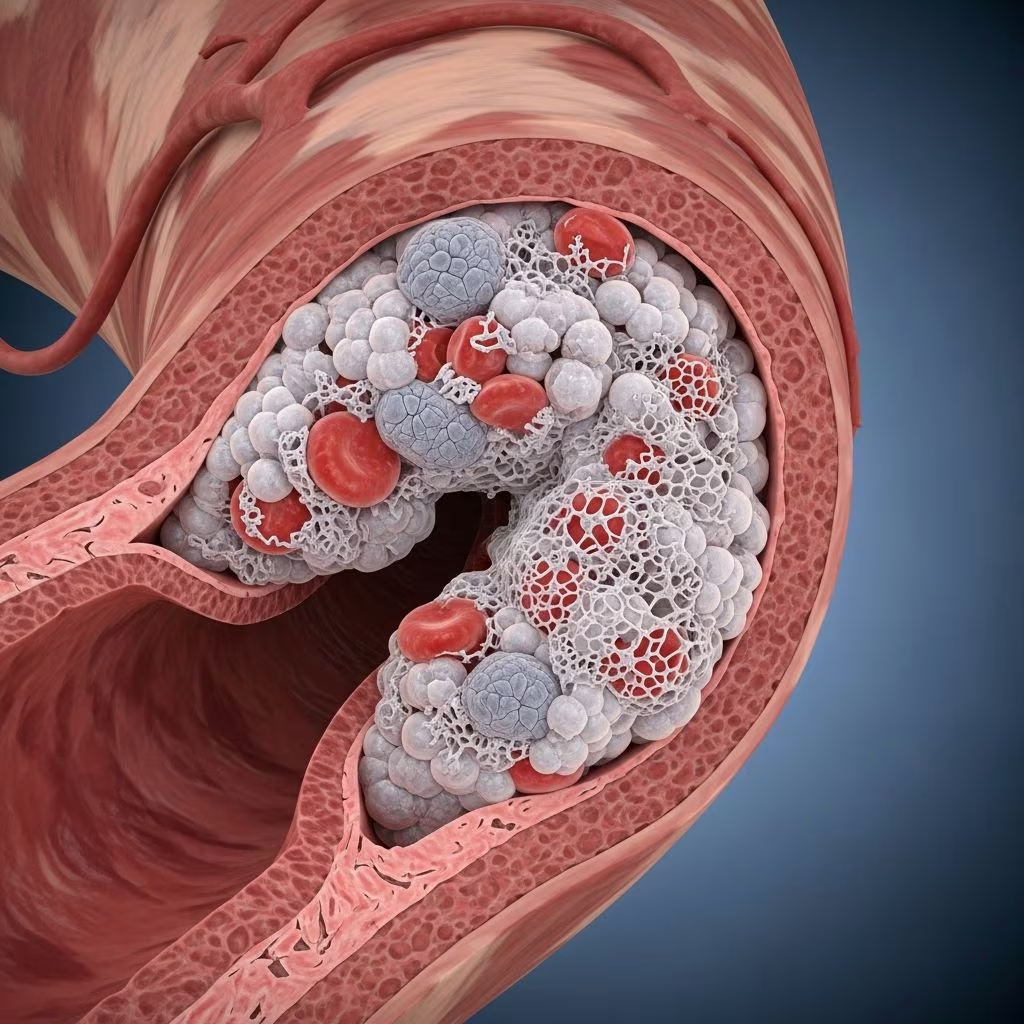
Pathological thrombosis refers to the abnormal formation of blood clots within blood vessels, disrupting normal circulation and potentially leading to severe complications or death in animals. This condition arises from disruptions in the delicate balance of hemostasis, often triggered by underlying diseases that promote a hypercoagulable state.
Understanding the Mechanisms of Thrombosis
Thrombosis occurs when blood clots form inappropriately inside vessels, obstructing blood flow. This process is governed by Virchow’s triad: endothelial injury, blood stasis, and hypercoagulability. In animals, systemic inflammation, endotoxemia, cancer, hormonal imbalances like hyperadrenocorticism, immune-mediated hemolytic anemia (IMHA), and antithrombin deficiencies from protein-losing conditions are common culprits.
Clots can develop in arteries or veins, with species differences in prevalence. Large animals like horses and cattle more frequently experience venous thrombi, while dogs and cats often face arterial issues. For instance, aortic-iliac thrombosis affects performance horses, and cranial vena cava clots occur in dogs.
Risk Factors Across Species
Certain diseases significantly elevate thrombosis risk. In dogs, IMHA, protein-losing nephropathy (PLN), protein-losing enteropathy (PLE), and heartworm disease stand out. Cats with cardiomyopathy are particularly vulnerable, especially when combined with other factors.
- Dogs: PLN and neoplasia frequently lead to arterial clots; idiopathic cases also occur. Studies show dogs with PLN have reduced antithrombin activity (64% vs. 82% in non-PLN cases).
- Cats: Cardiomyopathy drives arterial thromboembolism, often presenting acutely.
- Horses and Cattle: Venous thrombosis links to infections like rumenitis in cattle, causing hepatic abscesses that infiltrate vessels.
- Multi-factorial Risks: Over half of aortic thrombosis (ATh) cases in dogs involve comorbidities like infections (endocarditis, sepsis) or multiple hypercoagulable states.
Hypercoagulability in IMHA likely stems from neutrophil extracellular traps, monocyte tissue factor expression, and damage-associated molecular patterns from hypoxic injury.
Species-Specific Clinical Presentations
In Dogs
Dogs with ATh often show pelvic limb weakness or paralysis. A retrospective study of 100 dogs classified 27% as acute, 72% chronic, with 35% nonambulatory at diagnosis. Signs include sudden collapse, pain, or gradual lameness.
Pulmonary thromboembolism (PTE) from heartworm causes dyspnea, coughing, hemoptysis, or sudden death, often post-adulticide treatment.
In Cats
Cats typically present with acute arterial thromboembolism from cardiomyopathy, leading to saddle thrombus—a classic “painful, pale, pulseless, paralyzed” hindlimb syndrome.
In Large Animals
Cattle develop caudal vena cava thrombi from rumenitis-associated liver abscesses, visible in hepatic, perirenal, or thoracic segments. Horses suffer jugular vein thrombosis from catheterization or trauma, with swelling and edema.
Diagnostic Approaches
Diagnosis relies on clinical suspicion, imaging, and lab tests. Ultrasonography confirms ATh in most cases (91/100 dogs).
| Diagnostic Tool | Application | Species |
|---|---|---|
| Thoracic Radiography | Detects PTE: underperfusion, infiltrates, pleural effusion, arterial tortuosity | Dogs, Cats |
| Arterial Blood Gas | Hypoxemia with normal/low PaCO2 | Dogs, Cats |
| CT Angiography/VQ Scan | Confirms PTE | Dogs, Cats |
| Ultrasonography | Visualizes thrombi in vessels | All |
| Coagulation Panels | Assesses antithrombin, hypercoagulability | Dogs |
Necropsy provides postmortem confirmation.
Treatment Strategies
Treatment targets underlying causes and clot management, with supportive care central.
Supportive and Medical Therapies
- Anticoagulants: Heparin, low-molecular-weight options for prophylaxis in high-risk cases like IMHA/PLN.
- Anti-inflammatories/Antimicrobials: For secondary infections in large animals.
- Hydrotherapy: Aids venous resolution in horses.
Thrombolytic Interventions
Thrombolytics like r-tPA (0.5–1 mg/kg IV over 60-90 min) show variable success in canine arterial thrombosis. In 12/100 ATh dogs, combined with thrombectomy in 9; prior reports note limited efficacy.
Surgical thrombectomy or vein ligation succeeds in equine jugular cases if unilateral.
Prognosis Insights
Overall poor: 57% of hospitalized ATh dogs discharged, but only 16/57 alive at 180 days. Ambulatory status predicts survival (P<0.001). Nonambulatory dogs fare worse.
Prevention in High-Risk Animals
Thromboprophylaxis is recommended for IMHA/PLN dogs using evidence-based anticoagulants. Manage comorbidities aggressively: treat infections, control endocrinopathies, monitor heartworm.
FAQs
What causes thrombosis in dogs with IMHA?
Multifactorial: neutrophil traps, tissue factor, cytokines from anemia-induced hypoxia.
Is aortic thrombosis curable in dogs?
Prognosis guarded; ambulation at presentation key to discharge survival.
How is PTE diagnosed in cats?
Radiography, blood gas, CT angiography confirm after suspecting cardiomyopathy.
Can horses recover from jugular thrombosis?
Yes, with medical management; surgery if severe.
What is the role of PLN in thrombosis?
Lowers antithrombin, promoting hypercoagulability.
References
- Thrombosis, Embolism, Aneurysm, and Dissection in Animals — MSD Veterinary Manual. 2023. https://www.msdvetmanual.com/circulatory-system/thrombosis-embolism-aneurysm-and-dissection/thrombosis-embolism-aneurysm-and-dissection-in-animals
- Outcome and treatments of dogs with aortic thrombosis — PMC – NIH. 2020-09-29. https://pmc.ncbi.nlm.nih.gov/articles/PMC7517508/
- Thrombosis — eClinpath (Cornell University). Accessed 2026. https://eclinpath.com/hemostasis/disorders/thrombosis/
- DIC and Thrombosis — Cornell University College of Veterinary Medicine. Accessed 2026. https://www.vet.cornell.edu/animal-health-diagnostic-center/laboratories/comparative-coagulation/clinical-topics/dic-and-thrombosis
- Thrombotic Disorders — Wiley Online Library (Schalm’s Veterinary Hematology). 2023. https://onlinelibrary.wiley.com/doi/abs/10.1002/9781119500537.ch91



