

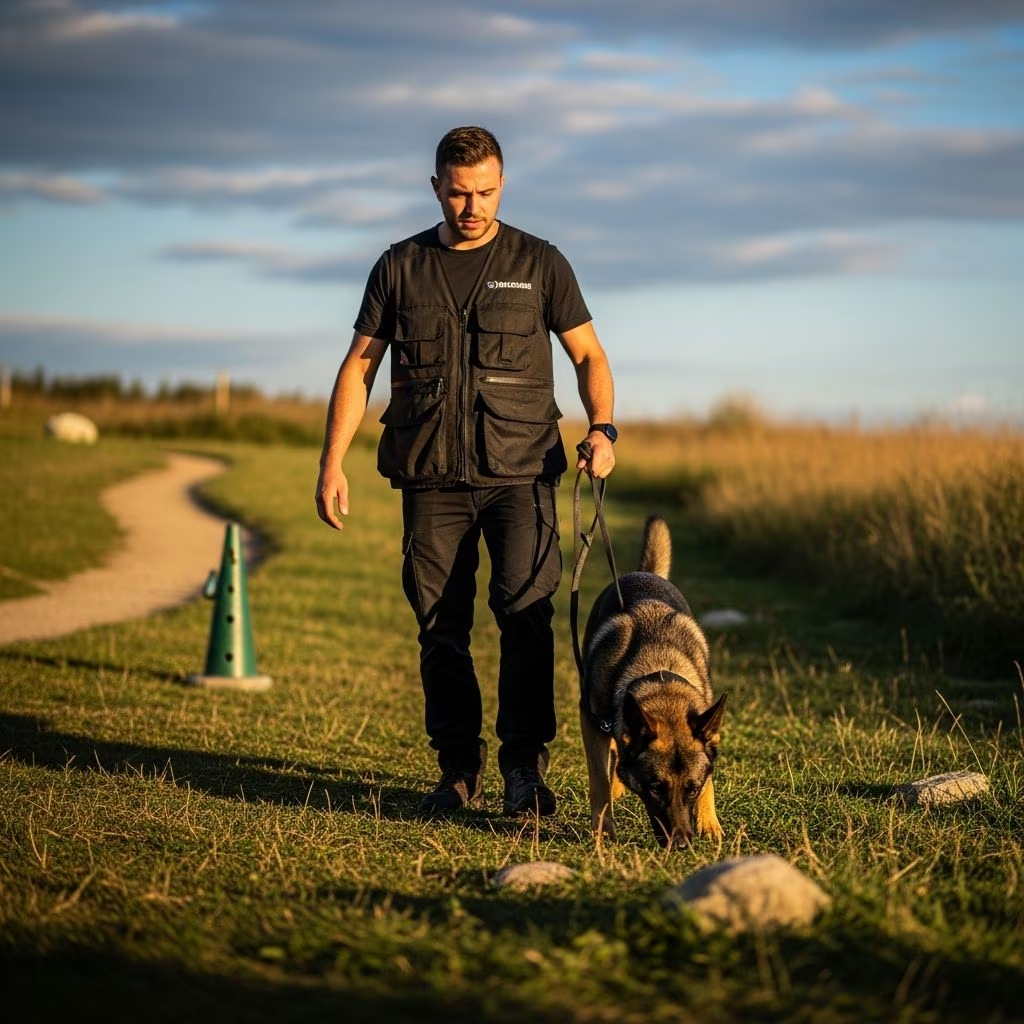
Detection dog handlers partner with specially trained canines to identify hidden threats using the dog’s superior sense of smell, serving in critical roles across law enforcement, agriculture, and conservation.
Understanding the Detection Dog Handler Role
Detection dog handlers guide their canine partners through searches in high-stakes environments like airports, borders, and cargo facilities, interpreting subtle behavioral cues to pinpoint contraband, explosives, pests, or invasive species. These professionals ensure the dog’s welfare, maintain peak performance through ongoing training, and document findings for law enforcement or regulatory actions.
Unlike general pet trainers, handlers focus on precision scent work, where dogs with up to 40 times more olfactory receptors than humans excel at tasks impossible for technology alone. Daily duties include leading searches, providing care such as grooming and exercise, and confronting suspects when alerts are given.
Core Responsibilities and Daily Challenges
Handlers conduct thorough inspections of baggage, vehicles, and parcels, relying on their dog’s alert—often a sit, paw, or bark—to signal a find. They must read canine body language accurately under pressure, write detailed reports, and ensure compliance with safety protocols.
- Directing the dog during live searches in varied settings.
- Interpreting alerts and communicating results to teams.
- Maintaining the dog’s health, including diet, vet care, and mental stimulation.
- Participating in mock scenarios to sharpen skills.
- Handling irregular hours, travel, and high-stress confrontations.
Challenges include building unbreakable bonds, adapting to the dog’s unique personality, and sustaining motivation amid repetitive drills. Success demands physical fitness, as handlers often work in demanding conditions.
Essential Qualities for Aspiring Handlers
Passion for dogs forms the foundation, paired with patience for months of repetition and positive reinforcement techniques. Strong communication interprets canine signals without overwhelming the animal, while physical stamina supports extended fieldwork.
Key traits include:
- Empathy to match training to the dog’s pace and motivators, like toys or treats.
- Resilience for handling false alerts or training setbacks.
- Analytical skills to refine search patterns based on environmental factors.
- Commitment to the dog’s lifelong care, even post-retirement.
Handlers must thrive in team environments, often within police K9 units or federal agencies.
Educational Pathways and Prerequisites
While not always mandatory, a degree in criminal justice, animal science, or biology boosts employability, providing foundational knowledge in laws, ethics, and biology. Police academy training, lasting about six months, covers essential skills like self-defense and regulations for law enforcement paths.
| Pathway | Duration | Focus Areas |
|---|---|---|
| Criminal Justice Degree | 2-4 years | Law, forensics, ethics |
| Police Academy | 6 months | Firearms, CPR, physical tests |
| Detection-Specific Programs | 6-13 weeks | Scent imprinting, bonding |
Programs like those from the National Detector Dog Training Center emphasize handler-dog bonding over 13 weeks. No prior experience is needed for some specialized courses.
Step-by-Step Career Progression
Entering this field requires structured advancement:
- Gain Initial Experience: Join law enforcement or volunteer with animal agencies to build dog-handling exposure.
- Complete Foundational Training: Finish police academy or equivalent for operational readiness.
- Apply to Specialized Units: Pass interviews, medical exams, and dog-matching assessments for K9 roles.
- Undergo Handler Certification: Master search techniques, behavior reading, and alerts in 10-13 week programs.
- Excel in Evaluations: Succeed in timed mock searches proving team proficiency.
Post-certification, ongoing education via workshops ensures adaptability to new threats.
Training a Detection Dog: Methods and Timeline
Training imprints scents—drugs, explosives, or pests—using positive reinforcement: introduce odor, hide it, reward alerts. Sessions use simple boxes or advanced tools like remote toy dispensers, progressing to real-world simulations.
Dogs typically achieve proficiency in 6-9 months, with handlers focusing on welfare to prevent burnout. Federal programs build trust through intensive pairing.
Career Opportunities Across Sectors
Beyond police K9s detecting narcotics and bombs, handlers protect agriculture via USDA’s detector dogs targeting pests at ports. Conservation roles sniff out invasives, while private sectors cover bed bugs or medical scents.
- Law Enforcement: Airports, borders (ATF 10-week explosives focus).
- Agriculture: USDA pest interdiction.
- Competitions: AKC Scent Work with essential oils.
Salaries vary; law enforcement handlers often earn competitively with benefits.
Building the Handler-Dog Bond
The partnership is symbiotic: handlers learn the dog’s baselines, while dogs gain confidence. Daily care fosters loyalty, crucial for reliable alerts. Tips include consistent routines and play-based motivation.
Overcoming Common Hurdles
New handlers face bonding delays or environmental distractions; solutions involve incremental exposure and data tracking. Physical demands require fitness regimes, and emotional toll from high-pressure scenarios calls for support networks.
Future Trends in Detection Work
Advancements include training for emerging threats like novel explosives or diseases, with tech aiding scent analysis. Hybrid roles blend detection with conservation, expanding opportunities.
Frequently Asked Questions
What breeds make the best detection dogs?
High-energy breeds like Labrador Retrievers, German Shepherds, and Beagles excel due to drive and scent ability.
How long does certification take?
Typically 10-13 weeks, plus prior experience.
Do handlers take their dogs home?
Yes, in most law enforcement roles, for 24/7 bonding.
Is prior dog experience required?
Not always; programs teach from basics.
What if the dog retires?
Handlers often adopt them.
References
- How To Become A Detection Dog Trainer — International Dog Trainer School. 2023. https://internationaldogtrainerschool.com/how-to-become-a-detection-dog-trainer/
- How To Become a Dog Handler (for Contraband Detection) — Indeed. 2024-01-15. https://www.indeed.com/career-advice/finding-a-job/how-to-become-a-dog-handler
- Detector Dogs — USDA APHIS. 2025-06-10. https://www.aphis.usda.gov/plant-protection-quarantine/detector-dogs
- How I Became a Conservation Detection Dog Handler — K9 Conservationists. 2023. https://k9conservationists.org/how-i-became-a-conservation-detection-dog-handler/
- Special Agent Canine Handlers — ATF. 2024-09-20. https://www.atf.gov/careers/special-agent-canine-handlers



