SAR Dog Handler: A Complete Guide to Training and Certification
Discover the rewarding journey of training and certifying your dog as a search and rescue hero, from essential skills to deployment readiness.
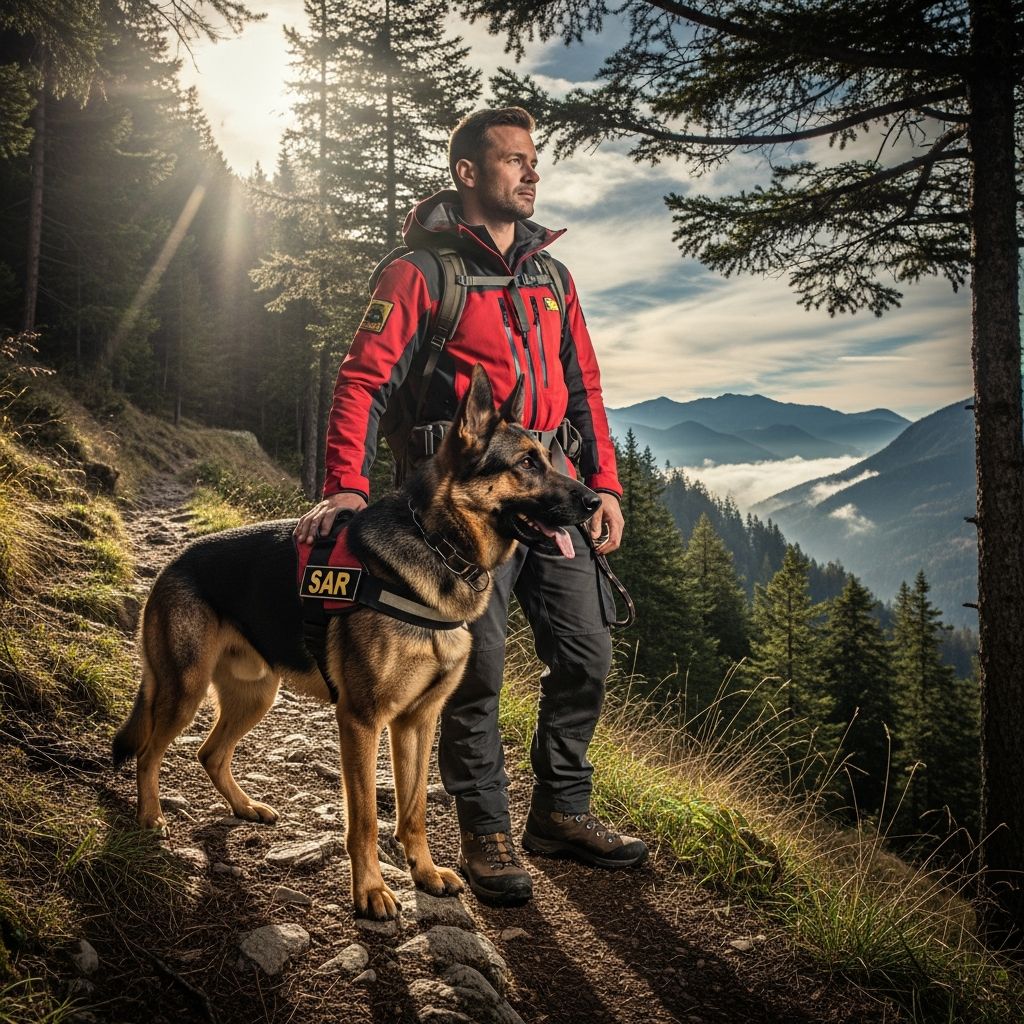
Path to Becoming a SAR Dog Handler
Becoming a search and rescue (SAR) dog handler involves a profound commitment to training both yourself and your canine partner to locate missing persons in diverse and challenging environments. This role demands physical endurance, technical knowledge, and an unbreakable bond with your dog, ultimately enabling you to contribute to life-saving operations.
Understanding the Role of a SAR Dog Handler
SAR dog handlers work alongside emergency response teams, deploying their trained dogs to detect human scent in scenarios like wilderness searches, disaster rubble, or urban disasters. Handlers must interpret their dog’s alerts accurately while navigating hazardous terrains and coordinating with incident command structures. The partnership requires handlers to possess strong observational skills to read canine body language and adapt to unpredictable conditions.
Success in this field hinges on the handler’s ability to maintain composure under pressure, as operations often occur in adverse weather, rugged landscapes, or collapsed structures. Handlers also educate communities on prevention and participate in drills to ensure readiness.
Essential Qualities for Aspiring Handlers
To thrive as a SAR dog handler, individuals need resilience, patience, and a passion for canine behavior. Physical fitness is crucial, as teams must traverse difficult terrain for extended periods, sometimes up to eight hours continuously. Mental fortitude helps manage the emotional toll of real-world searches, where outcomes can vary.
- Physical stamina: Ability to hike, climb, and run in varied weather.
- Observational skills: Expertise in dog body language and scent dynamics.
- Problem-solving: Adapting training when environmental factors shift.
- Communication: Clear reporting to search managers and team members.
These traits develop through consistent practice and mentorship, making the path accessible to dedicated beginners.
Selecting the Ideal Canine Partner
Choosing a dog for SAR work starts with breeds exhibiting high drive, athleticism, and scenting ability, such as Labrador Retrievers, Golden Retrievers, Border Collies, and Belgian Malinois. These dogs thrive on independent work and possess exceptional olfactory systems that require specialized honing.
Acquire dogs from shelters or breed rescues, as they often possess the innate qualities needed without prior professional training. Avoid starting with dogs older than three years unless they have foundational obedience and a solid handler bond, since full certification typically takes one to two years. Puppies benefit from early socialization to build environmental stability and confidence.
| Breed | Key Strengths | SAR Discipline Suitability |
|---|---|---|
| Labrador Retriever | Drive, focus, water rescue aptitude | Wilderness, water, disaster |
| Border Collie | High energy, intelligence | Trailing, area search |
| Belgian Malinois | Athleticism, endurance | Urban, HRD |
| Golden Retriever | Calm demeanor, scenting | Live find, cadaver |
Building Foundational Human Skills
Before focusing on the dog, handlers must complete personal certifications. Organizations like the National Association for Search and Rescue (NASAR) require SARTECH II certification, covering ground search fundamentals, navigation, and incident management. Additional prerequisites include CPR/First Aid, NIMS courses, HAZMAT awareness, and backcountry survival training.
Volunteer with local SAR teams to gain experience as a ground searcher, ensuring you understand operational protocols before advancing to K9 handling. This step verifies your suitability for the demands of fieldwork.
Core Training Components for Your Dog
SAR training spans 600+ hours over one to two years, emphasizing weekly sessions in realistic conditions. Begin with puppies on socialization and basic obedience like reliable recall and stays, progressing to discipline-specific skills.
Obedience and Behavior Assessment
All dogs must pass a Behavior, Obedience, and Agility (BOA) test for off-leash reliability, demonstrating control in public settings. Obedience ensures safety for the dog, handler, and bystanders during deployments.
Agility and Physical Conditioning
Dogs train to jump, climb, and navigate obstacles, preventing injuries like musculoskeletal strains. Fitness routines build endurance for prolonged searches.
Search-Specific Drills
For live-find roles, introduce playful searches with hidden subjects. Human Remains Detection (HRD) involves odor imprinting. Gradually increase complexity with distractions, weather variations, and terrains to simulate real missions.
Handlers learn scent plume theory—how odors disperse—and missing person behaviors to design authentic scenarios.
Certification Pathways and Standards
Certification validates team proficiency through rigorous evaluations. NASAR offers tests for canines over 12 months, requiring handler SARTECH II completion. Other bodies like the International Police Work Dog Association or state programs set similar benchmarks.
Programs like the National Disaster Search Dog Foundation pair dogs with handlers post-8-10 months of professional training, followed by a year toward FEMA certification. Post-certification, weekly rubble drills maintain skills.
- Complete handler prerequisites.
- Achieve BOA clearance.
- Master basic searches.
- Pass discipline-specific evaluations.
- Obtain operational certification.
Finding Mentorship and Joining Teams
Owner-trained dogs demand mentorship; no shortcut classes exist. Join local SAR groups for guidance, as teams train collectively. Expect 24/7 commitment once partnered, with dogs living alongside handlers for bond strengthening.
Discipline Variations in SAR Work
- Wilderness Search: Trailing scents over vast areas.
HRD: Locating remains via cadaver scent. - Urban/Disaster: Rubble navigation for live victims.
- Water Rescue: Detecting submerged individuals.
Training tailors to these, with crossover possible for versatile teams.
Challenges and Realistic Expectations
Training occurs outdoors in all conditions, testing handler endurance during long summer sessions. Only committed pairs succeed, as dogs retire around 8-9 years after peak service. Emotional resilience aids in handling non-finds or traumatic scenes.
Deployment and Lifelong Maintenance
Certified teams deploy via agencies, maintaining proficiency through ongoing practice. Bonds formed enable instinctive teamwork, turning ordinary dogs into elite rescuers.
Frequently Asked Questions (FAQs)
What breeds make the best SAR dogs?
High-drive breeds like Labs, Goldens, Collies, and Malinois excel due to their energy, focus, and scenting prowess.
How long does training take?
Typically 1-2 years of intensive weekly sessions to reach certification.
Can I send my dog away for training?
No, SAR dogs are owner-trained with mentorship; professional programs pair ready dogs.
What certifications do handlers need?
NASAR SARTECH II, First Aid, NIMS, and HAZMAT at minimum.
Is prior dog training experience required?
Not always, but foundational knowledge accelerates progress; mentorship fills gaps.
References
- How To Become A Search And Rescue Dog Trainer — International Dog Trainer School. 2023. https://internationaldogtrainerschool.com/how-to-become-a-search-and-rescue-dog-trainer/
- Requirements for SAR Dog Candidates — MESARD. 2024. https://mesard.org/requirements-for-sar-dog-candidates/
- Canine Training Program — National Disaster Search Dog Foundation. 2025-01-15. https://www.searchdogfoundation.org/canine-training-program/
- Canine SAR Certification — NASAR. 2024. https://nasar.org/page/K9SAR
- K9 Training — Virginia Search and Rescue Dog Association. 2023. https://www.vsrda.org/k9-training
- Information for Becoming a K9 SAR Team — SAR Dogs US. 2024. https://sardogsus.org/resources/
- How to be a SAR K9 Handler — Allied Medical Training. 2023-06-01. https://alliedmedtraining.com/how-to-be-a-sar-k9-handler/
Similar Articles





Read full bio of Sneha Tete