

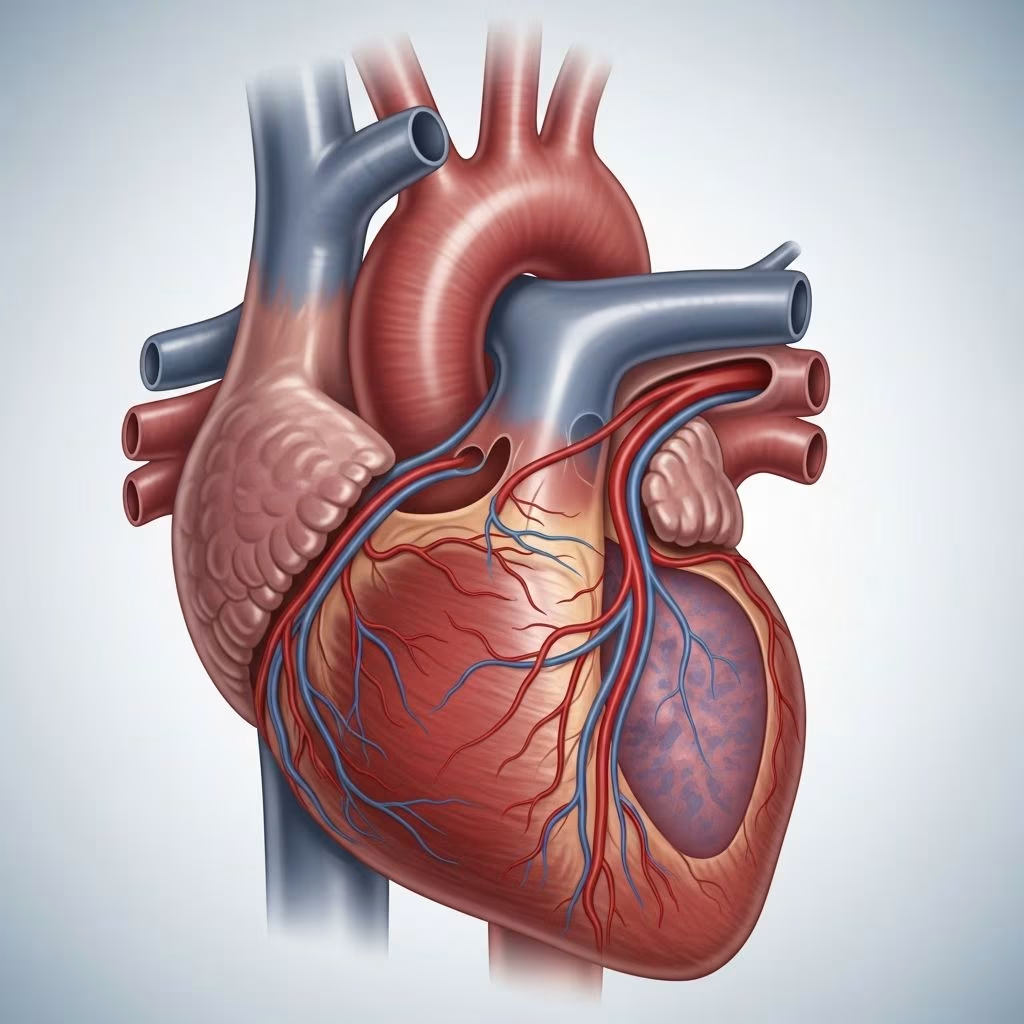
Patent ductus arteriosus (PDA) ranks as the most frequent congenital heart anomaly in dogs, arising when a fetal blood vessel fails to seal after birth. This persistent opening between the aorta and pulmonary artery disrupts normal circulation, potentially leading to heart enlargement and failure if untreated. Early intervention through surgery can fully resolve the issue, offering puppies a normal lifespan.
The Role of the Ductus Arteriosus in Fetal Development
In unborn puppies, the heart features a vital temporary structure called the ductus arteriosus, a short vessel connecting the pulmonary artery to the aorta. This shunt diverts oxygen-rich blood from the placenta away from the non-functional lungs, ensuring the fetus receives adequate oxygenation.
At birth, the first breath triggers lung expansion and oxygen level changes, prompting the ductus to constrict and close within hours to days. Hormonal shifts and increased oxygen tension facilitate this process, redirecting all blood through the lungs for proper oxygenation. When closure fails, resulting in PDA, oxygenated blood recirculates unnecessarily to the lungs, overburdening the left heart chambers.
How PDA Alters Canine Heart Function
With PDA, higher pressure in the aorta forces blood back into the lower-pressure pulmonary artery during each heartbeat. This left-to-right shunt increases lung blood volume, causing the left atrium and ventricle to enlarge from volume overload.
Over time, chronic strain leads to left ventricular hypertrophy, where the heart muscle thickens to compensate. Untreated, this progresses to congestive heart failure, marked by fluid buildup in lungs and abdomen. In severe cases with large shunts, pulmonary hypertension develops, potentially reversing flow to a right-to-left shunt. This deprives systemic circulation of oxygen, causing cyanosis, exercise intolerance, and sudden collapse.
Recognizing Early Warning Signs in Puppies
PDA often manifests subtly in young dogs. The hallmark is a continuous ‘machinery’ murmur, loudest over the left heart base, detectable during routine exams as early as 6-8 weeks.
- Bounding pulses: Strong, hyperkinetic femoral pulses from diastolic runoff into the pulmonary artery.
- Exercise intolerance: Fatigue, coughing, or reluctance during play, signaling early heart strain.
- Failure to thrive: Poor weight gain, lethargy, or stunted growth in affected puppies.
- Respiratory distress: Rapid breathing or crackles from pulmonary edema in advanced stages.
- Cyanosis (rare early): Bluish gums or footpads if shunt reverses.
Pet owners might notice these during puppy wellness visits, where veterinarians auscultate murmurs prompting further investigation.
Breeds at Heightened Risk for PDA
While PDA affects all dogs, certain breeds show genetic predispositions due to hereditary factors. Miniature Poodles, German Shepherds, and Pomeranians face elevated risks, alongside Collies, Shetland Sheepdogs, English Springer Spaniels, and Labrador Retrievers.
Histological studies reveal ductus wall abnormalities, like hypoplastic smooth muscle and aorta-like elastic tissue, explaining persistence in predisposed lines. Females may be overrepresented, though environmental influences remain unclear.
| Breed | Relative Risk | Notes |
|---|---|---|
| Miniature Poodle | High | Hereditary lines studied extensively |
| German Shepherd | Moderate-High | Common in large breeds |
| Pomeranian | Moderate | Toy breeds affected |
| Collie | Moderate | Genetic screening advised |
| Malamute | Moderate | Large breed predisposition |
Diagnostic Approaches for Confirming PDA
Veterinarians start with physical exams, identifying the characteristic murmur and pulses. Radiographs reveal left heart and vessel enlargement, plus pulmonary overcirculation.
Echocardiography provides definitive diagnosis, visualizing the open ductus, assessing shunt size, direction, and cardiac dimensions via Doppler flow mapping. This ultrasound detects turbulence and measures pressures.
Electrocardiograms may show ventricular hypertrophy, while bloodwork rules out secondary issues. In ambiguous cases, advanced imaging like CT angiography aids planning.
Surgical and Interventional Treatment Options
PDA is uniquely curable among canine heart diseases via timely closure. Surgical ligation, traditionally via thoracotomy, ties off the ductus under general anesthesia, with success rates exceeding 95% in healthy puppies.
Minimally invasive alternatives include transcatheter occlusion using devices like Amplatzer canine ductal occluders, inserted via femoral artery. These suit small patients, reducing recovery time and complications.
- Ideal timing: Before 6 months, prior to heart failure.
- Post-op care: Chest tubes, pain management, activity restriction for 2-4 weeks.
- Complications (rare): Bleeding, recanalization (<5%), nerve damage causing laryngeal paralysis.
Medical management with pimobendan, ACE inhibitors, and diuretics controls symptoms in inoperable cases but doesn’t cure.
Prognosis and Long-Term Outlook After Treatment
Early surgical correction yields excellent results, with most dogs achieving normal lifespans sans medication. Murmurs resolve immediately post-ligation, hearts remodel within months.
Delayed intervention risks irreversible damage, reducing survival despite closure. Untreated PDAs lead to CHF within 1-2 years. Regular follow-ups monitor remodeling via echoes.
Preventive Strategies and Genetic Considerations
Breeding affected dogs perpetuates PDA; genetic testing and screening via cardiac auscultation/echoes in breeding programs mitigate risks. Owners of high-risk breeds should pursue puppy exams at 6-8 weeks.
Pet insurance covering congenital conditions aids affordability of diagnostics and surgery. Routine heart checks save lives.
Frequently Asked Questions (FAQs)
What causes PDA in dogs?
PDA stems from failure of the fetal ductus arteriosus to close post-birth, often with genetic underpinnings in predisposed breeds.
Can puppies outgrow PDA?
No, PDA does not spontaneously resolve and worsens without intervention.
Is PDA painful for dogs?
Dogs typically don’t show pain but suffer fatigue and breathing issues from heart strain.
How much does PDA surgery cost?
Costs range $2,500-$6,000 depending on method, location, and complications; insurance helps.
Can PDA occur in adult dogs?
Though congenital, diagnosis often happens in adulthood if mild, but prognosis declines.
Supporting Your Dog Through PDA Management
Beyond treatment, low-sodium diets, weight control, and avoiding stressors support heart health. Monitor for recurrence signs post-surgery.
Consult board-certified veterinary cardiologists for complex cases. With prompt action, PDA need not shorten a dog’s joyful life.
References
- Patent Ductus Arteriosus in Canines — County Line Veterinary Clinic. Accessed 2026. https://www.mycountylinevet.com/services/dogs/visiocare/patent-ductus-arteriosus-canines
- Patent Ductus Arteriosus (PDA) — UF Small Animal Hospital. Accessed 2026. https://smallanimal.vethospital.ufl.edu/clinical-services/orthopedic-surgery/patent-ductus-arteriosus-pda/
- Patent Ductus Arteriosus (PDA) Fact Sheet — Vet Specialists. Accessed 2026. https://www.vetspecialists.co.uk/fact-sheets-post/patent-ductus-arteriosus-pda-fact-sheet/
- Patent Ductus Arteriosus in Dogs — VCA Animal Hospitals. Accessed 2026. https://vcahospitals.com/know-your-pet/patent-ductus-arteriosus-in-dogs
- Etiology of patent ductus arteriosus in dogs — PubMed (NIH). 2003-04-01. https://pubmed.ncbi.nlm.nih.gov/12683616/
- Patent Ductus Arteriosus (PDA) in Dogs — VRCC. 2022-05-23. https://www.vrcc.com/site/blog/2022/05/23/patent-ductus-arteriosus-pda-dogs
- Cardiac Shunts in Animals — Merck Veterinary Manual. Accessed 2026. https://www.merckvetmanual.com/circulatory-system/congenital-and-inherited-anomalies-of-the-cardiovascular-system/cardiac-shunts-in-animals



