

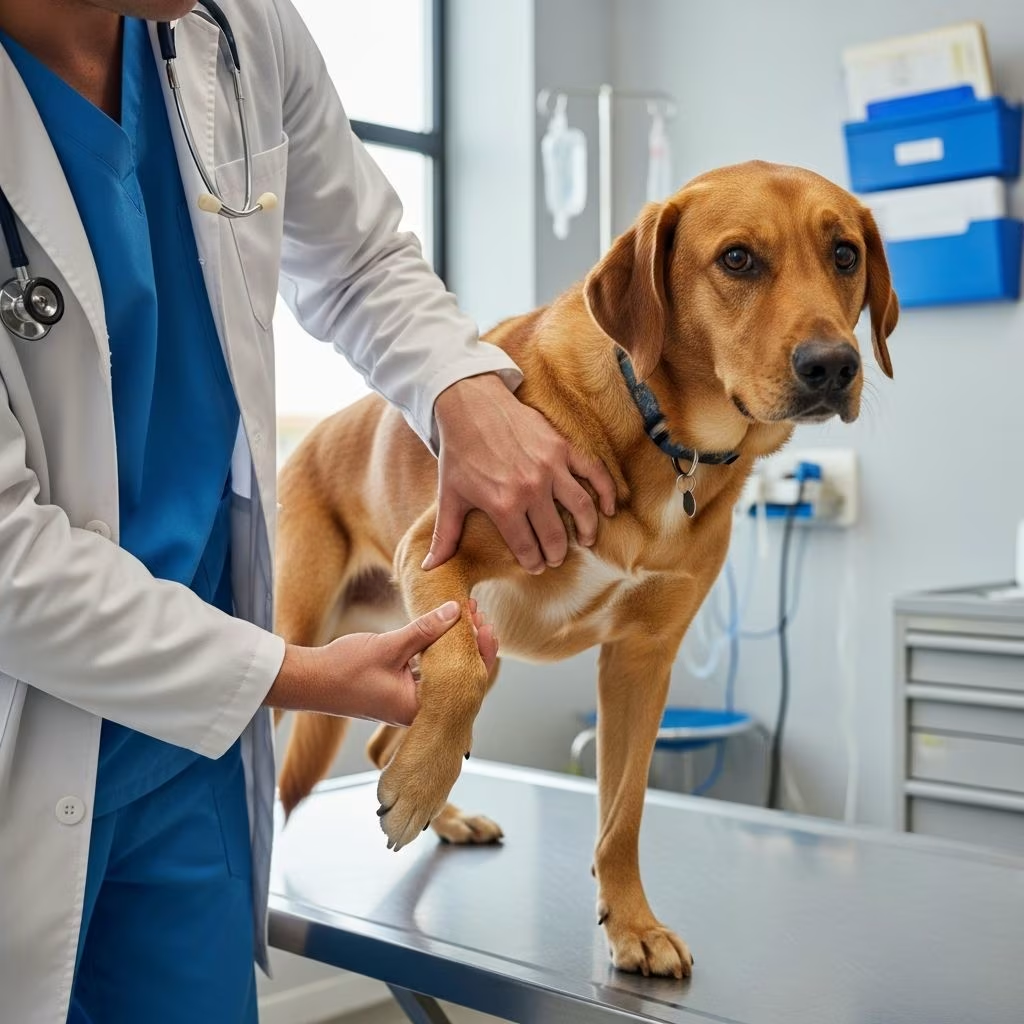
Patellar luxation, commonly referred to as a luxating or dislocating kneecap, stands as one of the most frequently encountered orthopedic conditions affecting canine companions. The condition occurs when the patella—the bone structure commonly known as the kneecap—shifts from its proper anatomical position within the groove of the thighbone. This displacement can cause significant discomfort and functional impairment in affected dogs, ranging from mild intermittent limping to severe, debilitating lameness that substantially impacts quality of life.
Defining the Condition: What Happens When the Kneecap Dislocates
At the foundation of understanding patellar luxation lies knowledge of normal knee anatomy and function. The patella is a specialized bone that sits within a groove called the trochlear groove, located at the end of the femur or thighbone. During normal movement, the kneecap glides smoothly along this groove as the knee joint flexes and extends, maintaining proper alignment and distributing forces evenly across the joint surfaces.
When a dog develops patellar luxation, this smooth gliding mechanism breaks down. The kneecap slips out of its groove—a process termed luxation in veterinary terminology. This displacement prevents the knee from functioning normally and creates abnormal stress on surrounding tissues. Over time, this repetitive abnormal movement can lead to cartilage damage, chronic inflammation, and the progressive development of arthritis within the joint.
Directional Classifications: Understanding Medial and Lateral Luxations
Veterinarians classify patellar luxations based on the direction in which the kneecap displaces. This distinction proves critical for treatment planning, as each type involves different anatomical abnormalities and requires distinct surgical approaches.
Medial Patellar Luxation (MPL) occurs when the kneecap shifts toward the inside of the leg, displacing toward the dog’s body centerline. This represents the most common form, occurring in approximately 75% of cases. Dogs with medial luxation often develop a characteristic “bow-legged” appearance, where the limbs angle inward from the body. The tissues on the inside of the knee become excessively tight while those on the outside become abnormally loose, contributing to the instability.
Lateral Patellar Luxation (LPL) occurs when the kneecap displaces outward, away from the dog’s center line. This variant accounts for approximately 25% of cases and tends to create a “knock-kneed” stance where the limbs angle inward at the knee while the paws point outward. While both small and large breeds can develop lateral luxation, larger dogs represent a greater proportion of LPL cases compared to their representation in MPL cases.
Breed Predisposition and Risk Factors
Patellar luxation demonstrates clear breed and demographic patterns. Small breed dogs bear significantly elevated risk, with breeds including Poodles, Pomeranians, and Chihuahuas showing particularly high prevalence. The condition affects small-breed dogs at rates 10 times higher than large-breed dogs. Despite being considered a congenital condition present from birth, luxating patella has been documented in approximately 7% of puppies.
Gender influences susceptibility, with females affected 1.5 times more frequently than males. This sex-linked predisposition suggests hormonal or genetic factors may contribute to anatomical variations that predispose female dogs to the condition.
The genetic basis of patellar luxation proves complex. Research indicates the condition involves at least 15 different chromosomal regions, meaning multiple genes contribute to the development of anatomical abnormalities that result in an unstable kneecap. This polygenic inheritance pattern explains why the condition appears across various breeds and why surgical correction in one generation does not prevent the condition in offspring.
The Severity Grading System: Assessing Functional Impact
Veterinarians employ a four-grade classification system to quantify the severity of patellar luxation and predict likely clinical progression. This system directly influences treatment recommendations and prognosis.
| Grade | Clinical Description | Characteristics | Treatment Approach |
|---|---|---|---|
| Grade I | Mild instability | Kneecap luxates only with manual pressure; returns to normal position spontaneously; minimal or no lameness observed | Conservative management; monitoring for progression |
| Grade II | Moderate intermittent luxation | Kneecap pops in and out periodically during normal activity; remains out until leg is fully extended and rotated; intermittent limping may occur | Surgery recommended if lameness develops |
| Grade III | Frequent luxation | Kneecap remains displaced most of the time but can be manually repositioned; noticeable lameness typically present | Surgery generally recommended |
| Grade IV | Permanent luxation | Kneecap permanently displaced and cannot be manually returned to groove; severe lameness; often accompanied by significant limb deformity | Surgery strongly indicated; may require aggressive techniques |
It is important to recognize that affected dogs may have different grades of severity in each rear leg. Approximately 50% of dogs with patellar luxation experience bilateral involvement, meaning both knees are affected. In these cases, each knee may demonstrate different severity grades.
Recognizing Clinical Signs and Symptoms
Dogs with patellar luxation present with varied clinical manifestations depending on severity. The primary and most observable sign involves altered gait patterns and limping. Dogs frequently exhibit what owners and veterinarians term a “skip”—a sudden, brief lifting of the affected hind limb during walking or running, followed by a return to normal weight-bearing after several steps. During these episodes, the dog may hold the leg close to the body or extend it backward unnaturally.
In mild to moderate cases, lameness often appears intermittent, occurring sporadically rather than consistently. Dogs may limp after activity or when cold but walk normally at other times. In more severe cases, lameness becomes constant and debilitating. Large dogs with Grade IV luxations frequently develop severely impaired mobility that substantially restricts their ability to exercise, climb stairs, or engage in normal physical activities.
The relationship between patellar luxation and pain remains complex. While abnormal joint mechanics and kneecap displacement clearly disrupt normal function, not all affected dogs demonstrate obvious pain behaviors. Some dogs with intermittent luxations may experience discomfort primarily during episodes of displacement, while those with chronic conditions may develop secondary pain from joint cartilage deterioration and arthritis.
Diagnostic Procedures: Confirming the Diagnosis
Veterinary diagnosis of patellar luxation begins with a detailed history and physical examination. During the orthopedic assessment, the veterinarian manipulates the rear leg while palpating the kneecap, attempting to move the patella from its normal position within the groove. This hands-on evaluation allows the veterinarian to confirm the direction and ease with which the kneecap luxates.
Many cases are discovered incidentally during routine wellness examinations when the veterinarian palpates a luxating patella in an otherwise asymptomatic dog. In other situations, a documented history of intermittent lameness or limping prompts the veterinarian to perform specific orthopedic examination maneuvers to assess the kneecap’s stability.
Radiographic imaging (X-rays) provides essential supplementary information, particularly when assessing the extent of the problem and detecting concurrent abnormalities. Radiographs reveal the alignment of the bones forming the knee joint, the depth and shape of the trochlear groove, and the position of the tibial tuberosity (the bony protrusion where the patellar ligament attaches to the tibia). These images also allow the veterinarian to detect secondary changes such as early arthritis development or unusual bone structure variations that contribute to luxation.
Anatomical Variations Contributing to Luxation
Patellar luxation rarely results from a single anatomical problem. Rather, multiple structural variations often combine to produce an unstable kneecap. Understanding these contributing factors helps explain why affected dogs develop the condition and why surgical correction requires addressing all abnormalities present.
The tibial tuberosity—the bony attachment point for the patellar ligament on the shinbone—frequently sits too far to the inside or outside of the leg’s centerline. This medial or lateral displacement of the tibial tuberosity prevents the ligament from pulling the kneecap in a straight line along the groove, instead causing the kneecap to track abnormally.
The supportive tissues surrounding the patella also contribute significantly. In dogs with medial luxation, the tissues on the inside of the knee become abnormally tight and those on the outside become abnormally loose, destabilizing the kneecap. Curvature of the femur or tibia represents another common variation, where abnormal bowing of the leg bones alters the alignment of the knee joint and contributes to patellar instability.
Additionally, the trochlear groove itself may be abnormally shallow, providing insufficient depth to maintain the kneecap’s normal position. When multiple anatomical variations coexist—which occurs in most cases—the combined effect produces significant instability.
Conservative Management Approaches for Mild Cases
Dogs with Grade I patellar luxation and those with mild symptoms but no documented lameness may be managed conservatively without immediate surgical intervention. This approach involves careful monitoring for progression and implementation of lifestyle modifications designed to minimize stress on the affected knee.
Weight management proves particularly important, as excess body weight increases stress through the knee joint and may accelerate cartilage deterioration. Maintaining an appropriate body condition score helps minimize joint loading during normal activities.
Activity modification involves limiting jumping, running on slippery surfaces, and other activities that place excessive stress on the rear legs. Some dogs benefit from physical therapy and controlled exercise protocols designed to strengthen the muscles supporting the knee, potentially improving stability and reducing symptoms.
Periodic follow-up examinations allow the veterinarian to monitor whether the luxation remains stable or progresses to a higher grade. If lameness develops or severity increases, surgical intervention becomes indicated.
Surgical Correction: Addressing the Underlying Problem
Surgery is recommended for dogs with Grade II, III, or IV patellar luxation accompanied by a documented history of lameness. The surgical approach depends on the direction and severity of luxation, with different techniques designed to address the specific anatomical abnormalities identified in each patient.
Realignment and Stabilization Procedures represent the primary surgical technique. In dogs with medial luxation, the veterinary surgeon releases excessively tight tissues on the inside of the knee while tightening or implicating tissues on the outside of the knee. The exact opposite procedure is performed in dogs with lateral luxation. These soft tissue adjustments help realign the kneecap and restore proper tracking through the groove.
The tibial tuberosity often requires relocation. The surgeon makes precise cuts in the bone (called osteotomies) and repositions this bony attachment point so that the patellar ligament pulls the kneecap in proper alignment. Bone plates and screws stabilize the repositioned bone while healing occurs.
Deepening the trochlear groove surgically increases the groove’s depth, providing a more secure pathway for the kneecap to glide through during knee movement. This technique helps maintain proper patellar positioning even when other anatomical abnormalities are present.
Aggressive Surgical Approaches become necessary in Grade IV cases, particularly in larger dogs. Beyond the standard procedures, the surgeon may need to straighten abnormally curved femurs or tibias through bone-cutting procedures. These corrective osteotomies create significant structural changes that require stabilization with bone plates and extensive healing time. These complex procedures demand exceptional surgical expertise and post-operative care.
Post-Operative Recovery and Rehabilitation
Following surgical correction of patellar luxation, dogs require carefully managed recovery periods and rehabilitation protocols. Initial post-operative care focuses on pain management and preventing excessive activity that might compromise surgical repairs. Gradual return to normal activity, guided by the veterinarian, typically occurs over several weeks.
Physical therapy and controlled exercise programs facilitate healing and help restore normal knee function. Strengthening exercises help rebuild muscular support around the knee joint, potentially improving long-term outcomes.
Prognosis and Long-Term Expectations
Most dogs undergoing appropriate surgical treatment for patellar luxation experience significant improvement in lameness and mobility. Success rates vary based on the severity of the condition and the complexity of corrections required, with most dogs returning to normal or near-normal function.
It is important to recognize that surgical correction of patellar luxation in one generation does not prevent the condition in offspring, as the genetic predisposition remains. Dogs treated surgically for patellar luxation should generally not be used for breeding purposes.
Frequently Asked Questions
Is patellar luxation painful?
Pain associated with patellar luxation varies. Mild cases with intermittent luxation may cause minimal discomfort, with lameness resulting primarily from abnormal joint mechanics. More severe cases, particularly those with chronic displacement and secondary arthritis development, often involve significant pain. Signs of chronic pain include frequent or constant lameness and reduced exercise tolerance.
Can patellar luxation be prevented?
Since patellar luxation involves inherited anatomical variations, prevention is not possible in genetically predisposed dogs. However, selecting dogs from parents without a history of patellar luxation and avoiding breeding affected dogs helps reduce incidence in future generations.
What is the cost of surgery for patellar luxation?
Surgical costs vary significantly based on geographical location, surgical complexity, and the specific techniques required. Grade IV cases requiring bone realignment procedures typically cost more than Grade II cases requiring simpler soft tissue adjustments. Pet insurance and financing options may help manage these expenses.
Can patellar luxation affect both rear legs?
Yes. Approximately 50% of dogs with patellar luxation have bilateral involvement, meaning both knees are affected. Each knee may demonstrate different severity grades, requiring individualized treatment approaches.
References
- Patellar Luxation — Nashville Veterinary Specialists. 2024. https://www.nashvillevetspecialists.com/patellar-luxation
- Luxating Patella in Dogs: What Is It, and How Is It Treated? — PetMD. 2024. https://www.petmd.com/dog/conditions/musculoskeletal/luxating-patella-in-dogs
- Luxating Patella in Dogs — VCA Animal Hospitals. 2024. https://vcahospitals.com/know-your-pet/luxating-patella-in-dogs
- Pet Patellar Luxation In Toledo, OH 43617 — West Suburban Animal Hospital. 2024. https://westsuburbananimalhospital.com/pet-patellar-luxation-toledo-oh/
- Patellar Luxation in Dogs — VetLessons. 2024. https://www.vetlessons.com/patella
- Patellar Luxation in Dogs — American College of Veterinary Surgeons. 2024. https://www.acvs.org/small-animal/patellar-luxations/
- Patellar luxation in dogs — PubMed Central / NIH. 2018. https://pmc.ncbi.nlm.nih.gov/articles/PMC6055913/



