
Parrotlet Species: Care Guide & Personality
Complete guide to parrotlet care, behavior, and characteristics for pet bird owners.
Introduction to Parrotlets
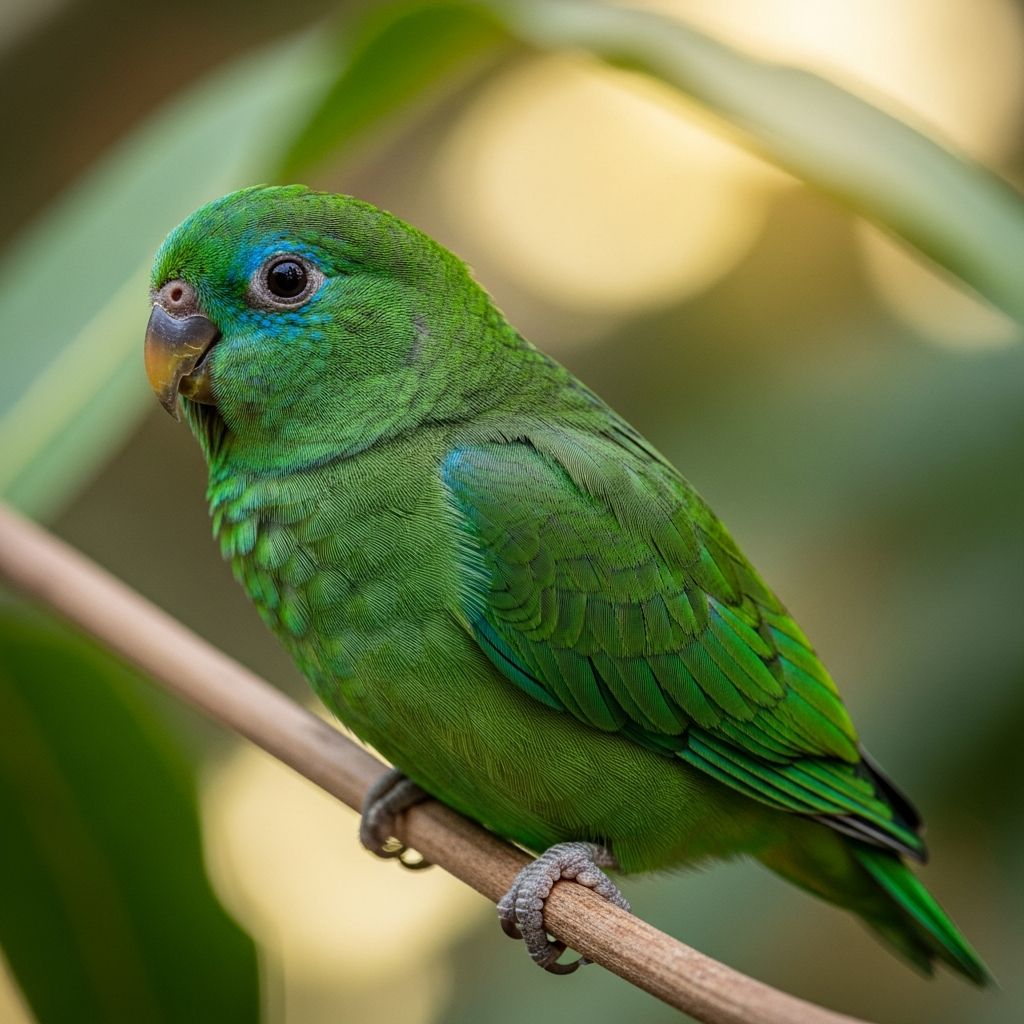
Parrotlets are among the smallest species of parrots, yet they possess remarkably large personalities that belie their diminutive size. These fascinating birds, native to Mexico, Central America, and South America, have captured the hearts of bird enthusiasts worldwide. Often called “pocket parrots” due to their compact frame, parrotlets pack the intelligence, curiosity, and spirited nature of much larger parrot species into a body measuring just 4 to 5 inches tall. Their striking plumage, combined with their playful and fearless demeanor, makes them popular choices for pet owners seeking a manageable yet engaging avian companion.
Parrotlet Species Overview
While numerous parrotlet species exist throughout the Americas, only a few are commonly kept as pets. The two most popular species are the Pacific parrotlet and the green-rumped parrotlet, each with distinct characteristics and care requirements.
Pacific Parrotlet
The Pacific parrotlet is especially popular among bird enthusiasts and represents the nominate species in captivity. These birds are native to Mexico and Central and South America, where they inhabit diverse environments ranging from lowland forests to shrublands. Pacific parrotlets display clear sexual dimorphism, making it easy to distinguish males from females. Males are predominantly green with striking blue markings on their wings, behind their eyes, and on their rumps, while females lack these blue colorations and display more uniform green plumage. Males are also noted as better talkers than females, though neither sex is particularly vocal compared to larger parrot species.
Green-Rumped Parrotlet
The green-rumped parrotlet is smaller than its Pacific cousin and tends to be somewhat shyer and less active. As their name suggests, males have distinctive dark blue primary wing feathers with turquoise secondary feathers, while females display a patch of yellow feathers between their eyes above their beaks. Unlike other parrotlet species, green-rumped parrotlets do not have blue coloration on their backs, making them visually distinctive.
Physical Characteristics and Appearance
Parrotlets possess distinctive physical features that set them apart from other small parrot species. They have stocky, compact bodies with short, broad tails that give them a sturdy appearance resembling miniature Amazons. Their size is remarkably small, comparable to lovebirds, yet they maintain powerful, strong beaks that are disproportionately forceful for their body size.
Plumage and Color Variations
The nominate color across parrotlet species is various shades of green, which provides excellent camouflage in their natural forest and grassland habitats. However, parrotlets come in numerous color mutations, particularly the Pacific parrotlet, which exhibits blue, yellow, lutino, fallow, darker green, pastel, isabel (cinnamon), albino, and white varieties. These color mutations are said to be more easy-going than the nominate green coloration, though they may be less hardy, possibly due to inbreeding practices.
Structural Features
All parrotlet species possess four-toed zygodactyl feet, with two toes pointing forward and two pointing backward. This specialized foot structure helps them maintain a secure grip on branches and perches. Their wing movement is also unique; they flap their wings in small whirlpool-like movements that conserve energy and allow them to focus more energy on foraging activities.
Temperament and Personality
Parrotlets are renowned for their outsized personalities that seem incongruous with their tiny bodies. These birds are intelligent, curious, feisty, fearless, and playful, displaying the temperament of a large parrot confined within a small body. They enjoy interacting with humans and form strong bonds with their owners when properly socialized.
Behavioral Traits
Parrotlets can be affectionate and cuddly with their caretakers, yet they possess a notable willful streak that requires experienced handling. They are sometimes aggressive, and their bite is surprisingly powerful—much stronger than that of a budgie. Pet owners should never underestimate the force of a parrotlet’s bite despite the bird’s diminutive size. These birds do not realize they are small and often behave as though they could best larger pets, which creates a significant safety concern. Supervision is essential whenever a parrotlet is outside its cage, particularly around dogs, cats, and small children.
Social Behavior in Captivity
Unlike many parrot species, parrotlets demonstrate surprising antisocial tendencies toward other birds, even their own species. While wild parrotlets are highly gregarious, forming flocks of dozens or even up to 100 birds, they prefer solitude in captive environments. Mated pairs of parrotlets have been known to fight to the death in small enclosures, and they do not reproduce as readily in captivity as other small parrots like parakeets. If an owner desires a strong bond with their parrotlet, keeping only one bird is essential, as paired parrotlets will bond exclusively to each other, excluding their human caretaker.
Communication and Vocalization
Parrotlets are known for their soft, quiet voices compared to larger parrot species. While individual birds speak softly, they are not known to be excellent talkers. Most parrotlets learn only about 10 words throughout their lives, with males generally achieving better speech development than females. In the wild, parrotlets make noise during flight, yet their individual vocalizations remain relatively subdued.
Natural Habitat and Distribution
Parrotlets are exclusively found in the Americas, with their range extending from Mexico through Central and South America. Their natural habitats are diverse, encompassing lowland forests, tropical and subtropical forests, savannas, riverine forests, scrublands, pastures, gallery forests, palm groves, and even desert regions. This adaptability to various environments reflects their resilience and ability to thrive in both dry and moist conditions.
Wild Behavior and Diet
In their native habitats, wild parrotlets are primarily active during early mornings and evenings. Their diet consists mainly of grass seeds, leaf buds, flower blossoms, berries, and other small fruits. They forage actively throughout their territories, and their energy-efficient wing movement allows them to maximize foraging time and enhance survival rates.
Reproduction and Breeding
Most parrotlet species mate for life and breed seasonally during the rainy season. In the wild, they nest in tree or cactus cavities and may appropriate abandoned nests of other bird species. Females lay between three and seven small white eggs, typically one egg every day or every other day. The female incubates the eggs exclusively, though the male provides food for both her and the chicks once they hatch. Males display clear sexual dimorphism by the first moult, with characteristic blue markings appearing on their rumps and behind their eyes in species where this coloration is present.
Parrotlet vs. Parakeet Comparison
| Characteristic | Parrotlet | Parakeet |
|---|---|---|
| Tail Length | Short and blunt | Longer and more pronounced |
| Body Build | Stockier and more compact | Sleeker and more delicate |
| Personality | Aggressive, ready to bite | Playful and affectionate |
| Social Compatibility | Prefer solitude; fight with conspecifics | Gregarious and social |
| Reproductive Success | Lower in captivity | Higher in captivity |
Suitability as Pet Birds
While parrotlets’ small size may seem ideal for children, they are not recommended as children’s pets. Their temperamental and feisty nature combined with their powerful bite makes them better suited for experienced bird owners or adults who can handle their spirited personalities appropriately. The Pacific parrotlet, in particular, can become aggressive if left without regular handling for extended periods, despite its diminutive stature.
Natural Predators
In their wild habitats, parrotlets face predation from several sources. Birds of prey, including hawks and eagles, pose significant threats from the air. On the ground and in trees, they must contend with big cats, bats, monkeys, and snakes. Their green coloration serves as effective camouflage against forest backgrounds, helping them evade these predators.
Frequently Asked Questions About Parrotlets
Q: How long do parrotlets live as pets?
A: Parrotlets have a long lifespan relative to their size, making them long-term companions for dedicated bird owners. Their striking colors, intelligent nature, and playful demeanor contribute to their appeal as lifelong pets.
Q: Can parrotlets learn to talk?
A: While parrotlets can learn words, they are not prolific talkers. Most learn only about 10 words during their lifetime, with males generally achieving better speech development than females. Their soft voices and limited vocabulary make them less suitable for owners seeking talkative birds.
Q: Are parrotlets good for beginners?
A: Parrotlets are better suited for experienced bird owners rather than beginners. Their feisty temperament, powerful bite, and specific social needs require informed handling and management. They demand regular interaction and cannot be safely housed with other birds.
Q: Should parrotlets be kept in pairs?
A: It depends on your goal. If you want a strong bond with your parrotlet, keep only one bird. Paired parrotlets bond exclusively to each other and exclude human interaction. However, they can be kept peaceably in groups within large aviaries, though separate from other species.
Q: What should I feed my parrotlet?
A: Parrotlets are omnivores that naturally eat grass seeds, leaf buds, flower blossoms, berries, and small fruits. In captivity, they should receive a varied diet including high-quality pellets, fresh fruits, vegetables, and occasional protein sources to maintain optimal health.
References
- Parrotlet – Forpus cyanopygius — A-Z Animals. Accessed November 2025. https://a-z-animals.com/animals/parrotlet/
- Pacific Parrotlet Personality, Food & Care — Lafeber Co. Pet Birds by Lafeber. https://lafeber.com/pet-birds/species/pacific-parrotlet/
- Parrotlets: What to Know About These Small Birds — WebMD Pets. Accessed November 2025. https://www.webmd.com/pets/what-to-know-parrotlet
- Meet the Parrotlets – A Large Parrot Packed in a Mini Body — PetMD. Accessed November 2025. https://www.petmd.com/bird/care/meet-parrotlets-large-parrot-packed-mini-body
- Parrotlet Species Overview and Care Guide — myRightBird. Accessed November 2025. https://myrightbird.com/birds/parrotlet
- Parrotlets – Species Information — Parrot Fun Zone. Accessed November 2025. https://www.parrotfunzone.com/learn-about-parrots/parrot-species/parrotlets
Similar Articles








Read full bio of Sneha Tete


