
Parrots as Pet Birds: Species Guide & Care
Complete guide to parrot species, characteristics, behavior, and essential care requirements for pet owners.
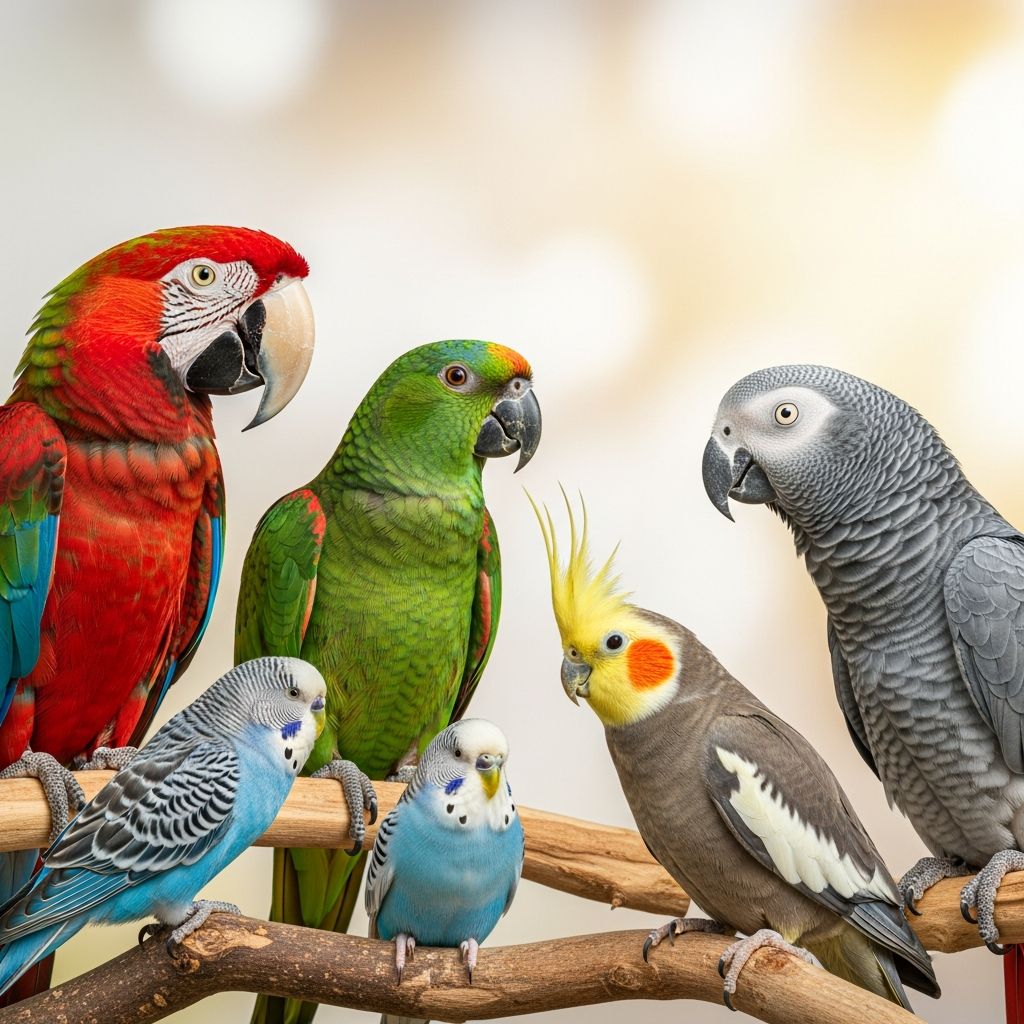
Understanding Parrots: A Comprehensive Species Guide
Parrots belong to the order Psittaciformes and represent one of the most diverse and intelligent bird families in the world. There are over 350 species of psittacine birds, divided into three distinct families, each with unique characteristics and care requirements. These remarkable birds are primarily arboreal and diurnal, meaning they live in trees and are most active during daylight hours. Native to tropical and subtropical regions across the globe, parrots have captivated pet owners for generations due to their vibrant plumage, complex social behaviors, and remarkable cognitive abilities.
Taxonomy and Classification
The classification of parrots provides essential insight into understanding the vast diversity within this avian order. Parrots belong to Order Psittaciformes and are further divided into three families, each containing numerous species with varying sizes, temperaments, and specialized needs. Understanding this taxonomy helps pet owners and avian professionals select appropriate species for their circumstances and provide species-specific care.
Within the Psittaciformes order, you will find everything from small parakeets weighing just a few ounces to large macaws that can reach up to three pounds. This incredible size range reflects the adaptability of parrots to different ecological niches and environmental conditions across their native ranges.
Major Parrot Families and Characteristics
Physical Diversity Among Species
Parrots exhibit remarkable physical diversity that extends far beyond their famous colorful plumage. Their anatomical adaptations reflect millions of years of evolution suited to their ecological roles. Key physical features include:
- Powerful, curved beaks specifically adapted for cracking seeds and manipulating food items
- Zygodactyl feet with two toes pointing forward and two pointing backward, enabling exceptional gripping ability
- Large, intelligent eyes positioned on the sides of their heads for enhanced visual perception
- Specialized vocal structures allowing for complex vocalizations and mimicry capabilities
- Flexible neck joints permitting remarkable head rotation and coordination
Common Parrot Species in Captivity
Several parrot species have become popular as companion birds due to their manageable size, trainability, and engaging personalities. Each species brings distinct characteristics to the pet bird hobby:
African Grey Parrots: Recognized as among the most intelligent parrot species, African Greys demonstrate exceptional problem-solving abilities and can develop vocabularies exceeding 1,000 words. These large birds require experienced owners and significant environmental enrichment.
Amazon Parrots: Known for their vibrant green plumage and outgoing personalities, Amazon parrots are social birds that thrive on interaction. They are popular among experienced bird owners seeking engaging companions.
Macaws: The largest parrot species, macaws command attention with their striking appearance and powerful voices. These birds require substantial space, specialized diets, and experienced handling.
Cockatoos: Famous for their expressive crests and playful antics, cockatoos form intense bonds with their owners. They require considerable social interaction and mental stimulation.
Pionus Parrots: Often described as “small Amazon parrots” due to their stocky builds and short, square tails, Pionus species are native to Mexico, Central America, and South America. These birds are recognized for their calm temperament and gentler vocalizations compared to larger species.
Lovebirds and Parakeets: Smaller parrot species like lovebirds and budgerigar parakeets are accessible to novice bird owners while still offering engaging personalities and interactive behaviors.
Behavioral Characteristics
Social Structure and Bonding
Parrots are intensely social birds that naturally live in flocks and form complex social hierarchies. In captivity, they often redirect these social instincts toward their human caretakers, forming strong pair bonds with their owners. Understanding parrot social behavior is fundamental to providing appropriate mental stimulation and emotional wellbeing.
The study of parrot behavior is intrinsically connected to their mental health. Pioneering research in the 1970s established the foundation for modern understanding of parrot psychological needs. Behavioral problems such as feather destructive behavior, often called pterotillomania, frequently indicate underlying psychological distress rather than physical illness.
Cognitive Abilities and Communication
Parrots possess remarkable intelligence comparable to young children in many cognitive domains. They demonstrate problem-solving abilities, tool use, long-term memory, and capacity for emotional complexity. Their communication systems include:
- Vocalizations ranging from melodious contact calls to loud alarm calls
- Mimicry of human speech and environmental sounds
- Body language including crest raising, wing displays, and postural shifts
- Behavioral signaling through grooming, play, and interactive movements
Natural Behaviors in Captive Settings
Understanding natural behaviors helps owners provide appropriate outlets for instinctive drives. Parrots use their powerful beaks to manipulate their environment, swing between branches, and establish social dominance within their flocks. Recent research on rosy-faced lovebirds demonstrates how parrots use their beaks to swing between branches for faster movement, showcasing the sophisticated motor control these birds possess.
Nutritional Requirements
Dietary Fundamentals
Proper nutrition forms the foundation of parrot health and longevity. Malnutrition in captive parrots remains a significant concern among avian veterinarians, often resulting from reliance on seed-only diets. Key nutrients essential for optimal health include:
- High-quality proteins for feather growth and muscle maintenance
- Essential fatty acids for brain function and feather condition
- Calcium and phosphorus for bone density and metabolic function
- Vitamin A for vision and immune system support
- Antioxidants for cellular protection
Dietary Approaches
Modern avian nutrition recognizes two primary dietary approaches for companion parrots. All-seed diets, while traditional, typically lack essential nutrients and contribute to obesity and metabolic diseases. Formulated diets provide balanced nutrition but should be supplemented with fresh vegetables and fruits. The most successful dietary strategy combines high-quality formulated diets with fresh produce, allowing nutritional variety while maintaining balanced nutrient intake.
Dietary conversion to a healthier diet requires patience and gradual introduction of new foods. Parrots often exhibit neophobic responses to unfamiliar foods, necessitating gradual acclimation through positive reinforcement and consistent presentation.
Health Considerations
Common Medical Conditions
Avian veterinarians regularly encounter specific health conditions in captive parrots. Proventricular dilatation disease (PDD) represents one of the most challenging avian conditions, with recent research identifying a causal relationship with avian bornavirus. Early detection of avian bornavirus infection, though common in birds with PDD, also occurs in birds with other chronic diseases, complicating diagnosis and treatment approaches.
Reproductive emergencies occur most frequently in smaller psittacine species including cockatiels, lovebirds, and budgerigar parakeets. Conditions such as dystocia, egg yolk peritonitis, and chronic egg laying require immediate veterinary intervention and behavioral modification strategies.
Feather Health and Behavioral Issues
Feather destructive behavior represents one of the most challenging clinical concerns faced by avian veterinarians and pet owners alike. This condition, characterized by feather removal, feather chewing, or self-inflicted trauma, results from complex interactions between environmental, nutritional, behavioral, and medical factors. Systematic investigation of underlying causes guides effective case management strategies.
Behavioral history-taking should comprehensively address the bird’s background, early rearing environment, caregiver expectations, household composition, air quality, environmental changes, exposure to chemicals, cage design, toys, photoperiod, nutrition, and social interactions. Understanding these contextual factors enables targeted interventions.
Creating Optimal Living Environments
Housing and Space Requirements
Parrot housing must accommodate natural behaviors including flight, climbing, foraging, and social interaction. Minimum space requirements vary dramatically based on species size and activity level. Larger species like macaws require significantly more space than smaller parakeets. Cages should include multiple perches of varying diameters, enrichment items, and accessible food and water sources.
Environmental Enrichment
Mental stimulation through environmental enrichment prevents behavioral problems and promotes psychological wellbeing. Enrichment strategies include:
- Foraging opportunities requiring problem-solving and manipulation
- Rotating toys and perches to maintain novelty
- Social interaction with owners and other birds when appropriate
- Training sessions incorporating positive reinforcement
- Access to natural substrates for destruction and exploration
Selecting and Adopting Parrots
Choosing the Right Species
Selecting an appropriate parrot species requires honest assessment of owner experience, available time, space, and emotional commitment. Species selection should consider vocalization levels, size, lifespan, temperament, and specific care requirements. Novice owners benefit from starting with smaller, more forgiving species before advancing to larger, more demanding birds.
Adoption Considerations
Adopting rescued parrots requires specialized knowledge and preparation. The process involves careful assessment of the bird’s background, health status, behavior history, and compatibility with the new household. Integration of adopted parrots into existing flocks demands gradual acclimation, separate initial housing, and careful monitoring for territorial aggression or stress-related behaviors.
Parrot Anatomy and Physiology
Understanding avian anatomy and physiology provides essential foundation for effective parrot care and working with veterinary professionals. Key physiological features distinctive to parrots include specialized respiratory systems, high metabolic rates, and unique digestive anatomy. LafeberVet has documented 16 interesting facts about parrot anatomy and physiology that serve veterinary professionals and informed owners during physical examination, clinical care, and health assessment.
Frequently Asked Questions About Parrots
Q: How long do pet parrots typically live?
A: Parrot lifespan varies significantly by species. Smaller species like parakeets may live 5-10 years, while larger species like African Greys and macaws can exceed 50-80 years, requiring lifelong commitment from owners.
Q: Can parrots be trained like dogs?
A: Yes, parrots respond exceptionally well to positive reinforcement training. Their intelligence allows them to learn complex behaviors, tricks, and even verbal communication through consistent, reward-based training methods.
Q: What causes feather plucking in parrots?
A: Feather plucking or destructive behavior typically results from combinations of factors including inadequate environmental enrichment, social isolation, poor nutrition, stress, medical conditions, or underlying behavioral issues requiring veterinary evaluation.
Q: How do I transition my parrot to a healthier diet?
A: Dietary transitions should occur gradually over several weeks. Introduce new healthy foods alongside familiar foods, offer positive reinforcement, and remain patient as parrots often resist unfamiliar food items initially.
Q: Are parrots suitable for apartment living?
A: While smaller species may adapt to apartments, most parrots vocalize loudly and require substantial space. Consider neighbor proximity and your tolerance for noise before committing to parrot ownership in shared housing.
Q: What should I do if my parrot shows signs of aggression?
A: Aggressive behavior often signals fear, territorial defense, or hormonal influence. Consult an avian behaviorist to identify underlying causes and implement appropriate management strategies rather than punishing the behavior.
References
- Taxonomy: Parrot – LafeberVet — Lafeber Company. 2025. https://lafeber.com/vet/species/parrot/
- Parrot Behavior Overview — Lafeber Pet Birds. 2025. https://lafeber.com/pet-birds/questions/parrot-behavior/
- Avian Expert Articles on Pet Bird Care — Lafeber Company. 2025. https://lafeber.com/pet-birds/avian-expert-articles/
- Our Macaw Research from Tambopata Received Lafeber’s Global Parrot Conservation Grant — Texas A&M College of Veterinary Medicine. 2025. https://vetmed.tamu.edu/themacawsociety/our-macaw-research-from-tambopata-received-lafebers-global-parrot-conservation-grant/
- Lafeber’s Global Parrot Conservation Spotlight — Lafeber Company. 2025. https://lafeber.com/pet-birds/category/new/
Similar Articles








Read full bio of medha deb


