
Parrot Care Guide: Species, Diet & Behavioral Needs
Complete guide to parrot species, nutrition, care requirements, and behavioral characteristics for pet owners.
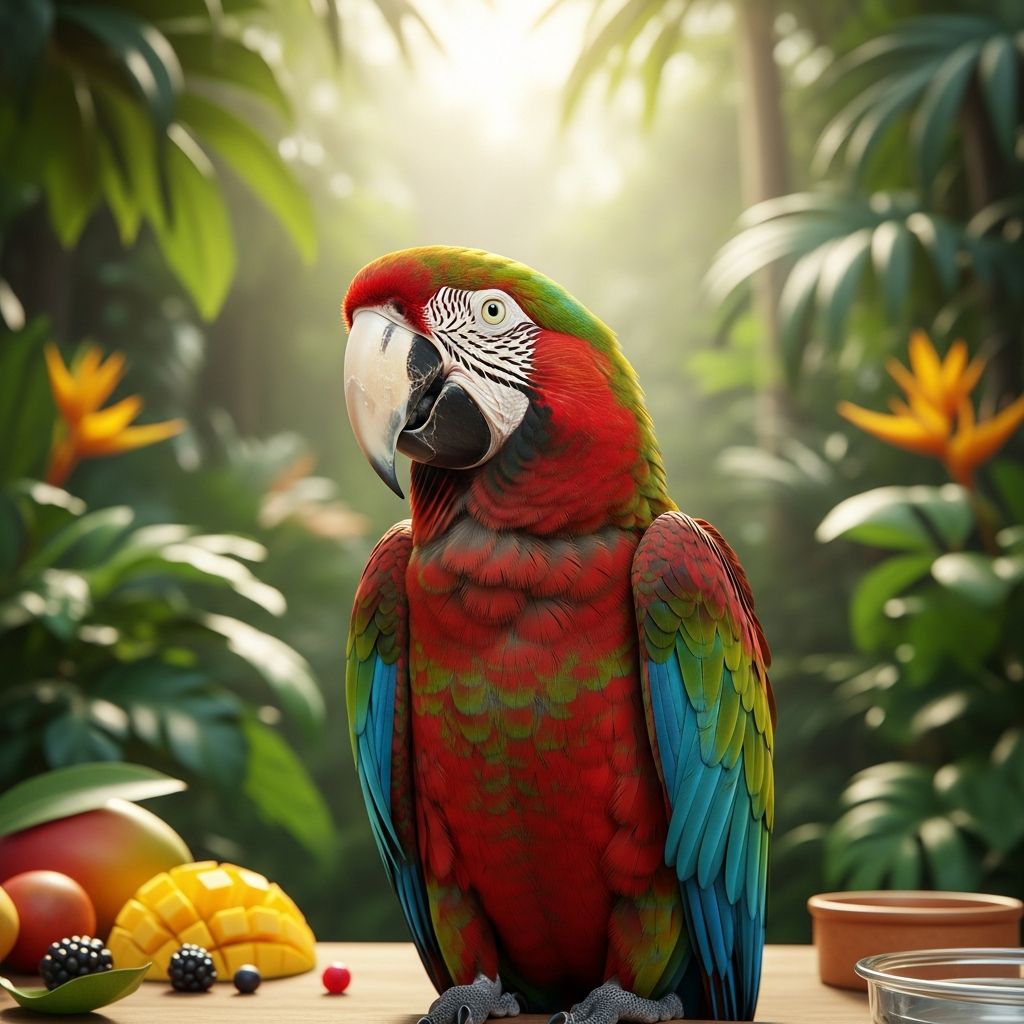
Understanding Parrots as Companion Birds
Parrots represent one of the most diverse and captivating groups of companion birds available to pet owners today. These remarkable feathered companions originate from warm habitats including rainforests, grasslands, savannas, semi-arid regions, and tropical islands across the globe. Their vibrant plumage, intelligent personalities, and social nature make them increasingly popular choices for households seeking interactive and engaging pets. However, successfully keeping parrots as companion animals requires comprehensive understanding of their specific needs, behavioral patterns, and care requirements.
The appeal of parrots extends beyond their stunning visual appearance. These birds possess remarkable cognitive abilities, emotional intelligence, and the capacity to form strong bonds with their human caretakers. Their personalities range from playful and outgoing to calm and reserved, offering potential owners the opportunity to find a species that matches their lifestyle and preferences.
Popular Parrot Species for Pet Owners
The companion bird market features numerous parrot species, each with distinctive characteristics, temperaments, and care needs. Understanding the differences between these species helps prospective owners make informed decisions about which bird might best suit their household.
Top companion parrot species include:
- Cockatiels – medium-sized, affectionate, and relatively quiet
- Budgerigars (budgies/parakeets) – small, social, and excellent for beginners
- African Greys – large, highly intelligent, and long-lived
- Conures – medium-sized, playful, and moderately vocal
- Cockatoos – large, demanding, and extremely social
- Amazon Parrots – medium to large, outgoing, and vocal communicators
- Lovebirds – small, paired birds with big personalities
- Parrotlets – tiny species with bold temperaments
- Senegal and Meyer’s Parrots – medium-sized, relatively quiet, and adaptable
- Severe Macaws – smaller macaw species with big personalities
Popularity among these species stems from various factors including size, personality type, aesthetic appeal, vocalization levels, and compatibility with different living situations. Whether someone seeks a large, intelligent companion or a small, independent bird, the diversity of parrot species ensures suitable options for various lifestyles.
Parrot Characteristics and Physical Attributes
Parrots exhibit remarkable diversity in their physical characteristics while sharing common features that define the group. These birds display an extraordinary range of colors including black, blue, brown, gray, green, multi-colored, orange, red, white, and yellow plumage. Size variation among parrot species is particularly pronounced, ranging from small birds measuring just a few inches to large macaws exceeding 3 feet in length.
Size categories among companion parrots:
- Small parrots: budgies, lovebirds, parrotlets (up to 7 inches)
- Medium parrots: cockatiels, conures, Amazons (8-14 inches)
- Large parrots: African greys, cockatoos, macaws (15-40+ inches)
One unique adaptation found in certain parrot species is their beak structure, which has evolved to enable efficient movement through their natural environments. Recent research examining rosy-faced lovebirds demonstrates how parrots utilize their beaks as a specialized gripping tool to swing between branches, facilitating faster movement through dense vegetation. This anatomical feature represents millions of years of evolutionary adaptation to arboreal life.
Social Interaction and Behavioral Needs
Understanding parrot social requirements represents one of the most critical aspects of responsible pet ownership. The Lafeber Pet Bird Selector classifies companion birds into four distinct interaction categories, with parrots distributed across three of these categories based on their species-specific social requirements.
Interaction categories for parrots:
| Interaction Type | Species Examples | Care Considerations |
|---|---|---|
| Highly Social | African Greys, Cockatoos | Require extensive daily interaction, mental stimulation, and can develop behavioral issues without adequate attention |
| Social | Cockatiels, Budgies, Macaws, Amazons, Lovebirds, Parrotlets | Need consistent daily interaction but tolerate some alone time; benefit from environmental enrichment |
| Somewhat Social | Rosella Parrots | Remain tame through consistent interaction but are more independent than other parrot species |
The highly social category includes species known for their exceptional intelligence and emotional sensitivity. African greys, for instance, demonstrate complex cognitive abilities comparable to young human children and require sophisticated mental stimulation. Cockatoos, while less intellectually advanced than African greys, are often described as “needy” due to their dependence on consistent human interaction and their tendency to develop behavioral problems when kept in isolation.
Social species comprise the largest category of companion parrots. These birds don’t necessarily require constant physical contact or cuddling but need to recognize their role within the household “flock.” Regular interaction, conversation, and involvement in family activities keep social parrots psychologically healthy and behaviorally stable.
Vocalization and Sound Characteristics
Parrot vocalizations represent an important consideration for potential owners, particularly those living in apartments or shared housing situations. Different species exhibit dramatically different sound production capabilities and behavioral patterns regarding noise generation.
Common vocalization categories among parrots:
- Vocal communicators – extensive vocalizations throughout the day
- Chatterers – frequent but less intense vocalizations
- Whistlers – preference for melodic whistling over harsh calls
- Relatively quiet – minimal vocalization compared to other parrot species
Understanding a species’ natural vocalization pattern helps owners manage noise levels and select birds compatible with their living environment. While many parrots are inherently vocal creatures, some species like certain conure types and lovebirds produce significantly less noise than larger species such as macaws or cockatoos.
Proper Cage Requirements and Housing
Providing appropriate housing represents a fundamental requirement for parrot health and behavioral well-being. Different species require different cage dimensions to accommodate their size, activity level, and movement patterns.
Minimum recommended cage dimensions:
- Small parrots (budgies, lovebirds, parrotlets): 30 x 30 x 40 inches
- Medium parrots (cockatiels, conures, smaller Amazons): 36 x 30 x 60 inches
- Large parrots (African greys, Amazons, small cockatoos): 40 x 30 x 60 inches
- Extra-large parrots (macaws, large cockatoos): 48 x 36 x 66 inches
Bar spacing represents another critical consideration, ranging from 0.5 inches for the smallest species to 1.5 inches for the largest parrots. Proper spacing prevents head entrapment and injury while accommodating the bird’s climbing and perching behaviors. Beyond cage dimensions, parrots require diverse perching materials, climbing opportunities, and environmental enrichment to maintain physical fitness and psychological stimulation.
Nutritional Requirements and Feeding Practices
Proper nutrition forms the foundation of optimal parrot health and longevity. Parrots evolved as foraging birds, naturally spending significant portions of their day searching for, manipulating, and consuming food. This natural behavior drives their interactive approach to eating, which creates characteristic challenges in captive environments.
Common feeding characteristics of parrots:
- Food dropping and flinging during consumption
- Squirting and ricocheting food particles
- Enjoyment of manipulating and interacting with food items
- Preference for foraging-based feeding rather than simple bowl feeding
These natural behaviors, while messy, provide important psychological stimulation and physical activity. Lafeber’s nutritious foraging formulations leverage these innate behaviors to provide both enrichment and complete nutrition. A varied diet combining seeds, pellets, fresh fruits, and vegetables supports different nutritional requirements across species and individual birds.
Common dietary concerns include calcium deficiency, vitamin A deficiency, vitamin B deficiency, and obesity. All-seed diets, while popular historically, frequently lead to nutritional imbalances and obesity. Modern avian nutritionists recommend balanced pellet-based diets supplemented with fresh produce and occasional treats.
Health Considerations and Common Conditions
Parrots face various health challenges both in wild populations and captive settings. Understanding common conditions helps owners recognize early warning signs and seek veterinary care promptly.
Nutritional and metabolic conditions:
- Calcium deficiency
- Vitamin A deficiency
- Vitamin B deficiency
- Obesity
- Fatty liver disease
- Hemochromatosis
Infectious and parasitic conditions:
- Avian polyomavirus
- Psittacine beak and feather disease (PBFD)
- Respiratory infections
- Psittacosis
- Chlamydiosis
- Aspergillosis
Behavioral and trauma-related conditions:
- Beak malocclusion
- Trauma from accidents
- Feather picking and self-injury
- Proventricular Dilatation Disease (PDD)
- Chronic egg laying
- Toe-tapping and wing-flipping muscle spasms
Regular veterinary checkups, appropriate diet, mental stimulation, and proper environmental conditions significantly reduce the incidence of these conditions and enhance overall parrot longevity.
Lifespan Expectations for Different Species
Parrot lifespans vary considerably across species, with some small species living 10-20 years while larger species may exceed 50-80 years in captivity. Understanding species-specific lifespan expectations helps owners make informed long-term commitments to their birds.
Typical lifespan categories:
- Up to 10 years – small species including budgies and lovebirds
- Up to 20 years – medium species including cockatiels and conures
- Up to 30 years – larger species including Amazons and African greys
- 30+ years – extra-large species including cockatoos and macaws
These lifespans require owners to view parrot ownership as a decades-long commitment similar to adopting a child. The long-term relationship between parrot and owner creates deep bonds but demands sustained financial investment, time commitment, and dedication to the bird’s welfare.
Conservation Status of Parrot Species
Wild parrot populations face significant threats from habitat loss, climate change, poaching, and illegal trade. The International Union for Conservation of Nature and Natural Resources (IUCN) tracks threatened parrot species, with numerous species kept as companions now classified as endangered or vulnerable.
Endangered parrot species commonly kept as pets:
- African Grey (both Congo and Timneh subspecies)
- Lilac-crowned Amazon
- Lear’s Macaw
- Sun Parakeet
- Yellow-headed Amazon
- Yellow-naped Amazon
Many additional species are classified as vulnerable or near-threatened, while others remain plentiful with stable wild populations. Supporting captive-bred birds from reputable breeders rather than wild-caught specimens helps protect endangered populations. Lafeber’s Global Parrot Conservation initiatives support research and habitat protection efforts worldwide, contributing to species preservation and wild population recovery.
Choosing the Right Parrot Species for Your Lifestyle
Selecting an appropriate parrot species requires honest assessment of personal circumstances including available time, living space, noise tolerance, and long-term commitment capacity. Different species suit different lifestyles and household situations.
Small species like budgies and lovebirds suit first-time bird owners and people with limited space. Medium species like cockatiels and conures offer enhanced interaction and personality while remaining manageable for most households. Large species like African greys and cockatoos require experienced owners with substantial time availability and strong commitment to meeting intensive social and enrichment needs.
Frequently Asked Questions About Parrots
Q: How long do parrots live as pets?
A: Parrot lifespans vary by species, ranging from 10 years for small species like budgies to 50+ years for large macaws and cockatoos. African greys commonly live 40-60 years in captivity.
Q: What do parrots need in their cage?
A: Parrots require appropriately-sized cages with multiple perches of varying diameters, toys for enrichment, space for flight or climbing, proper lighting, and temperature control. Cage dimensions vary by species size.
Q: Are parrots good for apartments?
A: Small, relatively quiet species like budgies, lovebirds, and Senegal parrots work well for apartments. Large, vocal species like macaws and cockatoos are generally unsuitable for apartment living due to noise levels.
Q: What should parrots eat?
A: Parrots require balanced diets combining high-quality pellets, fresh fruits and vegetables, and occasional nuts and seeds. Avoid all-seed diets, avocado, chocolate, salt, and caffeine. Consult avian veterinarians for species-specific nutritional guidance.
Q: How social do parrots need to be?
A: Most companion parrots require regular daily interaction to remain psychologically healthy and behaviorally stable. Highly social species like African greys and cockatoos demand extensive interaction, while other species tolerate more independence.
Q: What are common parrot health problems?
A: Common issues include nutritional deficiencies, obesity, fatty liver disease, avian polyomavirus, psittacine beak and feather disease, respiratory infections, and behavioral problems like feather plucking. Regular veterinary care prevents many conditions.
References
- Parrot | Personality, Food & Care – Pet Birds by Lafeber Co. — Lafeber Company. 2025. https://lafeber.com/pet-birds/species/parrot/
- Taxonomy: Parrot – LafeberVet — Lafeber Company. 2025. https://lafeber.com/vet/species/parrot/
- Pet Bird Behavior Articles – Parrots & Pet Birds — Lafeber Company. 2025. https://lafeber.com/pet-birds/category/behavior/
- Avian Expert Articles – Pet Birds by Lafeber Co. — Lafeber Company. 2025. https://lafeber.com/pet-birds/avian-expert-articles/
- Our Macaw research from Tambopata received Lafeber’s Global Parrot Conservation Grant — Texas A&M University College of Veterinary Medicine & Biomedical Sciences. 2025. https://vetmed.tamu.edu/themacawsociety/our-macaw-research-from-tambopata-received-lafebers-global-parrot-conservation-grant/
Similar Articles








Read full bio of medha deb


