

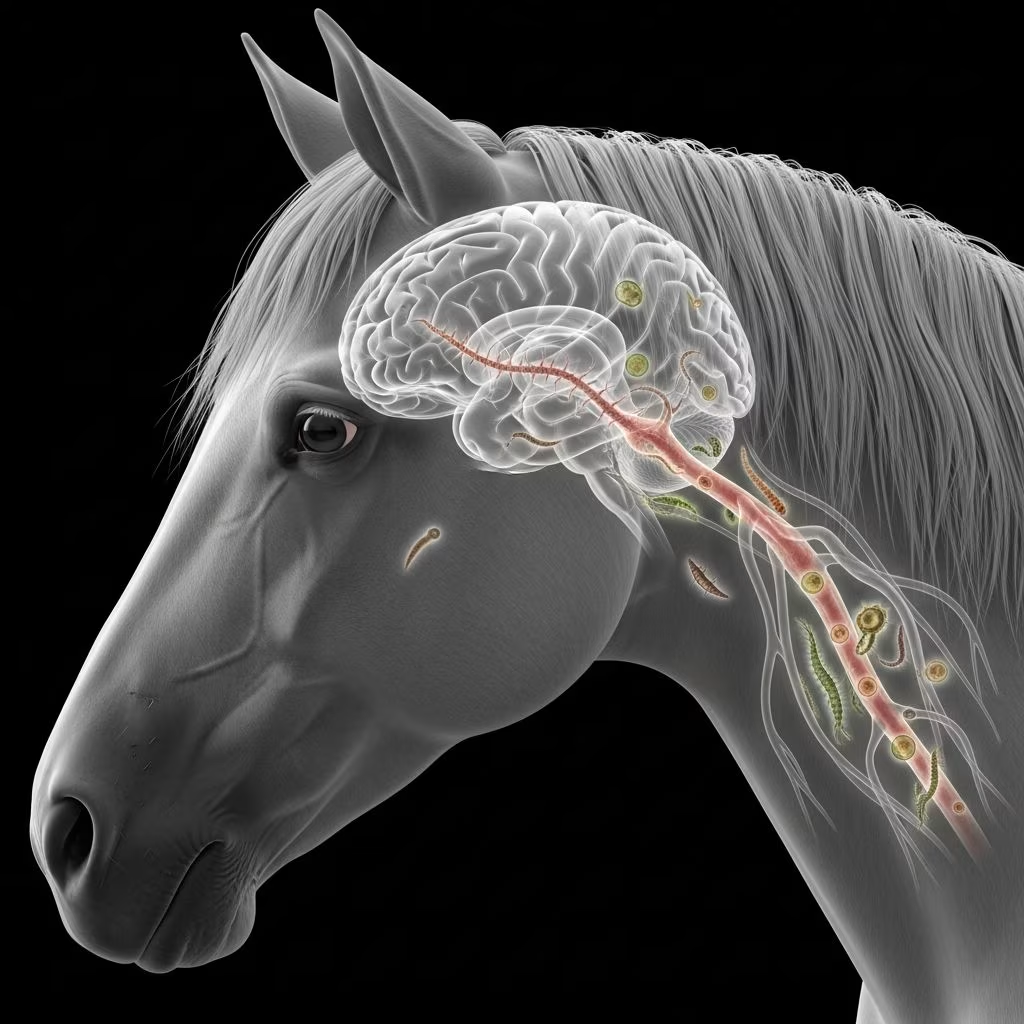
Parasites pose significant risks to horses by targeting the central nervous system (CNS), which includes the brain and spinal cord. These invasions lead to a range of neurological impairments that can severely compromise a horse’s mobility, coordination, and overall well-being. Primary culprits include protozoan parasites like Sarcocystis neurona and Neospora hughesi, certain nematodes, and even insect larvae. Understanding these threats is crucial for timely intervention and horse care.
Protozoan Parasites: The Leading Cause of Equine Neurological Disease
Protozoans dominate CNS disorders in horses, with equine protozoal myeloencephalitis (EPM) being the most prevalent. Caused mainly by S. neurona, this condition arises when horses ingest contaminated feed or water harboring sporocysts from opossum feces. Horses act as dead-end hosts, meaning the parasite cannot complete its life cycle in them but still inflicts damage by crossing into the CNS.
The life cycle begins in opossums, the definitive hosts, where sporocysts are shed in feces. Intermediate hosts like armadillos or skunks amplify the parasite before it reaches horses incidentally. Once ingested, sporocysts release merozoites that invade neural tissues, forming schizonts primarily in the brain and spinal cord. This results in inflammation, necrosis, and hemorrhage, disrupting normal nerve function.
Neospora hughesi plays a lesser role but mirrors EPM symptoms. Its transmission remains unclear, though vertical spread from mares to foals has been noted, sometimes leading to abortions or muscle issues alongside neurology.
Recognizing Clinical Signs of CNS Parasitic Invasion
Symptoms vary by lesion location and severity, often progressing from subtle to debilitating. Common indicators include:
- Ataxia and incoordination: Stumbling, wide-based stance, or circling, especially noticeable on turns or slopes.
- Muscle weakness and atrophy: Particularly in hindquarters, leading to dragging toes or frequent tripping.
- Cranial nerve deficits: Facial drooping, ear droop, tongue paralysis, or swallowing difficulties.
- Behavioral changes: Lethargy, head pressing, or sudden collapses in advanced cases.
- Other signs: Tremors, recumbency, or unilateral lameness mimicking orthopedic problems.
Onset can be acute or gradual, with spinal cord involvement causing gait issues and brainstem lesions prompting head tilts or loss of reflexes. Early detection hinges on owners noting these progressive abnormalities.
Diagnostic Approaches for Parasitic CNS Disorders
Diagnosing CNS parasites requires ruling out trauma, infections, or toxicities. For EPM, serum tests detect S. neurona antibodies, indicating exposure but not active CNS disease. Cerebrospinal fluid (CSF) analysis via lumbar puncture is gold standard: elevated antibodies or PCR-positive for parasite DNA confirm CNS involvement.
| Test Type | Purpose | Accuracy | Source |
|---|---|---|---|
| Serum Titer | Detects exposure | High for infection, low for CNS disease | |
| CSF Titer/PCR | Confirms active CNS infection | Most reliable | |
| Neurologic Exam | Assesses lesion location | Essential baseline | |
| Imaging (MRI/CT) | Visualizes lesions (limited availability) | Supportive |
Post-mortem histology reveals schizonts in neurons, but antemortem tests guide treatment. Differential diagnoses include viral encephalitides or nutritional deficits.
Prevention Strategies: Limiting Parasite Exposure
Control hinges on breaking transmission chains. Key measures include:
- Securing feed storage to deter opossums—use metal bins and elevate hay.
- Eliminating wildlife access: Fence pastures, remove brush piles, and discourage opossum habitats.
- Regular deworming: Though ineffective against protozoans, it manages concurrent nematodes.
- Environmental hygiene: Clean water sources and spilled grain promptly.
Vaccines are unavailable, so vigilance in endemic areas (especially Americas) is vital. Stress reduction via proper nutrition and biosecurity minimizes disease progression in exposed horses.
Treatment Protocols and Prognosis
Antiprotozoal drugs like ponazuril or diclazuril target S. neurona, administered for 28 days. Supportive care includes anti-inflammatories (e.g., NSAIDs) and physical therapy to aid recovery. Success rates reach 60-80% with early intervention, though residuals like mild ataxia may persist.
For nematode larvae (e.g., Setaria digitata), ivermectin or organophosphates may expel migrants, paired with corticosteroids to curb inflammation. Insect myiasis requires careful larvicides. Prognosis improves with prompt, aggressive therapy but worsens in chronic cases.
Less Common Parasites: Nematodes and Insects
Beyond protozoans, roundworms like Setaria digitata (Asian cattle parasite) migrate via mosquitoes, causing cerebrospinal nematodiasis. Symptoms mimic EPM: paresis, ptosis, and paralysis. Strongyle larvae (Strongylus vulgaris) occasionally invade CNS during migration.
Insect larvae, such as Hypoderma bots, burrow through brain tissue, prompting myiasis. Treatment demands precision to avoid neurotoxicity. These are rarer in well-managed herds but underscore broad-spectrum vigilance.
Risk Factors and Epidemiology
EPM peaks in late summer/fall in the US, correlating with opossum activity. Young adults under stress (racing, transport) are susceptible, with <1% of exposed horses developing signs. Geographic prevalence ties to opossum density; imported parasites like Setaria emerge in novel regions.
FAQs
What causes most CNS parasitic diseases in horses?
Sarcocystis neurona via EPM is primary, spread by opossum-contaminated feed/water.
Can EPM spread horse-to-horse?
No, horses are dead-end hosts; direct transmission does not occur.
How do I know if my horse has EPM?
Observe ataxia/weakness; confirm with CSF tests after neuro exam.
Is there a vaccine for these parasites?
No vaccines exist; focus on prevention.
What is the success rate of EPM treatment?
60-80% improve with early antiprotozoals.
Owner Tips for CNS Health Monitoring
Daily checks for gait, appetite, and demeanor catch issues early. Consult vets for neuro exams at abnormality onset. Biosecurity pays dividends in parasite-prone areas.
References
- Equine protozoal myeloencephalitis (EPM) in a horse — Texas A&M Veterinary Medical Diagnostic Laboratory. 2023. https://tvmdl.tamu.edu/case-studies/equine-protozoal-myeloencephalitis-epm-in-a-horse/
- An update on Sarcocystis neurona infections in animals and Equine — PMC (PubMed Central). 2015-06-15. https://pmc.ncbi.nlm.nih.gov/articles/PMC4461864/
- Equine Protozoal Myeloencephalitis — Equine Disease Communication Center (UC Davis). 2024. https://www.equinediseasecc.org/EPM
- Equine protozoal myeloencephalitis (EPM) — Center for Equine Health, UC Davis. 2023. https://ceh.vetmed.ucdavis.edu/health-topics/equine-protozoal-myeloencephalitis-epm
- Central Nervous System Disorders Caused by Parasites in Horses — Merck Veterinary Manual. 2023. https://www.merckvetmanual.com/horse-owners/brain-spinal-cord-and-nerve-disorders-of-horses/central-nervous-system-disorders-caused-by-parasites-in-horses



