

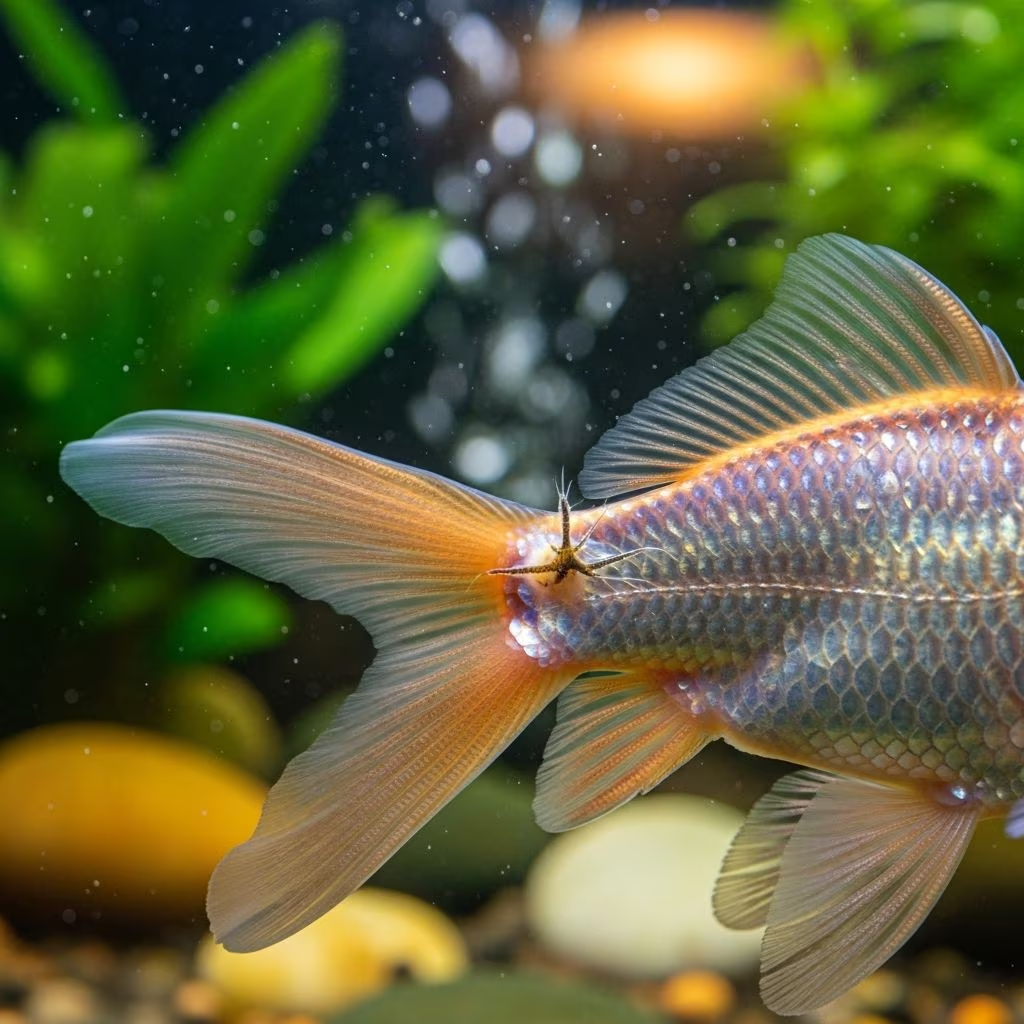
Aquarium enthusiasts often face invisible enemies that can devastate their carefully curated underwater worlds: parasites. These microscopic or visible invaders latch onto fish, disrupting their health and potentially wiping out entire tanks if left unchecked. Understanding these threats is crucial for maintaining vibrant, disease-free aquariums.
Why Parasites Thrive in Aquariums
Aquariums mimic natural habitats but in confined spaces, allowing parasites to spread rapidly. Stress from shipping, poor water quality, or new introductions accelerates infections. Parasites range from single-celled protozoans to multicellular worms and crustaceans, each with unique life cycles exploiting fish vulnerabilities.
Protozoan Parasites: The Microscopic Menace
Protozoans are among the most notorious aquarium parasites due to their rapid reproduction and direct life cycles. They attach to skin, gills, and fins, causing irritation and secondary infections.
Ichthyophthirius multifiliis: The White Spot Culprit
Known as freshwater Ich or white spot disease, this ciliate parasite manifests as small, salt-like cysts on fish bodies. Infected fish flash against objects, show increased respiration, and may lose appetite. The parasite’s free-swimming stage (tomites) infects new hosts before encysting and reproducing.
- Symptoms: White nodules (2-3mm), lethargy, clamped fins.
- Life Cycle: Trophozoite burrows into skin, cyst ruptures releasing tomites after 3-7 days.
- Prevention: Quarantine new fish for 4 weeks.
Cryptocaryon irritans: Saltwater Ich Terror
In marine setups, Cryptocaryon irritans causes devastating outbreaks. Visible white spots appear, leading to rapid mortality if untreated. It favors warmer waters, proliferating in summer.
| Stage | Duration | Action |
|---|---|---|
| Trophont | 3-7 days | Visible on fish |
| Tomont | Up to 55 days | Cyst stage in tank |
| Theront | 24-48 hours | Infectious free-swimmer |
Amyloodinium ocellatum: Velvet’s Deadly Dust
Marine velvet coats fish in golden-brown film, suffocating gills. Caused by dinoflagellates, it kills within days in high temperatures. Fish exhibit labored breathing and isolation.
Flagellates and Ciliates: Internal and External Ravagers
These mobile parasites invade gills and intestines, often evading early detection.
Brooklynella: Clownfish’s Nemesis
Primarily affecting marine fish like clownfish, Brooklynella causes excess mucus, rapid gill movement, and mortality within 48 hours. Wild-caught specimens are prime carriers.
- Treatment Tip: Formalin baths in quarantine.
Chilodonella and Tetrahymena: Gill Destroyers
Chilodonella spp. create white patches on gills and skin, leading to asphyxiation. Tetrahymena targets stressed fish, mimicking bacterial lesions.
Spironucleus and Hexamita: Hole-in-the-Head Instigators
These flagellates erode head tissues, causing pits and stringy feces. Common in discus and cichlids, they thrive in poor water conditions.
Monogenean Trematodes: Flukes on Skin and Gills
Flukes are flatworms with direct life cycles, laying eggs or birthing live young. They anchor with hooks, feeding on mucus and tissue.
Skin Flukes (Gyrodactylus spp.)
Viviparous, these flukes spread explosively on freshwater fish. Symptoms include twitching, excess slime, and fin damage.
Gill Flukes (Dactylogyrus spp.)
Oviparous gill specialists cause pale, swollen gills and piping behavior. Microscopic eggs hatch into oncomiracidia infecting nearby fish.
| Fluke Type | Reproduction | Primary Site |
|---|---|---|
| Gyrodactylus | Live birth | Skin/Fins |
| Dactylogyrus | Egg-laying | Gills |
Nematodes and Cestodes: Intestinal Invaders
Worm-like nematodes burrow into guts, while tapeworms absorb nutrients.
Capillaria spp.: The Slimy Worm
Capillaria pterophylli causes emaciation and white, stringy feces in community tanks. All species susceptible.
Protoopalina and Spironucleus: Discus Destroyers
These protozoans flagellates trigger diarrhea and weight loss in discus.
Crustacean Parasites: Visible Predators
Larger parasites like lice and anchor worms are easier to spot but destructive.
Lernaea (Anchor Worms)
Females embed heads into muscle, trailing egg sacs. Common in goldfish/koi, causing bloody wounds and secondary bacteria.
Argulus (Fish Lice)
Disc-shaped crustaceans swim freely, attaching to suck blood. Visible movement on fish.
Less Common but Lethal: Amoebic and Algal Parasites
Nepimiasis (amoebic gill disease) erodes gill arches. Cladogonium forms green filaments on shrimp, penetrative and fatal.
Diagnosing Parasitic Infections
Observe behavior: flashing, lethargy, anorexia. Skin checks reveal spots, worms, or films. Gill biopsies under microscope confirm parasites. Differentiate from bacteria/fungi by wet mounts.
Prevention Strategies for Parasite-Free Tanks
- Quarantine: 4-6 weeks for new arrivals with daily observations.
- Water Quality: Stable parameters (pH 6.5-7.5, ammonia 0ppm).
- UV Sterilizers: Kill free-swimming stages.
- Low Stocking: Reduce stress.
Treatment Protocols: Step-by-Step
Always treat in quarantine to protect main tank.
- Raise Temperature: Speeds Ich cycle (28-30°C freshwater).
- Chemicals: Formalin, malachite green, copper for marines (monitor levels).
- Salt Baths: 0.3-0.5% for flukes.
- Medications: Praziquantel for flukes/worms, metronidazole for flagellates.
- Water Changes: 25-50% daily during treatment.
| Parasite | Primary Treatment |
|---|---|
| Ich | Copper/Ich meds |
| Flukes | Praziquantel |
| Velvet | Copper + UV |
| Anchor Worms | Dimilin + salt |
FAQs on Aquarium Fish Parasites
Can parasites spread to humans?
Rarely; Mycobacterium marinum from contaminated water can infect cuts, but most are fish-specific.
How long does Ich treatment take?
7-14 days, covering full life cycle.
Is copper safe for inverts?
No; use alternatives like hyposalinity for shrimp/snails.
Can I prevent all parasites?
Not entirely, but quarantine and hygiene minimize risks.
What if treatment fails?
Rest, improve diet; consult vet for resistant strains.
Long-Term Tank Management
Regular maintenance prevents outbreaks. Dip new fish in praziquantel prophylactically. Monitor with test kits. Healthy fish resist infections better.
By recognizing signs early and acting decisively, aquarists can protect their finned friends from parasitic doom.
References
- Common Saltwater Fish Diseases And How To Treat Them — Reefco Aquariums. 2023. https://reefcoaquariums.com/blogs/news/common-saltwater-fish-diseases-and-how-to-treat-them
- Fish Diseases and Parasites – Know What to Look For — Pets on Broadway. 2024. https://petsonbroadway.com/blogs/expert-advice/fish-diseases-and-parasites-know-what-to-look-for
- Parasites in Depth — eSHa Labs. 2023. https://eshalabs.com/parasites-in-depth/
- Aquarium Fish Diseases with Pictures — Green Aqua. 2024. https://greenaqua.hu/en/blog/post/aquarium-fish-diseases-with-pictures
- Introduction to Freshwater Fish Parasites — Texas A&M AgriLife Extension. 2013-09-01. https://extension.rwfm.tamu.edu/wp-content/uploads/sites/8/2013/09/Introduction-to-Freshwater-Fish-Parasites.pdf
- Seven Parasites Harmful to Your Tropical Fish — PetAssure. 2022. https://www.petassure.com/new-newsletters/seven-parasites-harmful-to-your-tropical-fish/



