

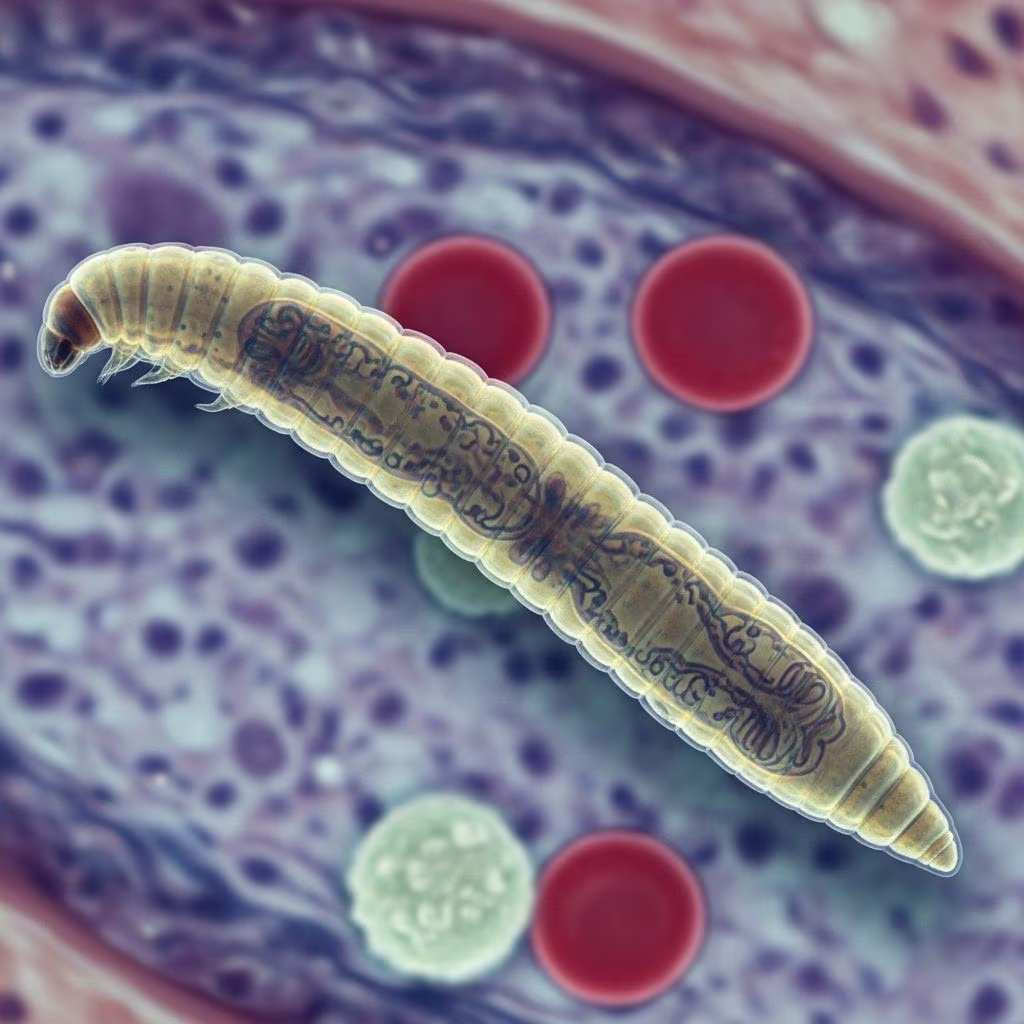
Parasitic roundworm infections caused by organisms of the Trichinella genus represent a significant concern for animal health professionals and livestock producers worldwide. This zoonotic disease, which can transmit from animals to humans, remains a challenge in meat safety protocols and animal husbandry practices across both developed and developing nations. The parasite’s ability to persist in muscle tissues and its complex life cycle make it an important topic for anyone involved in animal care, food production, or public health.
The Nature and Global Distribution of the Parasite
Trichinella comprises parasitic nematodes that have evolved to infect a remarkably diverse range of animal species. Unlike many parasites with narrow host preferences, this genus demonstrates exceptional adaptability, capable of establishing infections in most mammals globally, with certain species even affecting reptiles and avian populations. The widespread nature of this parasite reflects its evolutionary success and the challenges it presents for containment efforts.
The most frequently encountered species in clinical and epidemiological contexts is Trichinella spiralis, which demonstrates a particular affinity for domestic swine, equines, rodents, and various carnivorous species. This predominance in pig populations has made pork products a primary concern for transmission prevention in human food chains.
Mechanism of Animal Infection and Parasite Establishment
The infection pathway in animals initiates through the consumption of meat containing dormant larval cysts from previously infected animals. Once ingested, these encapsulated larvae are released within the animal’s digestive system, where they mature and establish themselves in intestinal tissues. The parasite’s reproductive cycle then accelerates, with larvae subsequently migrating throughout the body’s circulatory and lymphatic systems.
The destination of these migrating parasites is the muscular system, where they penetrate individual muscle fibers and form protective capsules called cysts. Within these cystic structures, larvae can persist in a metabolically dormant yet viable state for extended periods, potentially spanning years. This persistence mechanism is crucial to understanding the parasite’s survival strategy and transmission potential.
Recognizing Infection Status in Animal Populations
One of the most significant challenges in managing trichinellosis is the absence of obvious clinical indicators in infected animals. While humans exposed to high parasite loads may develop severe systemic symptoms including fever, myalgia, and gastrointestinal disturbance, animal reservoirs typically remain asymptomatic throughout infection. This distinction has led animal health professionals to differentiate terminology: the term “Trichinella infection” more accurately describes the parasitic presence in animals, while “trichinellosis” is reserved for clinical disease presentation in humans.
The lack of obvious disease signs in animals means that infections frequently go unrecognized in domestic and wild populations unless specific diagnostic measures are implemented. This silent persistence underscores why systematic surveillance and screening programs are essential for breaking transmission chains.
Diagnostic Approaches for Parasite Detection
Identifying Trichinella infections in animals requires employing complementary diagnostic methodologies, each with distinct advantages and limitations:
Direct Detection Methods
The most definitive approach involves direct microscopic examination of muscle tissue samples obtained during postmortem inspection of animal carcasses destined for human consumption. Historically, pathologists squeezed muscle tissue between glass plates for visual examination under magnification. Contemporary protocols have substantially improved sensitivity through enzymatic digestion of tissue samples, which liberates parasites from muscle fibers, concentrates them, and facilitates identification of mobile organisms under microscopic observation.
This direct method remains the gold standard for meat inspection purposes and provides immediate confirmation of parasite presence. However, it requires tissue sampling and is typically performed postmortem, limiting its utility for diagnostic purposes in living animals.
Serological Detection Approaches
Indirect diagnostic methods capitalize on the immune system’s response to parasitic infection by detecting antibodies against Trichinella antigens in animal serum or meat fluid samples. These serological techniques prove particularly valuable for surveillance programs and epidemiological investigations across animal populations.
The timing of antibody development following infection varies significantly based on infection intensity. Animals exposed to high parasite doses typically develop detectable immunoglobulin G antibodies within 2-3 weeks post-infection, whereas those with low-dose exposures may require several additional weeks for seroconversion. Modern enzyme-linked immunosorbent assay (ELISA) methodologies utilizing excretory-secretory antigens demonstrate sensitivity ranges from 93-99% and specificity from 91-99% in swine populations.
However, critical species-specific limitations exist. Equine populations demonstrate inconsistent serological responses, with some naturally infected horses showing high muscular parasite burdens despite lacking detectable antibodies. This variation necessitates species-appropriate diagnostic strategy selection.
Limitations and Practical Considerations
International trichinellosis commissions explicitly caution against relying exclusively on serological methods for individual animal certification, particularly in equine species. The inconsistency of antibody production in certain animal populations means that negative serological results cannot definitively exclude infection. Furthermore, the extended timeline required for antibody development means that acute infections may escape detection during early stages.
Life Cycle Dynamics and Transmission Mechanisms
The parasite’s life cycle demonstrates remarkable efficiency in perpetuating transmission through animal populations. Following establishment in muscle tissues, host immunity gradually develops, leading to expulsion of adult intestinal worms. However, while adult parasites are eliminated, protective cysts remain embedded in muscle cells indefinitely, serving as reservoirs for future transmission.
The parasite exhibits extraordinary fecundity, with heavily infected animals potentially harboring hundreds of larvae per gram of muscle tissue. This remarkable density increases transmission probability whenever infected meat is consumed by susceptible hosts.
An interesting aspect of the transmission cycle involves scavenger-mediated spread. The parasite can survive within decaying animal carcasses for extended periods, allowing infection to spread through wildlife and domestic animal populations via carrion consumption. This pathway maintains parasite circulation in areas with limited human intervention.
Distinction Between Animal and Human Infection Outcomes
The contrasting disease presentations between animals and humans reflect fundamental immunological and physiological differences. Humans consuming infected meat experience variable symptom severity directly proportional to the number of ingested larvae and individual immune status. Clinical manifestations appearing 5-15 days post-exposure may include systemic fever, severe myalgia, headache, cough, periorbital edema, arthralgias, pruritus, cutaneous rashes, and gastrointestinal dysfunction. In severe cases involving extremely high parasite loads, fatalities have been documented.
Conversely, animals infected with equivalent or even higher parasite quantities typically remain clinically normal, with infections discovered only through systematic screening. This discordance explains why animal populations can maintain substantial reservoirs of infection without obvious disease indicators.
Clinical Management and Treatment Considerations
Therapeutic intervention for trichinellosis in animals presents practical challenges that limit its feasibility. While human cases can be managed with antihelmintic medications targeting adult intestinal parasites combined with anti-inflammatory corticosteroids, animal treatment remains generally impractical due to economic considerations and technical limitations.
The narrow therapeutic window for humans—requiring treatment within brief periods following meat ingestion to effectively target adult worms—demonstrates why prevention substantially outweighs treatment as a management strategy.
Prevention Strategies Across Production Systems
Effective prevention centers on interrupting the transmission cycle through multiple complementary approaches:
- Meat Temperature Control: Thorough cooking to internal temperatures of 145°F (63°C) for roasts or 160°F (71°C) for ground meats effectively destroys all larval stages in pork and other meat sources.
- Freezing Protocols: Freezing pork at appropriate temperatures for specific durations kills viable cysts, though this approach proves less reliable for non-pork meat sources.
- Feed Management: Preventing animal access to raw or undercooked meat, rodent carcasses, or infected wildlife eliminates a primary infection route.
- Waste Disposal: Proper sanitary disposal of slaughter byproducts prevents scavenger populations from becoming infected intermediate hosts.
- Surveillance Programs: Systematic testing of at-risk animal populations provides epidemiological data guiding prevention priorities.
Epidemiological Patterns and Geographic Considerations
In developed nations implementing rigorous meat inspection protocols for domestic pork, human infections increasingly stem from consumption of game meats or equine products. However, globally, the majority of human cases continue arising from insufficiently cooked domestic pork and wild boar consumption, particularly in regions with limited food safety infrastructure.
Frequently Asked Questions
Can infected animals transmit parasites directly to other animals without meat consumption?
No. Transmission absolutely requires ingestion of cyst-containing muscle tissue. Direct contact or fecal contamination does not transmit infection, as larvae shed before intestinal maturation are not immediately infective.
How long can parasite cysts remain viable in infected muscle tissue?
Cysts can persist for years, remaining metabolically viable and capable of establishing new infections if consumed. This persistence is why infected meat poses ongoing transmission risk unless properly processed.
Are all animal species equally susceptible to infection?
Susceptibility varies considerably across species. Most mammals become infected readily, while certain reptile and avian species show variable infection establishment rates.
Why don’t infected animals show disease symptoms?
The absence of clinical signs reflects different immunological responses between humans and animals. While humans mounting inflammatory responses to migrating larvae develop acute symptoms, animals typically establish tolerance to parasitic presence.
Significance for Food Safety and Animal Health Policy
Trichinellosis represents a critical intersection between animal health, food safety, and public health protection. The parasite’s global distribution, multiple animal reservoirs, and capacity for asymptomatic animal infections necessitate comprehensive prevention approaches spanning production, processing, and preparation stages. Understanding infection mechanisms, implementing appropriate diagnostic protocols, and maintaining rigorous prevention measures collectively protect both animal populations and human consumers from this preventable parasitic disease.
References
- Trichinellosis fact sheet — Canadian Food Inspection Agency. 2024. https://inspection.canada.ca/en/animal-health/terrestrial-animals/diseases/reportable/trichinellosis/fact-sheet
- Trichinellosis — World Organisation for Animal Health (WOAH). 2024. https://www.woah.org/en/disease/trichinellosis/
- Epidemiology, Diagnosis, Treatment, and Control of Trichinellosis — National Center for Biotechnology Information (NCBI). 2008. https://pmc.ncbi.nlm.nih.gov/articles/PMC2620635/
- Trichinellosis (Trichinosis) in Dogs — Merck Manual Veterinary Manual. 2024. https://www.merckvetmanual.com/dog-owners/disorders-affecting-multiple-body-systems-of-dogs/trichinellosis-trichinosis-in-dogs
- DPDx – Trichinellosis — Centers for Disease Control and Prevention (CDC). 2024. https://www.cdc.gov/dpdx/trichinellosis/index.html



