

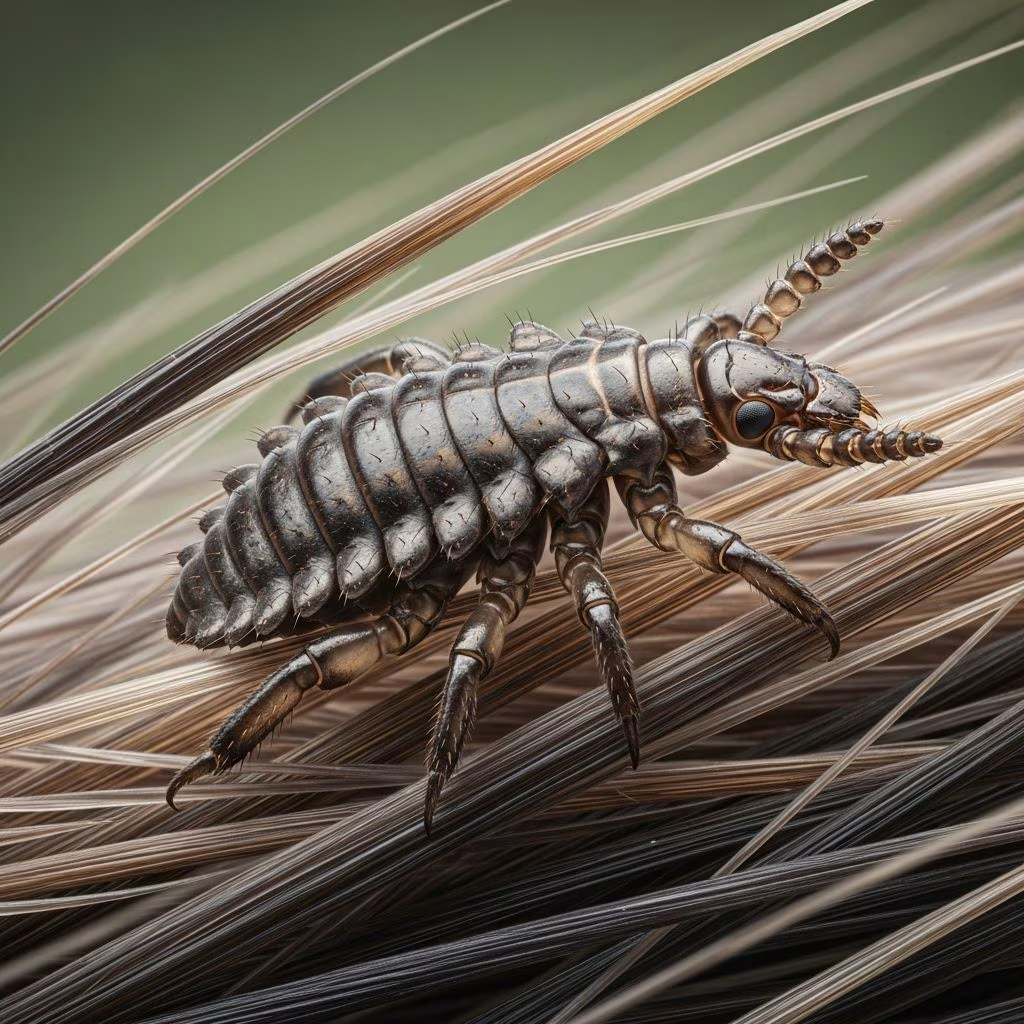
Lice represent a significant group of ectoparasites that affect a wide range of animal species, from household pets to livestock. These host-specific parasites have evolved specialized adaptations that make them particularly suited to infesting specific animal species, with rare exceptions for cross-species transmission. Understanding the biology, identification, and management of lice infestations is essential for pet owners and animal healthcare professionals alike. This comprehensive guide explores the nature of lice parasites, their impact on animal health, diagnostic techniques, and the various treatment and prevention strategies available to combat these persistent parasites.
The Nature and Classification of Lice Parasites
Lice are small wingless insects belonging to two distinct orders based on their feeding mechanisms and anatomical characteristics. These parasites have become highly specialized over evolutionary time, with each species showing a strong preference for particular host animals. This host specificity means that lice found on dogs are unlikely to infest cats, and animal lice rarely pose a zoonotic threat to humans.
Chewing Lice: Structure and Behavior
Chewing lice, scientifically classified within the order Mallophaga, possess distinctive physical characteristics that differentiate them from their sucking counterparts. These parasites feature a blunted head structure that is noticeably wider than their thorax, giving them a characteristic appearance under magnification. Their feeding apparatus consists of ventral chewing mandibles designed specifically for consuming epidermal debris. Rather than piercing the skin, chewing lice subsist on a diet primarily composed of skin scales, sebaceous secretions, and in birds, feathers. One notable behavioral trait of chewing lice is their active mobility; they can frequently be observed moving through the hair coat, which sometimes facilitates their detection during physical examination.
Sucking Lice: Anatomy and Feeding Strategy
Sucking lice, classified within the order Anoplura, employ a fundamentally different feeding strategy despite their similar small size and parasitic lifestyle. These parasites possess specialized piercing mouthparts that allow them to penetrate the skin surface and access deeper tissue fluids and blood. This feeding behavior directly contributes to more severe irritation and dermatological damage compared to chewing lice in many cases. The sucking lice’s ability to extract blood makes them potentially more problematic in situations of heavy infestation, where significant blood loss and anemia may develop.
Clinical Manifestations of Lice Infestation
The presence of lice parasites triggers a cascade of physiological responses in affected animals, ranging from mild discomfort to severe systemic effects in cases of substantial parasite loads.
Dermatological and Behavioral Signs
Animals infested with lice typically exhibit pruritus, or intense itching, that manifests as frequent scratching and self-grooming behaviors. This scratching response, while an attempt to relieve discomfort, often causes secondary skin damage. Affected animals frequently develop alopecia, characterized by patchy or diffuse hair loss that becomes particularly visible in areas of heavy scratching. The coat appearance deteriorates noticeably, becoming rough, matted, or unkempt due to the combination of parasite activity and the animal’s behavioral response to infestation. In cases where animals engage in intense rubbing against stationary objects such as fence posts or walls, additional mechanical hair loss and potential hide damage may occur.
Systemic Effects in Severe Infestations
While mild lice infestations may cause primarily localized discomfort, heavy parasite loads trigger more serious systemic consequences. Severe infestations can precipitate anemia, particularly when sucking lice are involved, due to continuous blood feeding by large numbers of parasites. Affected animals often display reduced body condition, weight loss, and general unthriftiness characterized by lethargy and reduced appetite. Growth rates in young animals may be stunted, and overall productivity and quality of life are significantly compromised. Dermal irritation can become severe enough to cause visible skin damage and secondary bacterial infections at excoriated sites.
Diagnostic Approaches for Lice Detection
Accurate identification of lice infestation requires a combination of clinical observation and laboratory confirmation to guide appropriate treatment decisions.
Visual Inspection and Physical Examination
The initial diagnostic approach involves careful visual inspection of the animal’s coat, paying particular attention to predilection sites where lice are most commonly found. A fine-toothed comb can be systematically worked through the hair coat, particularly around the neck, shoulders, and hindquarters, to dislodge parasites and eggs. Adult lice may be visible to the naked eye or with simple magnification, appearing as small moving insects within the hair. Nits, or louse eggs, appear as small oval structures firmly attached to individual hair shafts and may be more readily apparent than adult parasites, particularly in areas of heavy infestation.
Microscopic Confirmation
Laboratory examination confirms visual findings and allows for precise species identification based on anatomical characteristics. Samples collected via combing can be mounted directly on microscope slides for examination, or alternatively, large clumps of hair containing suspected parasites and nits can be chemically digested using potassium hydroxide solution to facilitate visualization of parasites. Microscopic examination allows differentiation between chewing and sucking lice based on head size and body morphology, and distinguishes animal lice from human lice, which possess distinctly different anatomical features including the presence of eyes.
Therapeutic Approaches and Treatment Protocols
A diverse array of pharmaceutical options has become available for treating lice infestations, with efficacy varying based on lice type, formulation, and animal species involved.
Topical and Oral Medications
Pyrethroid compounds, including permethrin and deltamethrin, have long served as reliable topical treatments effective against both chewing and sucking lice. These products are applied directly to the animal’s skin and coat, offering advantages in ease of application for owners. Fipronil, imidacloprid, and selamectin represent modern alternatives particularly effective in both dogs and cats, with many formulations originally developed for flea control proving equally efficacious against lice. Flumethrin combined with imidacloprid offers potent topical activity, particularly in canine patients.
Newer pharmacological classes have expanded treatment options significantly. The isoxazoline family of oral insecticides, including afoxolaner and fluralaner, provides systemic lice control and may offer advantages over topical products, particularly for sucking lice. Macrocyclic lactones, compounds traditionally used for internal parasite control, have demonstrated efficacy against both chewing and sucking lice when administered systemically. Organophosphate compounds, while older, remain effective options for certain applications, though they carry specific safety considerations requiring careful handling.
Treatment Duration and Egg Resistance
A critical consideration in lice treatment protocols involves the relative resistance of louse eggs to therapeutic agents. Many effective treatments kill adult parasites and nymphal stages but demonstrate limited or no activity against eggs. Consequently, repeated treatments administered at 7 to 10-day intervals prove necessary to eliminate nymphs as they hatch from resistant eggs. This staged approach ensures complete eradication of all life stages and prevents treatment failures that might result from a single application. Treatment efficacy and duration should be verified against specific product labeling to ensure appropriate dosing intervals.
Environmental Management and Sanitation
Successful lice control requires attention to the animal’s living environment and the elimination of parasites on non-biological surfaces where they may survive.
Cleaning and Disinfection Protocols
Treated animals should be placed in thoroughly cleaned and disinfected living spaces to eliminate any parasites or eggs present on environmental surfaces. Bedding, blankets, and other materials that contact infested animals should be washed in hot water and dried in high-heat conditions, which accelerates desiccation and kills parasites and eggs. Cage surfaces, food and water bowls, grooming equipment, and other fomites should be cleaned and disinfected using appropriate antimicrobial solutions. The mortality rate of lice and eggs on environmental surfaces increases substantially under hot, dry conditions, making proper drying procedures an essential component of environmental control.
Contact Animal Management
Infested animals must be quarantined and treated before reintroduction to uninfected animals to prevent horizontal transmission within a household or facility. Newly acquired animals should undergo thorough examination and treatment if infestation is detected prior to introduction to established animals. This precautionary approach prevents the spread of parasites through direct contact or via shared living spaces and equipment.
Prevention and Long-Term Control Strategies
Preventing lice infestations and maintaining parasite-free status requires both pharmaceutical intervention and attention to underlying management factors.
Pharmaceutical Prevention
Monthly administration of products effective against lice, such as fipronil, imidacloprid, flumethrin/imidacloprid combinations, or selamectin, provides ongoing protection while simultaneously controlling fleas. Monthly isoxazoline products offer the dual benefit of lice and tick prevention. This preventive approach proves particularly valuable in environments where lice exposure represents an ongoing risk or where previous infestations have occurred.
Management and Environmental Modifications
Long-term prevention requires addressing underlying conditions that predispose animals to lice infestation. Overcrowding in living spaces increases direct contact and parasite transmission rates. Poor nutritional status compromises immune function and increases an animal’s susceptibility to parasitic infection. Environmental and social stress weakens innate resistance to parasites. Implementing management practices that reduce these risk factors—including adequate spacing between animals, provision of high-quality nutrition, stress reduction, and maintenance of clean living environments—provides a foundation for sustained parasite control even without pharmaceutical intervention.
Treatment Efficacy and Expected Outcomes
Appropriate treatment protocols typically result in rapid improvement of clinical signs. Pruritus generally resolves within days of effective treatment as adult parasites are eliminated. Hair regrowth occurs over subsequent weeks and months as the irritation resolves and follicles re-enter normal growth cycles. Overall improvement in coat quality, body condition, and behavioral normalization reflects the resolution of the underlying parasitic burden and associated clinical effects.
Species-Specific Considerations
While the principles of lice diagnosis and treatment apply broadly across animal species, certain species-specific factors influence management strategies. Treatment product selection must account for the animal’s species, age, weight, and any concurrent health conditions or medications. Minimum age requirements for various treatment products may restrict options in very young animals. Withdrawal periods for products used on food-producing animals require careful attention to ensure compliance with regulatory requirements.
References
- Overview of Lice in Animals — Merck Veterinary Manual. Accessed 2026. https://www.merckvetmanual.com/integumentary-system/lice/overview-of-lice-in-animals
- Lice in Companion Animals — Companion Animal Parasite Council. Accessed 2026. https://capcvet.org/guidelines/lice/
- Lice: Chewing and Sucking Species — Western College of Veterinary Medicine, University of Saskatchewan. Accessed 2026. https://wcvm.usask.ca/learnaboutparasites/parasites/lice-chewing-mallophaga,-and-sucking-anoplura.php
- Lice in Cattle — NADIS Forecasts. Accessed 2026. https://clients.nadis.org.uk/planner-articles/lice-in-cattle/
- Animal Lice Infestation and Treatment Options — VETMED. Accessed 2026. https://vetmed.co.nz/kh-article/animal-lice-infestation-and-treatment-options/



