
Parasitic Infections in Farmed Fish Systems
Comprehensive guide to identifying, treating, and preventing parasitic diseases in aquaculture operations
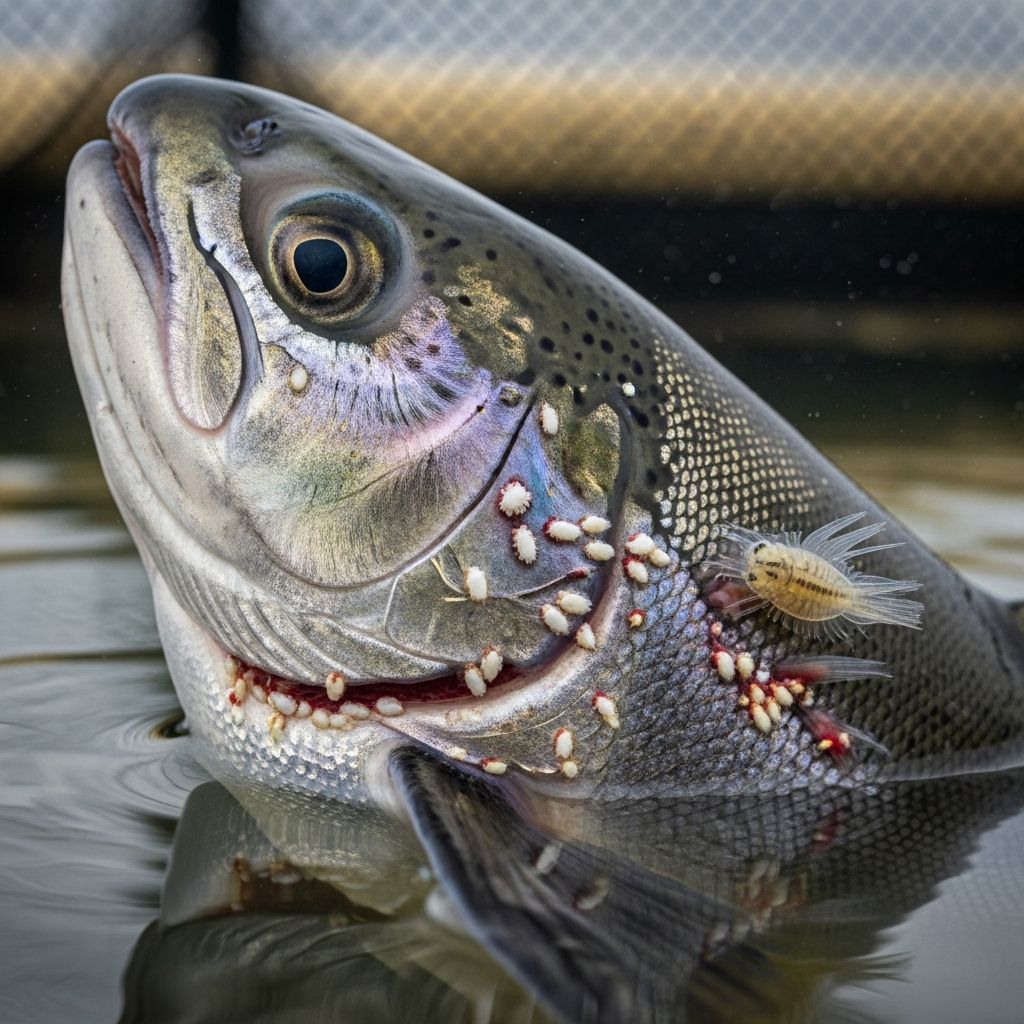
Parasitic organisms represent one of the most significant health challenges facing modern aquaculture operations worldwide. Unlike wild fish populations that may naturally carry parasites without manifesting severe disease, concentrated farming environments create ideal conditions for rapid parasite proliferation and transmission. Understanding the diversity of parasitic pathogens, their life cycles, and effective management strategies is essential for maintaining productive and sustainable fish farming systems.
The Scope of Parasitic Threats in Aquaculture
Fish farming facilities encounter parasitic organisms from virtually every major animal parasite group, each presenting unique challenges to animal health and economic viability. The confined nature of aquaculture environments fundamentally differs from natural water systems, creating conditions where parasite transmission rates accelerate dramatically. Fish density, water quality, temperature fluctuations, and stress levels all influence parasite establishment and disease progression.
Parasites can be acquired through multiple pathways in farming systems. Spillover events occur when wild fish populations contribute parasitic stages to farmed populations through water circulation or contact. Additionally, infected stock transfers between facilities, contaminated equipment, and inadequate sanitation practices serve as major transmission vectors. Once parasites establish in a confined population, their impacts scale exponentially compared to wild populations.
Major Categories of Fish Parasites
Parasitic organisms affecting farmed fish fall into two primary classifications based on their cellular complexity and life cycle strategies.
Single-Celled Parasites
Protistan parasites comprise the most frequently encountered parasitic threats in aquaculture systems. These microscopic organisms exhibit remarkable diversity in their target tissues and pathogenic mechanisms. Single-celled parasites predominantly feature direct life cycles, meaning they complete their development entirely within or on the fish host without requiring intermediate organisms.
External protistans colonize gill tissues and skin surfaces, causing visible signs including mucus production, behavioral abnormalities such as flashing against tank surfaces, and respiratory distress. Some protistan species develop into chronic infections causing weight loss and reduced feed conversion efficiency. Internal protistans establish infections within the digestive tract or blood systems, producing systemic effects that compromise overall fish health and growth performance.
Multi-Celled Parasites
Metazoan parasites represent larger, more complex organisms with greater tissue-damaging capacity than their protistan counterparts. These parasites employ diverse life cycle strategies, with some requiring intermediate hosts while others complete development directly on fish. Metazoan parasites include flatworms, roundworms, crustaceans, and specialized organisms that infect specific tissues or organs.
The impact of metazoan parasites often correlates with infection intensity. While light infections may cause minimal observable disease, heavy parasite burdens can precipitate catastrophic mortality events. Certain metazoan groups exhibit pronounced host specificity, parasitizing only particular fish species, while others demonstrate broad host ranges affecting numerous species within farming operations.
Identifying Parasitic Infections in Farmed Populations
Accurate diagnosis of parasitic infections requires systematic examination techniques and understanding of clinical presentation patterns. Recognition of disease signs, coupled with laboratory confirmation, enables timely intervention and prevents population-wide outbreaks.
Observable Disease Indicators
Parasitized fish frequently display characteristic behavioral and physical changes that alert farmers to potential infections:
- Excessive mucus coating on skin and fins
- Flashing behavior indicating skin irritation
- Gasping at water surfaces suggesting respiratory compromise
- Unexplained weight loss despite adequate feeding
- Abnormal swimming patterns or lethargy
- Visible lesions, ulcerations, or discoloration
- Loss of appetite and poor feed conversion
- Sudden mortality without obvious external injuries
Laboratory Diagnostic Methods
Definitive diagnosis of parasitic infections relies on microscopic examination of fresh biological samples. Wet mount preparation of gill tissues, skin scrapings, and intestinal contents allows direct visualization of living parasites under magnification. Identifying specific parasite morphology enables targeted treatment selection and infection assessment.
Historical examination techniques remain valuable diagnostic tools. Stained tissue sections reveal internal parasites and their tissue distribution patterns. Some modern diagnostic approaches employ specialized staining methods or histological evaluation to identify organisms and assess tissue damage severity.
Pharmacological Treatment Approaches
Chemical treatments form the foundation of parasite control in aquaculture, with distinct medications targeting specific parasite groups and life stages.
Broad-Spectrum Antiparasitic Agents
Formalin represents a traditional treatment chemical effective against numerous external parasites affecting gills and skin surfaces. This formulation works through oxidative damage mechanisms and continues widespread use in both freshwater and saltwater aquaculture systems. Copper sulfate treatments address external protistan parasites and certain dinoflagellate species, though careful dosing prevents toxicity to fish tissues.
Potassium permanganate provides oxidative parasite control, particularly for external ciliates in pond-reared fish species. Chloroquine addresses specific dinoflagellate parasites, though its use typically restricts to ornamental and non-food fish systems due to regulatory considerations.
Targeted Anthelmintic Medications
Praziquantel emerged as a highly effective anthelmintic agent decades ago, initially demonstrating efficacy against specific parasite groups. This medication has since found application across multiple parasite categories in aquaculture settings, including flatworm parasites affecting gills and eyes, and cestode parasites parasitizing intestinal tissues. Benzimidazole compounds successfully treat nematode infections affecting farmed fish, building on extensive livestock application history.
Metronidazole addresses internal flagellate parasites in ornamental fish species, particularly cichlids and related families, targeting organisms colonizing intestinal tissues. Amprolium and toltrazuril provide treatment options for apicomplexan parasites in multiple fish species, though efficacy varies and continues evaluation.
Integrated Parasite Management Strategies
Sustainable parasite control transcends simple chemical treatment, incorporating multiple intervention points throughout parasite life cycles. Integrated approaches recognize that parasites exhibit remarkable adaptive capacity to environmental changes and chemical pressures, necessitating diversified management tactics.
Environmental and Mechanical Controls
Water quality management directly influences parasite infection rates and disease severity. Maintaining appropriate oxygen levels, managing ammonia and nitrite concentrations, and controlling temperature fluctuations reduce fish stress and enhance immune function. These parameters diminish parasite establishment capacity and moderate disease progression.
Mechanical filtration removes free-living parasite stages from water systems, particularly larval and cercarial forms. This approach complements chemical treatments by reducing environmental parasite loads and transmission opportunities. Regular tank cleaning, substrate management, and equipment sanitization eliminate parasite eggs and resistant stages.
Life Cycle Interruption Techniques
Strategic control of specific parasite life stages offers targeted management approaches. Branchiuran parasites such as Argulus reproduce by depositing egg clusters on submerged objects. Deploying wooden slats, lattices, and branch bundles within infected systems provides substrate for egg deposition, enabling farmers to physically remove egg clusters and prevent larval development.
Intermediate host elimination represents another lifecycle-targeting strategy. Eye fluke parasites depend on snail populations for cercarial production, with individual snails potentially releasing thousands of infective larvae daily. Manual snail removal from pond systems substantially reduces infection pressure on fish populations without requiring chemical inputs.
Stocking and Density Management
Fish density directly correlates with parasite transmission rates and disease severity. Reducing crowding decreases contact frequency between infected and susceptible individuals, slowing infection spread. Species-specific stocking recommendations prevent density-related stress that suppresses immune function and facilitates parasitic establishment.
Quarantine protocols for new stock additions prevent introduction of parasites into previously uninfected populations. Observation periods, diagnostic testing, and preemptive treatment of incoming fish reduce spillover risks and protect established farming operations.
Chemical Resistance and Treatment Limitations
Intensive reliance on specific chemical treatments has precipitated resistance development in certain parasite populations, reducing medication efficacy in affected regions. Sea lice parasites in salmon farms exemplify this challenge, with documented resistance to multiple pesticide classes limiting treatment options.
Overuse of antimicrobial agents in aquaculture contributes to broader antibiotic resistance concerns affecting both farmed and wild fish populations, with potential human health implications. Judicious treatment protocols employing rotation strategies and restricted usage periods help preserve medication efficacy for future applications.
Species-Specific Parasitic Concerns
Certain parasite-host combinations present particular challenges in aquaculture settings.
| Parasite Type | Common Fish Hosts | Primary Effects | Management Focus |
|---|---|---|---|
| Gyrodactylid monogeneans | Ornamental species | Skin and eye lesions | Early detection, formalin treatment |
| Dactylogyrids | Goldfish, koi, cyprinids | Gill damage, respiratory distress | Water quality, density reduction |
| Myxozoan parasites | Salmonids, carp | Tissue invasion, systemic disease | Genetic selection, water treatment |
| Nematode parasites | Eels, various species | Organ damage, inflammation | Benzimidazole treatment, sanitation |
Future Directions in Parasite Management
Emerging research continues identifying vulnerable parasite life cycle stages amenable to novel intervention strategies. Immunological approaches exploiting fish immune responses offer complementary control mechanisms reducing chemical dependency. Genetic selection for parasite-resistant fish strains represents a long-term sustainability strategy.
Biological control methods utilizing natural predators or competing organisms provide alternative management approaches. Continued scrutiny of parasite biology and aquaculture system dynamics will reveal additional intervention opportunities supporting more sustainable farming practices.
Frequently Asked Questions
What are the most common parasites in fish farms?
Single-celled protistan parasites and flatworm monogeneans represent the most frequently encountered parasitic threats in aquaculture systems, though specific parasites vary by fish species, water type, and geographic location.
How quickly can parasites spread in farming systems?
Parasites with direct life cycles can establish rapidly in confined populations, potentially progressing from initial infection to population-wide outbreak within days or weeks depending on water temperature and fish density.
Can parasites be eliminated from an infected system?
Complete parasite elimination requires integrated approaches combining chemical treatment, environmental management, and life cycle interruption strategies. Persistent management prevents reestablishment rather than achieving permanent elimination.
Are parasite treatments safe for food fish?
Treatment safety varies by medication and food fish classification. Many effective treatments restrict application to ornamental fish, while food fish require approved medications with established withdrawal periods before harvest.
How does wild fish contact affect farm parasite loads?
Spillover events from wild populations can introduce new parasitic species into farming systems through water contact or escaped farmed fish. Facility location and water source management help minimize these transmission risks.
References
- Parasitic Diseases of Fish — Merck Veterinary Manual, Department of Large Animal Clinical Sciences, College of Veterinary Medicine, University of Florida. https://www.merckvetmanual.com/exotic-and-laboratory-animals/aquarium-fish/parasitic-diseases-of-fish
- Control of parasitic diseases in aquaculture — National Institutes of Health, National Center for Biotechnology Information. 2023. https://pmc.ncbi.nlm.nih.gov/articles/PMC10090776/
- Disease, Parasites and Chemicals — SeaChoice. https://www.seachoice.org/info-centre/aquaculture/disease-parasites-and-chemicals/
- Aquaculture Fish Health — NOAA Fisheries, National Oceanic and Atmospheric Administration. https://www.fisheries.noaa.gov/national/aquaculture/aquaculture-fish-health
Similar Articles








Read full bio of medha deb


