

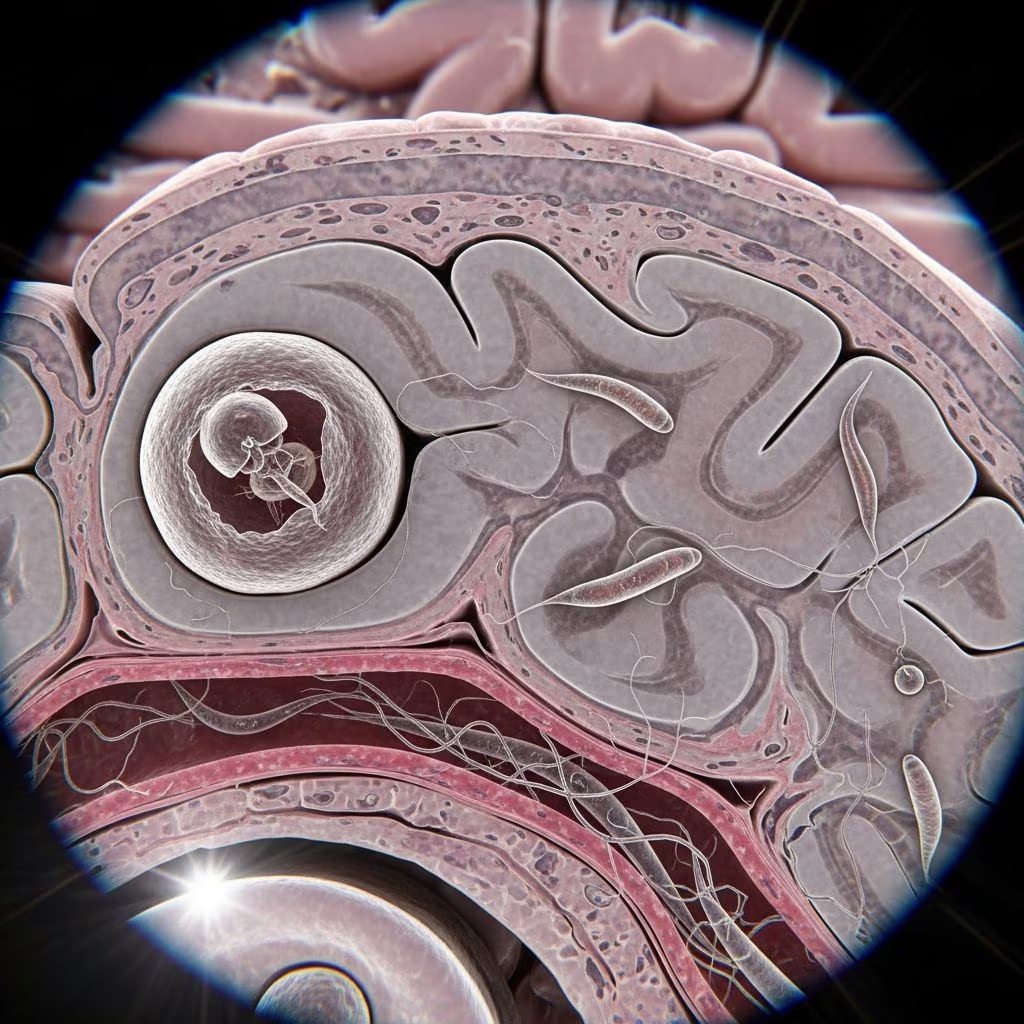
The central nervous system (CNS) represents a critical target for various parasitic organisms that can cause severe neurological disease in animals. These infections, caused by diverse metazoan parasites including helminths and arthropods, represent a significant veterinary concern worldwide. Understanding the mechanisms by which these organisms invade the CNS, their pathogenic effects, and diagnostic approaches is essential for veterinary professionals and animal health specialists.
Classification Framework for Parasitic CNS Disease
Parasitic infections affecting the central nervous system can be organized into distinct categories based on the natural history and host specificity of the organisms involved. This classification system provides a practical approach to understanding how different parasites interact with the nervous system.
Predilection-Site Parasites
Certain parasites have evolved to specifically target neural tissue within their definitive hosts. These organisms possess adaptations that allow them to locate, establish, and persist within the CNS as part of their normal developmental cycle. In these cases, the presence of the parasite in the nervous system typically represents a characteristic feature of the organism’s life cycle and may or may not produce clinical disease depending on the host species and parasite burden.
Erratic Migration Parasites
Some parasitic species normally establish infections in non-neurological sites but occasionally wander aberrantly into neural tissue. These parasites lack specific neurotropic adaptations and their presence in the CNS usually results from abnormal host-parasite interactions or unusual circumstances. Despite their accidental nature, aberrant migrations can produce severe clinical signs due to the sensitive nature of neural tissue and the inflammatory response elicited by the parasite’s presence.
Incidental Host Infections
Certain parasites demonstrate host specificity, causing minimal or no disease in their natural definitive hosts while producing severe neurological disease in aberrant or incidental hosts. These organisms may possess mechanisms to avoid neural tissue in adapted hosts but cause pathogenic CNS migration in unsuitable hosts. This category highlights the importance of host-parasite coevolution and adaptation.
Major Parasitic Groups Affecting the Nervous System
Roundworm Infections
Nematodes represent a substantial portion of parasitic CNS infections across diverse animal species. Several roundworm species demonstrate neurotropic tendencies or the capacity to cause CNS disease through aberrant migration.
Ascarid Roundworms: Larvae of ascarid species, including Toxocara and Baylisascaris genera, can migrate to the CNS and establish larval infections. Baylisascaris procyonis, found in raccoon intestines, presents a particularly significant zoonotic threat. This parasite infects over 90 species of wild and domesticated animals and frequently causes neurological disease characterized by larva migrans syndrome. The organism demonstrates remarkable host range flexibility, though some species including opossums and skunks show relative resistance to neurologic complications.
Filarial Nematodes: Dirofilaria immitis, the canine heartworm, occasionally causes aberrant CNS infections despite its primary tropism for cardiac tissue. Additional filarial species such as Setaria digitata causes motor weakness, ataxia, and paralysis in horses, goats, and sheep through CNS invasion. The developing worms produce focal tissue degeneration and myelin sheath damage throughout the nervous system.
Specialized Neurotropic Nematodes: Parelaphostrongylus tenuis, commonly called brainworm, demonstrates specific neurological predilection in its definitive white-tailed deer host while causing severe, often fatal disease in incidental hosts such as moose, elk, and llamas. Adult worms establish infections in the cranial meninges and subdural space, where their presence elicits hemorrhage and meningeal inflammation.
Fluke Parasitism
Trematode parasites, particularly lung and blood flukes, can establish infections within neural tissue through diverse mechanisms. Paragonimus species migrate anomalously into the CNS where they create characteristic tunneling through neural parenchyma. The migratory passages left by adult flukes trigger inflammatory responses including aseptic meningitis and granuloma formation. Schistosome parasites deposit eggs that reach the CNS via aberrant vascular dissemination, creating cyst-like lesions and inflammatory granulomas. Three schistosome species affecting humans demonstrate distinct CNS tropism patterns, with some preferentially affecting spinal tissue while others target cerebral structures.
Arthropod-Associated Neurological Disease
Dipteran Larval Infections
Myiasis, the parasitic development of dipteran fly larvae within animal tissues, can involve the CNS when Cuterebra larvae wander aberrantly from their typical subcutaneous sites. These larvae, normally found beneath the skin in dogs and cats, have been documented invading cerebral and cerebellar tissue. Treatment presents unique challenges because organophosphate compounds that eliminate larvae can simultaneously cause nervous system damage. Corticosteroid therapy becomes necessary to manage secondary inflammatory damage and elevated intracranial pressure during parasiticide treatment.
Pathogenic Mechanisms and Clinical Manifestations
Direct Tissue Damage
Parasitic CNS infections produce clinical signs through multiple mechanisms. Direct mechanical damage occurs as parasites migrate through neural tissue, creating hemorrhagic tracks and focal necrosis. Large parasites may produce mass effects through their physical bulk, increasing intracranial pressure and causing secondary ischemic damage. Some parasites secrete toxic substances that directly damage nervous tissue and blood vessels.
Inflammatory Response
The host immune response to parasitic presence within the CNS generates substantial neurological consequences. Granuloma formation around parasitic stages creates localized inflammation and tissue destruction. Vasculitis, triggered by parasitic antigens, damages blood vessel walls and can result in hemorrhage or infarction. Meningeal inflammation produces cerebrospinal fluid abnormalities detectable on clinical examination.
Clinical Sign Patterns
Neurological manifestations vary depending on the specific parasitic species, location of infection, and parasite burden. Common clinical signs include:
- Motor dysfunction including weakness, ataxia, and incoordination
- Sensory abnormalities and behavioral changes
- Seizure activity and head deviation
- Cranial nerve dysfunction including blindness and drooping eyelids
- Paralysis affecting limbs or trunk
- Loss of trained behaviors such as herding instinct
- Depression and altered consciousness
Diagnostic Approaches and Challenges
Clinical Examination
Neurological examination establishes the location and severity of CNS involvement. Specific reflex and motor abnormalities help localize lesions within the brain or spinal cord. However, parasitic CNS disease produces nonspecific findings that overlap substantially with viral encephalitis and other neuroinflammatory conditions.
Cerebrospinal Fluid Analysis
Examination of cerebrospinal fluid provides valuable diagnostic information. Eosinophilic pleocytosis, elevated protein, and specific antibody detection support parasitic infection diagnosis. In Parelaphostrongylus tenuis infections, cerebrospinal fluid eosinophilia exceeding 17% suggests parasitic infection in endemic regions. However, direct parasite visualization in CSF occurs infrequently.
Advanced Imaging
Magnetic resonance imaging and computed tomography reveal neural tissue involvement, though parasitic infections produce nonspecific lesions resembling other CNS diseases. Imaging may demonstrate hemorrhage, edema, or mass effects but cannot definitively identify the parasitic etiology.
Necropsy Examination
Currently, definitive diagnosis of many CNS parasitic infections relies on post-mortem examination. Direct visualization of parasites within neural tissue, identification of migration tracks, and associated histologic lesions provide conclusive diagnosis. This limitation emphasizes the diagnostic challenges of parasitic CNS disease in living animals.
Prevention and Management Strategies
Preventive Medicine
Regular deworming programs reduce parasitic burdens in animals at risk for CNS infections. This approach proves particularly important for animals with access to intermediate hosts such as snails, slugs, and insects. Avoiding consumption of infected animal tissues prevents transmission of certain parasites including Baylisascaris and tissue-dwelling helminths.
Environmental Management
Reducing intermediate host populations and limiting exposure to contaminated environments decreases infection risk. Proper sanitation of animal housing and food preparation facilities minimizes parasitic transmission. Geographic awareness of endemic parasitic species informs preventive strategies for animals in specific regions.
Therapeutic Considerations
Parasiticide selection requires careful consideration of drug effects on nervous tissue. While certain medications eliminate parasites effectively, they may cause secondary neurological damage. Supportive care including anti-inflammatory therapy becomes essential to manage treatment-induced complications and progression of parasitic disease.
Zoonotic Implications
Several parasites causing CNS disease in animals also threaten human health. Baylisascaris procyonis causes larval migrans in humans with particular risk to children. Parelaphostrongylus and Angiostrongylus species produce neurological disease in humans exposed to infected animal tissues or intermediate hosts. Understanding animal parasitic CNS diseases provides insight into emerging zoonotic threats and informs public health prevention strategies.
Species-Specific Considerations
Companion Animals
Dogs and cats face risks from multiple CNS parasites including Toxocara, Baylisascaris, Dirofilaria, and aberrant Cuterebra infections. Cats demonstrate particular susceptibility to certain parasitic species, while some conditions show breed or age predisposition.
Equine and Ruminant Disease
Horses, cattle, sheep, and goats contract distinct CNS parasitic infections. Setaria digitata causes significant neurological disease in these species, while Parelaphostrongylus affects vulnerable ungulates. Ruminant husbandry practices influence parasitic disease risk substantially.
Wildlife Infections
Wild animals serve as natural hosts and reservoirs for parasitic species. Understanding parasitic ecology in wildlife populations informs prediction and management of spillover events affecting domestic and companion animals.
Frequently Asked Questions
Can parasitic CNS infections be cured?
Treatment success depends on parasite species, infection stage, and host immune status. Early intervention with appropriate parasiticides offers the best prognosis, though permanent neurological damage may persist even after successful parasite elimination.
How do animals acquire parasitic CNS infections?
Transmission routes vary by species. Ingestion of intermediate hosts (snails, slugs, insects, crustaceans), consumption of infected tissues, and percutaneous larval penetration represent primary transmission mechanisms.
Are all parasitic CNS infections fatal?
Mortality varies widely. Some infections cause severe neurological disease with high fatality rates, while others produce mild clinical signs. Host factors, parasite burden, and treatment timing influence outcomes substantially.
What preventive measures are most effective?
Regular deworming, avoiding intermediate host consumption, maintaining clean environments, and geographic awareness of endemic parasites represent cornerstone prevention strategies.
Conclusion and Clinical Implications
Parasitic infections of the central nervous system represent complex veterinary challenges requiring integration of clinical assessment, supportive care, and parasiticide therapy. The diversity of parasitic species, varied pathogenic mechanisms, and diagnostic limitations demand thorough clinical knowledge and systematic diagnostic approaches. Recognition of geographic risk factors, host susceptibility patterns, and zoonotic implications enables veterinary professionals to provide optimal care while protecting public health. Ongoing research into parasitic CNS pathogenesis and development of improved diagnostic and therapeutic methods continue to enhance management outcomes for affected animals.
References
- Central Nervous System Disorders Caused by Parasites in Dogs — MSD Veterinary Manual. Accessed 2026. https://www.msdvetmanual.com/dog-owners/brain-spinal-cord-and-nerve-disorders-of-dogs/central-nervous-system-disorders-caused-by-parasites-in-dogs
- Nematodes Causing CNS Disease in Animals – Nervous System — Merck Veterinary Manual. Accessed 2026. https://www.merckvetmanual.com/nervous-system/central-nervous-system-diseases-caused-by-helminths-and-arthropods/nematodes-causing-cns-disease-in-animals
- Parasitic Diseases of the Central Nervous System — PubMed Central, National Institutes of Health. 2015. https://pmc.ncbi.nlm.nih.gov/articles/PMC4926779/
- About Toxocariasis — Centers for Disease Control and Prevention (CDC). Accessed 2026. https://www.cdc.gov/toxocariasis/about/index.html
- Parasitic Infections of the Central Nervous System – Equine Neurology — Wiley Online Library. Accessed 2026. https://onlinelibrary.wiley.com/doi/abs/10.1002/9781118993712.ch23
- Brainworm (P. tenuis) — Cornell Wildlife Health Lab. Accessed 2026. https://cwhl.vet.cornell.edu/resource/brainworm-p-tenuis



