

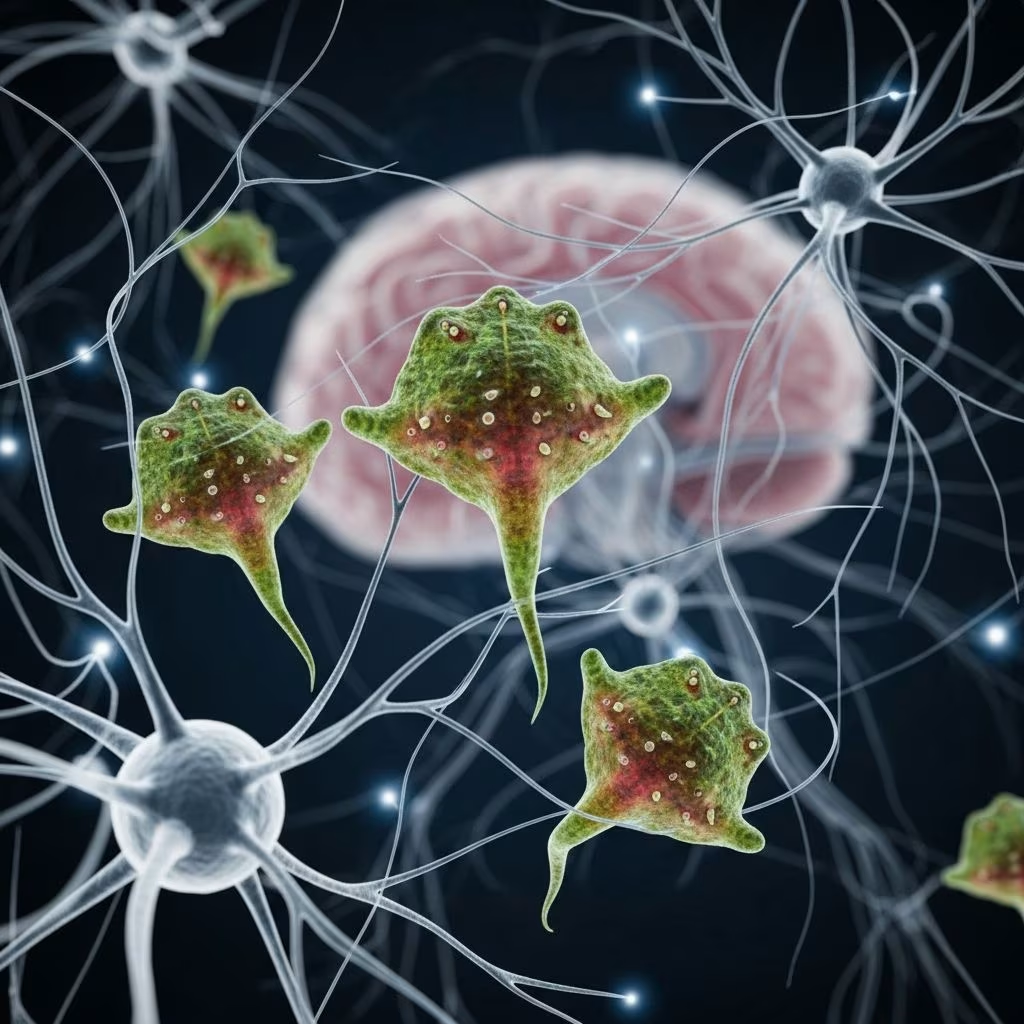
Parasitic infections affecting the central nervous system represent a significant challenge in veterinary medicine, particularly when caused by trematodes, commonly known as flukes. These flatworm parasites possess a remarkable ability to migrate aberrantly through animal tissues, sometimes reaching and establishing themselves within the brain and spinal cord. Understanding the mechanisms by which these parasites cause neurological disease is essential for veterinarians diagnosing and treating affected animals. This comprehensive overview examines the major trematode species responsible for CNS infections in animals, their pathophysiological mechanisms, and current therapeutic approaches.
Understanding Trematode Parasites and Their Neurological Potential
Trematodes are obligate internal parasites characterized by complex life cycles involving multiple hosts. While most species establish themselves in their preferred anatomical locations—such as the lungs, bile ducts, or blood vessels—some individuals aberrantly migrate into the nervous system. This erratic behavior can occur across a diverse range of animal species, including both domesticated and wild populations. The ability of certain trematode species to access and establish infections within the CNS depends on multiple factors, including the parasite’s developmental stage, the host species involved, and various immunological and physiological variables that influence parasite survival and tissue penetration.
Lung Fluke Infections and Brain Involvement
The lung flukes Paragonimus westermani and Paragonimus kellicotti represent important causative agents of CNS disease in various animal species. These parasites normally establish infections within the pulmonary tissue, where they complete their developmental cycle and produce patent infections through the coughing and expectoration of eggs. However, in certain instances, larvae or adult flukes deviate from their typical migration pathway and penetrate into the cranial vault, establishing cystic lesions within the brain parenchyma and spinal cord tissue.
When lung flukes aberrantly migrate to the CNS, they typically form encapsulated lesions that may remain dormant or cause progressive neurological deterioration. The documented hosts include domesticated animals such as pigs, dogs, and cats, as well as laboratory rodents and human individuals. A critical distinction in extraneural infections is that these aberrant parasites do not produce patent infections in the nervous system—meaning that eggs are not expelled through normal routes. This establishes what veterinarians term a “dead-end” infection, where the parasite cannot complete its transmission cycle and gradually dies within the host tissue.
The clinical significance of these aberrant migrations lies in their potential to cause mass effects, mechanical obstruction of CSF flow, and the inflammatory responses generated by the host immune system attempting to wall off the foreign organisms. Progressive neurological signs may develop insidiously, and diagnosis often requires advanced neuroimaging combined with careful clinical correlation.
Blood Fluke Complications in the Nervous System
Schistosomes, commonly referred to as blood flukes, occupy an important niche within the small vessels of the gastrointestinal tract and urinary bladder. These parasites rely on the passage of eggs through fecal or urinary elimination for transmission to intermediate aquatic hosts. However, in some infected animals, eggs escape the normal vascular route and enter systemic circulation, potentially depositing within CNS vasculature where they become encapsulated by host tissues.
The pathophysiology of schistosomal CNS involvement differs significantly from that of lung fluke infections. Rather than establishing cystic lesions, schistosome eggs trapped within nervous system vasculature initiate a granulomatous inflammatory response. The host immune system attempts to isolate the parasitic antigen through formation of granulomas composed of inflammatory cells. During the chronic phase of infection, these granulomas may become exudative and necrotic, potentially disrupting normal neurological function.
Different Schistosoma species demonstrate distinct patterns of CNS involvement. While Schistosoma mansoni and Schistosoma haematobium predominantly affect spinal cord structures, Schistosoma japonicum exhibits a predilection for brain tissue. This species-specific localization likely reflects differences in egg size, host vascular anatomy, and parasite biology, though the precise mechanisms remain incompletely understood. The entry into the nervous system is theorized to occur through Batson’s plexus, a venous network that provides an alternative route to systemic circulation.
Sinus-Dwelling Flukes and Meningeal Invasion
Troglotrema acutum represents an unusual trematode species with a distinct pathogenic mechanism involving direct invasion of cranial structures. This parasite inhabits the frontal and ethmoidal sinuses of foxes and mustelid species across Europe, establishing itself within cystic chambers formed within sinus epithelium. The flukes characteristically live in pairs within these protective cysts, demonstrating a remarkable adaptation to the sinus microenvironment.
The serious complication arising from chronic Troglotrema acutum infections involves progressive pathological changes to bony sinus structures. The parasites induce decalcification of the sinus walls, leading to thinning and atrophy of these normally protective bone barriers. Over time, this erosive process results in penetration of the cribriform plate—a delicate bony structure forming the roof of the nasal cavity and separating the olfactory bulbs from the nasal passages. Once this anatomical barrier breaches, pathogenic microorganisms gain access to the cranial vault, establishing a fulminant meningeal infection.
The resulting purulent meningitis constitutes a medical emergency with fatal consequences in virtually all cases. The rapid dissemination of bacteria throughout the meninges and cerebrospinal fluid overwhelms the animal’s immune system. Notably, no effective therapeutic interventions currently exist for Troglotrema acutum infections, making prevention through appropriate sanitation and parasite control measures the only viable management strategy for susceptible animal populations.
Species Susceptibility and Resistance Patterns
The development of parasitic CNS disease following trematode infection does not occur uniformly across all animal species. Certain species demonstrate remarkable resistance or marginal susceptibility to aberrant neurological migration, even when exposed to high parasite burdens. Opossums, skunks, cats, pigs, sheep, and goats appear to possess biological factors that either prevent parasites from reaching the CNS or limit the extent of neurological involvement when infections do occur.
This species-specific variation likely reflects multiple biological mechanisms operating at the population and individual level. Differences in vascular anatomy, CSF dynamics, blood-brain barrier function, and systemic immune responses all potentially contribute to differential susceptibility. Additionally, behavioral factors—such as feeding habits that influence parasite acquisition—and ecological exposure patterns shape the epidemiology of trematode CNS disease within different species. Understanding these susceptibility patterns assists veterinarians in risk-stratifying patients and formulating evidence-based prevention and surveillance strategies.
Clinical Manifestations of Trematode CNS Infections
The neurological signs arising from trematode CNS infections depend on multiple variables including parasite location, lesion size, inflammatory response intensity, and the specific neural structures affected. Animals with brain involvement may present with behavioral changes, seizure activity, ataxia, or other motor dysfunction. Progressive neurological decline is commonly observed, reflecting the chronic nature of granuloma formation or cystic expansion.
Spinal cord involvement typically manifests with progressive myelopathic signs including weakness, loss of coordination, and eventual paraparesis or paraplegia. The rate of progression varies considerably; some animals remain stable for extended periods while others deteriorate rapidly depending on lesion characteristics and immune activation levels.
Diagnostic Approaches and Neuroimaging
Definitive diagnosis of trematode CNS infections presents significant challenges due to the rarity of these conditions and nonspecific clinical presentations. Advanced neuroimaging including magnetic resonance imaging and computed tomography can identify intracranial or spinal lesions suggestive of parasitic infections. However, imaging findings alone cannot distinguish trematode infections from neoplastic, inflammatory, or vascular disease processes.
Cerebrospinal fluid analysis may reveal elevated protein concentrations, pleocytosis, or granulomatous inflammation, providing supportive evidence for parasitic involvement. Serological testing using parasite-specific antibodies offers additional diagnostic utility in some cases, though sensitivity and specificity vary depending on infection stage and host immune status. Direct visualization of parasitic elements through tissue examination or cytological analysis rarely occurs in ante-mortem diagnostics, as established CNS infections are typically difficult to sample safely.
Treatment Considerations and Limitations
Therapeutic management of trematode CNS infections presents formidable challenges due to limited effective antiparasitic options combined with inherent complications associated with parasite eradication within neural tissue. Anthelmintic agents capable of killing parasites within the CNS may paradoxically exacerbate neurological dysfunction through acute inflammatory responses triggered by rapid parasite death and release of antigenic material.
Ivermectin and organophosphate compounds demonstrate activity against certain larval stages and nematodes, though their efficacy against established trematode infections remains questionable. The blood-brain barrier frequently limits penetration of systemically administered antiparasitic drugs into CNS tissue, reducing therapeutic effectiveness for infections within neural structures.
In conditions such as Troglotrema acutum infection, no viable treatment modalities exist. Once the cribriform plate has been breached and meningitis established, supportive care and palliative management represent the only humane options available. This underscores the paramount importance of preventive measures including appropriate sanitation, water safety, and parasite control in susceptible animal populations.
Differential Diagnosis and Diagnostic Algorithm
When confronted with an animal presenting neurological signs suggestive of potential parasitic etiology, veterinarians must carefully consider alternative diagnoses before attributing pathology to trematode infections. Rabies represents the most critical differential diagnosis requiring exclusion, particularly in animals with acute onset behavioral changes, aggression, or unexplained neurological deterioration. Vaccination status, exposure history, and species predisposition should be carefully evaluated.
Additional differential diagnoses include infectious meningoencephalitis from bacterial, viral, or fungal pathogens; neoplastic lesions affecting neural tissue; vascular accidents including stroke; and traumatic CNS injury. The animal’s age, vaccination record, geographic location, and exposure to parasites through diet or environment all contribute to establishing diagnostic probability for parasitic involvement.
Prevention and Epidemiological Considerations
Effective prevention of trematode CNS infections requires understanding parasite transmission dynamics and implementing appropriate host management strategies. Many trematode species depend on aquatic intermediate hosts, making water source management critical in endemic regions. Avoiding feeding raw or undercooked freshwater fish containing metacercariae reduces transmission risk for susceptible species.
In geographic areas where specific trematodes are endemic, targeted surveillance of wildlife and domestic animal populations aids in identifying areas of elevated transmission. Parasitological surveys examining fecal samples, necropsy findings, and serological studies provide epidemiological data informing public health recommendations. Education of animal caretakers regarding prevention practices, including proper food preparation and sanitation, reduces infection incidence in managed populations.
Future Directions in Research and Clinical Management
Ongoing investigation into the immunological factors determining species-specific resistance to trematode CNS invasion may eventually identify therapeutic targets for enhancing host defense mechanisms. Development of novel antiparasitic agents with improved CNS penetration and reduced toxicity to neural tissue could expand treatment options. Better understanding of parasite neurotropism and the molecular mechanisms underlying aberrant migration patterns may reveal intervention points for preventing CNS involvement.
Collaborative efforts between veterinary parasitologists, neurologists, and clinical practitioners continue to expand the knowledge base regarding rare parasitic CNS infections. Case reporting through peer-reviewed literature and professional networks improves diagnostic awareness and case recognition, ultimately benefiting animal welfare through earlier intervention and appropriate management planning.
References
- Trematodes Causing CNS Disease in Animals — Merck Veterinary Manual. Accessed via https://www.merckvetmanual.com/nervous-system/central-nervous-system-diseases-caused-by-helminths-and-arthropods/trematodes-causing-cns-disease-in-animals
- Neuroparasitic Infections: Cestodes, Trematodes, and Protozoans — National Center for Biotechnology Information (NCBI). https://pmc.ncbi.nlm.nih.gov/articles/PMC2683840/
- Overview of Central Nervous System Diseases in Animals Caused by Helminths and Arthropods — Merck Veterinary Manual. https://www.merckvetmanual.com/nervous-system/central-nervous-system-diseases-caused-by-helminths-and-arthropods/overview-of-central-nervous-system-diseases-in-animals-caused-by-helminths-and-arthropods
- Parasitic Diseases of the Central Nervous System — National Center for Biotechnology Information (NCBI). https://pmc.ncbi.nlm.nih.gov/articles/PMC4926779/



