

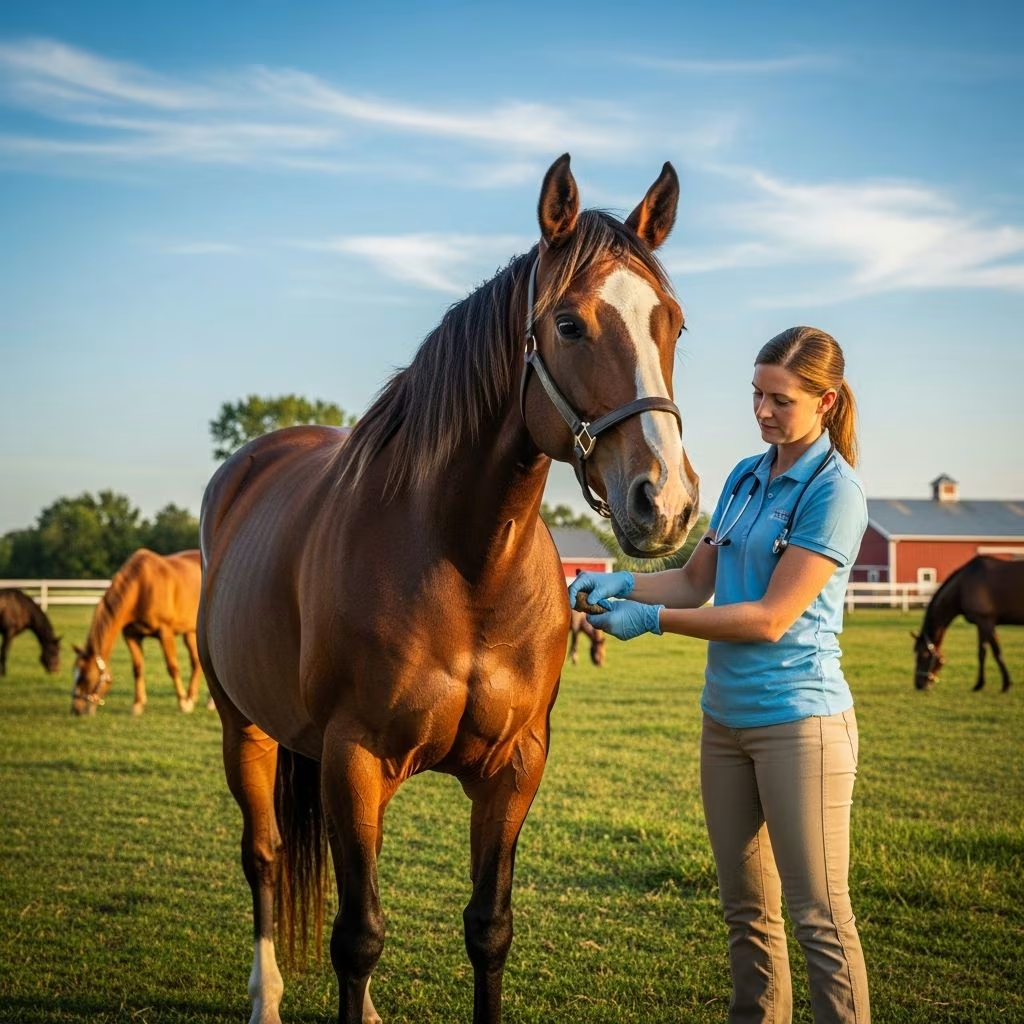
Effective parasite control is crucial for pregnant mares to prevent health complications for both the mare and developing foal. Parasites such as small strongyles, ascarids, bots, and tapeworms can lead to weight loss, colic, and developmental issues if not managed properly. By integrating strategic deworming with robust environmental practices, horse owners can minimize risks and promote optimal reproductive outcomes.
Understanding Parasite Threats to Breeding Horses
Internal parasites pose unique challenges during pregnancy because they can pass through the placenta or contaminate the foaling environment, exposing newborns early. Small strongyles, the most common culprits, encyst in the gut walls and emerge in large numbers, potentially causing severe inflammation known as larval cyathostomiasis. Ascarids primarily affect younger horses but can burden mares, leading to poor nutrient absorption essential for fetal growth. Bots and tapeworms add further risks, with bots migrating through tissues and tapeworms contributing to colic.
Horses ingest these parasites via contaminated pasture, feed, or water. Eggs shed in manure hatch into infective larvae under warm, moist conditions, perpetuating the cycle. Pregnant mares, with heightened nutritional demands, are particularly vulnerable to the energy-draining effects of parasitism. Proactive management disrupts this cycle at multiple points, from farm hygiene to precise pharmacological interventions.
Diagnostic Tools: The Role of Fecal Egg Counts
Fecal egg counts (FEC) are the cornerstone of modern parasite control, allowing tailored treatments rather than blanket approaches. This test quantifies eggs per gram of manure, classifying horses as low (<200 epg), medium (200-500 epg), or high (>500 epg) shedders. High shedders contribute disproportionately to pasture contamination, so targeting them reduces overall farm parasite loads.
- Perform FEC 2-4 times annually, aligning with seasonal risks like spring and fall.
- Conduct fecal egg count reduction tests (FECRT) post-deworming to assess efficacy; a >95% reduction indicates susceptibility, while lower values signal resistance.
- New arrivals should be quarantined and tested to prevent introducing resistant strains.
Regular monitoring shifts from interval-based to evidence-based deworming, preserving drug effectiveness amid growing anthelmintic resistance.
Safe Deworming Schedules for Expectant Mares
Dewormers labeled safe for pregnant mares include ivermectin, moxidectin, fenbendazole, and pyrantel. Timing is critical to avoid larval migration phases that could harm the fetus. Veterinary guidance ensures region-specific adjustments based on parasite prevalence.
| Gestation Stage | Recommended Treatments | Target Parasites |
|---|---|---|
| Pre-breeding/Late Winter | Ivermectin, pyrantel, or fenbendazole (low shedders); larvicidal fenbendazole or moxidectin (high shedders) | General roundworms, early strongyles |
| Spring/Post-Foaling | Ivermectin or broad-spectrum options | Small strongyles, ascarids |
| Mid-Pregnancy (End First/Second Trimester) | Fenbendazole, ivermectin, pyrantel; repeat for high shedders | Broad-spectrum coverage |
| Third Trimester/Late Fall | Moxidectin or ivermectin for bots/encysted larvae; praziquantel or double-dose pyrantel for tapeworms | Bots, tapeworms, encysted strongyles |
| Pre-Foaling (2-4 Weeks Prior) | Safe broad-spectrum dewormer | Minimize foal exposure |
This schedule, adapted from expert guidelines, balances efficacy with safety. High shedders may need additional treatments, confirmed via FEC. Products like Quest Gel (moxidectin) and Quest Plus (moxidectin/praziquantel) are vetted for breeding mares.
Environmental Strategies to Break Parasite Cycles
Non-chemical controls are vital, as dewormers alone cannot address environmental reservoirs. Pasture management reduces larval ingestion by limiting exposure.
- Manure Removal: Clear stalls daily and pastures weekly; compost piles to >102°F (40°C) kills eggs. Use vacuums for efficiency on larger properties.
- Pasture Rotation: Divide fields into sections, resting each 4-6 weeks to allow larval die-off. Avoid overgrazing, which forces consumption of contaminated roughs.
- Co-Grazing: Follow horses with cattle, sheep, or goats, which consume equine larvae harmlessly, interrupting life cycles.
- Feed and Water Hygiene: Elevate feeders 2-3 feet off-ground; clean troughs daily to prevent fecal contamination.
- Sacrifice Areas: Designate high-traffic zones for confinement during wet seasons, protecting pastures.
These practices can slash pasture larvae by 50-80%, per extension studies. Limit stocking to 1-2 horses per acre, grouping by age to shield foals from ascarids.
Farm-Wide Integrated Parasite Programs
A holistic approach combines diagnostics, treatments, and habitat modifications. Start with baseline FEC on all horses to identify shedders. Quarantine newcomers for 2-4 weeks, treating based on FECRT.
Seasonal plans align with biology: intensive management in wet springs/falls when larvae thrive. Compost manure away from grazing areas, turning piles regularly for heat buildup. Track progress via annual FEC trends; stable farms may reduce testing to 3x/year.
For breeding operations, prioritize mares and foals. Deworm foals first at 4 weeks (ascarid-focused), repeating every 4-6 weeks until weaning. This protects vulnerable neonates while minimizing resistance buildup.
Addressing Anthelmintic Resistance
Resistance to benzimidazoles, pyrantel, and macrocylic lactones is rising, driven by overuse. FECRT detects it early: treat, retest 14 days later. Rotate classes judiciously, favoring FEC-guided selective therapy.
Environmentals amplify dewormer impact, delaying resistance. Avoid routine 2-month intervals; treat only high shedders 2-4x/year, others 1-2x.
Foal Protection from Day One
Mares pass parasites via milk or placenta minimally, but contaminated environments pose immediate threats. Pre-foaling deworming slashes this risk. Monitor weanlings closely, as stress heightens susceptibility.
Common Challenges and Solutions
| Challenge | Solution |
|---|---|
| High rainfall boosting larvae | Increase rotation frequency, use sacrifice lots |
| Labor-intensive manure removal | Invest in drags, vacuums, or co-grazing |
| Detecting resistance | Annual FECRT on farm dewormers |
| Multiple horse groups | Age-segregated pastures, individual FEC plans |
Frequently Asked Questions (FAQs)
Is it safe to deworm pregnant mares?
Yes, approved products like ivermectin and moxidectin are safe throughout gestation when used per label.
How often should I test FEC?
2-4 times yearly for adults; more for foals and high-risk mares.
Can cattle help control horse parasites?
Absolutely; they eat larvae without harm, breaking cycles.
What if FECRT shows poor reduction?
Switch classes and retest; consult a vet for resistance management.
Do all horses need deworming?
No, low shedders (<200 epg) may skip routine treatments.
This comprehensive framework empowers owners to foster parasite-free environments, ensuring thriving pregnancies and vigorous foals. Consult veterinarians for customized plans.
References
- Whole-Farm Management Strategies for Equine Internal Parasites — Penn State Extension. 2023. https://extension.psu.edu/whole-farm-management-strategies-for-equine-internal-parasites/
- Deworming the Pregnant Mare — Merck Animal Health USA. 2024. https://www.merck-animal-health-usa.com/horse-owners-and-professionals/foal-mare-care/mare-care/deworming-for-the-pregnant-mare/
- Controlling Common Internal Parasites of the Horse — Oklahoma State University Extension. 2023. https://extension.okstate.edu/fact-sheets/controlling-common-internal-parasites-of-the-horse.html
- Equine Parasite Control: Deworming and Beyond — The Horse. 2024. https://thehorse.com/features/equine-internal-parasites/
- Parasite Control — McGee Equine Veterinary Clinic. 2023. https://www.mcgeeequine.com/parasite-control/
- AAEP Internal Parasite Control Guidelines — American Association of Equine Practitioners. 2024-05-01. https://aaep.org/wp-content/uploads/2024/05/Internal-Parasite-Guidelines_Updated.pdf



