

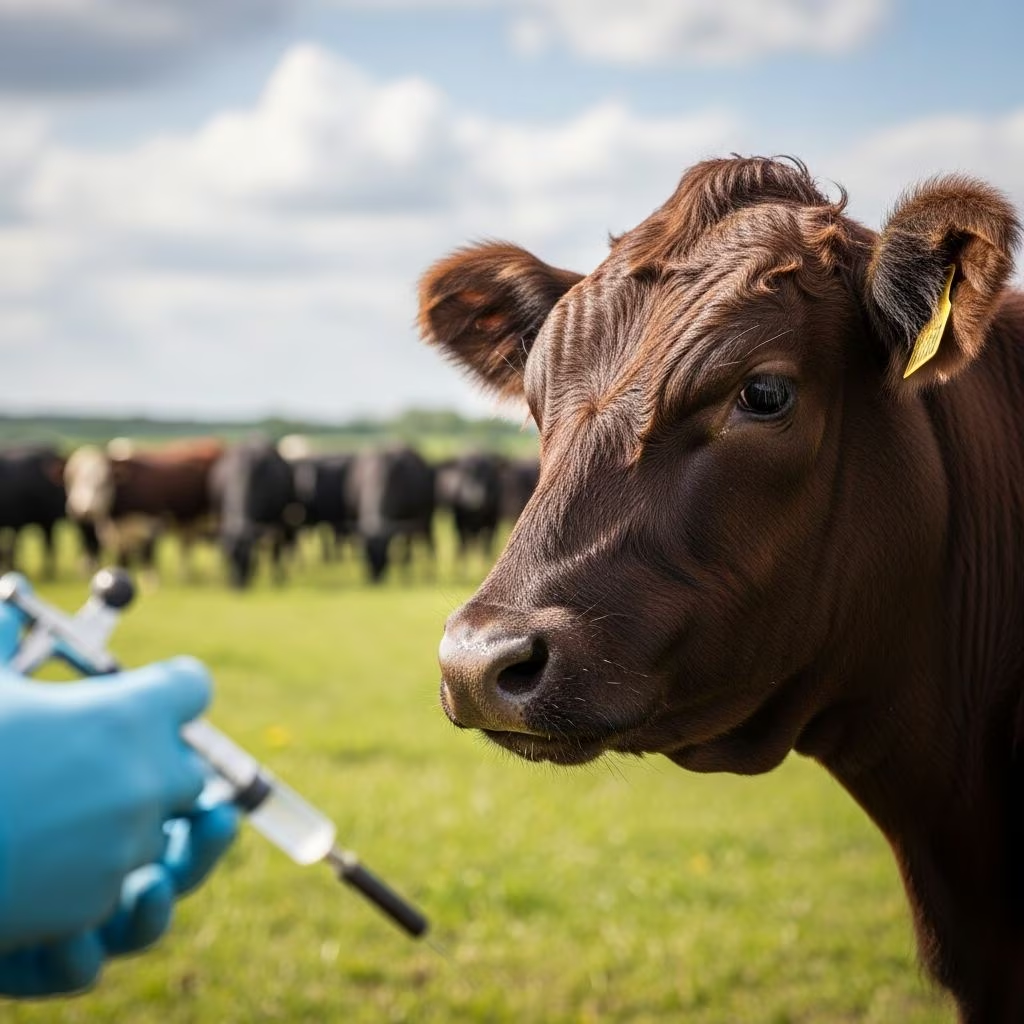
Parasites pose a significant threat to beef cattle health, growth rates, and overall farm profitability. Effective control requires integrating targeted treatments, smart grazing practices, and vigilant monitoring to minimize losses from both internal worms and external pests like flies and lice.
Understanding the Impact of Parasites on Beef Herds
Internal parasites such as roundworms, lungworms, and flukes drain nutrients from cattle, leading to weight loss, reduced feed efficiency, and weakened immunity. Young calves and grazing stock are particularly vulnerable, with heavy infestations stunting development and increasing susceptibility to other diseases. External parasites, including horn flies, lice, grubs, and ticks, irritate the skin, spread diseases, and lower hide quality, further compounding economic impacts through decreased milk production in cows and slower gains in feeders.
Strategic management can yield substantial returns. Producers who implement comprehensive programs often see improved weight gains of 10-20% in calves and reduced veterinary costs across the herd.
Key Internal Parasites Affecting Beef Cattle
- Ostertagia ostertagi (brown stomach worm): Primary pathogen causing abomasal damage, diarrhea, and poor weight gain, especially in spring and fall.
- Cooperia spp.: Small intestinal worms that contribute to malnutrition in young stock.
- Lungworms (Dictyocaulus viviparus): Lead to respiratory issues and coughing fits during humid conditions.
- Flukes and tapeworms: Less common but impactful in wet pastures, affecting liver health and digestion.
These parasites thrive in moist environments, with larvae surviving on pastures for months, perpetuating cycles of reinfection.
External Parasite Challenges in Beef Operations
Horn flies cluster around wounds and genitals, causing bunching and stress. Stable flies target legs, biting aggressively and reducing grazing time. Lice infestations peak in winter, leading to hair loss and rubbing. Cattle grubs migrate under the skin, damaging hides, while ticks transmit anaplasmosis and other pathogens.
| Parasite | Seasonal Peak | Primary Impact |
|---|---|---|
| Horn flies | Summer | Weight loss, reduced milk |
| Lice | Winter | Skin irritation, hide damage |
| Grubs | Fall migration | Hide depreciation |
| Ticks | Spring-Fall | Disease transmission |
Strategic Deworming Programs for Optimal Results
Timing is critical for deworming. Treat cows before calving to reduce larval transmission to calves. Deworm calves at weaning and again 3-4 weeks after pasture turnout to interrupt egg-laying cycles. In grazing systems, spring treatments target immature larvae acquired over winter, while fall doses eliminate arrested stages before housing.
Multiple treatments spaced 3-4 weeks apart for youngstock prevent pasture recontamination. Always consult a veterinarian to tailor programs to regional climate and herd history.
Dewormer Classes and Administration Methods
Three main classes dominate U.S. cattle dewormers: benzimidazoles (e.g., fenbendazole), imidazothiazoles (e.g., levamisole), and macrocyclic lactones (e.g., ivermectin, doramectin). Broad-spectrum options like pour-on macrocyclic lactones control both internal worms and some ectoparasites, offering dual benefits in fall applications against lice and flies.
Choose based on parasite spectrum and resistance status:
- Benzimidazoles: Effective against gut worms and lungworms; available as oral suspensions, granules, or lick blocks.
- Imidazothiazoles: Target roundworms; oral or injectable with short withdrawal times.
- Macrocyclic lactones: Broadest coverage, including inhibited larvae; pour-ons, injectables, or boluses.
Administer pour-ons along the topline from withers to tailhead using calibrated guns. Oral drenches ensure rumen delivery. Weigh animals accurately to avoid underdosing, which accelerates resistance.
Managing Pastures to Break Parasite Cycles
Pastures act as parasite reservoirs. Rotate cattle to allow larval die-off, resting fields for 3+ months. Graze young animals first on contaminated pastures, followed by adults with stronger immunity. Mixed-species grazing with horses or sheep disrupts bovine-specific cycles.
Mechanical practices enhance control: Harrow pastures to expose larvae to sunlight and dry manure pats harboring 80-90% of infective stages. Avoid overstocking, which concentrates parasites. Plant parasite-suppressive forages like chicory or sericea lespedeza, rich in tannins that deter worm establishment.
- Feed hay in racks off-ground to prevent fecal contamination.
- Elevate water sources above reach to block defecation.
- Fence off low-lying, damp areas prone to larval survival.
Controlling External Parasites Effectively
Insecticide ear tags, applied by mid-March, excel against horn flies and ticks, with pyrethroids most reliable for spinose ear ticks. Pour-ons and injectables handle lice and grubs; treat grubs post-heel fly season but before November 1 to avoid hide damage.
Self-treatment devices like backrubbers and dust bags provide continuous exposure in high-pressure areas. Systemic products kill migrating grubs and sucking lice. Integrate with dewormers offering ectoparasite coverage for efficiency.
Preventing Anthelmintic Resistance in Cattle Herds
Resistance emerges from repeated underdosing, single-class reliance, and treating entire herds indiscriminately. Rotate classes annually and use narrow-spectrum products when worms are absent. Perform Fecal Egg Count Reduction Tests (FECRT) every 2 years: Collect pre- and post-treatment samples from 10-12 animals to verify 90%+ efficacy.
Target treatments to high-risk groups: calves, thin cows, or FAMACHA-scored anemic animals (adapted for cattle). Quarantine new arrivals, deworming with dual classes at double dose, and confirm negative fecals before integration.
Nutrition and Immunity Boost for Parasite Resilience
Adequate nutrition bolsters immunity. Provide 130% of maintenance protein, favoring bypass sources, to preparturient cows for stronger colostrum and calf resistance. Zinc and copper supplementation aids external parasite control and worm expulsion, but monitor to prevent toxicity.
Monitoring and Diagnostic Tools
Regular fecal egg counts guide treatments. Body condition scoring and anemia checks (e.g., eyelid color) flag infestations early. Partner with vets for larval cultures identifying resistant strains. Track performance metrics like average daily gain to quantify program success.
Regional Considerations and Integrated Programs
Programs vary by climate: Humid Southeast demands frequent deworming; arid West focuses on dust control for flies. Align treatments with handling events like vaccinations for cost savings. Comprehensive plans combining refugia (untreated animals), rotation, and monitoring sustain long-term efficacy.
Frequently Asked Questions (FAQs)
What is the best time to deworm beef calves?
Deworm at branding, weaning, and 3-4 weeks post-turnout. Fall treatments before winter housing target overwintering larvae.
How do I know if dewormers are still effective?
Conduct FECRT: Egg counts should drop 90%+ two weeks post-treatment. Test multiple animals for accuracy.
Can pasture management alone control parasites?
No, but rotation, harrowing, and mixed grazing reduce loads by 50-70%. Combine with targeted deworming.
What are withdrawal times for common dewormers?
Ivermectin: 35 days; Fenbendazole: 8 days; Morantel: 14 days. Always check labels.
Are ear tags effective for all external parasites?
Best for horn flies and ticks; supplement with pour-ons for lice and grubs.
References
- Effective parasite management in beef calves—what you need to know — Elanco. Accessed 2026. https://farmanimal.elanco.com/us/effective-parasite-management-in-beef-calves-what-you-need-to-know
- Beef Cattle Ectoparasites — Oklahoma State University Extension. Accessed 2026. https://extension.okstate.edu/fact-sheets/beef-cattle-ectoparasites.html
- Control of Parasites in Grazing Beef Cattle — USDA NRCS. 2022-12-01. https://www.nrcs.usda.gov/sites/default/files/2022-12/Control-Parasites-Grazing-Beef-Cattle.pdf
- Best Management Practices for Pasture Parasite Management — Cornell University College of Veterinary Medicine. Accessed 2026. https://www.vet.cornell.edu/animal-health-diagnostic-center/programs/nyschap/modules-documents/best-management-practices-pasture-parasite-management
- Treating for Internal Parasites of Cattle — Purdue University Extension. Accessed 2026. https://www.extension.purdue.edu/extmedia/vy/vy-51.html
- Controlling Parasites — University of Tennessee Beef & Forage Center. 2020-11. https://utbeef.tennessee.edu/wp-content/uploads/sites/127/2020/11/ControllingParasites.254.pdf



