
Parakeratosis In Pigs: Comprehensive Guide To Zinc Dermatitis
Understanding zinc deficiency effects, symptoms, diagnosis, and management strategies for healthier swine herds.
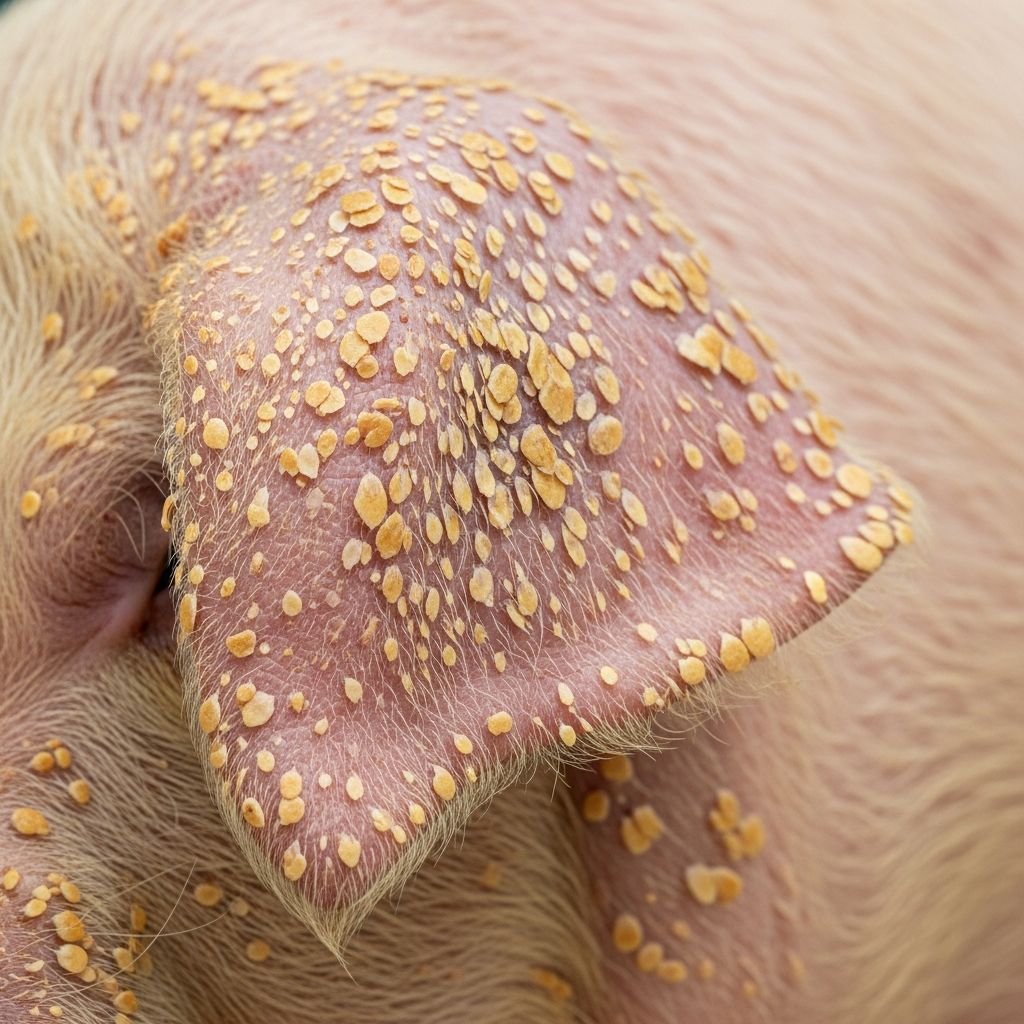
Parakeratosis represents a significant nutritional disorder in swine production, primarily driven by inadequate zinc availability in the diet. This condition manifests as a distinctive crusting dermatitis without intense itching, predominantly impacting growing pigs aged 6 to 16 weeks. Early recognition and corrective measures can prevent widespread herd issues and economic losses.
Understanding the Pathophysiology of Parakeratosis
At its core, parakeratosis arises from disrupted keratinization processes in the epidermal layer of the skin. Normally, keratinocytes mature and shed their nuclei as they migrate to the skin’s surface, forming a protective stratum corneum. In parakeratosis, these cells retain their nuclei, leading to incomplete barrier formation and vulnerability to environmental stressors.
Zinc plays a pivotal role in epithelial integrity, enzyme function, and immune modulation. Deficiency impairs these processes, resulting in hyperplastic epidermis with parakeratotic changes. High dietary calcium or phytate levels exacerbate this by forming insoluble zinc complexes, reducing bioavailability.
Primary Causes and Risk Factors
The etiology centers on zinc unavailability rather than absolute deficiency. Key contributors include:
- Imbalanced rations: Diets with excessive calcium (above 0.8-1%) or phosphorus bind zinc, limiting absorption.
- Phytate-rich feeds: Corn, soybeans, and grains contain phytic acid that chelates minerals.
- Feed manufacturing errors: Inadequate premix inclusion or contamination affects commercial operations.
- Environmental factors: High humidity, poor hygiene, or secondary bacterial overgrowth (e.g., Staphylococcus aureus) worsen lesions.
Growing pigs are most susceptible due to rapid tissue turnover and higher zinc demands during this phase. Historical outbreaks in the 1940s-1950s highlighted the issue in high-grain diets low in bioavailable zinc.
Clinical Presentation and Progression
Symptoms emerge 2-4 weeks after dietary insult, starting with erythematous patches on high-contact areas. Progression follows a predictable pattern:
| Stage | Skin Changes | Common Locations | Associated Signs |
|---|---|---|---|
| Early | Reddening, dryness | Abdomen, inner thighs, legs | Mild scaling |
| Moderate | Crusting, thickening | Ears, neck, perineum, back | Debris accumulation, rough texture |
| Advanced | Scab formation, fissuring | Extremities, flanks | Reduced feed intake, growth lag |
Unlike pruritic conditions, pigs rarely rub affected areas. Severe cases may involve vomiting, diarrhea, or poor weight gain, with individual variability—even on identical diets, some pigs remain unaffected. Lesions accumulate dirt and sebum, creating a moist, brownish exudate under crusts.
Accurate Diagnosis: Key Methods and Tools
Diagnosis combines clinical evaluation, histopathology, and biochemical assays. Veterinarians prioritize:
- History review: Recent feed changes, ration composition analysis for Ca:Zn ratios.
- Skin biopsy: Confirms parakeratotic hyperkeratosis—hallmark retained nuclei in stratum corneum.
- Serum/liver zinc: Levels below 100 ppm in liver or low serum indicate deficiency.
- Blood profiling: Checks vitamin A, protein status to rule out confounders.
Feed, water, and soil sampling ensures comprehensive assessment, as regional mineral variations influence needs.
Differential Diagnosis: Distinguishing Similar Conditions
Several dermatoses mimic parakeratosis. Key differentiators include:
| Condition | Key Features | Pruritus | Response to Zinc |
|---|---|---|---|
| Exudative Epidermitis (Greasy Pig) | Greasy exudate, systemic illness | Variable | Poor |
| Sarcoptic Mange | Papules, intense rubbing | Severe | None |
| Ringworm | Circular alopecia, fluorescence | Mild | None |
| Vitamin B Deficiency | Seborrhea, alopecia | Absent | Variable |
| Hyperkeratosis | Diffuse thickening | Absent | Poor |
Parakeratosis uniquely responds rapidly to zinc supplementation and lacks contagious spread.
Treatment Protocols: Rapid Recovery Strategies
Correction focuses on restoring zinc status while addressing secondary issues. Standard approaches:
- Oral supplementation: Zinc sulfate at 100-120 mg/kg feed or 0.8-1.2 g daily per pig. Recovery in 15-18 days.
- Injectable therapy: 5% zinc sulfate (10 mg/kg IM) plus vitamin A accelerates healing to 4-5 days.
- Dietary adjustments: Reduce Ca to 0.6-0.8%; add yeast, bran, roots for bioavailable zinc.
- Supportive care: Antibiotics for pyoderma; improve hygiene to prevent cracks.
Avoid zinc excess, which causes toxicity (anorexia, colic). Monitor via bloodwork.
Prevention: Proactive Herd Management
Prevention outperforms treatment through vigilant nutrition:
- Ration formulation: Ensure 100-150 ppm zinc, balanced Ca:P (1.2-1.5:1).
- Feed quality control: Regular premix audits, phytase enzymes for phytate breakdown.
- Monitoring: Quarterly zinc assays in liver samples from cull pigs.
- Husbandry: Dry bedding, ventilation to minimize bacterial opportunists.
In endemic areas (e.g., high-grain regions), baseline soil/water analysis guides supplementation.
Economic Impact and Historical Context
Parakeratosis inflicted heavy losses mid-20th century, with outbreaks in commercial herds linked to plant-based feeds. Today, it’s rare in modern swine operations but persists where feed errors occur. Affected litters show 20-30% growth depression, amplifying costs via delayed market weights.
FAQs on Parakeratosis in Swine
Q: What age group is most at risk?
A: Primarily 6-16 week-old growing pigs, due to high metabolic demands.
Q: Is parakeratosis contagious?
A: No, it’s nutritional, not infectious, though secondary bacteria may spread.
Q: How quickly does treatment work?
A: Oral zinc yields improvement in 2 weeks; injections in 4-5 days.
Q: Can adult pigs get it?
A: Rare, but possible with severe deficiency, impacting fertility.
Q: What’s the ideal zinc level in pig feed?
A: 100-150 ppm, adjusted for Ca/phytate content.
Advanced Insights: Research and Future Directions
Studies confirm Ca/Zn antagonism as central—rations with 44 ppm Zn induced disease when Ca exceeded norms. Emerging research explores genetic predispositions and microbiome roles in zinc uptake. Probiotics and organic zinc sources show promise for enhanced bioavailability.
Producers should partner with nutritionists for customized programs, integrating analytics from on-farm labs. This holistic approach safeguards against resurgence in intensive systems.
References
- Parakeratosis VMed109 DVM-5 — Scribd. Accessed 2026. https://www.scribd.com/presentation/615401263/Parakeratosis-VMed109-DVM-5
- Parakeratosis in pigs – how and how to treat — VillageGarden. Accessed 2026. https://villagarden.decorexpro.com/en/parakeratoz-u-sviney-s-tochki-zreniya-specialistov/
- Parakeratosis – Swine Diseases — University of Minnesota Libraries Open Textbook. 2023. https://open.lib.umn.edu/swinedisease/chapter/parakeratosis/
- Domestic Animals in the Elucidation of Zinc’s Role in Nutrition — PubMed (NIH). 1984-07-01. https://pubmed.ncbi.nlm.nih.gov/6383874/
- Parakeratosis or Zinc Deficiency Disease in the Pig — SAGE Journals. 1953. https://journals.sagepub.com/doi/10.3181/00379727-88-21670
Similar Articles








Read full bio of medha deb


