
Parakeet Care Guide: Species, Diet & Pet Tips
Complete parakeet care guide covering species identification, nutritional needs, and pet management.
Understanding Parakeet Species
Parakeets represent a diverse group of small parrots characterized by their long, tapered tails and vibrant plumage. The term “parakeet” is broadly applied to numerous species, but understanding the different varieties helps pet owners make informed decisions about which species suits their lifestyle and preferences.
The budgerigar, commonly called a “budgie,” stands as the most popular pet parakeet species worldwide. These Australian natives thrive in various habitats, from woodlands and open grasslands to dry scrub environments throughout non-coastal Australia and Tasmania. Another notable species is Bourke’s parakeet, originating from the southern and eastern regions of Australia. Monk parakeets represent another significant species, distinguished by their unique nest-building behavior—they are the only parakeets that construct actual nests and live in large colonial groups.
Budgerigar Varieties
Within the budgerigar species, two primary types have been developed for captivity. The English “budgie” represents a show bird variety, characterized by a notably larger head and chest. In contrast, the American “budgie” exhibits greater activity levels and maintains a shorter tail length. Both varieties have been selectively bred into numerous mutant color variations, expanding the palette of available parakeet colors far beyond their natural appearance.
Physical Characteristics and Identification
Parakeets possess distinctive physical features that make them easily recognizable among avian species. All parakeets are small, slender birds, typically measuring between 7 to 7.8 inches in length and weighing approximately 0.08 to 1.1 ounces. Their most defining feature is their long, tapered tail, which comprises a significant portion of their total body length.
Plumage and Coloration
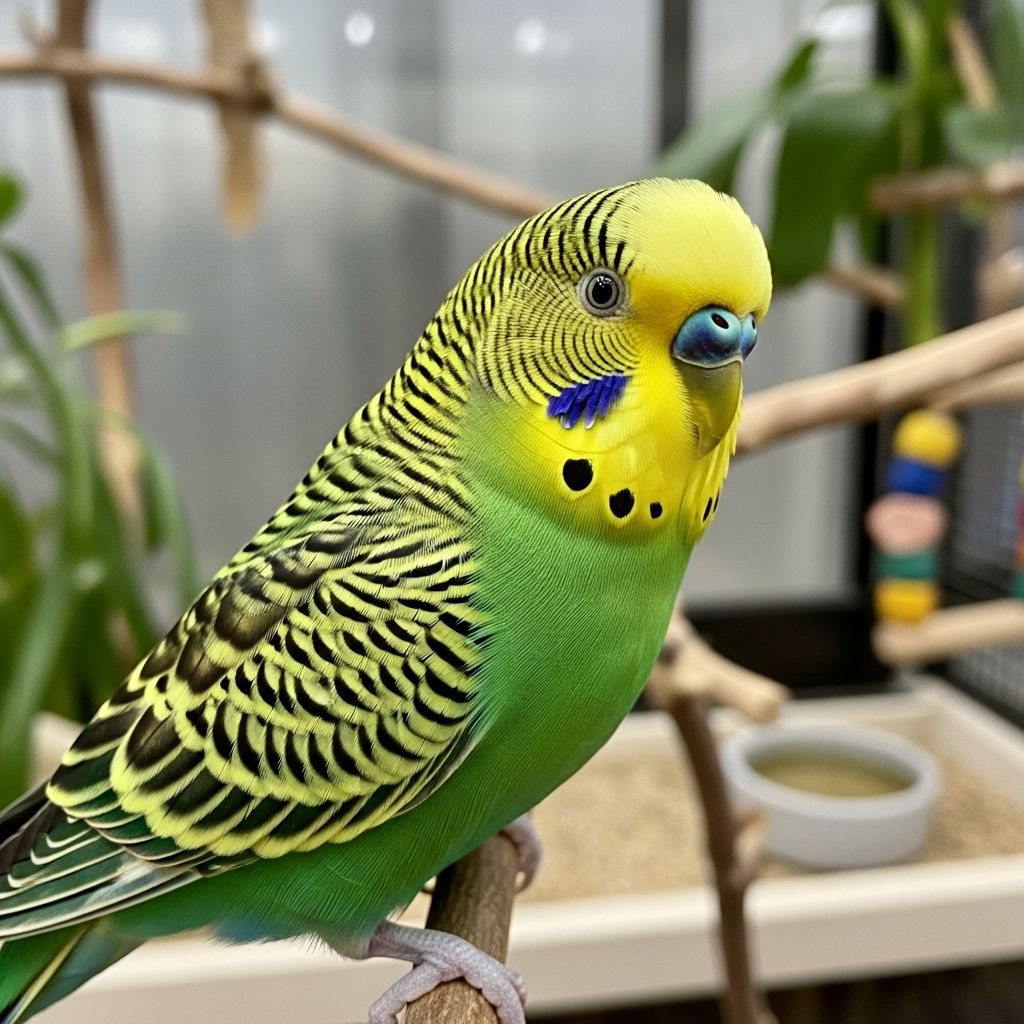
Wild budgerigars display a characteristic plumage pattern consisting of yellow feathers barred with black across the back of the head and body. The forehead and throat feature plain yellow feathers, while a distinctive row of black dots spans across the throat area. Greenish-yellow feathers adorn the underside. In captivity, selective breeding has produced an impressive spectrum of colors including blue, gray, white, and various combinations thereof.
The feather patterns in wild parakeets typically include black and outlined green-yellow wings and bluish-green tail feathers. Breeding females often display light brown or beige coloring in their cere (the skin at the base of the beak), while males exhibit blue coloring in this area. Notably, juvenile parakeets display pearlescent cere coloration that develops into adult coloration as they mature.
Size Variations Among Species
While budgerigars represent the smaller end of the parakeet spectrum, other species exhibit considerable size variation. Monk parakeets, for example, measure between 17.7 to 20.9 inches in length and weigh 3.2 to 4.2 ounces—significantly larger than budgerigars. These size differences impact housing requirements, dietary needs, and handling considerations for potential owners.
Behavioral Traits and Temperament
Understanding parakeet behavior is essential for successful pet ownership and ensuring proper social and environmental enrichment. Parakeets are renowned for their gregarious, affectionate, and playful nature, making them excellent companions for families and individuals alike.
Social Dynamics
In their natural state, parakeets form massive flocks, often numbering hundreds of thousands of birds that migrate between roosting areas and food sources. This inherent gregariousness translates to captivity, where parakeets thrive with regular social interaction and mental stimulation. They are monogamous creatures that form strong pair bonds, whether with mates or with their human caregivers.
Interestingly, gender influences behavioral expression in parakeets. Female parakeets tend to display more aggressive tendencies compared to their male counterparts. The English budgerigar variety may exhibit slightly more docile behavior than the American type, though both can become hand-tamed with proper socialization and consistent handling.
Communication and Vocalizations
Parakeets are exceptional vocalists and natural mimics. Their reputation as great whistlers extends to their ability to learn sounds and words, making them engaging and entertaining pets. Many parakeet owners report that their birds develop vocabularies and respond to specific phrases. Active vocal periods typically occur at dawn and dusk when parakeets sing, fly, and forage for food, with reduced activity during the hottest parts of the day.
Daily Activity Patterns
Understanding parakeet activity cycles helps owners structure appropriate care routines. These birds are crepuscular, meaning they’re most active during twilight hours. After sunset, they return to roosting sites for nighttime rest. Parakeets possess unique sleeping habits, often tucking their heads backward under their wings while perching on a single leg. This position conserves body heat and provides a sense of security. Additionally, these birds sleep in short bursts throughout the night, periodically waking to assess their surroundings.
Anatomical and Physiological Features
Parakeets possess specialized anatomical characteristics that distinguish them as members of the Order Psittaciformes, the parrot family. Understanding these features provides insight into their unique physiology and care requirements.
Specialized Adaptations
Several anatomical traits define parakeets’ species classification. Their hearts beat seven times faster than human hearts, requiring careful monitoring during health assessments. Unlike most birds, parakeets possess the only avian tongue featuring intrinsic muscles, enabling remarkable dexterity and manipulation of food items. Their syrinx, the avian vocal organ, remains relatively simple compared to other bird species.
The craniofacial hinge of the beak functions as a synovial joint, allowing considerable mobility and precision in beak manipulation. Notably, parakeets lack ceca (specialized pouches in the digestive system) and typically lack gallbladders, affecting their digestive processes and dietary requirements. Their feet display a zygodactyl arrangement—two toes pointing backward and two directed forward—providing superior grip strength for perching and climbing.
Nasal Structure
Parakeets exhibit communication between the right and left nasal sinuses, a feature that impacts their respiratory function and has implications for respiratory health monitoring in captive birds.
Natural Habitat and Geographic Distribution
Parakeets originate from diverse geographic regions, with the majority hailing from Australia. Understanding their natural habitats provides valuable context for creating appropriate captive environments that meet their instinctive needs.
In the wild, budgerigars are exceptionally well-adapted to arid Australian climates. They inhabit grasslands and open woodlands, where their natural green and yellow coloration provides camouflage while foraging for seeds. Their nomadic lifestyle involves moving between locations to find optimal living conditions and food sources. This adaptation explains why captive parakeets require varied enrichment and foraging opportunities to maintain psychological well-being.
Other parakeet species have adapted to different environments. Monk parakeets, while originally from South America, have successfully established populations in some regions of North America, demonstrating remarkable adaptability. Some parakeet species migrate seasonally when food becomes scarce in their primary locations.
Dietary Requirements and Nutrition
Proper nutrition forms the foundation of parakeet health and longevity. While parakeets are primarily granivores—seed-eating birds—their nutritional needs extend beyond seeds alone.
Primary Diet Components
High-quality pellets should comprise the foundation of a captive parakeet’s diet, providing balanced nutrition with appropriate vitamin and mineral concentrations. Seeds remain an important dietary component but should be offered in controlled quantities to prevent obesity and ensure nutritional balance. A diverse diet incorporating various foods prevents nutritional deficiencies and maintains dietary interest.
Supplementary Foods
Fresh fruits and vegetables provide essential micronutrients, fiber, and enrichment opportunities. Parakeets are classified as omnivores, occasionally consuming insects in their natural habitat, indicating a capacity for varied protein sources. Offering occasional protein sources supports their nutritional requirements and mimics natural dietary patterns.
Foraging Behavior
Foraging represents a critical component of normal daily parrot activity. Pet owners should actively teach and encourage their parakeets to play and forage, as this behavior provides both physical exercise and mental stimulation essential for psychological well-being and disease prevention.
Caring for Pet Parakeets
Successfully keeping parakeets as pets requires understanding their social, environmental, and behavioral needs. These intelligent, affectionate birds respond well to proper socialization and handling.
Socialization and Handling
Parakeets are extremely social birds that can become hand-tamed with consistent, gentle handling from a young age. When properly socialized, they enjoy daily interaction and develop strong bonds with their caregivers. Early exposure to varied people, sounds, and environments facilitates comfortable adaptation to household life and reduces stress-related behaviors.
Environmental Enrichment
Creating a stimulating environment prevents boredom and associated behavioral problems. Provide toys that encourage foraging, climbing, and playing. Rotate toys regularly to maintain novelty and interest. Consider pairing parakeets with compatible companions, as their social nature often benefits from avian interaction when space and resources permit.
Sleep and Shelter
Providing adequate sleep opportunities through a covered cage at night promotes better rest and reduces stress. Most captive parakeets thrive with 10-12 hours of sleep nightly. Maintaining consistent light-dark cycles supports healthy circadian rhythms essential for physiological and behavioral well-being.
Frequently Asked Questions
Q: What is the lifespan of a pet parakeet?
A: Properly cared-for parakeets typically live 10-20 years in captivity, with some individuals reaching longer lifespans when provided optimal nutrition, healthcare, and environmental enrichment.
Q: How many parakeets can be housed together?
A: While parakeets are social birds, space constraints often necessitate individual housing in home environments. If housing multiple birds, ensure adequate cage space, multiple feeding stations, and careful monitoring for aggression, particularly among females.
Q: Can parakeets learn to talk?
A: Yes, parakeets are excellent mimics and can learn to repeat words, sounds, and songs. Early, consistent training and regular interaction facilitate vocabulary development and sound mimicry.
Q: What temperature do parakeets prefer?
A: Parakeets thrive in temperatures between 65-75°F (18-24°C). Maintain consistent temperatures and avoid drafts, as rapid temperature fluctuations can stress these birds and compromise their health.
Q: How can I tell if my parakeet is male or female?
A: Adult parakeets display sexual dimorphism through cere coloration. Males typically have blue ceres, while females display pink or brown ceres. Juvenile birds feature pearlescent cere coloration that develops into adult coloration.
Q: What cage size is appropriate for parakeets?
A: Individual parakeets require minimum cage dimensions of 24″ length, 18″ depth, and 24″ height. Larger enclosures always benefit these active birds, providing space for flight, toys, and natural behaviors.
References
- Basic Information Sheet: Parakeet — Lafeber Company. 2024. https://lafeber.com/vet/basic-information-sheet-for-the-parakeet/
- What to Know About Parakeets — WebMD. 2024. https://www.webmd.com/pets/what-to-know-about-parakeets
- Parakeet: Species, Facts, Care, and Complete Guide — A-Z Animals. 2024. https://a-z-animals.com/animals/parakeet/
- Discover the Charm of Parakeets with These 10 Fun Facts — myRightBird. 2024. https://myrightbird.com/articles/discover-the-charm-of-parakeets-with-these-10-fun-facts
- Parakeet Care Sheet — PetMD. 2024. https://www.petmd.com/bird/parakeet-care-sheet
- Monk Parakeet Identification — Cornell Lab of Ornithology. 2024. https://www.allaboutbirds.org/guide/Monk_Parakeet/id
Similar Articles








Read full bio of medha deb


