

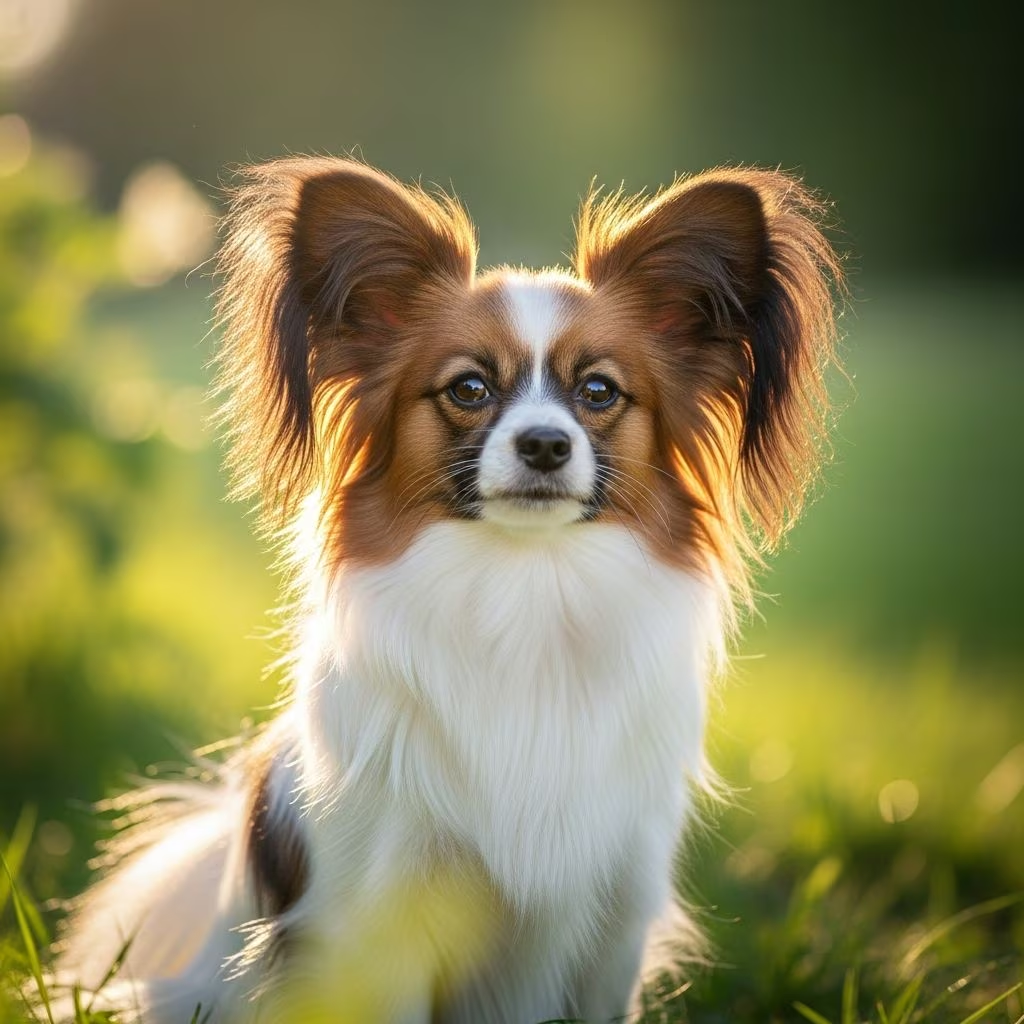
The Papillon stands out as a captivating toy breed, renowned for its elegant appearance, boundless energy, and sharp intellect. Originating from European nobility circles centuries ago, this small dog combines the grace of a lap companion with the spirit of an agile performer.
Tracing the Roots of the Papillon
Papillons trace their lineage back over 700 years, with evidence from Renaissance-era art depicting similar small spaniel-like dogs in the laps of royalty and nobility across Europe. These early canines, often shown in Italian frescoes and paintings by masters like Titian, featured drooping ears and served primarily as cherished companions for noblewomen traveling trade routes between Asia and Europe.
During the 16th and 17th centuries, the breed evolved under the influence of French and Belgian breeders. Initially known as Continental Toy Spaniels or Phalènes—named for their moth-like drooping ears—the dogs gained prominence in royal courts. King Louis XIV’s era marked refinements in their head shape and coat, leading to the refined look seen today. A pivotal shift occurred in the late 19th century when erect ears, resembling butterfly wings (“Papillon” in French), emerged naturally, possibly through mutation rather than deliberate crossbreeding.
Marie Antoinette’s devotion to her Papillon, Coco, during the French Revolution symbolizes the breed’s deep bond with humans; Coco reportedly stayed by her side until the end and lived to 22 years old. By the 19th century, these dogs spread beyond aristocracy into common households, reaching America in the late 1800s. Formal recognition followed: the United Kennel Club in 1950, and the American Kennel Club (AKC) in 1935 as a toy breed, grouping both erect- and drop-eared varieties together.
Distinctive Physical Features
Papillons are petite yet sturdy, typically weighing 4-9 pounds and standing 8-11 inches tall at the shoulder. Their silky, fine coat comes in varied colors like black and white, red and white, or sable, with profuse fringing on the ears, chest, and tail forming a plumed “squirrel tail” arched over the back.
The hallmark is the large, fringed ears set high on a slightly rounded head, giving the butterfly-wing effect. Drop-eared Phalènes remain part of the breed standard in some registries. Their almond-shaped eyes sparkle with alertness, and their delicate bone structure demands careful handling.
| Physical Trait | Description | AKC Ideal |
|---|---|---|
| Height | 8-11 inches | Under 11 inches |
| Weight | 4-9 pounds | Balanced proportion |
| Coat | Silky, single-layered | Parti-color preferred |
| Ears | Erect or drop | Large, fringed |
Personality and Behavioral Traits
Beneath their dainty exterior lies a bold, vivacious spirit. Papillons rank among the brightest dogs, placing 8th in Stanley Coren’s intelligence rankings out of 138 breeds, excelling in obedience and problem-solving. They are affectionate, outgoing, and adventurous, forming strong attachments to their families while remaining wary of strangers—making them vigilant watchdogs despite their size.
These dogs thrive on interaction and dislike solitude, often developing separation anxiety if left alone excessively. They get along with children if supervised, given their fragility, and can boss larger dogs due to fearless confidence. Early socialization ensures harmonious multi-pet homes.
- Energetic and Playful: Need daily play to channel high energy.
- Intelligent Learners: Master tricks, agility, and obedience quickly.
- Affectionate: Loyal lap dogs who crave human company.
- Alert: Excellent barkers for alerting to intruders.
Essential Training and Socialization Strategies
Papillons’ high intelligence demands consistent, positive reinforcement training from puppyhood. They respond best to reward-based methods like treats and praise, avoiding harsh corrections that could foster fearfulness. Short, frequent sessions prevent boredom, leveraging their eagerness to please.
Socialization is crucial: expose puppies to diverse environments, people, and animals between 3-12 weeks to curb potential skittishness. Enroll in puppy classes for foundational skills. Their athleticism shines in dog sports—agility, rally, and freestyle—where they often dominate toy breed competitions.
Housebreaking comes easily with crate training, but their small bladders require frequent potty breaks. Teach commands like “sit,” “stay,” and “come” early, progressing to advanced tricks for mental fulfillment.
Grooming Routines for a Gleaming Coat
Despite a long coat, Papillons are relatively low-shedders thanks to their single-layer fur. Weekly brushing with a slicker brush removes tangles from feathering on ears, tail, and legs, distributing natural oils for shine. Bathe monthly or as needed with gentle dog shampoo to preserve coat oils.
Daily dental care prevents tartar buildup—use enzyme toothpaste and brushes designed for small breeds. Trim nails every 3-4 weeks, and check ears weekly for debris, cleaning with vet-approved solutions to avoid infections. Their fine hair between paw pads needs trimming for comfort.
- Brush coat 2-3 times weekly.
- Clean ears and teeth daily.
- Bathe sparingly to avoid dry skin.
- Professional grooming quarterly for show dogs.
Exercise and Lifestyle Fit
Papillons require 30-60 minutes of daily activity to stay happy and healthy. Brisk walks, fetch games, or indoor play suffice; they’re adaptable to apartments but flourish with yards for zooming. Mental exercises like puzzle toys or training games match their smarts.
Ideal for active singles, couples, or families with older kids—not toddlers due to fragility. They travel well, fitting airline carry-ons, and enjoy outings like hiking on leashes.
Health Profile and Longevity
Papillons boast impressive longevity of 14-16 years, among the longest for dogs. Common concerns include patellar luxation (kneecap dislocation), progressive retinal atrophy (eye degeneration), and dental issues from crowded teeth. Open fontanelles—a soft skull spot—occur in some, requiring gentle handling.
Responsible breeders screen for genetic issues via OFA certifications. Annual vet checkups, vaccinations, and heartworm prevention are essential. Feed high-quality small-breed kibble portioned to maintain ideal weight, splitting into 2-3 meals to aid digestion.
| Health Issue | Prevalence | Prevention |
|---|---|---|
| Patellar Luxation | Moderate | Weight control, screening |
| Retinal Atrophy | Low-Moderate | Genetic testing |
| Dental Disease | High | Daily brushing |
Nutrition Guidelines for Optimal Vitality
Puppy Papillons need nutrient-dense food for growth, transitioning to adult formulas by 10-12 months. Aim for 300-400 calories daily for adults, adjusting for activity. Include omega fatty acids for coat health and glucosamine for joints. Fresh water always available; avoid table scraps to prevent obesity.
Finding and Welcoming Your Papillon
Select breeders affiliated with the Papillon Club of America, prioritizing health clearances. Rescues offer adult dogs for experienced owners. Prepare with puppy-proofing, quality supplies, and commitment to training. Papillons reward with unwavering devotion and lively companionship.
Frequently Asked Questions
Are Papillons good for first-time owners?
Yes, their trainability suits novices, but they need consistent engagement to thrive.
How much exercise do Papillons need?
30-60 minutes daily, blending physical and mental activities.
Do Papillons bark a lot?
They are alert barkers; training minimizes excessive noise.
Can Papillons live in apartments?
Perfectly, if exercised regularly.
What is the Papillon’s lifespan?
14-16 years with proper care.
References
- What Were Papillons Bred For? Origin & History — Dogster. 2023-05-15. https://www.dogster.com/lifestyle/what-were-papillons-bred-for-history
- Papillon History — Playtyme.us (AKC Breeder of Merit). 2022-08-10. https://www.playtyme.us/papillon-breed-info/papillon-history/
- Dog Breed Profile: Papillon — MyWoof. 2024-02-20. https://mywoof.com/blogs/articles/dog-breed-profile-papillon
- Papillon Facts – Dog Breeds — Wisdom Panel. 2023-11-05. https://www.wisdompanel.com/en-us/dog-breeds/papillon
- A Brief History of the Papillon — Papillon Club. 2021-06-12. https://papillonclub.org/articles-a-brief-history-of-the-papillon/
- Papillon dog — Wikipedia (citing Coren). 2025-01-10. https://en.wikipedia.org/wiki/Papillon_dog
- Papillon Dog Breed Health and Care — PetMD. 2024-09-18. https://www.petmd.com/dog/breeds/papillon



