

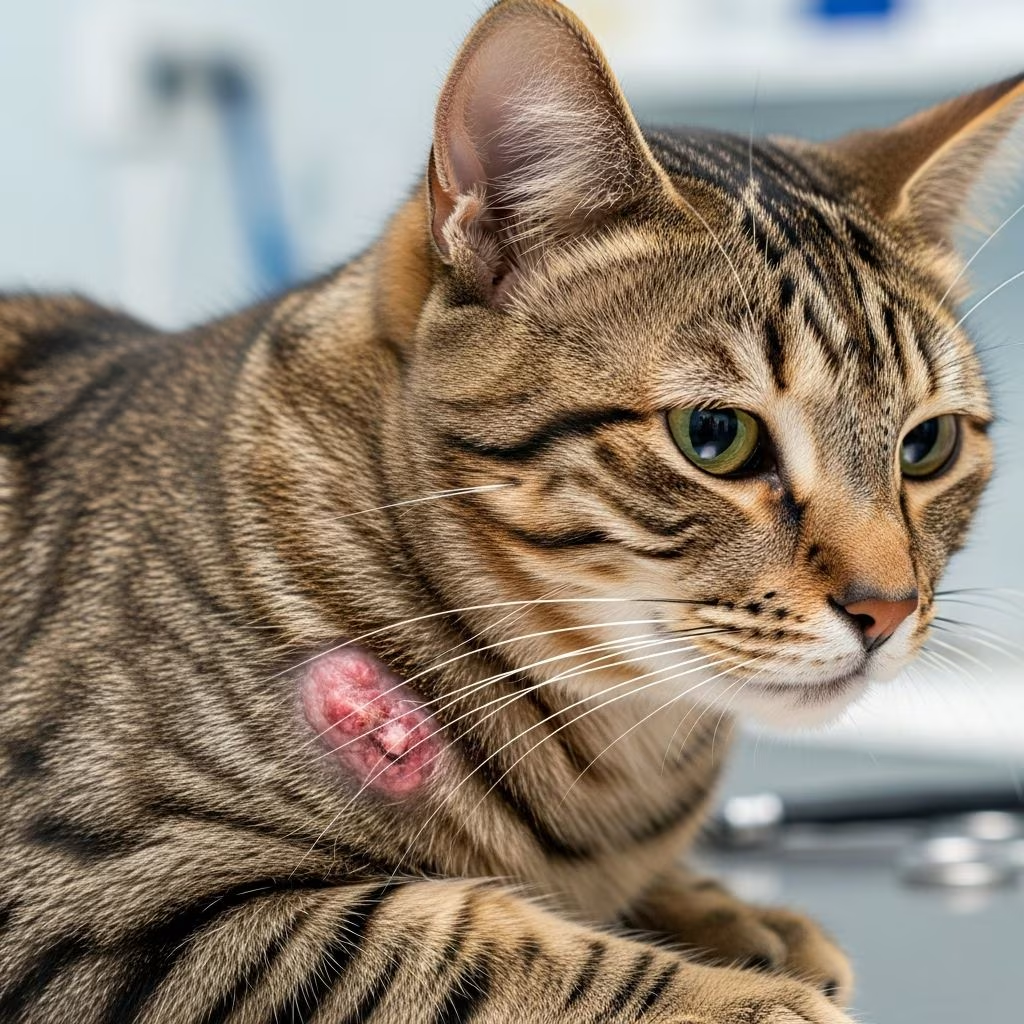
Panniculitis refers to inflammation in the fat tissue located just beneath the skin in dogs and cats. This condition manifests as nodules or lumps that can vary in size, texture, and severity, often prompting concern among pet owners. While not life-threatening in most cases, it requires prompt veterinary attention to identify and address underlying triggers.
Defining Panniculitis and Its Impact on Pets
The subcutaneous fat layer serves as insulation and energy storage for animals. When inflamed, it leads to localized swelling and nodule formation. In dogs, this is more frequently reported, particularly in certain breeds, whereas cats tend to experience it less commonly but with potentially more systemic effects. Nodules typically develop on the trunk, neck, or limbs, ranging from pea-sized to several centimeters in diameter. They may feel firm or fluctuant and can evolve into draining lesions if untreated.
Common Clinical Manifestations in Dogs and Cats
Pet owners often first notice palpable masses under the skin. These can be solitary or multiple, with dogs more prone to multifocal presentations. Key signs include:
- Subcutaneous nodules that are movable, firm, or soft to the touch.
- Redness, swelling, or ulceration around affected areas.
- Discharge of oily, yellowish-brown, or bloody fluid from ruptured nodules.
- Hair loss or crusting over the lesions.
- Intermittent pain, especially if secondary infection occurs.
In severe instances, pets exhibit systemic symptoms like fever, reduced appetite, lethargy, or depression, particularly with multiple lesions. Cats with pansteatitis—a diffuse form—show widespread firm nodules, abdominal pain, and vomiting due to fat necrosis throughout the body.
Primary Causes and Risk Factors
Panniculitis arises from diverse etiologies, categorized as infectious, sterile (non-infectious), or traumatic. Understanding the root cause is crucial for effective management.
Infectious Triggers
Bacterial, fungal, or mycotic infections can invade the fat layer, leading to suppurative inflammation. Rapidly growing mycetoma or deep fungal diseases are notable in endemic regions. Secondary bacterial infections often complicate ulcerated nodules.
Sterile or Idiopathic Forms
The most common type in dogs is idiopathic sterile nodular panniculitis, lacking identifiable pathogens. Breeds like Dachshunds, Miniature Poodles, Collies, and German Shepherds show higher susceptibility. Immune-mediated reactions, such as lupus panniculitis or erythema nodosum, contribute here.
Other Contributing Factors
| Category | Examples | Associated Pets |
|---|---|---|
| Trauma | Bite wounds, injections (vaccines, steroids) | Dogs and cats, often single lesion |
| Nutritional/Metabolic | Pansteatitis from vitamin E deficiency or poor-quality fish-based diets | Cats primarily |
| Systemic Diseases | Pancreatitis, liver disease, neoplasia (e.g., mast cell tumors) | Dogs and cats |
| Immune/Vascular | Autoimmune disorders, reduced blood supply | Dogs more common |
Young to middle-aged pets are affected across breeds, with no strong sex predisposition.
Diagnostic Approaches for Accurate Identification
Veterinarians employ a stepwise process to differentiate panniculitis from tumors, abscesses, or cysts. Initial exam reveals nodule characteristics, followed by:
- Fine-Needle Aspiration (FNA): Cytology shows pyogranulomatous inflammation with fat cells, neutrophils, and macrophages; rules out infection or cancer.
- Biopsy: Full-thickness sampling confirms diagnosis histologically, revealing fat necrosis and mixed inflammation.
- Cultures: Bacterial/fungal testing on aspirates or biopsies.
- Bloodwork: CBC, chemistry panel, urinalysis to screen for systemic issues like pancreatitis.
- Imaging: Ultrasound or radiographs for abdominal involvement in cats.
Sterile cases show no pathogens, while infectious ones yield growth on culture.
Treatment Strategies Tailored to Cause
Management hinges on etiology, lesion number, and systemic signs. Supportive care includes wound cleaning and antibiotics for secondary infections.
Medical Interventions
- Immunosuppressants: Prednisone (2-4 mg/kg daily, tapered) for sterile/idiopathic cases; effective in 70-80% of dogs with nodular panniculitis.
- Antibiotics/Antifungals: Long-term therapy (e.g., tetracyclines, azoles) for infections.
- Nutritional Support: Vitamin E supplementation (400-800 IU/day) for pansteatitis in cats.
Surgical Options
Excision of solitary, well-defined nodules, especially post-trauma. Multiple or recurrent lesions may require ongoing medical therapy.
Prognosis and Long-Term Outlook
Prognosis varies: excellent for single traumatic lesions post-excision; good for idiopathic canine cases responding to steroids (remission in months). Infectious forms depend on pathogen clearance. Feline pansteatitis carries guarded prognosis if advanced, with mortality from systemic toxemia. Recurrence is common without addressing underlying issues; monitoring prevents complications like scarring or fistulas.
Preventive Measures for Pet Owners
Minimize risks by:
- Providing balanced diets, avoiding excessive oily fish for cats.
- Preventing fights/trauma through supervision and neutering.
- Maintaining vaccination schedules judiciously.
- Regular vet check-ups for early nodule detection.
Early intervention improves outcomes significantly.
Frequently Asked Questions (FAQs)
Is panniculitis cancerous?
No, it’s inflammatory, not neoplastic, though biopsy rules out tumors.
Can panniculitis resolve on its own?
Some idiopathic nodules wax and wane, but veterinary evaluation is essential to prevent progression.
Why do Dachshunds get it more?
Genetic predisposition leads to sterile nodular forms in this breed.
How long does treatment last?
Weeks to months; steroids taper over 4-6 weeks typically.
Is it contagious?
No, except infectious cases transmissible via pathogens.
Pet Owner Checklist for Suspicious Skin Lumps
- Monitor size, number, and changes weekly.
- Note discharge, pain, or behavioral shifts.
- Contact vet if lumps persist >2 weeks or grow.
- Avoid squeezing to prevent infection spread.
References
- Panniculitis in Cats: Causes, Symptoms, and Treatment — PetCareRx. 2023-05-15. https://www.petcarerx.com/article/panniculitis-in-cats-causes-symptoms-and-treatment/6665
- Panniculitis in Dogs — Embrace Pet Insurance. 2024-08-20. https://www.embracepetinsurance.com/health/panniculitis
- Panniculitis — Animal Allergy & Dermatology of Colorado. 2024-03-10. https://animalallergycolorado.com/animal-disease-index/panniculitis
- Veterinary Guide to Panniculitis in Dogs (2025) — Ask A Vet. 2025-01-01. https://askavet.com/blogs/news/veterinary-guide-to-panniculitis-in-dogs-2025
- Panniculitis – Small and Large Animal Dermatology Handbook — University of Minnesota Libraries Open Textbook. 2023-11-12. https://open.lib.umn.edu/animaldermatology3/chapter/1e-panniculitis/
- Fatty Layer or Nodule Under the Skin in Dogs — PetMD. 2024-06-05. https://www.petmd.com/dog/conditions/skin/c_dg_panniculitis



