

Written by Dr. [Veterinary Expert], Updated [Current Year]
Pandora Syndrome in cats represents a paradigm shift in understanding chronic health issues in felines, particularly those involving the lower urinary tract and beyond. Unlike traditional diagnoses that focus solely on organ-specific diseases like **feline idiopathic cystitis (FIC)**, Pandora Syndrome recognizes a broader, stress-activated multisystem disorder rooted in neurophysiologic hypersensitivity. Cats with this condition exhibit recurring signs across multiple body systems, triggered by environmental stressors, with no identifiable underlying pathology in routine tests.
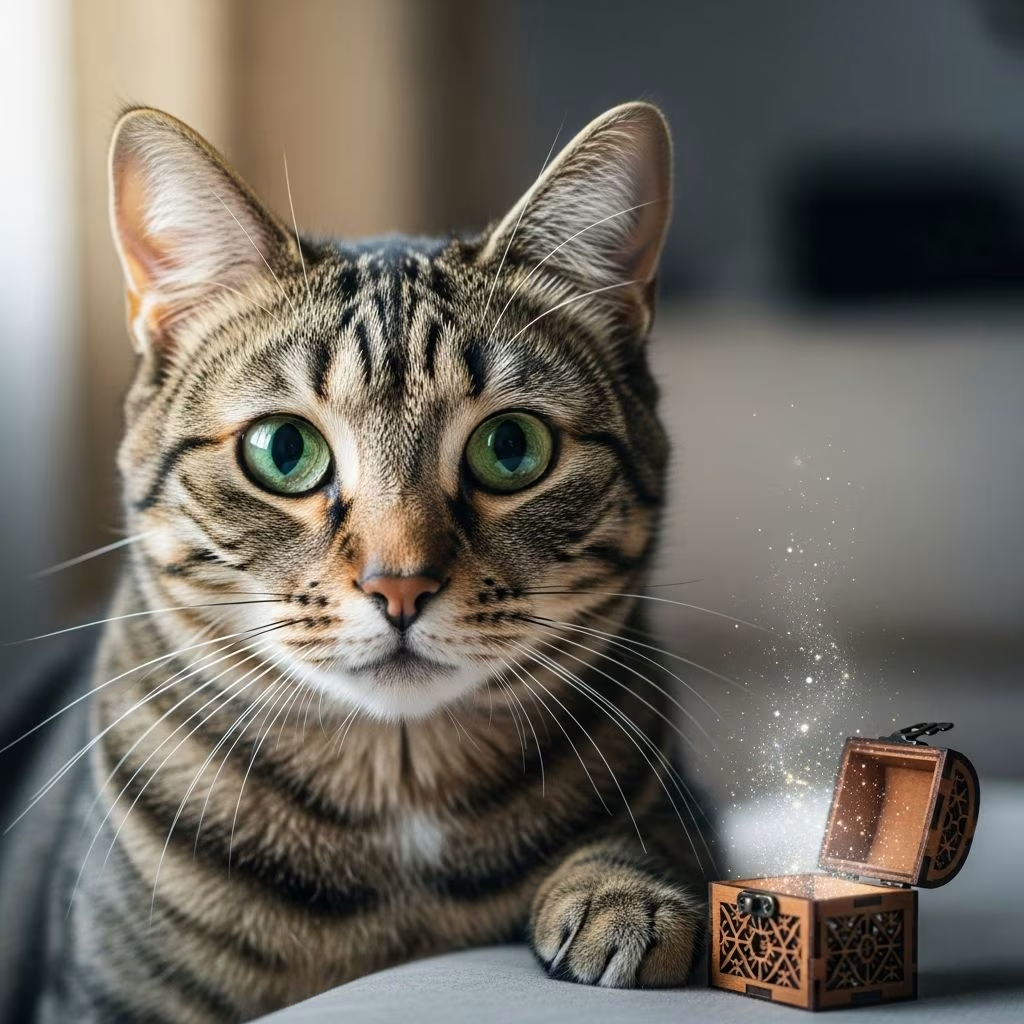
This syndrome, coined by veterinary researcher Dr. C.A. Tony Buffington, draws its name from Greek mythology’s Pandora, whose box unleashed myriad ills—mirroring how stress in these cats unleashes problems in various organs. Affecting up to 60% of cats presented for lower urinary tract signs, Pandora Syndrome demands a holistic approach emphasizing **Multimodal Environmental Modification (MEMO)** over symptomatic treatments alone. Early recognition and intervention can dramatically reduce flare-ups, improving quality of life for both cats and owners.
What Is Pandora Syndrome in Cats?
Pandora Syndrome is not a single disease but an **anxiopathy**—a chronic dysregulation of the cat’s central stress response system (CSRS), leading to exaggerated perceptions of threat and maladaptive pain responses. Cats become “sensitized,” where even mild stressors provoke widespread clinical signs. This differs from FIC, which is merely one manifestation; Pandora Syndrome encompasses comorbidities like overgrooming, gastrointestinal upset, and respiratory issues.
Key characteristics include:
- Multisystem involvement: Urinary (e.g., straining, blood in urine), GI (diarrhea, vomiting), dermatologic (overgrooming), and behavioral signs (anxiety, aggression).
- Stress linkage: Signs wax and wane with environmental changes, such as moves, new pets, or household disruptions.
- History of adversity: Often early weaning, neglect, or severe stressors prime the CSRS.
- Normal diagnostics: Bloodwork, urinalysis, imaging show no crystals, infections, or tumors—ruling out organic causes.
Prevalence is high: Studies indicate 70-75% of cats with idiopathic LUTS respond to MEMO, confirming the syndrome. Without addressing the root stress, recurrences are inevitable.
Symptoms of Pandora Syndrome in Cats
Symptoms are diverse and recurrent, often triggered by stressors. Owners may notice:
- Urinary signs (most common): Frequent litter box visits, straining without urine, bloody urine, urinating outside the box.
- Gastrointestinal: Chronic diarrhea, constipation, vomiting.
- Skin/Behavior: Excessive grooming leading to hair loss, aggression, hiding, fearfulness.
- Other: Respiratory issues, weight loss, lethargy during flares.
These signs correlate with identifiable stressors in 80% of cases, with rapid onset and resolution post-MEMO. Cats may appear “dog-like” (e.g., following owners), masking anxiety.
Causes of Pandora Syndrome in Cats
The core cause is **CSRS sensitization**, where the brain amplifies threat signals, activating fight/flight responses inappropriately. Genetic predisposition interacts with environmental factors:
| Risk Factor | Description | Impact |
|---|---|---|
| Early Life Stress | Weaning before 8 weeks, shelter life | Primes hypersensitivity |
| Chronic Stressors | Multi-cat homes, changes in routine | Triggers flares |
| Comorbidities | Transient illnesses across systems | Worsens cycle |
| Pain Amplification | Exaggerated response to minor insults | Prolongs symptoms |
Unlike infectious cystitis, Pandora stems from brain-perceived threats, not bladder pathology.
How Is Pandora Syndrome Diagnosed in Cats?
Diagnosis is by exclusion and positive response to MEMO—no specific test exists. Steps include:
- History: Recurrent multisystem signs tied to stressors, anxious behavior.
- Physical/Exam: Rule out infections, stones via urinalysis, ultrasound.
- Behavior Observation: Fearful posture (ears back, dilated pupils), physiologic signs (tachycardia).
- Therapeutic Trial: MEMO implementation; 70% show resolution, confirming diagnosis.
Vets assess home environment for resource adequacy and security.
Treatment for Pandora Syndrome in Cats
Treatment prioritizes MEMO over drugs, as environment drives 70-75% remission.
Multimodal Environmental Modification (MEMO)
MEMO creates predictability and security:
- Safe Spaces: Elevated perches, hiding boxes.
- Resources: One litter box per cat +1, separate food/water stations.
- Play/Enrichment: Daily interactive sessions, toys.
- Predictability: Consistent routines, pheromone diffusers (Feliway).
- Social Management: Avoid conflicts with other pets.
In hospitals: Scented bedding, warm temps (85-100°F), low-stress handling.
Pharmacotherapy and Supportive Care
Drugs target flares: Analgesics for pain, anxiolytics (e.g., gabapentin), but no superiority over MEMO shown. Diets like stress formulas offer modest aid.
Acute vs. Chronic Management
Acute (Hospital): Minimize threats with familiar scents, routines.
Chronic (Home): Owner education key; empathize, partner for adherence.
Preventing Pandora Syndrome Flare-Ups in Cats
Proactive MEMO prevents 80% recurrences:
- Monitor for stressors (visitors, changes).
- Maintain enrichment daily.
- Annual vet checks for early signs.
“MEMO is essential preventive care,” per Dr. Buffington.
Frequently Asked Questions (FAQs)
What is the difference between FIC and Pandora Syndrome?
FIC is bladder inflammation without cause; Pandora Syndrome is the overarching stress disorder causing FIC and more.
Can Pandora Syndrome be cured?
No cure, but MEMO manages it effectively, reducing flares.
How long does recovery take with MEMO?
70-75% see no LUTS in 10 months; full response varies.
Is medication always needed?
No; MEMO often suffices without diet/drug changes.
Can all cats get Pandora Syndrome?
Primarily anxious cats with stress history; rule out other causes first.
Implementing these strategies transforms lives. Consult your vet for tailored plans.
References
- Pandora Syndrome in Cats: Diagnosis and Treatment — Today’s Veterinary Practice. 2023. https://todaysveterinarypractice.com/urology-renal-medicine/pandora-syndrome-in-cats/
- Treating Pandora Syndrome in Cats: the Environment — Feline Purrspective. 2023. https://www.felinepurrspective.com/treating-pandora-syndrome-in-cats-the-environment/
- What is Pandora Syndrome in our Feline Patients? — Fairhaven Veterinary Hospital. 2023. https://fairhavenvet.com/what-is-pandora-syndrome-in-our-feline-patients/
- What is Pandora Syndrome? — Standiford Veterinary Center. 2023. https://standifordveterinary.com/services/cats/blog/what-pandora-syndrome.html
- Cat Stress and Urinary Health: Understanding Pandora Syndrome — Sage C4A. 2025. https://sagec4a.org/education-1/cat-stress-and-urinary-health-understanding-pandora-syndrome
- Pandora Syndrome — Today’s Veterinary Nurse. 2023. https://todaysveterinarynurse.com/urology-renal-medicine/feline-pandora-syndrome/



