

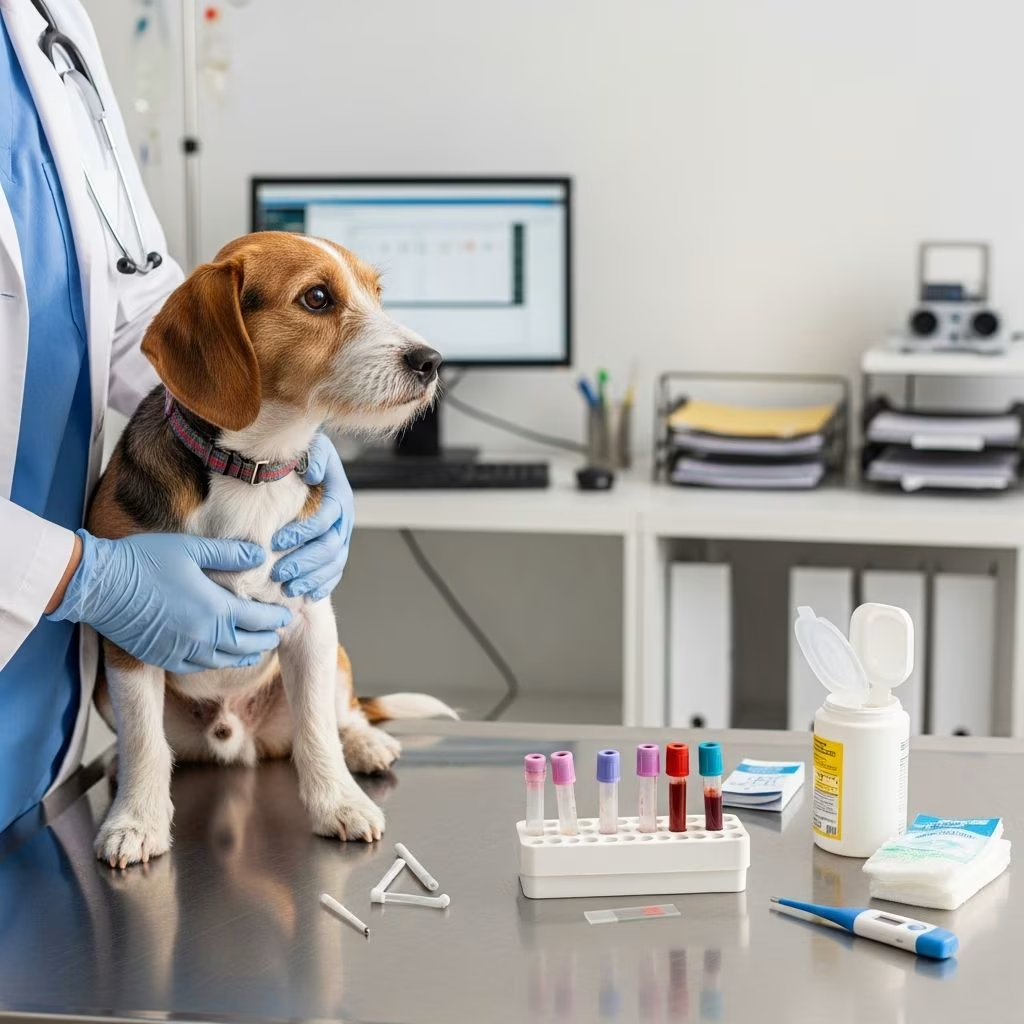
Understanding Pancreatic Disease Testing in Pets
The pancreas is a vital organ that plays a crucial role in your pet’s digestive system and blood sugar regulation. When pancreatic disease develops, early detection through proper testing can make a significant difference in your pet’s treatment outcomes and quality of life. This comprehensive guide explores the various methods veterinarians use to diagnose pancreatic disease in dogs and cats, helping you understand what tests your veterinarian might recommend and what the results mean for your pet’s health.
Why Pancreatic Disease Testing Matters
Pancreatic disease, particularly pancreatitis, is increasingly recognized as a common condition affecting both dogs and cats. However, diagnosing pancreatic disease can be challenging because the symptoms often mimic other health conditions. Clinical signs such as vomiting, loss of appetite, abdominal pain, and lethargy can indicate various ailments, making specific pancreatic testing essential for accurate diagnosis. If pancreatic disease goes undiagnosed and untreated, your pet may develop chronic pancreatitis, which can lead to more severe complications including diabetes mellitus and exocrine pancreatic insufficiency.
Initial Evaluation and Clinical Assessment
Before any laboratory testing begins, your veterinarian will conduct a thorough initial evaluation of your pet. This process includes obtaining a detailed medical history, performing a comprehensive physical examination, and assessing your pet’s clinical signs. Your veterinarian will ask about the onset and duration of symptoms, any recent dietary changes, medications your pet is taking, and any previous health issues. The physical examination helps identify signs such as abdominal tenderness, fever, or dehydration that might suggest pancreatic involvement. Understanding your pet’s signalment—including age, breed, and sex—is also important, as certain breeds and age groups may be predisposed to pancreatic disease.
Routine Laboratory Tests
When pancreatic disease is suspected, your veterinarian will typically begin with routine laboratory screening. These foundational tests provide general information about your pet’s overall health status and help identify or exclude other diseases that might be causing similar clinical signs.
Complete Blood Count (CBC)
A complete blood count measures various blood cell components, including red blood cells, white blood cells, and platelets. In pancreatic disease cases, the CBC may reveal elevated white blood cells indicating inflammation or infection, or other abnormalities that could suggest systemic involvement of the pancreatic condition.
Serum Biochemistry Panel
The serum biochemistry panel evaluates organ function and electrolyte balance. This test can reveal abnormalities in liver enzymes, kidney values, glucose levels, and electrolytes. Pancreatic disease may cause secondary changes in these values, particularly affecting blood glucose levels and liver enzymes.
Urinalysis
A complete urinalysis provides information about kidney function and can help identify concurrent issues such as diabetes, which may develop secondary to chronic pancreatitis. This test helps ensure that urinary system diseases are not contributing to your pet’s clinical signs.
Pancreatic-Specific Laboratory Tests
While routine laboratory tests provide valuable information, pancreatic-specific tests are essential for confirming pancreatic disease diagnosis. These specialized tests measure enzymes and proteins produced by the pancreas, offering much greater specificity than general lipase measurements.
Pancreatic Lipase Immunoreactivity (PLI) Testing
The measurement of pancreatic lipase immunoreactivity has revolutionized pancreatic disease diagnosis in veterinary medicine. Unlike general lipase activity tests that measure enzymes from multiple sources including adipose tissue and the gastrointestinal tract, PLI testing specifically measures lipase produced only from pancreatic acinar cells. This increased specificity makes PLI testing significantly more accurate for detecting true pancreatic inflammation.
For dogs, the Spec cPL test (canine pancreatic lipase) has demonstrated excellent diagnostic performance. In dogs with clinically significant pancreatitis, Spec cPL has shown a sensitivity of 82 to 94%, meaning it correctly identifies the disease in the majority of affected animals. Even in dogs with less severe pancreatitis, Spec cPL maintains the highest accuracy among available diagnostic tests with a sensitivity of 64%. The specificity of Spec cPL ranges between 79 and 100%, meaning the test rarely produces false-positive results.
For cats, the Spec fPL test (feline pancreatic lipase) provides similar diagnostic accuracy. Sensitivity varies based on disease severity, ranging from 54% in subclinical to mild disease to 100% in moderate to severe disease. This high specificity is especially important because many other diseases can cause clinical signs similar to pancreatitis, and false-positive results could lead to unnecessary treatment.
SNAP cPL Rapid Testing
The SNAP cPL test is a point-of-care rapid diagnostic assay that provides semi-quantitative results within minutes. This test is useful for rapidly ruling out pancreatitis when negative in dogs and cats with suggestive clinical signs. When the SNAP cPL test is positive, it suggests the presence of pancreatitis and warrants confirmation with laboratory assessment using the quantitative Spec cPL or equivalent test. The rapid nature of this test allows veterinarians to make faster diagnostic decisions and begin appropriate treatment sooner.
Additional Quantitative Tests
Newer diagnostic assays have been validated for pancreatic disease diagnosis, including the VetScan cPL rapid point-of-care test (a quantitative assay) and the Precision PSL, a non-immunologic colorimetric lipase diagnostic assay. These tests have been found to have comparable results to the Spec cPL test and offer additional options for diagnostic assessment.
Understanding PLI Test Results
Interpreting PLI test results correctly is essential for proper diagnosis and treatment planning. The reference ranges differ between dogs and cats, and results must be considered in context with your pet’s clinical signs and other diagnostic findings.
Canine PLI Results
For dogs, pancreatic lipase results are measured in µg/L (micrograms per liter). Results of 200 µg/L or less are consistent with an absence of pancreatic inflammation. Results between 201 and 399 µg/L indicate that pancreatitis is possible, and your veterinarian should re-evaluate your pet or recommend retesting in a couple of weeks, particularly if your pet shows signs of worsening pancreatitis. Results of 400 µg/L or greater are consistent with a diagnosis of pancreatitis and warrant appropriate treatment.
Feline PLI Results
For cats, pancreatic lipase results are measured in U/L. Results of 4.4 U/L or less suggest pancreatitis is unlikely. Results between 4.5 and 8.7 U/L indicate that pancreatitis is possible and warrant re-evaluation or retesting. Results of 8.8 U/L or greater are consistent with pancreatitis diagnosis.
Abdominal Ultrasound Imaging
Abdominal ultrasound is a valuable diagnostic tool that provides visualization of pancreatic tissue and surrounding structures. Ultrasonography is particularly useful for detecting severe acute pancreatitis but may not identify mild or subclinical disease. Ultrasound findings suggestive of pancreatitis include hypoechoic areas within the pancreas indicating necrosis or fluid accumulation, hyperechoic peripancreatic mesentery due to necrosis of peripancreatic fat, an enlarged or irregular pancreas, dilation of pancreatic or biliary ducts, and abdominal effusion (fluid accumulation in the abdomen).
While ultrasound provides valuable anatomical information, it must be used in conjunction with pancreatic-specific laboratory tests for accurate diagnosis. Ultrasound findings should be interpreted alongside PLI test results, clinical signs, and other diagnostic information to reach a comprehensive diagnosis.
Advanced Diagnostic Considerations
In cases where diagnosis remains unclear, additional diagnostic approaches may be considered. Pancreatic biopsy represents the gold standard for definitive pancreatitis diagnosis but has significant limitations including invasiveness, cost, and potential complications. For this reason, clinical diagnosis based on a consistent clinical picture including signalment, clinical signs, physical examination findings, supportive laboratory diagnostics, pancreatic-specific testing, consistent imaging findings, and thorough evaluation to rule out alternate differential diagnoses is most commonly used in clinical patients.
Response to Therapy as Diagnostic Support
In some cases, your pet’s response to treatment can support a pancreatic disease diagnosis. If your pet improves with appropriate pancreatic disease management—including dietary modifications, supportive care, and medical therapy—this positive response can help confirm the diagnosis. However, definitive diagnosis should rely primarily on pancreatic-specific laboratory tests rather than response to therapy alone.
Comparison of Diagnostic Test Accuracy
| Diagnostic Test | Test Type | Sensitivity in Dogs | Specificity | Advantages |
|---|---|---|---|---|
| Spec cPL (Dogs) | Quantitative immunoassay | 82-94% (severe), 64% (mild) | 79-100% | Highly specific for pancreatic lipase, rarely false positives |
| Spec fPL (Cats) | Quantitative immunoassay | 54-100% (varies by severity) | High | Species-specific, excellent for cats |
| SNAP cPL | Semi-quantitative rapid test | Good for ruling out disease | High | Fast results, in-clinic capability |
| General Serum Lipase | Activity assay | Below 55% | Low | Less specific, not recommended alone |
| Abdominal Ultrasound | Imaging | Better for severe disease | Variable | Visualizes pancreatic changes, rules out other conditions |
Considerations for Test Selection
Your veterinarian will recommend specific pancreatic disease tests based on your pet’s clinical presentation, severity of symptoms, and clinical context. Pets with acute, severe clinical signs and significant systemic complications warrant more comprehensive diagnostic workup including both laboratory tests and imaging. Pets with mild or intermittent symptoms might begin with SNAP cPL testing followed by quantitative PLI testing if results are positive. The combination of multiple diagnostic approaches provides the most accurate assessment of pancreatic disease status.
When to Pursue Pancreatic Testing
Your veterinarian should consider pancreatic disease testing when your pet presents with clinical signs suggestive of pancreatitis, including vomiting, loss of appetite, abdominal pain, lethargy, diarrhea, or fever. Additionally, pets with risk factors for pancreatic disease—including high-fat diet history, obesity, certain medications, or breed predisposition—warrant periodic pancreatic screening even without acute symptoms. Early detection through appropriate testing allows for timely treatment initiation and better long-term outcomes.
Frequently Asked Questions
Q: What is the most accurate test for diagnosing pancreatitis?
A: Pancreatic lipase immunoreactivity (PLI) testing, specifically Spec cPL for dogs and Spec fPL for cats, represents the most accurate non-invasive diagnostic test currently available. These tests have sensitivity of 82-94% in dogs with significant pancreatitis and high specificity (79-100%), making them superior to general lipase activity measurements.
Q: Can pancreatic disease be diagnosed with just one test?
A: While PLI testing is highly accurate, the most reliable diagnosis involves multiple diagnostic approaches. A comprehensive evaluation includes clinical signs, physical examination findings, routine laboratory work, pancreatic-specific testing, and often abdominal ultrasound imaging. Using multiple diagnostic modalities together provides the most accurate assessment.
Q: How long does it take to get pancreatic test results?
A: SNAP cPL rapid testing provides results within minutes in your veterinarian’s clinic. Quantitative PLI testing (Spec cPL or Spec fPL) typically requires sending blood samples to a laboratory and may take 24-48 hours for results, depending on your location and the laboratory used.
Q: What should I do if my pet’s PLI results are in the borderline range?
A: If your pet’s PLI results fall in the borderline range (201-399 µg/L for dogs or 4.5-8.7 U/L for cats), your veterinarian will likely recommend re-evaluation or retesting in a couple of weeks, particularly if your pet shows signs of worsening pancreatitis. Clinical signs and response to supportive care should also guide management decisions.
Q: Can my cat get pancreatitis?
A: Yes, cats can and do develop pancreatitis, and it is increasingly recognized as a common feline condition. Feline pancreatitis can be acute or chronic and may be associated with other conditions. Spec fPL testing allows for accurate diagnosis in cats, with the same high sensitivity and specificity as canine PLI testing.
Q: Is pancreatic biopsy necessary to diagnose pancreatitis?
A: While pancreatic biopsy is technically the gold standard for definitive diagnosis, it is rarely necessary in clinical practice due to its invasiveness and associated risks. Modern pancreatic-specific testing (PLI) combined with clinical evaluation provides accurate diagnosis without requiring biopsy in most cases.
Q: How often should my pet be screened for pancreatic disease?
A: Routine pancreatic screening is not necessary for healthy pets without risk factors. However, pets with risk factors for pancreatitis, chronic gastrointestinal symptoms, or those on certain medications may benefit from periodic pancreatic assessment as recommended by your veterinarian.
Conclusion
Pancreatic disease testing has evolved significantly with the development of highly specific and sensitive pancreatic lipase immunoreactivity tests. These advanced diagnostic tools allow veterinarians to accurately identify pancreatic disease in dogs and cats, enabling early intervention and appropriate treatment planning. By understanding the various testing methods available and what your pet’s results mean, you can work closely with your veterinarian to ensure your pet receives the most accurate diagnosis and appropriate care. If your pet shows signs of pancreatic disease, discussing these diagnostic options with your veterinarian is the first step toward protecting your pet’s health and quality of life.
References
- Pancreatitis Information — Texas A&M University College of Veterinary Medicine & Biomedical Sciences, Gastrointestinal Laboratory. https://vetmed.tamu.edu/gilab/research/pancreatitis-information/
- Diagnosing Acute Pancreatitis in Dogs — Today’s Veterinary Practice. 2023. https://todaysveterinarypractice.com/hepatology/diagnosing-acute-pancreatitis-in-dogs/
- Laboratory Diagnosis of Pancreatitis — PubMed Central, National Center for Biotechnology Information. 2022. https://pubmed.ncbi.nlm.nih.gov/36400472/
- Protocols for Pancreatic Lipase Testing — The Vetiverse. https://www.thevetiverse.com/en-au/latest/protocols-for-pancreatic-lipase-testing/
- Diagnosis of Canine and Feline Pancreatitis — Vetbloom. https://vetbloom.com/pancreatitis/
- Feline Pancreatitis — Cornell University College of Veterinary Medicine, Feline Health Center. https://www.vet.cornell.edu/departments-centers-and-institutes/cornell-feline-health-center/health-information/feline-health-topics/feline-pancreatitis



