

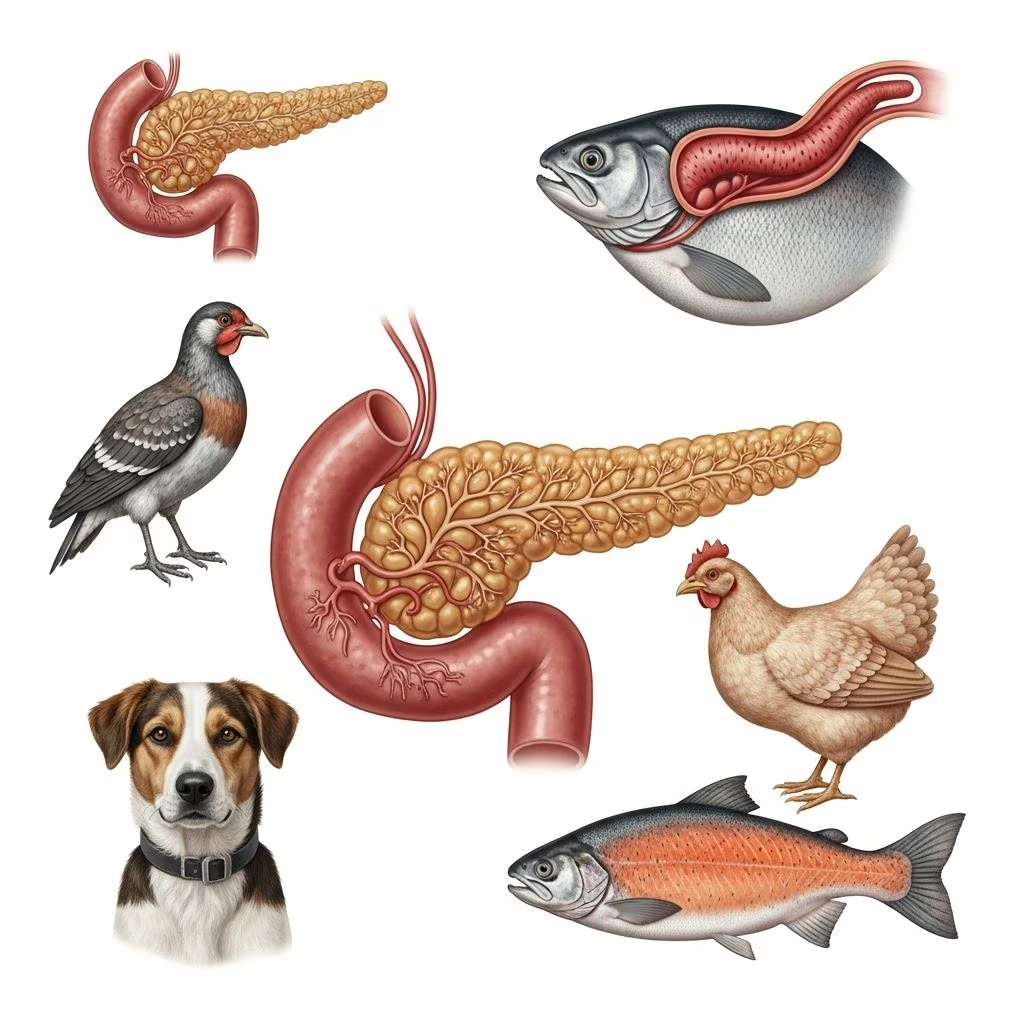
The pancreas stands as a vital organ in animals, blending digestive and hormonal roles to support metabolism and nutrient processing. Positioned in the abdominal cavity near the duodenum, it performs exocrine functions by releasing enzymes into the gut and endocrine functions by secreting hormones directly into the bloodstream.
Anatomical Layout Across Species
In carnivores like dogs and cats, the pancreas forms a compact structure with distinct right and left lobes hugging the duodenum’s curve. Horses and ruminants, however, feature a more spread-out organ embedded in the mesentery, adapting to their grazing physiology.
The organ divides into head, body, and tail regions. The head nestles against the duodenum, the body stretches alongside, and the tail points toward the spleen. This arrangement facilitates efficient enzyme delivery and vascular access.
- Dogs and cats: Discrete lobes with unified or dual ducts entering the duodenum.
- Horses and cattle: Diffuse, mesentery-integrated form without clear encapsulation.
- Pigs: Centralized with prominent duct systems.
Exocrine Component: Digestive Powerhouse
Comprising over 95% of pancreatic mass, the exocrine section produces a bicarbonate-rich juice loaded with enzymes for breaking down proteins, fats, carbohydrates, and nucleic acids. Acinar cells, pyramid-shaped with zymogen granules at their apex, synthesize these agents.
Enzymes release as inactive precursors (zymogens) to safeguard the pancreas from self-digestion. Trypsinogen activates in the duodenum via enterokinase, triggering a cascade for chymotrypsinogen, proelastase, and others. Lipase and amylase handle fats and starches directly.
| Enzyme Type | Function | Activation Mechanism |
|---|---|---|
| Proteases (e.g., trypsinogen) | Protein hydrolysis | Enterokinase in duodenum |
| Lipase | Fat emulsification | Direct secretion |
| Amylase | Starch breakdown | Direct secretion |
| Nucleases | Nucleic acid digestion | Direct secretion |
Ducts branch from tiny intralobular paths to major pancreatic ducts fusing with the common bile duct at the duodenal papilla in most species. In dogs, 68% have separate ducts per lobe; cats often share with bile pathways.
Endocrine Component: Metabolic Regulator
Islets of Langerhans, tiny cell clusters amid acinar tissue, occupy 1-2% of the pancreas but drive glucose homeostasis. These vascular-rich islands house alpha (glucagon), beta (insulin), delta (somatostatin), and epsilon (ghrelin) cells.
Beta cells dominate in dogs (50%), secreting insulin to lower blood glucose by promoting uptake and storage as glycogen or fat. Alpha cells release glucagon to elevate glucose via liver glycogenolysis during fasting.
- Insulin: Anabolic; enhances glucose transport into cells, inhibits gluconeogenesis.
- Glucagon: Catabolic; stimulates glycogen breakdown, lipolysis.
- Somatostatin: Inhibits insulin/glucagon release, fine-tunes secretion.
- Pancreatic polypeptide: Modulates gut motility and enzyme output.
Integrated Regulation Mechanisms
Pancreatic activity hinges on neural, hormonal, and substrate cues. Parasympathetic vagal stimulation boosts secretion; sympathetic input suppresses it, prioritizing fight-or-flight.
The gut-islet axis involves incretins like GLP-1 from intestinal cells, amplifying insulin post-meal. Cephalic phase anticipation triggers early insulin via brain signals. Liver interactions balance glucose via shared feedback loops.
In fed states, high insulin:glucagon ratios favor storage; fasting flips to glucagon dominance for energy mobilization.
Species-Specific Adaptations
Ruminants rely less on pancreatic amylase due to microbial fermentation but emphasize proteases for microbial protein. Carnivores pack potent lipases for fat-rich diets. Horses balance fiber digestion with endocrine precision for steady energy.
Ductal variations impact surgery: dogs may need dual ligation; cats risk bile complications from fused ducts.
Disruption and Clinical Implications
Pancreatitis arises from premature enzyme activation, causing inflammation. Exocrine insufficiency follows gland loss, demanding enzyme supplements. Diabetes mellitus stems from beta cell failure, requiring insulin therapy.
Experimental models ligate ducts or resect tissue, mimicking insufficiencies while studying ulceration risks at anastomoses.
Histological Insights
Lobules separate by connective septa, with acini draining to ducts lined by cuboidal centroacinar cells secreting bicarbonate. Islets show core beta cells surrounded by alpha rims, richly capillarized for rapid hormone dispatch.
Preventive Strategies in Veterinary Practice
Monitor high-fat diets in predisposed breeds to avert pancreatitis. Regular glucose checks catch early diabetes. Balanced nutrition supports dual functions.
Frequently Asked Questions (FAQs)
What triggers pancreatic enzyme secretion?
Cholecystokinin (CCK) from the duodenum and secretin stimulate acinar and ductal cells post-meal.
How does the pancreas prevent self-damage?
Zymogen storage and inhibitors like pancreatic secretory trypsin inhibitor block intra-pancreatic activation.
Which animals are prone to pancreatic issues?
Miniature Schnauzers and obese cats face higher pancreatitis risks.
Can diet influence endocrine function?
Yes, consistent carbs stabilize insulin demand; excesses strain beta cells.
What role do islets play in fasting?
Glucagon maintains euglycemia via hepatic glucose release.
References
- Pancreas: Exocrine and Endocrine – Veterinary Histology — Ohio State University Pressbooks. 2023. https://ohiostate.pressbooks.pub/vethisto/chapter/pancreas-exocrine-and-endocrine/
- A Brief Guide to Our Pet’s Pancreas — My Pet Nutritionist. 2023. https://mypetnutritionist.com/post/a-brief-guide-to-our-pets-pancreas/
- Pancreas — Veterian Key. 2016-10-26. https://veteriankey.com/pancreas-2/
- Pancreas—Its Functions, Disorders, and Physiological Impact — PMC (NCBI). 2022-04-06. https://pmc.ncbi.nlm.nih.gov/articles/PMC9005876/
- Overview of the Pancreas in Animals — Merck Veterinary Manual. 2023. https://www.merckvetmanual.com/endocrine-system/the-pancreas/overview-of-the-pancreas-in-animals
- Dog Pancreas Disease & Anatomy, Pancreatitis In Dogs — Safari Veterinary Care Centers. 2023. https://www.safarivet.com/care-topics/dogs-and-cats/pancreas-disease/



