

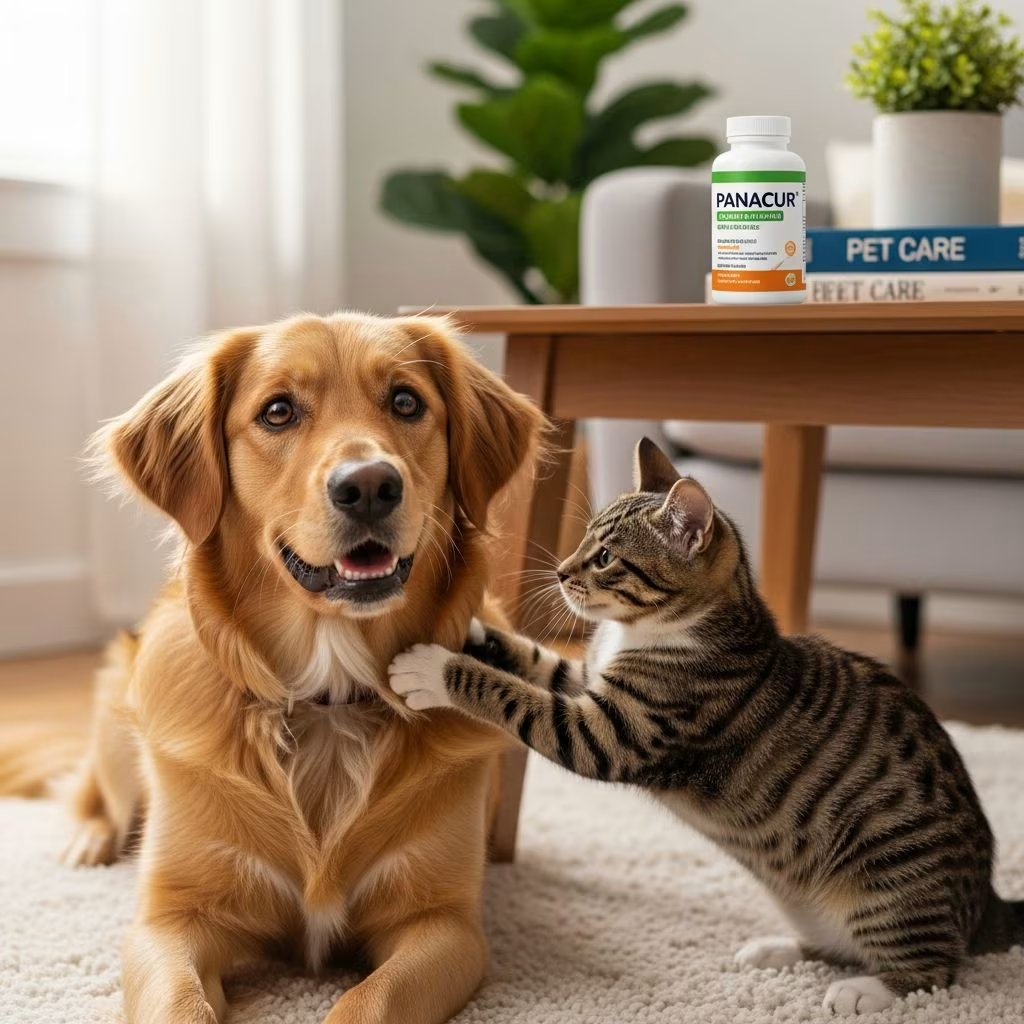
Panacur, containing the active ingredient fenbendazole, stands as a reliable option for managing Giardia infections in dogs and cats. This protozoal parasite causes gastrointestinal distress, and fenbendazole disrupts its energy production, leading to parasite elimination.
Understanding Giardia: A Common Pet Parasite
Giardia is a microscopic protozoan that inhabits the intestines of pets, leading to symptoms like diarrhea, weight loss, and lethargy. It spreads through contaminated water, food, or feces, making it highly transmissible in multi-pet homes or kennels. Unlike bacterial infections, Giardia forms resilient cysts that survive outside the host, complicating eradication efforts.
In dogs, infections often occur in puppies or during environmental exposure, while cats may carry it asymptomatically. Human transmission is possible, underscoring hygiene’s importance. Early detection via fecal testing allows timely intervention with medications like Panacur.
How Panacur Targets Giardia and Other Parasites
Fenbendazole works by binding to parasite tubulin, inhibiting microtubule formation essential for nutrient absorption and energy metabolism. This mechanism starves Giardia and various helminths, including roundworms, hookworms, whipworms, and some tapeworms.
For Giardia specifically, it affects both trophozoites and cysts, providing broad-spectrum control. Unlike some antibiotics, it spares beneficial gut bacteria, minimizing dysbiosis risks.
Dosing Guidelines for Dogs
Accurate dosing ensures efficacy while minimizing resistance. For Giardia in dogs, administer 50 mg/kg (1 ml per 2 kg of 10% suspension) daily for 3 consecutive days.
| Pet Weight | Daily Dose (Liquid 10%) | Treatment Duration |
|---|---|---|
| Up to 2 kg | 1 ml | 3 days |
| 4 kg | 2 ml | 3 days |
| 10 kg | 5 ml | 3 days |
| 20 kg | 10 ml | 3 days |
Administer with food to enhance absorption. Puppies under 6 months require 50 mg/kg for routine deworming at 2, 5, 8, and 12 weeks. Pregnant dogs receive 25 mg/kg from day 40 of pregnancy to 2 days post-whelping.
Dosing Protocols for Cats
Cats follow similar regimens, though fenbendazole lacks FDA approval for felines and is used off-label. For Giardia, 50 mg/kg daily for 3-5 days is standard.
- Adults: 1 ml per 2 kg bodyweight for 3 days.
- Kittens: Same rate, repeated at key developmental stages.
- Lungworm in cats: 50 mg/kg for 3 days.
Veterinary oversight is crucial due to species-specific metabolism differences.
Available Formulations of Panacur
Panacur comes in versatile formats for precise administration:
- Liquid suspension (10% fenbendazole): Ideal for small pets; easy syringe dosing.
- Granules (22.2%): Mix into food; sachets for 1-10 kg pets.
- Paste: Convenient for puppies; one syringe treats up to 6 kg for 3 days.
- Tablets/chews: Prescription-based for larger dogs.
Choose based on pet size, preference, and palatability.
Expected Timeline for Improvement
Clinical signs like diarrhea often resolve within 3-5 days of starting treatment. Full cyst clearance may take 1-2 weeks, necessitating follow-up fecal exams 2-4 weeks post-therapy. Extended courses (5-7 days) apply for refractory cases.
Reinfection is common without environmental decontamination, so bathing pets and disinfecting premises with 0.5% bleach (1:32 dilution) is essential.
Potential Side Effects and Safety Profile
Panacur is well-tolerated, with rare adverse effects. Most dogs and cats experience none at recommended doses.
| Common Side Effects | Rarity | Management |
|---|---|---|
| Vomiting or diarrhea | Uncommon | Reduce dose or discontinue; consult vet. |
| Lethargy | Rare | Monitor; usually self-resolves. |
| Allergic reactions | Very rare | Seek immediate veterinary care. |
Safe for puppies from 2 weeks, pregnant animals, and most breeds. Avoid in pets with known hypersensitivity. Overdose may cause elevated liver enzymes, but recovery is typical.
Preventing Giardia Reinfection
Treatment alone insufficient; prevention involves:
- Regular fecal testing, especially in high-risk environments.
- Avoiding contaminated water sources; use filtered or boiled water.
- Prompt removal of feces; disinfect with quaternary ammonium or steam cleaning.
- Quarantine new pets before introduction.
- Routine deworming every 3-6 months.
In catteries or kennels, treat all in-contact animals simultaneously.
When to Consult a Veterinarian
Seek professional advice if symptoms persist post-treatment, bloody stools appear, or dehydration occurs. Vets confirm diagnosis via ELISA or flotation tests and tailor protocols, potentially combining Panacur with metronidazole for stubborn infections. Never self-medicate without confirmation.
Alternatives to Panacur for Giardia
While effective, options include:
- Metronidazole: 10-25 mg/kg BID for 5-8 days.
- Nitazoxanide: Single 50 mg/kg dose, comparable to multi-day fenbendazole.
Choice depends on resistance patterns and pet tolerance.
Frequently Asked Questions (FAQs)
Can humans catch Giardia from treated pets?
Yes, cysts remain infectious until cleared. Practice strict hygiene; wash hands thoroughly.
Is Panacur safe for pregnant pets?
Yes, at adjusted doses; it does not harm fetuses.
How soon can I retest after treatment?
Wait 2-4 weeks for accurate results, as prepatent periods vary.
Does Panacur kill all tapeworms?
No, ineffective against flea-transmitted Dipylidium; use praziquantel for those.
Can I use over-the-counter Panacur?
Available OTC for some formulations, but vet prescription ensures proper use.
Long-Term Management in High-Risk Pets
Pets in shelters or breeding facilities benefit from monthly fenbendazole pulses. Monitor via quarterly fecal panels to catch subclinical carriers. Nutritional support with probiotics aids gut recovery post-infection.
Environmental management proves as vital as pharmacology. Quaternary ammonia disinfectants inactivate cysts effectively, unlike soap alone.
References
- Panacur Dosing Charts for Dogs, Cats, Puppies and Kittens — Hyperdrug. Accessed 2026. https://hyperdrug.co.uk/panacur/panacur-dosing-charts-for-dogs/
- Fenbendazole for Dogs and Cats (Panacur, Safe-guard) — PetMD. Accessed 2026. https://www.petmd.com/pet-medication/fenbendazole-panacur-safe-guard-for-dogs-cats
- Fenbendazole (Panacur) for Dogs: Uses, Side Effects — GoodRx. Accessed 2026. https://www.goodrx.com/pet-health/dog/fenbendazole-for-dogs
- GUIDELINE for Giardiasis — ABCD Cats & Vets. Accessed 2026. https://www.abcdcatsvets.org/guideline-for-giardiasis/
- Panacur For Dogs — American Kennel Club. Accessed 2026. https://www.akc.org/expert-advice/health/panacur-for-dogs/
- Giardia: Infection, treatment and prevention — Cornell University College of Veterinary Medicine. Accessed 2026. https://www.vet.cornell.edu/departments-centers-and-institutes/riney-canine-health-center/canine-health-topics/giardia-infection-treatment-and-prevention
- Giardia — CAPC. Accessed 2026. https://capcvet.org/guidelines/giardia/



