

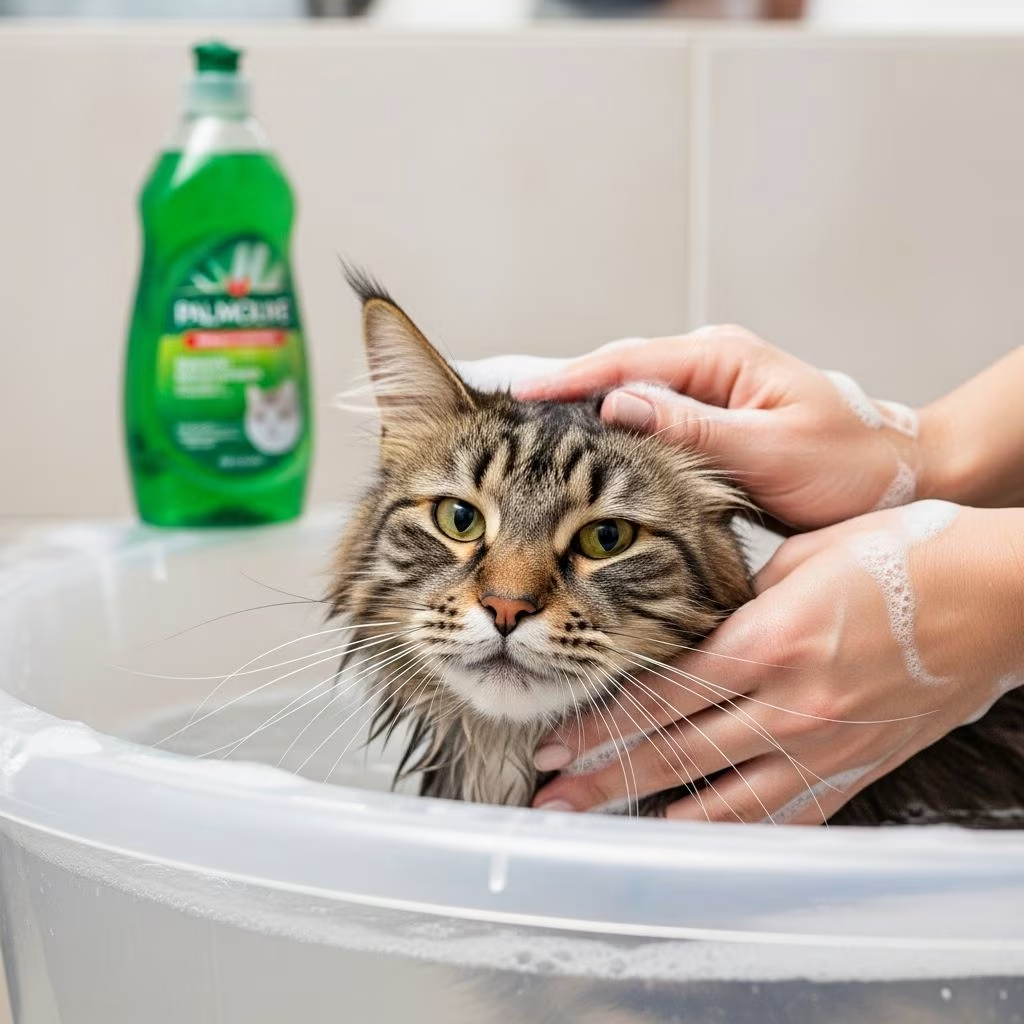
Understanding the Flea Problem in Cats
Flea infestations represent one of the most common parasitic challenges cat owners face. These tiny insects not only cause significant discomfort through constant itching but also pose serious health risks to felines. Fleas can transmit diseases, trigger allergic reactions, and in severe cases, lead to anemia in cats, particularly kittens and elderly animals. When a cat becomes infested, pet owners often seek immediate solutions, and many turn to household items they already have available. One such remedy that circulates frequently online involves using dish soap, particularly Palmolive, to bathe away the infestation.
Can Palmolive Actually Kill Fleas on Cats?
The straightforward answer is that Palmolive does possess the ability to kill adult fleas present on a cat’s body. The mechanism works through the soap’s surfactant properties, which interact with the flea’s protective outer layer, known as the exoskeleton. When applied during bathing, the soap disrupts this protective coating, causing adult fleas to lose buoyancy in water and ultimately drown.
However, this limited effectiveness comes with significant caveats. Adult fleas represent only approximately 5 percent of a total flea population within a home or on a pet. The remaining 95 percent consists of eggs, larvae, and pupae at various developmental stages. Palmolive has no impact whatsoever on these life stages.
The Flaw in the Palmolive Solution
Understanding the flea life cycle reveals why dish soap fails as a comprehensive treatment strategy. A single female flea can produce hundreds of offspring in a matter of weeks. When you bathe your cat with Palmolive and eliminate the adult fleas present, you address only the visible problem. The eggs and larvae remain untouched, developing into pupae and eventually emerging as new adult fleas that reinforce the infestation.
This cyclical pattern means that within days or weeks of a Palmolive bath, your cat will likely experience another flea outbreak as the next generation reaches adulthood. Furthermore, Palmolive provides zero protective benefit against future infestations. It contains no repellent properties and offers no ongoing defense. A flea can hop onto your cat immediately after the bath, and Palmolive provides no deterrent or preventative mechanism.
Safety Concerns with Using Dish Soap on Cats
Beyond its ineffectiveness against complete flea elimination, Palmolive presents several safety considerations when applied to feline skin and fur:
- pH Level Mismatch: Cats possess a skin pH that differs significantly from human skin and from the formulation of dish soaps designed for human dishwashing. Palmolive is not formulated with feline physiology in mind. This pH imbalance can irritate the skin and coat, leading to dryness, flakiness, and discomfort.
- Oil Depletion: While dish soaps excel at cutting through grease on dishes, this same property causes problems when applied to cat fur. Cats rely on natural oils that coat their skin and fur to maintain moisture, protection, and overall skin health. Palmolive strips away these essential oils, potentially resulting in dry, itchy skin and brittle, unhealthy-looking fur.
- Ingestion Risk: Cats engage in frequent self-grooming behaviors, licking their fur throughout the day and immediately after bathing. During this grooming, they inevitably ingest residual soap. Palmolive contains ingredients that are not formulated for feline consumption and may pose health risks when ingested.
- Skin Condition Aggravation: Cats with pre-existing skin conditions, allergies, or sensitivity will experience worsening irritation when exposed to dish soap. If your cat already suffers from a skin infection or dermatological condition, Palmolive can exacerbate these problems significantly.
When Might Palmolive Be Considered?
In truly emergency situations with limited resources, Palmolive might represent a temporary option. For example, if a stray cat appears at your door with a severe flea burden and you have no cat-specific flea products available, using Palmolive could address the immediate adult flea population while you arrange access to proper flea treatments. Similarly, if a cat becomes covered in an oily or greasy substance and no pet shampoo is accessible, Palmolive can help remove the contamination temporarily.
Even in these emergency scenarios, Palmolive should be considered only as a last resort, not a preferred solution. The occasional emergency use is unlikely to cause lasting harm, but repeated or regular application would cause progressive damage to your cat’s skin and coat health.
Proper Flea Treatment Approaches
Effective flea management requires a multi-pronged strategy that addresses all life stages:
| Treatment Type | How It Works | Advantages | Considerations |
|---|---|---|---|
| Monthly Preventatives | Topical liquids or oral medications applied/given monthly | Kills multiple life stages; prevents infestations; vet-recommended | Requires veterinary consultation; ongoing expense |
| Pet-Specific Shampoos | Formulated with feline-safe ingredients and proper pH balance | Gentler on skin and coat; designed for cat health | May not address all life stages alone; should pair with preventatives |
| Flea Combs | Mechanical removal of fleas from fur | Non-chemical; useful for monitoring infestation levels | Time-consuming; does not eliminate eggs or larvae |
| Environmental Treatment | Treating home, bedding, and outdoor areas | Breaks the infestation cycle; prevents reinfestation | Requires consistent application; multi-step process |
Why Professional Veterinary Products Matter
Veterinary-approved flea treatments are specifically developed to address multiple life stages simultaneously. Modern preventatives work through mechanisms that adult fleas cannot survive, while also preventing eggs and larvae from developing. These products undergo rigorous safety testing on animals and contain appropriate concentrations of active ingredients. Your veterinarian can recommend treatments suited to your specific cat’s age, weight, health status, and the severity of infestation in your area.
Prescription flea treatments offer a level of efficacy that household items simply cannot match. They provide lasting protection, often extending for 30 days or longer per application, and many work against not only fleas but also ticks and other parasites.
Choosing Among Palmolive Variants
If you find yourself in a true emergency situation where Palmolive is your only option, variant selection matters. The green Palmolive formula is marginally safer than antibacterial variants. The antibacterial versions contain additional chemical agents designed to kill bacteria, which provide extra irritation risk without additional benefit for flea treatment. The standard green formula, while still not ideal, represents a slightly better choice if you must choose.
Long-Term Flea Management Strategy
Rather than relying on temporary solutions like dish soap, implement a comprehensive approach:
- Consult your veterinarian about appropriate monthly flea preventatives for your cat
- Establish a consistent application schedule and mark calendar reminders
- Treat all pets in your household, not just the affected cat
- Clean and treat your home environment, including furniture, bedding, and outdoor areas where your cat spends time
- Maintain regular grooming and monitoring for early signs of flea activity
- Use cat-specific shampoos only when bathing is necessary for other reasons
Key Takeaways About Palmolive and Flea Treatment
While Palmolive dish soap does technically kill adult fleas through its sudsy action, it falls far short as a flea control solution. It addresses only a tiny fraction of a flea population, provides no ongoing protection, and risks irritating your cat’s skin and coat through regular use. The dish soap myth persists online because of its immediate, visible results against adult fleas, but this apparent success masks the reality that the infestation will return.
Emergency use in true crisis situations—when no alternatives exist—might be acceptable as a temporary measure. However, treating this as anything more than a last resort would be irresponsible to your cat’s health and wellbeing. Modern flea prevention products, many available through your veterinarian, offer dramatically superior effectiveness, safety, and protection. Investing in proper veterinary flea control is investing in your cat’s comfort, health, and quality of life.
Frequently Asked Questions
- Q: Does Palmolive kill flea eggs?
- No. Palmolive only affects adult fleas. Eggs, larvae, and pupae remain unaffected, and new adults will emerge within weeks.
- Q: How often can I safely use Palmolive on my cat?
- Occasional emergency use is unlikely to cause harm, but regular use is inadvisable. Repeated applications will progressively damage your cat’s skin and coat through oil depletion and irritation.
- Q: Are there specific Palmolive products safer for cats?
- The green variant is slightly safer than antibacterial formulations, but no dish soap is formulated appropriately for feline use.
- Q: What’s a better alternative to dish soap for flea treatment?
- Veterinary-approved monthly flea preventatives address all life stages and provide ongoing protection. Pet-specific shampoos are gentler if bathing is necessary for other reasons.
- Q: Can Palmolive prevent future flea infestations?
- No. Palmolive contains no repellent properties and offers zero preventative benefit. Fleas can reinfest immediately after bathing.
References
- Does Palmolive Kill Fleas? Vet Reviewed Safety & Effectiveness — Hepper. 2024. https://articles.hepper.com/does-palmolive-kill-fleas/
- Is Palmolive Dish Soap Safe for Cats? Vet-Approved Risks — Catster. 2024. https://www.catster.com/cat-health-care/is-palmolive-dish-soap-safe-for-cats/
- Is Palmolive Dish Soap Safe for Cats? Safety & Efficacy Explained — Hepper. 2024. https://articles.hepper.com/is-palmolive-dish-soap-safe-for-cats/



