

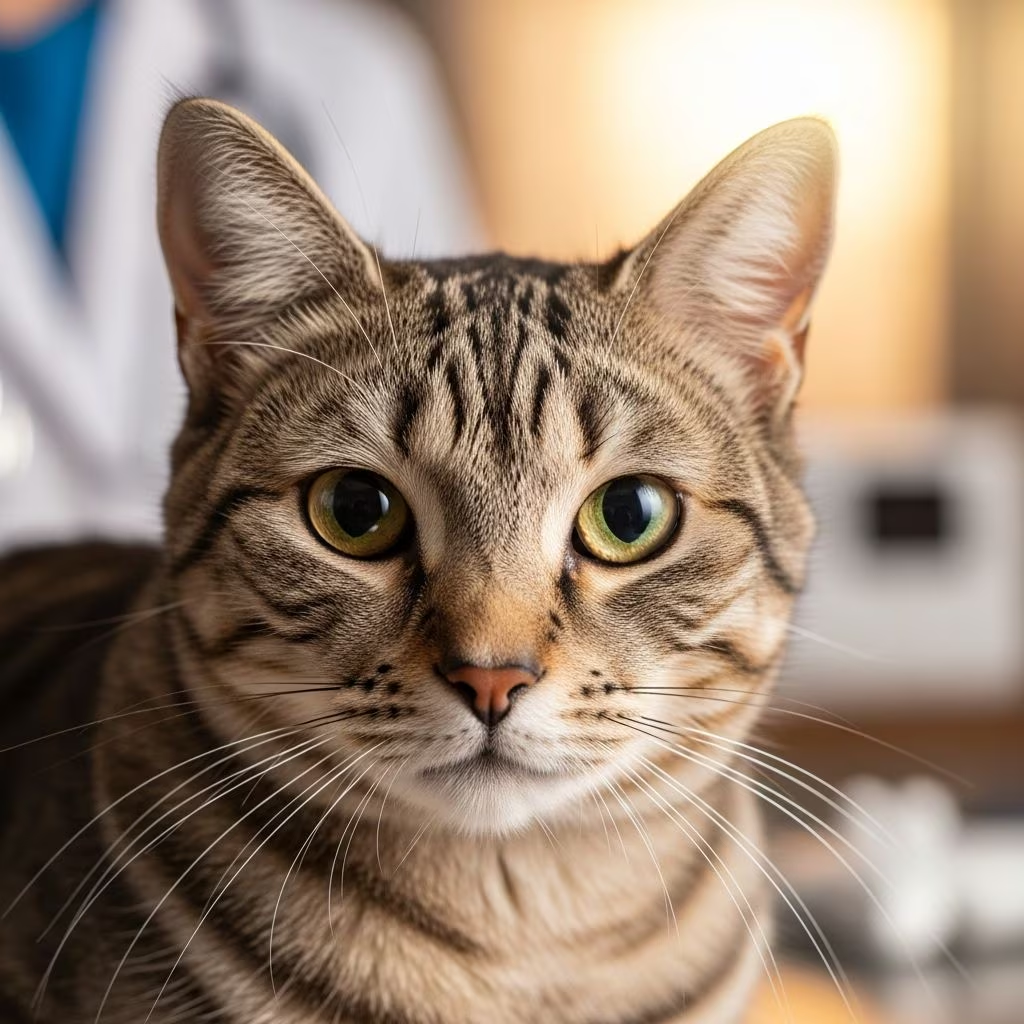
Understanding Pain in Cats: A Comprehensive Guide to Feline Pain Management
Cats are fundamentally different from dogs, and this distinction becomes particularly evident when examining how they experience and express pain. Unlike their canine counterparts, cats are much less likely to display obvious signs of discomfort, especially when dealing with chronic pain that develops over extended periods. For many years, veterinary professionals operated under the mistaken assumption that cats do not experience pain with the same intensity as humans or other animals. This misconception stemmed from cats’ natural instinct to hide their pain as a survival mechanism—a behavior inherited from their wild ancestors where displaying weakness could attract predators or lead to social exclusion from their group.
Fortunately, modern veterinary medicine has made remarkable progress in understanding feline pain and developing effective management strategies. Research has demonstrated that cats possess a nervous system remarkably similar to that found in humans, enabling them to feel pain with comparable sensitivity. This understanding has revolutionized how veterinarians approach pain assessment and treatment in feline patients, leading to improved outcomes and enhanced quality of life for countless cats.
Recognizing Pain in Your Cat: Subtle Signs You Shouldn’t Ignore
One of the most significant challenges in managing feline pain is simply recognizing when your cat is suffering. Because cats are masters at concealing discomfort, pet owners must become skilled observers of behavioral patterns. The signs of pain in cats are often subtle and easy to overlook, but careful attention to your cat’s everyday activities can reveal important clues about their wellbeing.
Behavioral Changes Associated with Pain
When a cat experiences pain, they typically alter their behavior in noticeable ways, though these changes may not be as dramatic as those seen in other species. One of the most common signs is reluctance to jump or climb. A cat that formerly leaped effortlessly to their favorite windowsill or the back of the sofa might begin avoiding these elevated spots altogether. Alternatively, your cat might still reach these favorite resting places but do so in an inefficient manner, taking several small jumps instead of one fluid motion. This staggered approach indicates the cat is trying to minimize the discomfort associated with jumping.
Mobility issues often extend to navigating stairs as well. A cat experiencing pain may decide that climbing stairs is too difficult and choose to remain on a single level of the home for extended periods. This represents a significant change in behavior for many cats, who typically enjoy exploring multiple levels of their environment.
Other Important Pain Indicators
Beyond movement-related changes, pain manifests in various other behavioral patterns. Changes in grooming habits are particularly telling—a cat in pain may neglect their usual meticulous grooming routine, resulting in an unkempt or dull coat. Alterations in litter box habits, such as difficulty entering or exiting the box, increased frequency of urination or defecation, or accidents outside the box, can indicate pain in the abdominal region or hind limbs. Loss of interest in toys, reduced playfulness, and decreased appetite are additional signs that warrant veterinary attention.
Perhaps most telling is when a cat stops assuming their characteristic relaxed sleeping positions. Healthy cats often curl into comfortable shapes—sometimes described as resembling a “bagel” or “pretzel”—when resting. A cat in pain may adopt a more rigid or tense posture, unable to achieve these comfortable configurations.
How Pain is Treated in Cats: A Multimodal Approach
Modern pain management for cats employs a multimodal approach, meaning veterinarians use multiple strategies and medication classes simultaneously to achieve optimal pain relief. This comprehensive strategy proves more effective than relying on a single treatment method. When your cat requires surgical or dental procedures, it is essential to discuss pain management options with your veterinarian before the procedure occurs.
Nonsteroidal Anti-Inflammatory Drugs (NSAIDs)
NSAIDs represent one of the most commonly prescribed pain relief medications for cats. These drugs function by interfering with the body’s production of inflammatory molecules that trigger both pain and swelling. They prove particularly effective for treating mild to moderate pain and discomfort across various conditions. However, NSAIDs require careful use in feline patients because there exists potential for liver, kidney, stomach, and intestinal complications, particularly in older cats or those with pre-existing organ disease.
A critical safety consideration: never administer over-the-counter NSAIDs to your cat without explicit veterinary approval. Some over-the-counter formulations designed for humans or other species can be extremely dangerous for felines. Always use medications specifically prescribed or recommended by your veterinarian for your individual cat.
Opioid Medications
For more severe pain, veterinarians turn to opioid medications. This important class of pain-relief drugs includes morphine, codeine, fentanyl, buprenorphine, and hydromorphone. Opioids are reserved for cases requiring significant pain management, such as severe surgical pain, advanced cancer, or severe arthritis in older cats. These medications can play a crucial role in maintaining acceptable quality of life for cats experiencing severe chronic pain, allowing them to remain comfortable and engaged with their environment.
Advanced and Emerging Pain Management Options
Beyond traditional NSAIDs and opioids, veterinary medicine now offers several newer therapeutic options that provide additional pain-relief possibilities for cats. Gabapentin, originally developed for nerve pain in humans, has proven valuable in feline medicine for managing various pain conditions. Tramadol offers another option for moderate pain management. Amantadine provides benefits for certain chronic pain conditions. More recently, medications like Frunevetmab (Solensia®) represent innovative approaches to pain management, particularly for conditions like osteoarthritis. Maropitant citrate (Cerenia®) addresses pain while simultaneously managing nausea, which often accompanies pain in cats.
Corticosteroids in Pain Management
Cortisone and synthetic cortisone-like drugs, including prednisone, prednisolone, methylprednisolone, and dexamethasone, function as potent anti-inflammatory medications capable of profoundly reducing pain. However, these medications carry significant potential for side effects with long-term use, so they are typically reserved for specific situations or used in conjunction with other therapies. Newer and more targeted therapeutic options have become more commonly utilized in modern veterinary practice, though corticosteroids remain valuable tools in certain pain management scenarios.
Pain Management During Surgical Procedures
Surgical pain management requires a comprehensive, multimodal approach that begins before the anesthesia is administered and continues well into the recovery period. Modern surgical pain management focuses on preventing pain rather than treating it after it occurs.
Preemptive Pain Management
Your veterinarian will initiate pain management before your cat’s surgical procedure even begins. This preemptive approach anticipates pain and provides medication in advance, fundamentally altering how your cat’s nervous system responds to surgical trauma. Before general anesthesia is administered, your cat receives an injection of pain medication that travels through the bloodstream, providing generalized protection throughout the body and preparing the nervous system to resist surgical pain signals.
Intraoperative Pain Control Strategies
Once your cat is under general anesthesia, your veterinarian will inject local anesthesia around the incision site, essentially “freezing” the area to prevent pain signals from reaching the central nervous system. Depending on the specific nature of your cat’s surgery, your veterinarian may employ additional pain management strategies, such as epidurals or continuous rate infusions (CRI).
A continuous rate infusion delivers tiny doses of potent pain medications through an intravenous line on a constant basis. This approach offers multiple advantages: it treats pain effectively while simultaneously reducing the amount of gas anesthesia required, allowing your veterinarian to use lower concentrations. Lower anesthesia concentrations mean your cat will wake up faster and experience fewer lingering effects from the anesthesia itself.
Postoperative Pain Management
After surgery concludes, most cats receive an injection of narcotic pain reliever, either during or immediately after the procedure. Additionally, cats typically receive a dose of NSAID medication to decrease both pain and inflammation. Your veterinarian will determine the specific medications, timing, and dosages based on your cat’s particular surgery, individual health needs, and overall health status.
Some postoperative feline patients benefit from physical medicine modalities that reduce pain and inflammation. These may include cold therapy using ice packs, therapeutic laser treatment, acupuncture, or therapeutic massage. Each surgical patient presents unique needs, so pain management strategies are customized to address the individual cat’s requirements.
At-Home Pain Management and Recovery
Any surgical procedure involves tissue trauma, and pain relief becomes critical for successful healing. The medications your cat receives at home will depend on the nature of the surgery and your veterinarian’s clinical assessment. Generally, an NSAID provides the foundation of at-home postoperative care, though your veterinarian may recommend additional medications based on your cat’s specific situation.
It is essential to administer all prescribed medications exactly as directed, maintaining consistent dosing schedules and durations. Do not hesitate to contact your veterinarian if you observe any concerns about your cat’s recovery, medication side effects, or pain levels during home care.
Managing Chronic Pain Conditions
Many cats, particularly seniors, experience chronic pain from conditions like osteoarthritis. By some estimates, approximately 90% of cats over age 12 develop osteoarthritis, making it the most common chronic disease affecting aging cats. When your cat receives a chronic pain diagnosis, it is important to understand that management, rather than cure, becomes the focus. Success means maximizing your cat’s comfort and functional ability while minimizing pain levels.
Multimodal Chronic Pain Management
Managing chronic feline pain effectively requires combining medication, dietary modifications, environmental changes, and complementary therapies. Veterinarians now recognize that addressing chronic pain from multiple angles produces better outcomes than single-approach strategies.
Physical Medicine and Rehabilitation
Physical medicine modalities complement traditional medication and nutrition approaches for chronic pain management. Options include physical rehabilitation, acupuncture, chiropractic care, laser therapy, and medical massage. When seeking these therapies, ensure you work with appropriately qualified and credentialed practitioners—your veterinarian can provide referrals to qualified professionals. Physical medicine may eventually allow for decreased medication doses over time by helping restore more normal movement patterns and strengthen your cat’s body.
Creating Your Cat’s Personalized Pain Management Plan
Every cat is unique, and pain management must be tailored to individual needs. When working with your veterinarian, be prepared to discuss:
– Your cat’s age and overall health status- Any existing medical conditions, particularly kidney or liver disease- Your cat’s behavior and lifestyle- Your observations about changes in pain-related behaviors- Your ability to administer medications or arrange treatment appointments- Your budget for pain management options
Open communication with your veterinarian is essential. If you notice your cat seems uncomfortable despite prescribed medications, or if you observe concerning side effects, inform your veterinarian immediately. Pain management plans can be adjusted and refined based on your cat’s response.
The Importance of Untreated Pain Prevention
Untreated pain is something no pet should experience. Beyond the immediate discomfort, chronic pain can lead to behavioral changes, reduced appetite, decreased activity, impaired healing from illness or surgery, and diminished quality of life. By paying careful attention to behavior changes that might signal pain and by working proactively with your veterinarian, you can help your cat enjoy a pain-free, comfortable life.
Frequently Asked Questions About Feline Pain Management
Q: How can I tell if my cat is in pain since they hide it so well?
A: Watch for behavioral changes such as reluctance to jump, difficulty navigating stairs, changes in grooming habits, litter box issues, reduced playfulness, or loss of interest in favorite activities. Your cat’s human family members are often best positioned to identify these subtle changes.
Q: Is it safe to give my cat over-the-counter pain medication?
A: No. Never give your cat over-the-counter NSAIDs or other pain medications without explicit veterinary approval. Some formulations can be extremely dangerous for felines. Always use medications specifically prescribed for your cat by your veterinarian.
Q: What should I do if my cat seems to still be in pain after surgery?
A: Contact your veterinarian immediately. Pain management plans can be adjusted based on your cat’s response. Your veterinarian may adjust medication doses, change medication types, or add complementary therapies to improve pain control.
Q: Can acupuncture and other alternative therapies help my cat’s chronic pain?
A: Yes, physical medicine modalities like acupuncture, laser therapy, and therapeutic massage can complement medication and help manage chronic pain. Work with qualified, credentialed practitioners whom your veterinarian recommends.
Q: How long will my cat need pain medication after surgery?
A: The duration depends on the specific surgery performed and your cat’s individual healing. Your veterinarian will determine an appropriate treatment duration and may adjust this based on your cat’s recovery progress.
References
- Pain Management for Cats — VCA Animal Hospitals. 2024. https://vcahospitals.com/know-your-pet/pain-management-for-cats
- Surgical Pain in Cats — VCA Animal Hospitals. 2024. https://vcahospitals.com/know-your-pet/surgical-pain-in-cats
- Managing acute pain: a team approach – 2022 ISFM Consensus Guidelines — International Society of Feline Medicine, PubMed Central/NIH. 2024. https://pmc.ncbi.nlm.nih.gov/articles/PMC10845385/
- Helping Your Cat with Osteoarthritis — VCA Animal Hospitals. 2024. https://vcahospitals.com/know-your-pet/helping-your-cat-with-osteoarthritis
- How Do I Know if My Cat is in Pain? — VCA Animal Hospitals. 2024. https://vcahospitals.com/know-your-pet/how-do-i-know-if-my-cat-is-in-pain
- 2022 AAHA Pain Management Guidelines for Dogs and Cats — American Animal Hospital Association. June 2022. https://www.aaha.org/guidelines/pain-management



