

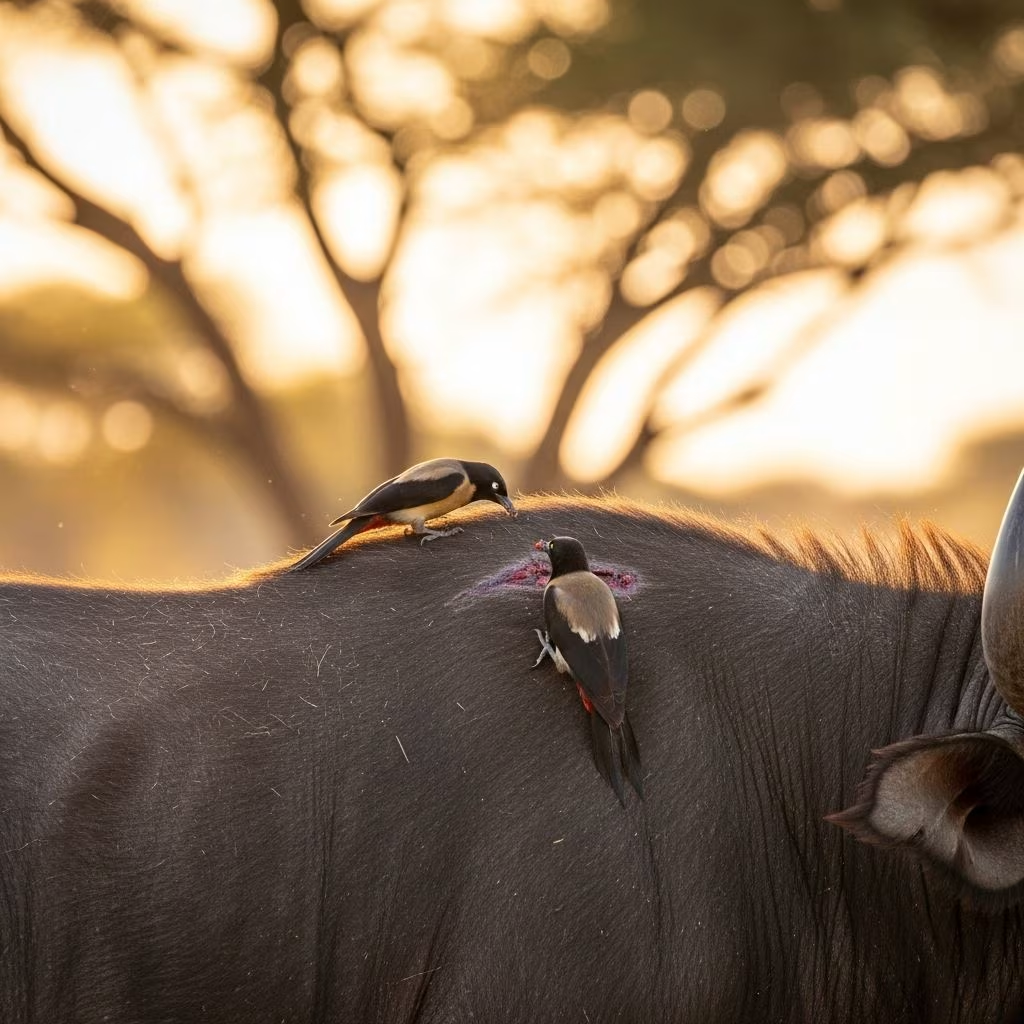
In the expansive savannas of Sub-Saharan Africa, a peculiar relationship unfolds daily between small brown birds and massive mammals. The oxpecker, a bird barely larger than a sparrow, perches boldly on the backs of buffalo, giraffes, zebras, and rhinos—feeding on parasites while simultaneously creating controversy within the scientific community. This relationship represents one of nature’s most compelling paradoxes: is the oxpecker genuinely beneficial to its hosts, or does it exploit them for its own nutritional gain? The answer, emerging from decades of behavioral research, reveals a far more nuanced reality than simple ecological classification allows.
Unraveling the Oxpecker’s Identity and Ecological Role
Oxpeckers belong to the genus Buphagus, occupying a unique ecological niche found nowhere else on Earth except the African continent. Two primary species exist: the red-billed oxpecker and the yellow-billed oxpecker, each displaying distinct preferences for particular host animals and feeding behaviors. These birds represent an extraordinary adaptation to life on the bodies of large mammals, possessing specialized morphological features that enable their unusual lifestyle. Their short, robust legs grip the skin and hair of their hosts with remarkable tenacity, while stiff tail feathers provide crucial support when clinging to vertical surfaces. Sharp, curved claws function like biological grappling hooks, allowing oxpeckers to maintain their position even on moving animals traveling at considerable speeds.
The oxpecker’s name itself hints at its primary function—though not entirely accurately. Early European naturalists believed these birds primarily extracted parasitic worms from cattle, but modern ornithology has revealed a far more complex dietary repertoire. The Kiswahili designation, “askari wa kifaru” (guard of the rhinoceros), more aptly captures the multifaceted role these birds play in African ecosystems.
The Spectrum of Feeding Mechanisms and Dietary Preferences
Oxpeckers have evolved four distinct feeding techniques, each employed under different circumstances and revealing much about their true ecological function. These specialized behaviors demonstrate remarkable adaptability to various parasitic loads and host conditions:
- Scissoring: A rapid opening-and-closing of the bill as it penetrates through hair and skin, particularly effective for extracting embedded ticks. This technique involves precise manipulation and considerable dexterity
- Plucking: A deliberate visual search where the oxpecker scans the host’s body with its head turned sideways, identifying and removing loose skin debris and visible parasites through a backward jerking motion
- Pecking: A pickaxe-like striking action used primarily on open sores and wounds, employing either slightly opened or closed bills depending on wound characteristics
- Insect-catching: Active pursuit of flying insects while remaining positioned on the host, involving hawking, random snapping, or stalking behaviors
The choice of feeding technique directly correlates with tick availability and host condition. When preferred tick species like scale ticks (Ixodidae) and horse flies (Tabanidae) are abundant, oxpeckers employ the less invasive scissoring and plucking methods. However, this apparent cooperation masks a deeper nutritional complexity that challenges simplistic categorization of the relationship as purely mutually beneficial.
Host Selectivity: A Window Into Ecological Strategy
Oxpeckers demonstrate remarkably specific preferences regarding which mammals serve as suitable hosts. Large, socially-organized herbivores with substantial tick burdens represent ideal candidates. Buffalo, giraffes, rhinos, zebras, wildebeest, hippos, and impala antelope feature prominently in oxpecker diets. Domesticated cattle also serve as reliable hosts, a relationship recognized and deliberately cultivated by African cattle herders for centuries.
Interestingly, oxpeckers consistently avoid certain species despite their size and abundance. Smaller antelopes including topis, reedbucks, lechwe, and duikers rarely host oxpeckers, suggesting that body size and tick-load intensity profoundly influence host selection. Camels and Lichtenstein’s hartebeests are similarly avoided. Elephants present a peculiar case—these massive animals occasionally tolerate oxpeckers, but only when in poor health, indicating that healthy elephants possess some mechanism for deterring or rejecting these persistent birds.
The Beneficial Case: Parasite Removal and Predator Detection
The traditional narrative celebrating oxpeckers as nature’s cleanup crew carries substantial scientific support. Early African cattle herders recognized the birds’ capacity to reduce parasitic loads and actively encouraged their settlement on livestock herds. This practice reflected genuine ecological understanding predating modern parasitology by centuries.
Tick removal provides clear benefits to host animals, reducing disease transmission and improving overall health. The constant vigilance of oxpeckers in scanning host bodies for parasites represents a continuous, cost-free pest control service. Beyond parasite management, oxpeckers provide an acoustic early warning system that enhances host survival. Their sharp, distinctive “tsik-tsik” alarm calls alert grazing mammals to approaching predators, compensating for many hosts’ limited visual acuity.
Scientific research has quantified this defensive benefit with remarkable precision. Studies comparing black rhinos with and without oxpecker companions revealed that rhinos without bird associates detected human approach only 23 percent of the time, whereas rhinos accompanied by oxpeckers detected every approach, often from substantially greater distances. The relationship is dose-dependent: more oxpeckers correlate with earlier threat detection, suggesting these birds provide genuine sensory enhancement to their hosts. This discovery validated the Kiswahili designation of oxpeckers as rhinoceros guards, confirming that indigenous knowledge systems had long recognized benefits that Western science only recently documented.
The Parasitic Perspective: Blood-Feeding and Wound Exploitation
The less romantic side of oxpecker biology has received increasing scientific attention in recent decades, revealing behaviors that blur the boundary between symbiotic cooperation and opportunistic exploitation. Oxpeckers do not exclusively feed on parasites and insects; they actively consume blood and tissue from their hosts. This behavior represents not merely incidental access to bodily fluids but deliberate wound feeding that raises serious questions about the relationship’s fundamental nature.
The prevalence of this parasitic behavior correlates directly with tick scarcity. When preferred tick species become unavailable due to seasonal fluctuations or environmental change, oxpeckers compensate by maintaining existing wounds open and creating new ones to access blood. Rather than representing aberrant behavior, wound feeding appears intrinsic to oxpecker feeding strategy—always present to some degree but intensifying when nutritional alternatives diminish. This opportunistic expansion of dietary scope suggests that the oxpecker-host relationship falls somewhere along a spectrum between mutualism and parasitism, with its position shifting seasonally and ecologically.
Breeding, Social Structure, and Long-Term Host Dependence
Oxpeckers display profound dependence on their mammalian hosts throughout their reproductive cycles. Both species are cooperative breeders, with multiple adults assisting breeding pairs in provisioning nestlings. Nest construction itself depends on host association: oxpeckers line their tree-hole nests with hair deliberately plucked from their animal companions. This intimate material connection underscores the depth of ecological integration between birds and hosts.
Breeding timing in red-billed oxpeckers demonstrates exquisite synchronization with host parasite availability. Research in Kruger National Park documented that breeding seasons align with rainfall patterns that trigger increases in scale tick abundance, providing essential nutrition for pre-breeding molts. Subsequently, increasing horse fly populations provide protein resources enabling breeding initiation. This phenological coupling illustrates how completely oxpecker reproductive success depends on maintaining access to host animals and their associated parasite fauna.
Typical clutches comprise two to three eggs, with incubation lasting approximately twelve days. Fledglings spend approximately 28-30 days in the nest before fledging, after which they continue riding on mammalian hosts, begging food from adults feeding on the same individual. In favorable rainy seasons, pairs may nest two to three times, maximizing reproductive output when conditions permit.
Daily Rhythms and Roosting Behavior
Despite their daytime dedication to host association, oxpeckers maintain distinct separation from their companions at night. As darkness falls, these birds abandon their animal hosts and retreat to communal roosting sites in nearby trees, thickets, or reed beds. They gather in small flocks, clustering closely together for thermal regulation and collective predator defense. Unlike cavity-nesting songbirds, oxpeckers prefer open branch perches that facilitate rapid escape if nocturnal threats materialize.
This daily rhythm represents a crucial temporal division between feeding and safety. By morning, oxpeckers return to their hosts, resuming their parasitic or mutually-beneficial feeding activities depending on one’s interpretive framework. This predictable cycle has likely influenced evolutionary dynamics, as hosts may have adapted to tolerate or even encourage oxpecker presence during resource-abundant daytime hours while benefiting from nocturnal freedom from the birds’ metabolic demands and wound-creating activities.
Species-Specific Preferences and Host-Bird Matching
Red-billed and yellow-billed oxpeckers exhibit distinct host preferences that likely reflect competition avoidance and ecological partitioning. Red-billed oxpeckers favor smaller hosts like impala, which despite their modest size carry substantial tick burdens that make them attractive to the smaller bird species. Yellow-billed oxpeckers, by contrast, concentrate on larger animals including buffalo and other megafauna. This differentiation allows both species to coexist in African ecosystems without direct competitive conflict over host access.
Selectivity extends beyond species boundaries to individual health status. Oxpeckers preferentially associate with animals in robust health, though the mechanisms driving this selectivity remain incompletely understood. The consistent avoidance of most elephant populations suggests that certain host defense mechanisms—perhaps behavioral intolerance, skin texture characteristics, or parasitic ecology unique to elephants—render them unsuitable except under compromised health conditions.
The Scientific Debate: Reframing Ancient Relationships
Contemporary behavioral ecology has moved beyond simple dichotomies of “cleaners” versus “parasites,” recognizing that oxpecker-host relationships likely vary considerably depending on ecological context, host species, season, and individual variation. The traditional characterization as mutualistic may represent an oversimplification of a relationship whose benefits and costs shift dynamically. In seasons of abundant parasites, the relationship tilts decidedly toward mutualism, with hosts genuinely benefiting from reduced disease burden and enhanced predator detection. During tick-scarce seasons, however, the relationship may become predominantly parasitic, with oxpeckers actively exploiting hosts for blood and tissue while providing minimal compensatory benefit.
This contextual variability explains why different research programs have reached seemingly contradictory conclusions about oxpecker impacts. Studies emphasizing parasite removal benefits naturally conclude that the relationship is beneficial, while research focusing on blood-feeding and wound-maintenance behavior reaches more critical assessments. The scientific consensus increasingly recognizes that both dimensions are simultaneously valid and that oxpeckers genuinely embody nature’s paradox—functioning as both beneficial cleaners and opportunistic parasites within the same ecological interaction.
Frequently Asked Questions
Do oxpeckers actually provide protection benefits to their hosts?
Yes. Research demonstrates that oxpecker alarm calls substantially improve host predator detection. Black rhinos with oxpeckers detected human approach from significantly greater distances than those without, suggesting these birds provide genuine sensory enhancement.
What do oxpeckers eat besides parasites?
Oxpeckers feed on four primary food categories: small invertebrates like ticks and flies obtained through specialized feeding techniques, blood drawn from existing or maintained wounds, host tissue, and occasionally flying insects captured while remaining on the host’s body.
Why do some animals refuse oxpeckers while others welcome them?
Host selectivity likely reflects differences in parasite loads, body size, behavioral tolerance, and possibly skin characteristics. Smaller antelopes and most elephants consistently avoid or reject oxpeckers despite their size, suggesting physiological or behavioral factors beyond simple body dimensions influence the relationship.
Are oxpeckers beneficial or harmful overall?
The answer depends on ecological and seasonal context. During tick-abundant seasons, oxpeckers provide substantial parasite removal and predator detection benefits. During scarce seasons, they may exploit hosts through blood-feeding and wound maintenance. The relationship represents a genuine paradox rather than simple classification.
Conservation Implications and Future Research Directions
Understanding oxpecker-host dynamics carries implications for African wildlife management and conservation strategy. Habitat loss reducing cavity-nesting tree availability threatens oxpecker breeding success and population stability. Climate change altering rainfall patterns and thus parasite phenology may fundamentally reshape the ecological balance between birds and hosts. Future research should continue documenting seasonal and contextual variation in the relationship, clarifying the circumstances under which oxpeckers genuinely benefit versus exploit their hosts. Such knowledge will enhance our capacity to maintain healthy, functioning ecosystems where complex multi-species relationships continue evolving and supporting African biodiversity.
References
- The Oxpecker: Nature’s Feathered Caretaker — Inverdoorn. Accessed January 30, 2026. https://inverdoorn.com/the-oxpecker-natures-feathered-caretaker/
- Oxpeckers and mammals – a relationship only found in Africa — Learn the Birds. Accessed January 30, 2026. https://learnthebirds.com/oxpeckers-and-mammals-a-relationship-only-found-in-africa/
- Oxpeckers, The Birds That Drink Blood — Bird Spot. Accessed January 30, 2026. https://www.birdspot.co.uk/bird-behaviour/oxpeckers-the-birds-that-drink-blood
- Red-billed oxpeckers: vampires or tickbirds? — Behavioral Ecology, Oxford University Press. Vol. 11, No. 2. https://academic.oup.com/beheco/article/11/2/154/204658
- Oxpecker — Wikipedia. Accessed January 30, 2026. https://en.wikipedia.org/wiki/Oxpecker



