
Owl Finch: Care, Behavior & Breeding Guide
Complete guide to owl finches: distinctive markings, social behavior, breeding, and expert care tips.
Owl Finch: A Complete Care and Breeding Guide
Owl finches are distinctive little birds that bear a striking resemblance to miniature owls, earning them their charming common name. These curious and social Australian finches have become increasingly popular among bird enthusiasts and pet owners who appreciate their unique appearance and engaging personalities. With their distinctive black and white facial markings and gentle disposition, owl finches make excellent additions to aviaries and flight cages. This comprehensive guide covers everything you need to know about caring for, breeding, and understanding these remarkable birds.
Physical Appearance and Distinctive Markings
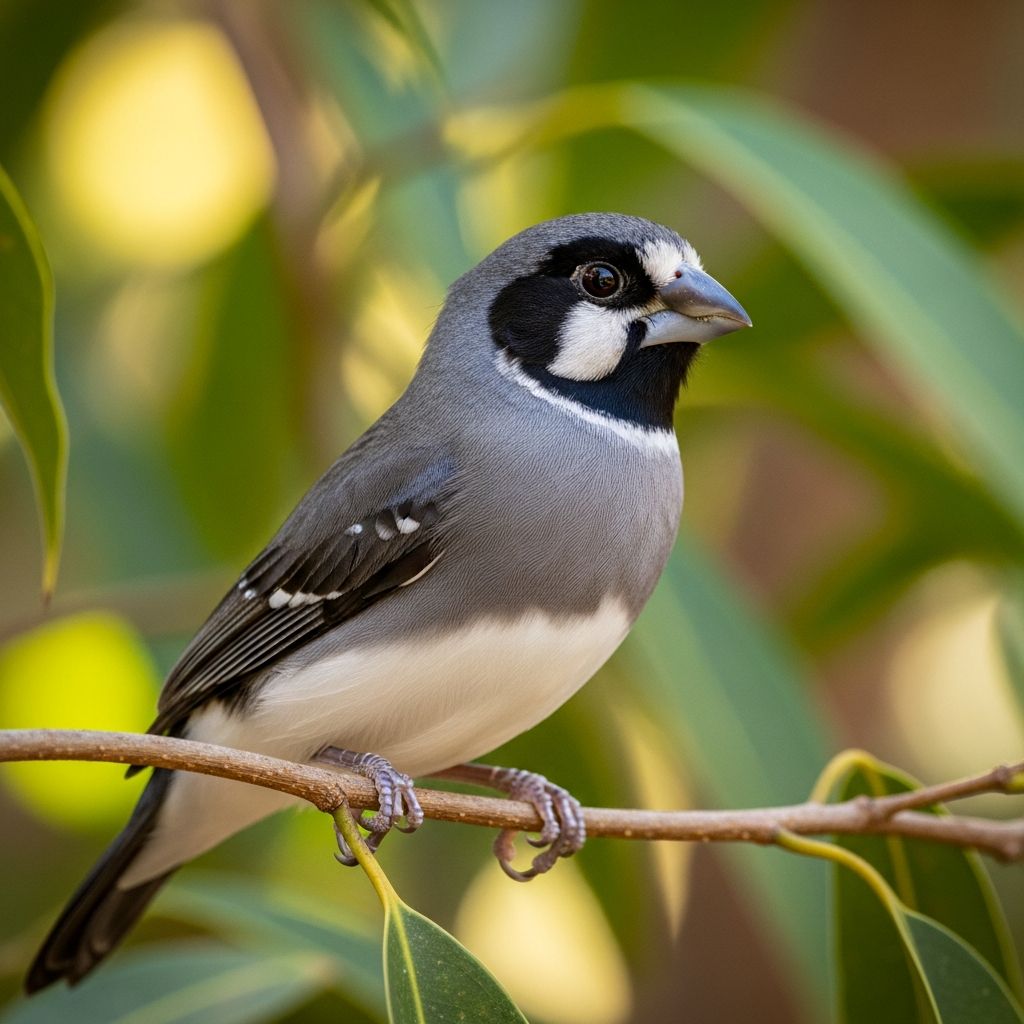
One of the most captivating features of owl finches is their distinctive appearance that closely resembles a tiny owl. These birds stand between 3 and 4 inches in length, making them a compact addition to any aviary. Their most striking characteristic is their white “face mask” which is bordered by a thin black band that circles around their face, starting from the forehead and continuing around the cheeks before meeting under the chin. This facial pattern is what gives them their owl-like appearance.
Beyond their distinctive face, owl finches display a beautiful combination of colors and patterns throughout their plumage. The top of their head and back are rich brown with subtle dark barring, while their wings are decorated with intricate patterns of dark brown-black feathering accented with delicate white spots. Their chest area is silvery-white with hints of beige, and a second black band runs across the lower breast, which is why some bird enthusiasts refer to them as “double-barred finches.” Their bellies are creamy off-white, and their tails are black and pointed. The beak is grey, and their eyes are characteristic black.
One interesting subspecies is the black-rumped owl finch, which features a black rump instead of the white rump found in the nominate species. Because these two subspecies sometimes interbreed in captivity, some birds may have blotchy rumps that are neither completely black nor white. Males and females are extremely difficult to distinguish visually, as both sexes share the same coloration and markings, making sex determination challenging for even experienced bird keepers.
Native Habitat and Geographic Distribution
Owl finches are native to Australia, where they inhabit a variety of ecological zones including woodlands, grasslands, and scrublands throughout the country. Their natural habitat encompasses semi-arid and sub-humid areas, particularly regions with pandanus palms or tall grasses adjacent to streams and lagoons. They also thrive in dry plains with scattered small trees such as eucalypts and bushes including acacias and bauhinias. Additionally, they have successfully adapted to human-modified landscapes, frequently appearing in gardens, cultivated areas such as sugarcane fields, and open woodland and forest edges.
In contemporary Australia, owl finches have shown remarkable adaptability and are commonly observed in city parks and urban areas, indicating their successful adjustment to human presence and environmental changes despite urbanization affecting many of their native habitats. These active flyers travel in groups ranging from four to 40 individuals, and larger flocks may form during the dry season when resources become more concentrated.
Personality and Social Behavior
Owl finches are renowned for their exceptional social nature and friendly disposition, distinguishing them from many other finch species. These birds are highly social and engage in behaviors such as clumping (huddling together) and allopreening (preening each other), which strengthen their social bonds. Wild flocks typically consist of 4 to 20 individuals, though larger congregations may occur during resource scarcity.
Unlike many finch species, owl finches are not territorial and display a bubbly, friendly personality that makes them beloved in both aviary and captive settings. They are naturally curious birds and will actively investigate anything new added to their environment, demonstrating intelligence and adaptability. However, proper housing is essential to maintain their pleasant temperament. Without adequate space, these active birds can become bored, frustrated, and potentially aggressive toward cage mates.
Pair bonds in owl finches are exceptionally strong, and pairs often remain together throughout the year even when not breeding. This monogamous nature contributes to their appeal as pets, as keepers can observe the deep connection between bonded pairs.
Care and Housing Requirements
Space and Enclosure Specifications
Owl finches require generous housing with ample space to accommodate their active flying nature. An aviary is the ideal housing option, preferably one that is full of branches and safe foliage to create a naturalistic environment. Because these birds are highly active flyers, they need plenty of room to fly back and forth, land on different perches, and establish their own territory within the enclosure.
The minimum recommended space is a large flight cage, though a properly designed aviary is optimal. Branches and perches of varying diameters should be provided throughout the enclosure to facilitate natural movement and exercise. Live plants and safe vegetation not only provide enrichment but also mimic their natural habitat and offer additional perching opportunities.
Compatibility with Other Bird Species
Owl finches generally get along well with most other Australian and Old World finches, as well as canaries. However, because they are closely related to zebra finches, these two species may successfully interbreed in captivity, producing sterile hybrids known as “mules.” This interbreeding is highly discouraged within the bird community to maintain genetic purity and species integrity.
While owl finches are compatible with many species, they should not be crowded in their enclosure, as overcrowding can lead to stress, aggression, and behavioral problems. Providing adequate space for multiple birds to maintain their own areas while cohabiting peacefully is crucial for successful multi-species aviaries.
Diet and Nutrition
In their natural habitat, owl finches subsist primarily on a variety of plant seeds, particularly grass seeds, which form the foundation of their diet throughout most of the year. During seasons when seeds are less available, they supplement their diet with fruits, berries, insects, and other vegetation.
In captive settings, owl finches thrive on high-quality finch food as their primary diet. Additional nutritional items should include small millet, boiled egg (an excellent protein source), and green foods. They will occasionally consume small mealworms and other live foods, which provide essential protein and mimic their natural foraging behavior.
Proper nutrition is particularly important during breeding season and for growing chicks, which require increased protein intake. Fresh water should be available at all times, and these birds have an efficient method of drinking that allows them to imbibe water quickly and minimize their vulnerability at water holes.
Breeding and Reproduction
Breeding Cycle and Nest Characteristics
Owl finches are generally reliable breeders and form strong pair bonds suitable for successful reproduction. The female typically lays between three and six eggs per clutch, with four or five being most common, though larger clutches do occur. Incubation begins after the third or fourth egg is laid and lasts approximately 12 days from the start of full incubation.
The breeding timeline progresses as follows: chicks hatch after 12 days of incubation, and young birds fledge at 22 to 26 days of age. Once fledged, chicks typically leave the nest at around three weeks old but remain dependent on their parents for food until they are 30 to 35 days old.
Parenting Behavior and Fostering
Owl finches are generally good parents, though some individuals may be overly carefree with their sitting habits or occasionally toss a baby out of the nest. A particularly endearing behavior in owl finch chicks is their unique begging posture: young birds will lift one wing straight into the air while begging to be fed from their parents, apparently as an attempt to block off their siblings and secure more food for themselves.
Once fledged, young birds will return to the nest to roost at night, and if left in the enclosure during subsequent broods, older siblings may assist with feeding new fledglings. If parents become aggressive toward fledglings when returning to nest and laying new eggs, it is best to move the juveniles to another cage at that time.
Many owl finch breeders maintain other similarly-sized finches nesting simultaneously, such as zebra finches and society finches, which will generally willingly foster owl finch eggs or babies if needed. Additionally, owl finches that are good parents will often foster eggs or babies from other species, making them valuable members of a breeding program.
Chick Development
Newly hatched owl finch chicks resemble zebra finch babies, displaying a duller version of their parents’ plumage. They molt into their adult feathers by approximately four months of age. The developmental timeline allows keepers to observe the gradual transformation from downy chicks to distinctive adult birds with characteristic markings.
Vocalizations and Communication
Owl finches are notably quieter than some other finch species, including the popular zebra finch and society finch. Male owl finches emit a soft, repetitive song which they begin attempting around 3 months of age, raising their neck during vocalization. Unlike males, female owl finches are not mute; they produce a distinctive “meep” sound that differs from their male counterparts.
These birds do not sing as frequently or as loudly as zebra or society finches, but regular observation will reveal their vocalizations and communication patterns. During breeding season, males are more vocal, while outside this period, their calls are minimal.
Unique Behavioral Traits
Owl finches exhibit several distinctive behaviors that set them apart from other finch species. One remarkable adaptation is their exceptionally slow molting of wing feathers—they are one of only a few passerine species to molt their flight feathers very gradually. This slow molt allows them to maintain flight capability throughout the process, which is advantageous for escaping predators in their natural habitat.
These birds feed on the ground or among grasses and small plants in their natural environment, which exposes them to certain health risks including intestinal parasites. Roosting behavior is also interesting: owl finches roost in nests, either those constructed specifically for roosting or in old breeding nests of their own or other species. Several individuals may roost together in one nest, further demonstrating their highly social nature.
Health Considerations and Common Issues
Because owl finches feed on the ground in their natural habitat, intestinal parasites can be a health concern. In captive settings, parasitic infections may occur, particularly if birds are housed in unsanitary conditions. Enteritis, or inflammation of the intestines, can develop if birds are fed stale or excessive green foods, making freshness and moderation essential in dietary management.
Egg-binding, a condition where females cannot expel eggs, is particularly problematic in young or old birds, and risk increases during cold or wet weather. Feather mites and fungal infections are also potential health issues, especially in enclosures with wet or damp floors. Maintaining proper hygiene, appropriate humidity levels, and clean, dry living conditions is crucial for preventing these health problems.
Frequently Asked Questions About Owl Finches
Q: How can I tell the difference between male and female owl finches?
A: It is extremely difficult to visually distinguish male owl finches from female owl finches, as both sexes share identical coloration and markings. Behavioral observation—particularly noting that males sing during breeding season while females produce “meep” sounds—is often the most reliable method for sex determination.
Q: What is the lifespan of an owl finch in captivity?
A: While specific lifespan data is not extensively documented, owl finches typically live several years in well-maintained captive environments with proper nutrition, spacious housing, and appropriate care.
Q: Can owl finches be housed with zebra finches?
A: While owl finches can technically cohabitate with zebra finches, interbreeding may occur, producing sterile “mule” hybrids. This is discouraged by the bird community to maintain genetic purity, so separate housing is recommended.
Q: What size aviary do owl finches need?
A: Owl finches are highly active flyers requiring generous housing. An aviary with ample space and numerous branches is ideal. A minimum of a large flight cage can work, but an aviary is strongly recommended for their wellbeing and behavioral expression.
Q: How often do owl finches breed?
A: Owl finches can breed multiple times per year under suitable conditions. However, breeders should provide adequate rest periods between breeding cycles and monitor birds for signs of exhaustion or health issues.
Q: Are owl finches good for beginner bird keepers?
A: Owl finches can be suitable for intermediate keepers who understand their space requirements and social needs. Their gentle temperament and breeding reliability make them rewarding, but beginners should first gain experience with more forgiving species.
References
- Owl (Bicheno) Finch – Poephila bichenovii or Taeniopygia bichenovii — FinchInfo. Accessed November 28, 2025. http://www.finchinfo.com/birds/finches/species/owl_finch.php
- Owl Finch – Pet Birds by Lafeber Co. — Lafeber Company. Accessed November 28, 2025. https://lafeber.com/pet-birds/species/owl-finch/
- Owl Finch – The Finches of Serenity — Serenity USA. Accessed November 28, 2025. https://www.serenityusa.com/blog/owl-finch/
- Double-barred Finch — Wikipedia. Accessed November 28, 2025. https://en.wikipedia.org/wiki/Double-barred_finch
- The Owl Finch — National Finch & Softbill Society. Accessed November 28, 2025. https://www.nfss.org/education/breeding/owl-finch-kerri-mccoy/
- Double-barred Finch – Birds in Backyards — Birds in Backyards Australia. Accessed November 28, 2025. https://www.birdsinbackyards.net/species/Taeniopygia-bichenovii
Similar Articles








Read full bio of medha deb


