

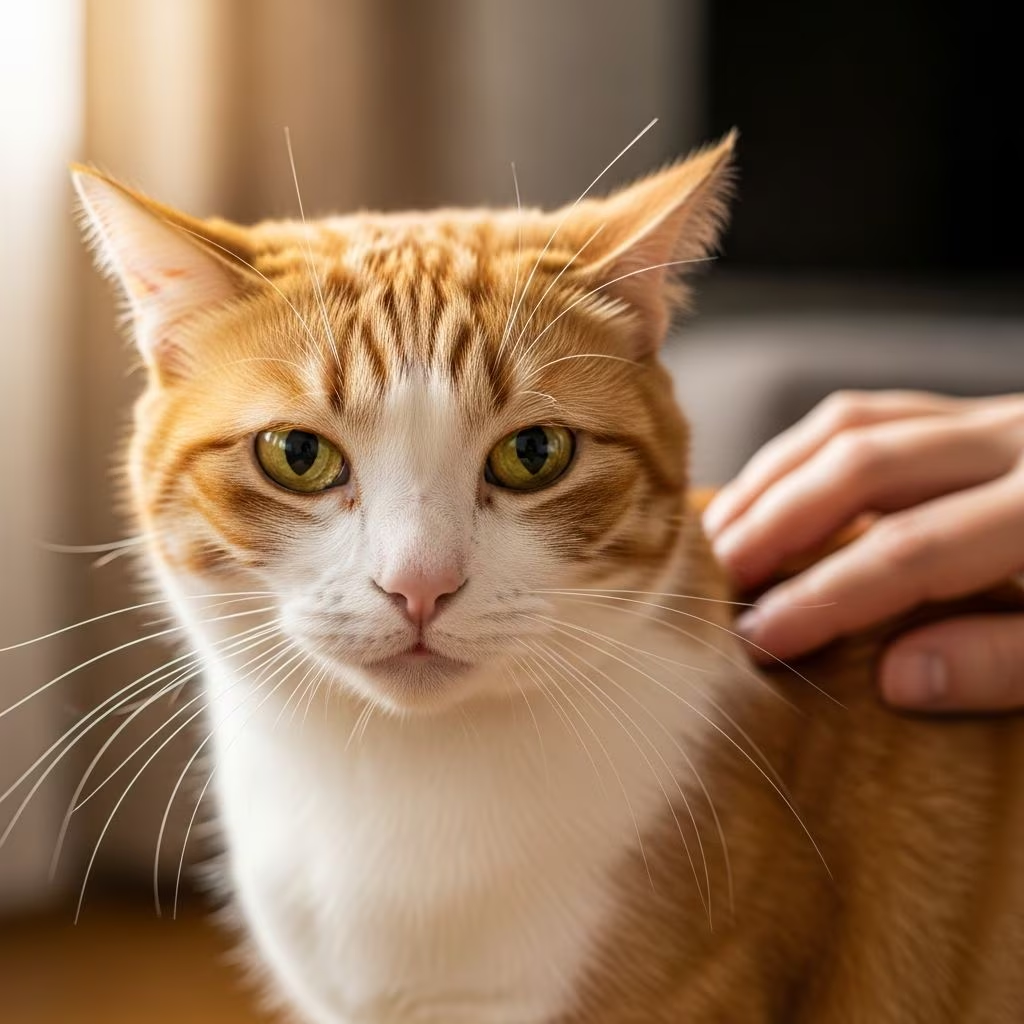
Understanding Overstimulation and Petting-Induced Aggression in Cats
Overstimulation refers to a cat’s normal response to being petted or handled in areas or ways the cat finds uncomfortable or that have gone on for too long. Petting-induced aggression is a common behavior where cats bite or scratch as a way of communicating that they have reached their physical tolerance threshold for handling. This is not a sign of a behavior problem; rather, it is your cat’s way of setting boundaries and saying “enough.”
A majority of cats exhibit overstimulation or petting-induced aggression to some degree. However, cats vary enormously in their tolerance levels—some cats enjoy extended petting sessions while others prefer brief interactions. Understanding your individual cat’s preferences and recognizing the warning signs they display is essential for preventing aggressive incidents and maintaining a positive relationship with your pet.
Why Does Overstimulation Happen?
Overstimulation in cats occurs due to a phenomenon called sensitivity threshold. Initially, a cat enjoys human contact and finds petting pleasurable. However, the repetitiveness of the petting eventually becomes irritating to the cat. At this point, the cat turns and bites as a way to communicate, “I’ve had enough.”
An analogy can be made to human behavior: if someone pats you on the back, it feels good initially. If they continue to pat you repeatedly, it becomes annoying, and you will either move away from them or ask them to stop. Cats respond similarly, but since they cannot speak, they use biting or scratching as their primary communication method.
Additionally, overstimulation can stem from frustration due to boredom. Cats that are under-stimulated for extended periods may become frustrated, and this pent-up energy can manifest as aggressive behavior during play or petting sessions. In some cases, what appears to be overstimulation may actually be redirected aggression—frustration triggered by environmental changes such as loud noises, unfamiliar animals, or people entering the cat’s territory.
Recognizing Warning Signs of Overstimulation
Cats almost always give clear warning signals before biting or scratching, though these signals can be subtle and difficult to pick up on at first. Learning to recognize these signs is crucial for preventing aggressive incidents. Common warning signals include:
- Tail swishing or flicking rapidly back and forth
- Skin twitching across the back
- Ears flattened or pulled back against the head
- Staring intently
- Quick head turn to watch your hand as you pet
- Pupilary dilation (wide pupils)
- Stillness or tenseness in body posture
- Low growl or hissing
- Whiskers pulled back against the face
- Body becoming rigid and tense
- Cat directly facing the object of annoyance and moving toward it
- Walking away or lying down
The key to preventing aggression is to interrupt the behavior at the first sign of any of these signals by withdrawing your attention immediately.
Two Categories of Overstimulation
Overstimulation generally falls into two distinct categories, each requiring a slightly different management approach:
Social “Self” Overstimulation: These cats do not self-regulate their overstimulation. They are so invested in obtaining attention and petting that they actively push themselves over their threshold. They may solicit attention intensely and furiously before hitting their limit. With these cats, you—the human—will be responsible for choosing when they need a break, as they will not ask for one themselves.
Corrective Overstimulation: These cats generally attempt to regulate their overstimulation by moving away or using body language to communicate that they need a break. You must be attentive and responsive to their signals, ensuring you give them the break they are requesting.
Effective Management Strategies
Petting Technique and Duration
The most effective way to reduce incidents of overstimulation is to stop petting your cat before they reach their threshold. The first step is determining your individual cat’s tolerance level. If you know your cat may become overstimulated after approximately five minutes of petting, pet the cat for only four minutes instead. Gradually, you can increase petting time slightly and observe how well your cat tolerates it.
Pay attention to areas your cat does not like to be petted. Some cats are sensitive around their tail, belly, or paws. Avoid these areas if your cat has shown sensitivity to touch in those regions. By respecting these preferences, you can extend pleasurable interaction time and reduce the likelihood of aggressive responses.
Responding to Warning Signals
When your cat exhibits warning signs of overstimulation, interrupt the behavior immediately by withdrawing your attention. You can do this simply by keeping your hands still by your sides. If your cat becomes very upset, take a break and create distance between yourself and your pet.
If your cat is still worked up after the initial break, consider switching to playtime with quiet interactive toys such as feather toys or string toys. This approach helps relieve your cat’s anxiety while still allowing you to interact positively. It redirects their energy toward appropriate play rather than aggressive responses.
When ending an interaction, do so calmly and respectfully. If your cat is on your lap, slowly stand up and allow the cat to gently slide off. Wait before attempting to interact again, giving your cat space and demonstrating that you understand and respect their signals and boundaries.
Addressing Aggressive Play
During playtime, if your cat becomes overstimulated and attacks your hands or feet, it is important to redirect this behavior. Particularly with kittens, avoid using your hands or feet as toys during play sessions. Kittens that learn hands and feet are toys will develop this as a hard-to-break habit that can persist into adulthood. Instead, use appropriate interactive toys like wand toys, balls, or feather teasers that create distance between your hands and your cat’s claws and teeth.
Increasing Play and Mental Stimulation
Sometimes overstimulation during petting stems from frustration caused by boredom or insufficient activity. Ensure your cat receives a good, vigorous play session with you daily. Keeping your cat active and mentally engaged is an effective way to reduce frustration and sensitivity threshold issues. A well-exercised cat is less likely to have pent-up energy that manifests as aggressive behavior during petting or handling.
What NOT to Do: Avoiding Harmful Corrections
Punishment is not an effective approach to address petting-induced aggression and will likely make the problem worse. Never yell at, hit, or physically correct your cat, as this will only make your cat fear you or become even more aggressive. Any attention—even negative attention—can reinforce the aggressive behavior.
If your cat does nip or scratch during overstimulation, verbal corrections such as saying “no” or “ouch” may be used, but they should be gentle and minimal. You can also try blowing lightly in the cat’s face as a deterrent. However, the correction should only be enough to stop the aggressive action and should never scare or frighten your cat into running away. If your cat becomes fearful, you have corrected too harshly. A correction that is too harsh may cause your cat to become fearful of you, potentially increasing the frequency and intensity of biting behavior.
Keep in mind that behavior modification takes time. Some cats require months or even a year or more to show meaningful changes in their behavior. Realistic expectations are that biting incidents will occur less frequently and eventually may diminish significantly as your cat learns to trust you respect their boundaries.
Building Trust and Positive Associations
The best way to address overstimulation-related aggression is through avoidance and proper handling techniques that build trust. Make every interaction with your cat a positive one. If your cat becomes upset during a petting session, shorten the session immediately. Your cat will learn that you are listening to them, respecting their boundaries, and responding to their needs.
You may be able to gradually increase your cat’s tolerance threshold by rewarding them with something they enjoy—such as treats or their favorite toy—when they display appropriate social behavior while remaining under their threshold. For example, reward your cat for accepting a head bump or brief petting without showing agitation signs. This positive reinforcement helps them associate human touch with rewards and can gradually extend their comfort zone.
Environmental Considerations
Pay attention to environmental triggers that may contribute to overstimulation or redirected aggression. Loud noises, unfamiliar animals or people, or changes in the environment can increase your cat’s stress levels and lower their tolerance threshold. If your cat is already anxious due to environmental stressors, they may become overstimulated more quickly during petting or handling. Minimize exposure to these triggers when possible, and be especially cautious about petting during times when your cat may be experiencing stress.
Special Considerations for Households with Children
If your cat exhibits significant overstimulation or petting-induced aggression, it is important to avoid having young children handle the cat. Young children may not understand or notice subtle warning signals, and they may be unable to respond quickly enough to prevent bites or scratches. As your cat’s tolerance improves through consistent management strategies, supervised, gentle interactions with older children can be gradually introduced.
Frequently Asked Questions
Q: Is petting-induced aggression a sign that my cat has a behavior problem?
A: No. Petting-induced aggression is a normal response cats use to communicate their boundaries. A majority of cats exhibit some degree of overstimulation or petting-induced aggression. It becomes a behavior problem only if not properly managed, which can lead to increased frequency and intensity of aggressive incidents.
Q: How long will it take for my cat’s behavior to improve?
A: Behavior modification takes time and patience. Some cats show changes within weeks, while others may require months or even a year or more to demonstrate improvement. Consistency in your management approach is essential for success.
Q: Can I punish my cat for biting during overstimulation?
A: No. Punishment will not make your cat more comfortable with handling and may actually increase aggression by making your cat fear you. The only effective way to address petting-induced aggression is through avoidance of the trigger and proper handling techniques.
Q: What should I do if my cat bites me during petting?
A: Stop petting immediately and withdraw your attention by keeping your hands still by your sides. Do not punish or yell at your cat. Instead, allow your cat space to calm down, and resume interaction only after your cat has shown no signs of agitation for several minutes.
Q: Could my cat’s overstimulation be caused by a medical condition?
A: Yes. Pain from an underlying medical condition can make touch more aversive and increase aggressive responses. If your cat’s overstimulation or aggression seems sudden or has worsened significantly, consult your veterinarian to rule out medical causes such as pain, skin irritation, or other health issues.
Q: How can I tell if my cat’s behavior is redirected aggression rather than overstimulation?
A: Redirected aggression typically occurs following environmental stressors such as loud noises, unfamiliar animals, or people entering your cat’s territory. If your cat becomes aggressive during or immediately after exposure to these triggers, it may be redirected aggression. However, the management approach—providing space, respecting boundaries, and avoiding punishment—is similar for both types of aggression.
Q: Is it ever safe to use my hands or feet to play with my cat?
A: It is best to avoid using your hands or feet as toys during play, especially with kittens. If you teach a kitten that hands are toys, this behavior becomes extremely difficult to break as the cat matures. Use appropriate toys like wand toys, feather teasers, or balls to create distance between your hands and your cat’s teeth and claws.
References
- Overstimulation and Petting Aggression — San Francisco SPCA. 2003-05-23. https://www.towncats.org/wp-content/uploads/2014/08/Agression-pdf-1001-sfspca.pdf
- Overstimulation (Cats) — San Francisco SPCA. https://www.sfspca.org/resource/overstimulation/
- Is overstimulation causing your cat to act out? — Ontario SPCA. 2021-06-10. https://ontariospca.ca/blog/is-overstimulation-causing-your-cat-to-act-out/
- Petting-Induced or Overstimulation Aggression in Cats — Humane Society of the United States Vermont. https://www.hshv.org/petting-induced-or-overstimulation-aggression-in-cats/
- Feline Overstimulation: Cats Who Bite When Pet — East Bay SPCA. 2024-05. https://eastbayspca.org/wp-content/uploads/2024/05/Overstimulation_Cats-Who-Bite-When-Pet.pdf
- Understanding Pet Behavior — ASPCA Pet Health Insurance. https://www.aspcapetinsurance.com/behavior-issues/



