

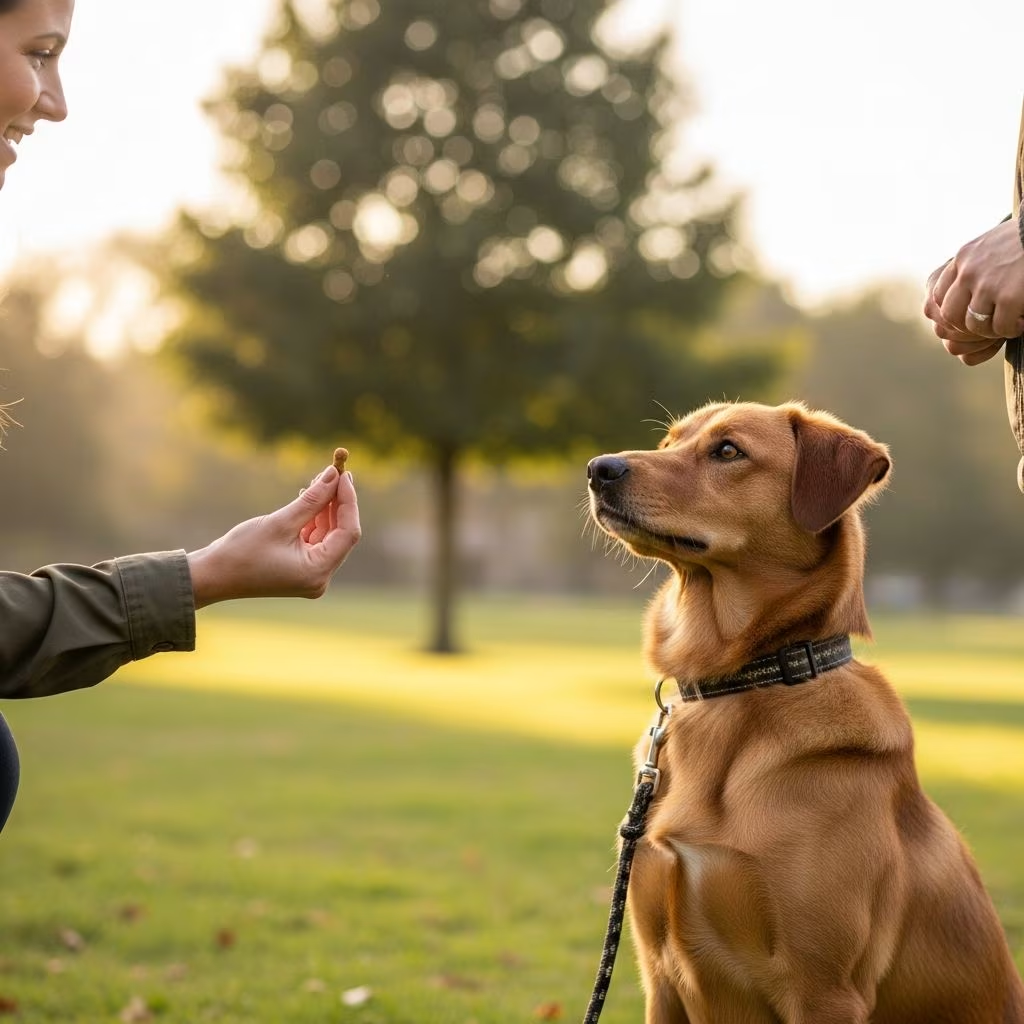
Training your dog can feel rewarding yet challenging, especially when progress stalls. Many owners encounter roadblocks due to subtle errors that hinder success. By recognizing these issues and applying targeted solutions, you can accelerate learning and strengthen your relationship with your pet.
Understanding the Roots of Training Setbacks
Dog training frustrations often arise from mismatched expectations or overlooked fundamentals. Dogs thrive on clear communication and motivation, but human habits like impatience or inconsistency disrupt this process. Positive reinforcement, which rewards desired actions, proves more effective than punishment, fostering confidence rather than fear.
Key factors include session length, cue clarity, and environmental variables. Short, frequent practice builds skills without overwhelming your dog, while gradual challenges prevent confusion. Addressing these early leads to reliable behaviors in real-world settings.
Top Pitfalls in Reward Delivery
Timing and quality of rewards directly impact learning speed. Delivering treats too slowly means your dog associates unrelated actions with the payoff, diluting the lesson. Aim to reward within seconds of the correct behavior; a clicker sharpens this precision by marking the exact moment.
- Use high-value treats like small pieces of chicken or cheese for tough tasks.
- Match reward size to effort: bigger wins deserve premium options.
- Place treats precisely to reinforce posture, such as luring toward the ground for a down-stay.
Inadequate reinforcement early on is another error. Dogs need frequent rewards during initial phases since food acts as a primary motivator, naturally compelling attention. Wean off treats gradually as cues solidify.
Mastering Cue Communication
Repeating commands like “Sit, sit, sit!” teaches dogs to ignore the first attempt, turning a single cue into a nagging phrase they await fully. Say it once, then pause expectantly. Reward compliance immediately, even if delayed, to build responsiveness.
Consistency in wording prevents mixed signals. Variations such as “Sit down” versus “Sit” confuse dogs unfamiliar with human nuances. Select distinct, simple cues and use them uniformly across household members.
Dogs also struggle with generalization, assuming “sit” applies only in the kitchen where first learned. Practice in varied locations, starting easy and proofing by introducing the three Ds: distance (how far you stand), distraction (environmental noise), and duration (how long they hold the position).
| Challenge Level | Distance | Distraction | Duration |
|---|---|---|---|
| Beginner | 1 foot | Quiet room | 2 seconds |
| Intermediate | 5 feet | Mild noise | 10 seconds |
| Advanced | 20 feet | Park setting | 1 minute |
This table illustrates progressive proofing. Train one D at a time before combining for best results.
Steering Clear of Aversive Methods
Tools like shock, prong, or choke collars risk fear and shutdown, eroding trust. Opt for front-clip harnesses or head halters to manage leash pulling humanely while teaching loose-leash walking. Positive approaches yield lasting obedience without side effects like aggression.
Verbal corrections like “No!” discourage experimentation, causing disengagement. Instead, ignore errors and reward successes, setting up scenarios where right choices are inevitable.
Building a Solid Training Foundation
Neglecting basics dooms advanced work. Master sit, stay, down, heel, leave it, and drop it first. These prevent hazards like ingesting toxins or jumping on guests.
- Begin indoors with zero distractions.
- Practice 5-15 minutes, 3-5 times daily.
- Incorporate play to keep energy high.
Skipping refreshers allows skills to fade. Weekly reviews boost confidence and solidify habits.
Optimizing Session Structure
Overlong sessions exhaust attention spans, turning fun into drudgery. Cap at 10-15 minutes, ending on a high note. Multiple daily bursts outperform marathon efforts.
Body language matters: avoid leaning over shy dogs or mixed signals like stepping back during stays. Stay upbeat, using enthusiastic tones to convey cues clearly.
Fostering Generalization and Proofing
Proofing exposes behaviors to novel contexts systematically. After kitchen sits, move to living room, then yard. Revert to basics in new spots to avoid frustration.
Always training means off-leash moments reinforce defaults. Inconsistent allowances, like permitting jumps then scolding, undermine progress.
Common Scenarios and Fixes
Pulling on Leash: Switch to no-pull gear and reward slack moments.
Poor Recall: Practice short distances indoors, using jackpots for returns.
Jumping: Turn away, reward four-on-floor.
Family-Wide Consistency
Household alignment prevents sabotage. Agree on cues and rules; brief sessions ensure all participate. Kids especially benefit from structured involvement.
FAQs
What if my dog ignores cues outdoors?
Reduce distance and distractions; rebuild indoors first, then proof gradually.
How many treats are too many?
Use tiny pieces equaling 10% daily calories; fade as behaviors stick.
Can puppies start training?
Yes, from 8 weeks with short, positive sessions focusing on basics.
What about dominant dog myths?
Modern science favors rewards over dominance; force breeds resistance.
When to seek professional help?
If aggression or severe fears persist despite basics, consult certified trainers.
Long-Term Success Strategies
Sustain gains with lifelong practice, adapting to life changes like moves or new pets. Track progress in a journal to spot patterns. Celebrate milestones to maintain motivation for both of you.
Embracing patience transforms frustrations into triumphs. With these adjustments, your dog will respond eagerly, making every walk and interaction enjoyable.
References
- 13 Common Dog Training Mistakes and How to Avoid Them — Companion Animal Psychology. 2021-04-13. https://www.companionanimalpsychology.com/2021/04/13-common-dog-training-mistakes-and-how.html
- Common Dog Training Mistakes and How to Avoid Them — American Kennel Club (AKC). N/A. https://www.akc.org/expert-advice/training/common-dog-training-mistakes/
- 9 Common Mistakes to Beware of When Dog Training — Fido Behaviour. N/A. https://www.fidobehaviour.com/blog/9-common-mistakes-to-beware-of-when-dog-training
- 14 Common Dog Training Mistakes — Knoll Animal Hospital. 2024-01-15. https://knollanimalhospital.com/2024/01/15/14-common-dog-training-mistakes/
- Key Dog Training Mistakes and How to Avoid Them — Animals First Vet Hospital. 2025-05-15. https://animalsfirstvethospital.com/2025/05/15/key-dog-training-mistakes-and-how-to-avoid-them/
- Dog Training Mistakes — Pet Doctor. 2024-01-15. https://dogandcat.com/2024/01/15/dog-training-mistakes/



