

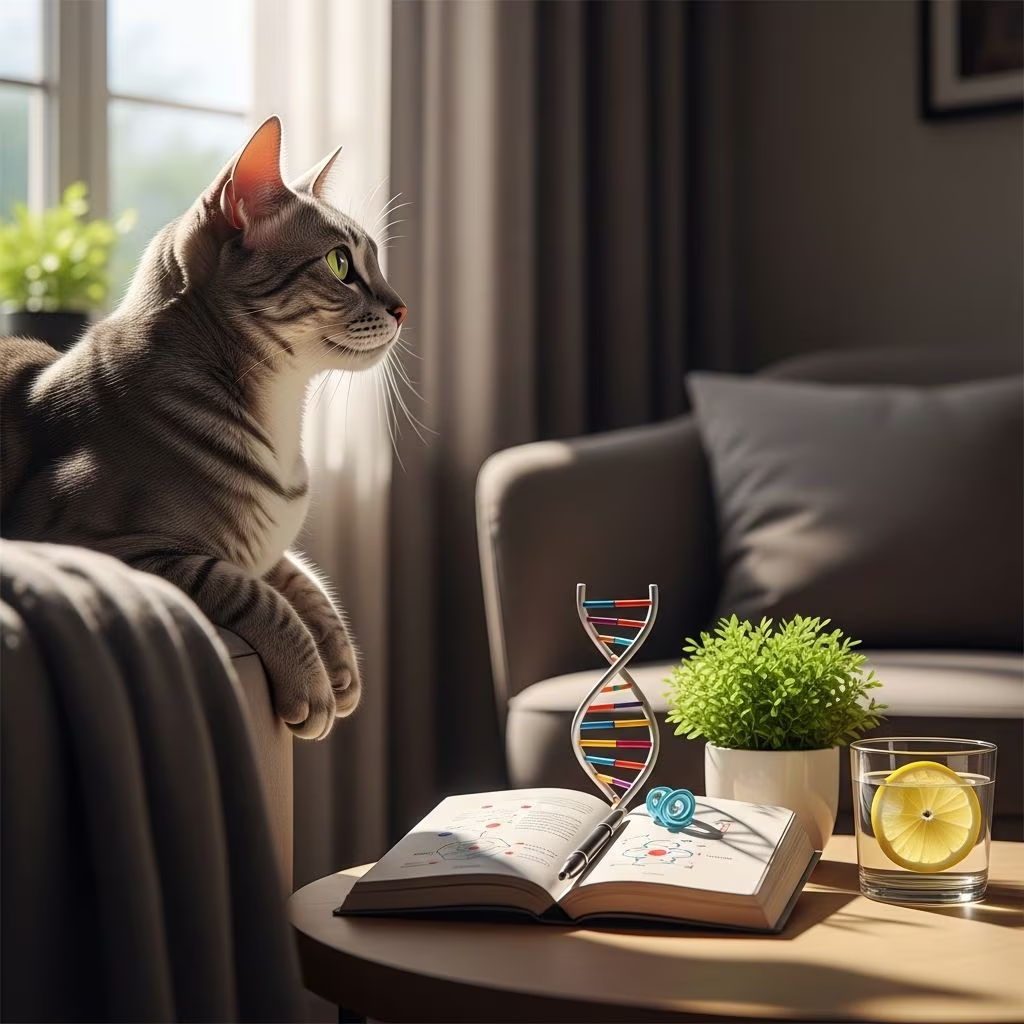
Cat allergies affect millions worldwide, often forcing tough choices between health and pet ownership. Recent research reveals promising avenues to desensitize the immune system or neutralize key allergens like Fel d 1, the primary culprit in cat dander, saliva, and fur. This article delves into these developments, offering hope for allergy sufferers dreaming of scratch-free cuddles.
Understanding the Root of Cat Allergies
The main trigger for cat allergies is **Fel d 1**, a protein produced in cats’ salivary and sebaceous glands. During grooming, it spreads to fur and skin flakes, becoming airborne in homes. Over 90% of cat-allergic individuals react specifically to Fel d 1, which binds to IgE antibodies on mast cells and basophils, releasing histamine and causing symptoms like sneezing, itchy eyes, and asthma.
Unlike pollen or dust mite allergies, cat allergens persist in environments for months, making avoidance challenging. Traditional treatments like antihistamines provide symptom relief but fail to address the underlying immune overreaction.
Traditional Management: Symptom Control Tactics
Standard approaches focus on reducing exposure and easing reactions:
- Home cleaning: Frequent vacuuming with HEPA filters, washing bedding weekly, and using air purifiers capture dander effectively.
- Medications: Antihistamines (e.g., cetirizine), nasal corticosteroids, and eye drops offer quick relief for mild cases.
- Bathing cats: Weekly baths reduce Fel d 1 on fur by up to 84%, though many cats resist.
These methods work for mild allergies but fall short for moderate to severe cases, where immunotherapy and novel interventions shine.
Breakthrough: Neutralizing Fel d 1 at the Source
A game-changing strategy from Purina researchers uses dietary antibodies to deactivate Fel d 1 before it spreads. Special dry cat food incorporates egg-derived IgY antibodies that bind to Fel d 1 in saliva, rendering it harmless to humans.
In clinical trials:
| Outcome | Result |
|---|---|
| Reduction in active Fel d 1 on cat hair | 50% in half of cats; 30% in 86% |
| Saliva Fel d 1 levels | Significant decrease |
| Human symptom improvement | Reduced rhinitis, asthma, eye issues after 1 month |
This non-invasive method maintains cat health while slashing environmental allergens. Participants reported better work productivity and fewer symptoms, proving its real-world impact.
Immunotherapy: Training the Immune System
**Allergen-specific immunotherapy (AIT)** gradually exposes patients to increasing Fel d 1 doses, shifting immune responses from allergic (Th2-dominated) to tolerant (Treg-enhanced). Traditional shots build tolerance over years, but innovations accelerate this.
NIH-funded studies combine allergy shots with medications for faster cat allergy relief, targeting severe cases.
Advanced AIT: High-Dose CpG Adjuvant
Researchers at Luxembourg Institute of Health tested high-dose CpG—a synthetic DNA mimic—with endotoxin-free Fel d 1 in allergic mice. This combo boosted regulatory T cells (Tregs) and B cells, reversing allergy hallmarks like IgE production and inflammation.
- Increased plasmacytoid dendritic cells at injection sites, promoting Tregs.
- Enhanced NK cells with TNF-α/TNFR2 profile, aiding tolerance.
- Full reversion of Th2 responses, suggesting human potential.
Published in Allergy (2020), this sets a foundation for clinical trials.
Nanotechnology Vaccines: A Future Frontier
Frontiers in Immunology (2025) details a layered double hydroxide (LDH) nanoparticle vaccine loaded with PADRE-rFel d 1. In mice, it balanced Th1/Th2 and Th17/Treg ratios, cutting IgE, airway hyperreactivity, and inflammation.
Key benefits:
- Restored immune cell balance.
- Lowered systemic stress and lung infiltration.
- Targeted Fel d 1 specifically, ideal for the 21% global cat allergy rate.
Genetic Innovations: Editing Out Allergens
NIH studies explore CRISPR-like gene editing to knock out Fel d 1 production in cats. Preliminary data show reduced allergen levels without harming feline health, though ethical and regulatory hurdles remain.
Early Exposure: Natural Tolerance Building?
High-dose cat exposure may modify Th2 responses, potentially protecting against allergies. Early childhood pet contact strengthens immunity, reducing asthma and eczema risks per HABRI research. However, this doesn’t reverse established allergies and risks sensitization in predisposed kids.
Practical Steps for Allergy Sufferers
Start with these evidence-based actions:
- Consult an allergist for skin/prick tests to confirm Fel d 1 sensitivity.
- Implement Purina’s anti-Fel d 1 diet if keeping your cat—available commercially.
- Explore AIT if symptoms persist; ask about CpG-enhanced options in trials.
- Monitor progress with symptom diaries and follow-up tests.
Combining strategies yields best results: diet for immediate relief, immunotherapy for lasting change.
Potential Risks and Considerations
All treatments carry caveats:
| Treatment | Pros | Cons/Risks |
|---|---|---|
| Anti-Fel d 1 Diet | Easy, safe for cats/humans | Not 100% effective; ongoing cost |
| AIT Shots | Long-term tolerance | Injections, time-intensive, mild reactions |
| Nano-Vaccines | Targeted, potent | Experimental; human trials needed |
Always vet with professionals; pregnant individuals or those with severe asthma should proceed cautiously.
FAQs
Can I really cure my cat allergy?
Not a full “cure,” but AIT and neutralizing diets achieve tolerance in many, reducing symptoms by 50-80%.
Does shaving my cat help?
No—Fel d 1 is in saliva, so shaving spreads it more. Bathing or diets are superior.
How long until dietary changes work?
Effects on hair/saliva appear in weeks; human relief in 1 month.
Is gene-edited hypoallergenic cat food coming?
Research is early-stage; no timeline yet.
Can kids build immunity from cats?
Early exposure may prevent allergies, but consult pediatricians.
These innovations bridge the gap between loving cats and breathing easy. Stay tuned for trials translating mouse successes to humans.
References
- Researchers may have found a way to “cure” cat allergies? — Immunopaedia. 2020. https://www.immunopaedia.org.za/breaking-news/researchers-may-have-found-a-way-to-cure-cat-allergies/
- Studies on nanoprotein vaccine alleviating symptoms of mice — Frontiers in Immunology. 2025. https://www.frontiersin.org/journals/immunology/articles/10.3389/fimmu.2025.1524929/full
- Research finds breakthrough in managing cat allergens — Improve International. N/A. https://improveinternational.com/uk/news/research-finds-breakthrough-in-managing-cat-allergens
- Neutralizing Allergens – The Breakthrough — Purina Institute. N/A. https://www.purinainstitute.com/science-of-nutrition/neutralizing-allergens/breakthrough
- Innovative Strategies to Reduce Exposure and Expression of … — NIH (PMC). N/A. https://pmc.ncbi.nlm.nih.gov/articles/PMC12417962/
- Does exposure to cats and dogs decrease the risk of developing … — NIH (PMC). 2009. https://pmc.ncbi.nlm.nih.gov/articles/PMC2783630/
- Allergies & Immunity | Child Health & Development — HABRI. N/A. https://habri.org/research/child-health/allergies-and-immunity/



