

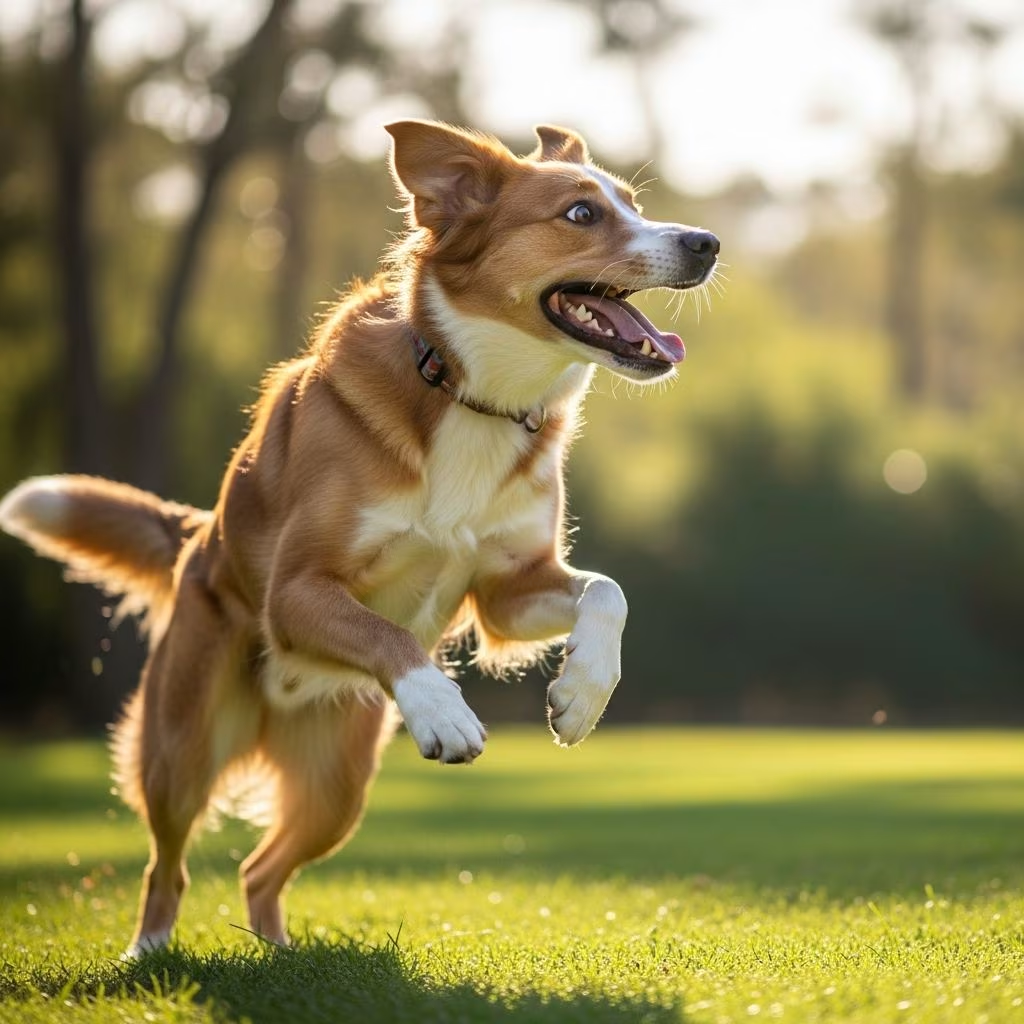
Dogs’ boundless energy can light up our lives, but when excitement tips into overdrive, it leads to jumping, barking, nipping, and chaos. Understanding the roots of this behavior—rooted in their biology, instincts, and environment—helps owners foster calmer interactions. This guide draws from animal behaviorists and certified trainers to explain why dogs get hyped, how to read their signals, and practical steps to dial down the frenzy.
Why Do Dogs Get So Excited?
Dogs often display toddler-like enthusiasm for everyday joys like walks, treats, or your return home. Applied animal behaviorist Renee Rhoades compares their cognitive processing to human children around age three, prone to big reactions over simple pleasures. What excites one dog—such as a door opening or a squeaky toy—might overwhelm another, highlighting individual differences in temperament and experiences.
Excitement stems from stimuli promising positive outcomes, including playtime, food rewards, or reunions. Rick Sanders, a registered professional dog trainer, points to ancestral ‘pack-greeting behavior’ inherited from wolves, where circles and barks signal joy upon a pack member’s return. Domestic dogs retain this social instinct, amplified by dependence on owners for survival.
However, caution against anthropomorphism: while dogs feel core emotions like joy and fear, avoid projecting complex human traits like guilt or spite. Instincts drive much of their hype, not nuanced sentiments.
How to Tell If Your Dog Is Excited (Versus Stressed)
Body language is key to distinguishing true excitement from stress, which can mimic arousal. Dogs express more openly with bonded humans, but context matters—pair signals with the environment for accurate reads.
Signs of positive excitement:
- Loose, relaxed posture with wiggly body
- Open mouth (relaxed pant, not excessive)
- Ears forward and perky
- Bright, wide eyes without tension
- Helicopter tail wag (high-speed circles, ideally right-biased for positivity)
Rhoades notes research linking rightward tail wags to positive states, versus leftward for stress. Stress indicators include stiff posture, tucked tail, lip licking, yawning, or avoidance—often misread as ‘super stoked’ enthusiasm.
For puppies, overstimulation shows as zooming, nipping, excessive barking, jumping, spinning, or inability to settle. Early recognition prevents escalation.
How Excited Is Too Excited?
Mild excitement delights, but excess risks injury, strained relationships, or learned dysfunction. Hyper pack-greetings might charm briefly but become unsafe with jumping on guests or property damage from zoomies. Overarousal can lead to humping (not always sexual; often just excess energy in males and females).
In puppies, unchecked hype hinders self-soothing, fostering lifelong reactivity. Trainers emphasize intervention when behavior disrupts safety or daily life, like during holiday gatherings where guests face licks and leaps.
Signs Your Dog Is Overexcited
Spot these red flags early:
- Zoomies (FRAPs): Frenetic random activity periods—dashing, spinning, crashing into objects.
- Jump-ups: Leaping on people, especially arrivals.
- Non-stop barking/chirping: High-pitched, repetitive vocalizing.
- Nipping/mouthing: Playful bites turning intense.
- Humping: Thrusting on legs, toys, or others from arousal overload.
- Inability to settle: Pacing, whining post-stimulation.
These amplify in high-stimulus scenarios: doorbells, visitors, or off-leash play.
Strategies to Calm an Overexcited Dog
Management blends prevention, redirection, and training. Consistency builds calm habits.
1. Establish a Routine
Puppies and adults thrive on predictability. Fixed schedules for meals, walks, play, and rest reduce anxiety-fueled hype. Predictable days mean fewer surprise triggers.
2. Provide Ample Exercise and Mental Stimulation
Channel energy proactively: daily walks, runs, fetch, or agility. Mental games like puzzle toys or scent work tire minds, curbing physical outbursts. Aim for 30-60 minutes vigorous activity, adjusted for age/breed.
3. Use Time-Outs and Safe Spaces
When arousal peaks, guide to a crate, pen, or quiet room with a chew toy. This teaches self-calming without punishment. Duration: 5-15 minutes until relaxed breathing returns.
4. Reward Calm Behavior
Ignore frenzy; lavish treats/praise for four-on-the-floor sits. Positive reinforcement shapes polite greetings.
5. Desensitize Triggers
Gradually expose to doorbells/guests at low intensity, rewarding calm. Pair with high-value chews to build positive associations.
| Trigger | Calming Technique | Expected Outcome |
|---|---|---|
| Door arrivals | Confine briefly, then leashed greet | Polite sits, no jumps |
| Play sessions | Short bursts + breaks | No nipping/zoomies |
| Walk excitement | Sit-stay before leash on | Controlled exits |
How to Stop Over-Excitement During Greetings
Exuberant hellos challenge many homes, especially holidays.
- Irresistible distractions: Offer ultimate toys/treats (frozen Kongs) as guests arrive.
- Staged entry: Confine dogs until visitors settle, reducing door drama.
- Gates/pens: Allow visual access without contact; test for frustration.
- Leashed practice: Simulate arrivals daily, rewarding calm.
- Dog monitor: Assign a handler for chews/redirection.
These curb jumping/barking without isolation.
Handling Zoomies and Overstimulation in Puppies
Puppy zoomies signal overload—end play immediately.
- Combine exercise with structured play (tug limits).
- Redirect to chew toys/puzzles.
- Enforce naps post-activity.
- Teach ‘settle’ cues with mats.
Certified trainer Abigail Schulte stresses routine + channeling energy prevents chronic hyperactivity.
Dealing with Humping and Other Overarousal Behaviors
Humping signals overexcitement, not dominance—common in familiar settings. Allow brief episodes if consensual; interrupt persistently with redirects. Address underlying arousal via exercise/training.
When to Seek Professional Help
If strategies fail, or aggression/ phobia emerges, consult a veterinary behaviorist. Rule out medical issues like thyroid problems or pain mimicking hype.
Frequently Asked Questions (FAQs)
Why does my dog go crazy when I get home?
Pack-greeting instinct from wolf ancestry; train calm alternatives.
Is tail wagging always happy?
No—direction/speed matters; left/stiff indicates stress.
How much exercise stops zoomies?
30-90 minutes daily, plus mental work, breed-dependent.
Should I punish excited jumping?
No—withhold attention; reward calm.
Can overexcitement harm my puppy?
Yes—leads to poor self-regulation; intervene early.
References
- Why Do Dogs Get So Excited? — Kinship. 2023. https://www.kinship.com/dog-behavior/why-do-dogs-get-so-excited
- Is Your Dog’s Humping Normal or Should You Be Worried? — Kinship (YouTube). 2025-05-09. https://www.youtube.com/watch?v=BuiUs2Gou3s
- How to Stop Dogs From Getting Overly Excited When Holiday Guests Arrive — Kinship. 2023. https://www.kinship.com/dog-behavior/does-your-dog-have-greeting-disorder
- Stop Puppy Zoomies! 6 Tricks to Calm Your Pup — Kinship (YouTube). 2023. https://www.youtube.com/watch?v=3pOWZhDirNg
- American Veterinary Society of Animal Behavior Position Statement on Puppy Socialization — AVSAB. 2023-10-01. https://avsab.org/wp-content/uploads/2018/03/Puppy_Socialization_Position_Statement_Download_-_10-3-14.pdf



