

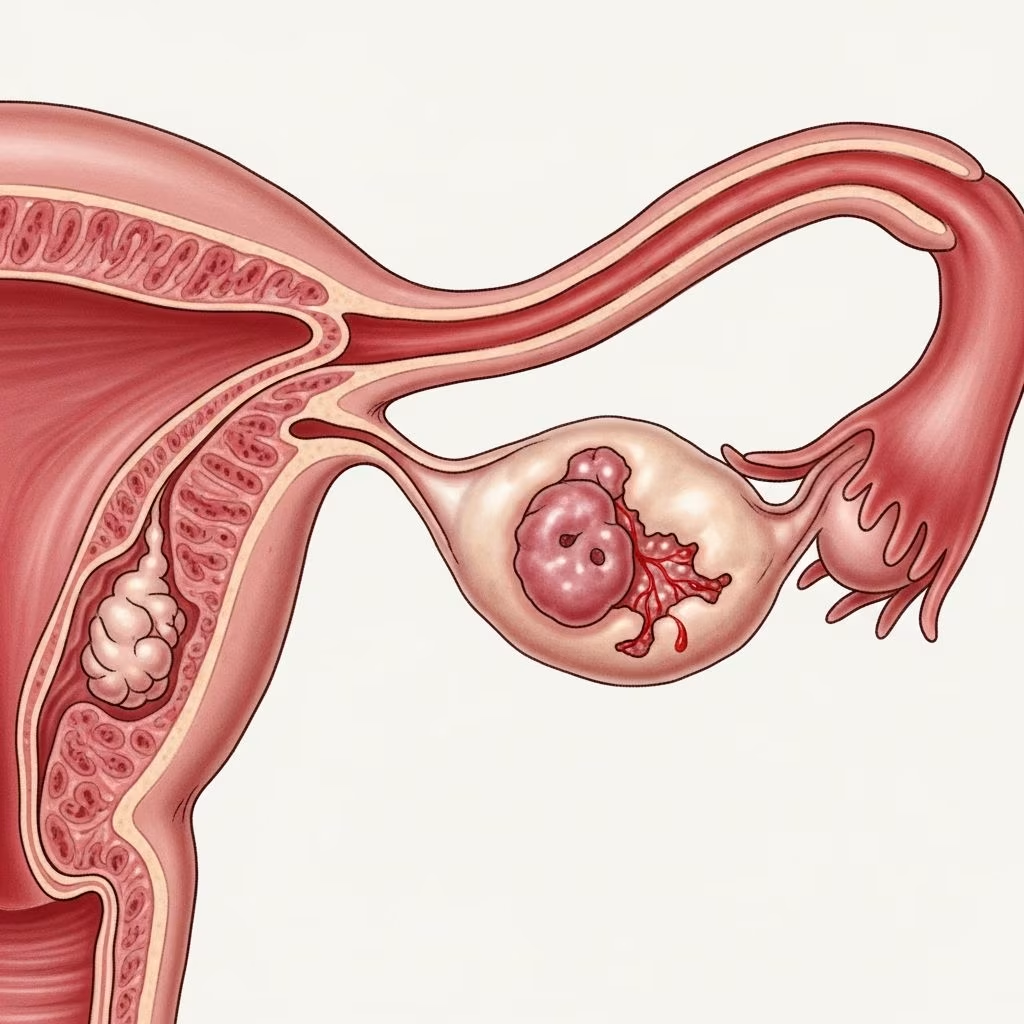
Ovarian tumors represent a significant health concern for intact female dogs, often progressing silently until advanced stages. These neoplasms arise from ovarian tissues and can lead to severe complications if not addressed promptly. Understanding their nature is vital for pet owners and veterinarians alike.
Understanding the Biology of Canine Ovarian Neoplasms
Canine ovarian tumors develop exclusively in unspayed females, stemming from cells within the ovaries. They are classified into epithelial, germ cell, and sex cord-stromal categories, with epithelial types being the most prevalent at approximately 40-50% of cases. Germ cell tumors account for 6-12%, while others like luteomas are rarer. These growths are frequently malignant, exhibiting local invasion and distant spread to sites such as lungs, liver, kidneys, lymph nodes, and pancreas.
Tumors may remain asymptomatic initially, complicating early detection. Hormonally active ones disrupt reproductive cycles, producing excess estrogen, progesterone, or even testosterone, leading to behavioral and physical alterations. Non-hormonal tumors grow silently, causing issues only upon reaching substantial size or metastasis.
Recognizing Early Warning Signs
Many dogs show no overt symptoms until tumors enlarge or metastasize. When signs appear, they often relate to mass effects, hormonal imbalances, or secondary conditions. Common indicators include:
- Abdominal distension or palpable masses due to tumor growth or fluid accumulation (ascites).
- Changes in estrus patterns, such as persistent heat, prolonged anestrus, or frequent cycles.
- Vulvar enlargement, discharge (possibly bloody or purulent), or swelling.
- Hair loss (alopecia), often symmetrical and bilateral, linked to hormonal excess.
- Enlarged mammary glands (gynecomastia) or milk production without pregnancy.
- Masculinization signs like male-like behaviors or aggression from testosterone secretion.
- Lethargy, appetite loss, fever, or weight reduction.
- Pyometra (uterine infection) or vaginal bleeding.
- Respiratory distress from pleural effusion if metastasis reaches the chest.
Owners should monitor intact females closely, especially older ones, as symptoms like rounded bellies or unusual discharges warrant immediate veterinary evaluation.
Risk Factors and Prevalence Insights
Ovarian tumors are uncommon, affecting less than 1% of intact females, but risk escalates with age and breed predispositions, though no specific breeds dominate reports. The primary risk factor is remaining unspayed, allowing repeated estrus cycles that may promote neoplastic changes. Hormonally active tumors correlate with reproductive history, while intact status heightens pyometra risk, a frequent comorbidity.
| Risk Factor | Description | Impact Level |
|---|---|---|
| Intact Status | Not spayed, repeated heat cycles | High |
| Age > 8 Years | Older females more prone | Moderate |
| Hormonal Imbalance | Excess estrogen/progesterone | Moderate |
| Genetic Predisposition | Limited breed data available | Low |
Early spaying dramatically reduces incidence, underscoring its preventive value.
Diagnostic Approaches for Accurate Identification
Diagnosis begins with a thorough history and physical exam, noting reproductive status and symptom onset. Baseline bloodwork (CBC, biochemistry, urinalysis) is standard but often normal unless anemia or hormonal shifts occur. Progesterone levels may be assessed for functional tumors.
Imaging is cornerstone:
- Abdominal palpation detects masses in 50-70% of cases.
- Radiographs (abdomen/thorax) reveal masses, fluid, or metastasis.
- Ultrasound excels in visualizing ovarian structures, distinguishing neoplasms from cysts; normal ovaries measure <25mm, tumors far exceed this.
Fluid analysis (cytology) from ascites or effusions confirms malignancy. Biopsy via fine-needle aspiration or surgery provides definitive histopathology, classifying tumor type.
In some instances, tumors are incidental during spay procedures. Advanced cases may show metastasis on thoracic imaging, guiding prognosis.
Treatment Strategies: From Surgery to Supportive Care
Ovariohysterectomy (spay) is the gold standard, removing ovaries and uterus to excise the primary tumor and prevent pyometra. For non-surgical candidates or metastasis, chemotherapy (e.g., carboplatin) may adjunct, though evidence is limited. Palliative care manages symptoms like fluid drainage or pain relief.
Success hinges on stage: early, localized tumors yield good outcomes post-surgery; metastatic cases have guarded prognoses, with survival often under 12 months. Hormonally active tumors resolve signs post-removal.
Prognostic Factors and Long-Term Outlook
Prognosis varies by type and spread. Benign or early epithelial tumors fare best; germ cell and metastatic ones poorest. Key factors:
- No metastasis: Excellent, >90% survival.
- Localized malignancy: Fair, 50-70% 1-year survival.
- Distant spread: Poor, palliative focus.
Regular follow-ups with imaging monitor recurrence. Spaying intact at-risk dogs enhances quality of life.
Prevention Through Proactive Reproductive Health
Spaying before first heat eliminates risk entirely, also averting mammary tumors and pyometra. For breeding dogs, vigilant monitoring and early diagnostics are essential. Owners should consult vets on timing, balancing benefits against surgical risks.
Frequently Asked Questions (FAQs)
Can spayed dogs develop ovarian tumors?
No, as ovaries are removed; rare remnants are exceptional.
What breeds are most affected?
No strong breed links; occurs across sizes in intact females.
Is chemotherapy effective alone?
Rarely; best combined with surgery for palliation.
How quickly do symptoms progress?
Variable; asymptomatic until advanced in many cases.
Does age influence tumor type?
Older dogs see more epithelial; younger may have germ cell.
This guide empowers owners with knowledge for timely action, potentially extending beloved pets’ lives.
References
- Ovarian Tumors in Dogs — PetPlace.com. 2023. https://www.petplace.com/article/dogs/pet-health/ovarian-tumors-in-dogs
- Ovarian Tumors in Dogs – Causes, Treatment — Vetster. 2024. https://vetster.com/en/conditions/dog/ovarian-tumors
- Diagnostic value of ultrasonography in identifying unilateral ovarian tumors — PMC (NCBI). 2024-04-15. https://pmc.ncbi.nlm.nih.gov/articles/PMC11052608/
- Ovarian Tumour in a Bitch: Diagnosis, Surgery and Recovery — Kafkas Universitesi Veteriner Fakultesi Dergisi. 2019. https://vetdergikafkas.org/uploads/pdf/pdf_KVFD_L_2117.pdf
- Ovarian Tumors in Dogs — PetMD. 2024. https://www.petmd.com/dog/conditions/reproductive/c_multi_ovarian_tumors
- Cancer in pets — American Veterinary Medical Association (AVMA). 2023. https://www.avma.org/resources/pet-owners/petcare/cancer-pets



