

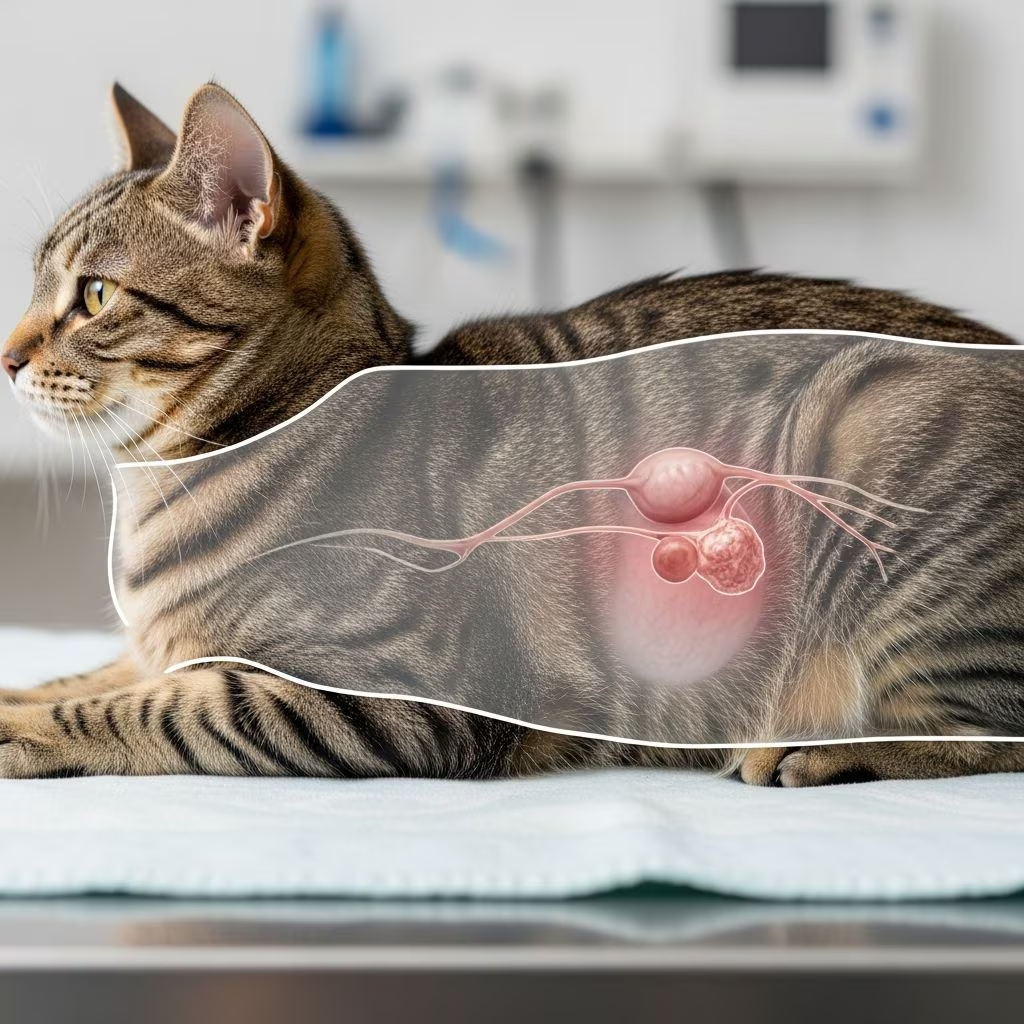
Ovarian remnant syndrome (ORS) occurs when ovarian tissue remains in a cat’s abdomen after spaying, leading to persistent heat-like symptoms due to ongoing hormone production.This condition affects spayed female cats, causing behavioral and physical signs mimicking estrus, though pregnancy is impossible.
What Is Ovarian Remnant Syndrome?
Ovarian remnant syndrome is a postoperative complication where fragments of ovarian tissue are inadvertently left behind during an ovariohysterectomy (spay surgery). This retained tissue continues to function, secreting hormones like estrogen and progesterone, which trigger cyclical signs of heat in cats.
In cats, the ovaries are typically removed during spaying to prevent reproduction and associated health risks. However, incomplete removal can happen due to surgical challenges, such as poor visualization of the ovarian pedicles, adhesions from inflammation, or ectopic (abnormally located) ovarian tissue. Studies indicate that about 17% of spay complications involve ovarian remnants, with signs often appearing an average of 15.5 months post-surgery.
While more commonly discussed in dogs, ORS is well-recognized in felines. The remnant tissue may hypertrophy over time, becoming more active and exacerbating symptoms. Unlike intact cats, those with ORS cannot conceive, but they attract unneutered males and exhibit distressing behaviors.
Understanding ORS is crucial for cat owners noticing unusual post-spay changes. Early recognition prevents secondary issues like mammary gland hyperplasia or stump pyometra, a severe uterine infection.
What Are the Signs of Ovarian Remnant Syndrome in Cats?
Cats with ORS display signs identical to those in heat because the remnant tissue drives hormonal cycles. These can emerge months or even years after spaying, varying in intensity.
- Vulvar swelling and bloody discharge: The vulva enlarges and may discharge blood, though grooming often hides this.
- Increased vocalization: Persistent yowling or calling, unlike the cat’s normal quiet demeanor.
- Restlessness and affection-seeking: Cats become hyperactive, rolling, rubbing, and seeking attention or mating.
- Mammary gland enlargement: Nipples and glands swell due to hormone stimulation.
- Attraction to males: Unneutered males may show interest, leading to attempted mating without pregnancy.
These symptoms recur cyclically, typically every 15-21 days during breeding season, though some cats show prolonged or atypical patterns. Differentiate from other causes like topical estrogen exposure from owner creams, which cats can absorb by licking.
| Sign | ORS Indicator | Normal Post-Spay |
|---|---|---|
| Vulvar Changes | Swelling, discharge | Resolves in weeks |
| Vocalization | Continuous yowling | Minimal |
| Behavior | Restless, flirty | Calm |
| Mammary | Enlarged nipples | No change |
Diagnosing Ovarian Remnant Syndrome in Cats
Diagnosis begins with a thorough history and physical exam by a veterinarian, ruling out exogenous hormones first. Confirmation requires specific tests to detect functional ovarian tissue.
Vaginal cytology: Examines cells from the vagina for cornified epithelial cells indicative of estrus.
Hormone stimulation tests: Administer human chorionic gonadotropin (hCG) or gonadotropin-releasing hormone (GnRH). Measure progesterone or estradiol levels 7-14 days later; elevations confirm luteal activity.
Anti-Müllerian hormone (AMH) assay: Highly accurate; AMH levels drop post-spay but remain elevated with remnants. Combined with progesterone, it’s the gold standard.
Imaging like ultrasound or CT scans locates remnants, especially if ectopic. CT is preferred for precision, identifying tissue near ovarian pedicles or unusual sites.
- Perform tests during suspected estrus for best sensitivity.
- Avoid false positives from medications.
Histopathology of surgically removed tissue provides definitive proof.
How Do I Care for a Cat With Ovarian Remnant Syndrome?
The only cure is surgical excision of the remnant tissue. Medical management fails long-term due to hormone persistence.
Surgical options:
- Laparoscopic surgery: Minimally invasive with small incisions and camera guidance; ideal for skilled vets.
- Exploratory laparotomy: Full midline incision to inspect pedicles; best during estrus when tissue is enlarged and vascular.
Schedule surgery 3-6 weeks post-ovulation induction for easier identification via corpus luteum. Use good lighting, hemostasis, and large incisions to avoid repeat errors.
Postoperative care (10-14 days):
- Strict confinement to prevent jumping.
- E-collar or bodysuit to protect incision.
- Pain meds: Onsior (robenacoxib), gabapentin for sedation.
- Monitor for infection, swelling, or dehiscence.
Prognosis is excellent post-successful removal; symptoms resolve permanently. Submit tissue for histopathology to confirm.
Frequently Asked Questions (FAQs)
Q: Can my spayed cat get pregnant with ORS?
A: No, without a uterus, pregnancy is impossible, but heat signs attract males.
Q: How common is ovarian remnant syndrome in cats?
A: Roughly 17% of spay complications; signs average 15.5 months post-op.
Q: Is laparoscopic surgery better for ORS?
A: Yes, for minimal invasion, but requires expertise; laparotomy ensures thoroughness.
Q: What if tests are negative but symptoms persist?
A: Re-evaluate with advanced imaging like CT; consider adrenal tumors mimicking hormones.
Q: Can ORS cause cancer or pyometra?
A: Yes, risks include neoplasia or stump pyometra, which can be fatal in cats.
Prevention of Ovarian Remnant Syndrome
Prevent ORS with meticulous spay technique: adequate incision, retraction for ovary exposure, ligation before transection, and pedicle inspection. Experienced surgeons reduce but don’t eliminate risk due to ectopic tissue.
Owners: Choose boarded surgeons; monitor for early signs post-spay.
In summary, ORS demands prompt veterinary intervention for cat welfare. Partner with your vet for diagnostics and surgery to restore normalcy.
References
- Ovarian Remnant Syndrome in Cats: Causes, Signs & Treatments — Catster (Ask the Vet). 2023. https://www.catster.com/ask-the-vet/ovarian-remnant-syndrome-in-cats/
- Canine and Feline Ovarian Remnant Syndrome (ORS) — Ansh Labs. 2024. https://www.anshlabs.com/resources/canine-and-feline-ovarian-remnant-syndrome-ors/
- Diagnosis and treatment of ovarian remnant syndrome — Vet Times. 2016-04-04. https://www.vettimes.com/news/vets/small-animal-vets/diagnosis-and-treatment-of-ovarian-remnant-syndrome
- Ovarian Remnant Syndrome — Animal Surgical Center of Michigan. 2024. https://www.animalsurgicalcenter.com/ovarian-remnant-syndrome
- Ovarian remnant syndrome (ORS) — Cornell University College of Veterinary Medicine. 2024. https://www.vet.cornell.edu/departments-centers-and-institutes/riney-canine-health-center/canine-health-topics/ovarian-remnant-syndrome-ors
- Ovarian Remnant Syndrome in Small Animals — Merck Veterinary Manual. 2023. https://www.merckvetmanual.com/reproductive-system/reproductive-diseases-of-the-female-small-animal/ovarian-remnant-syndrome-in-small-animals



