

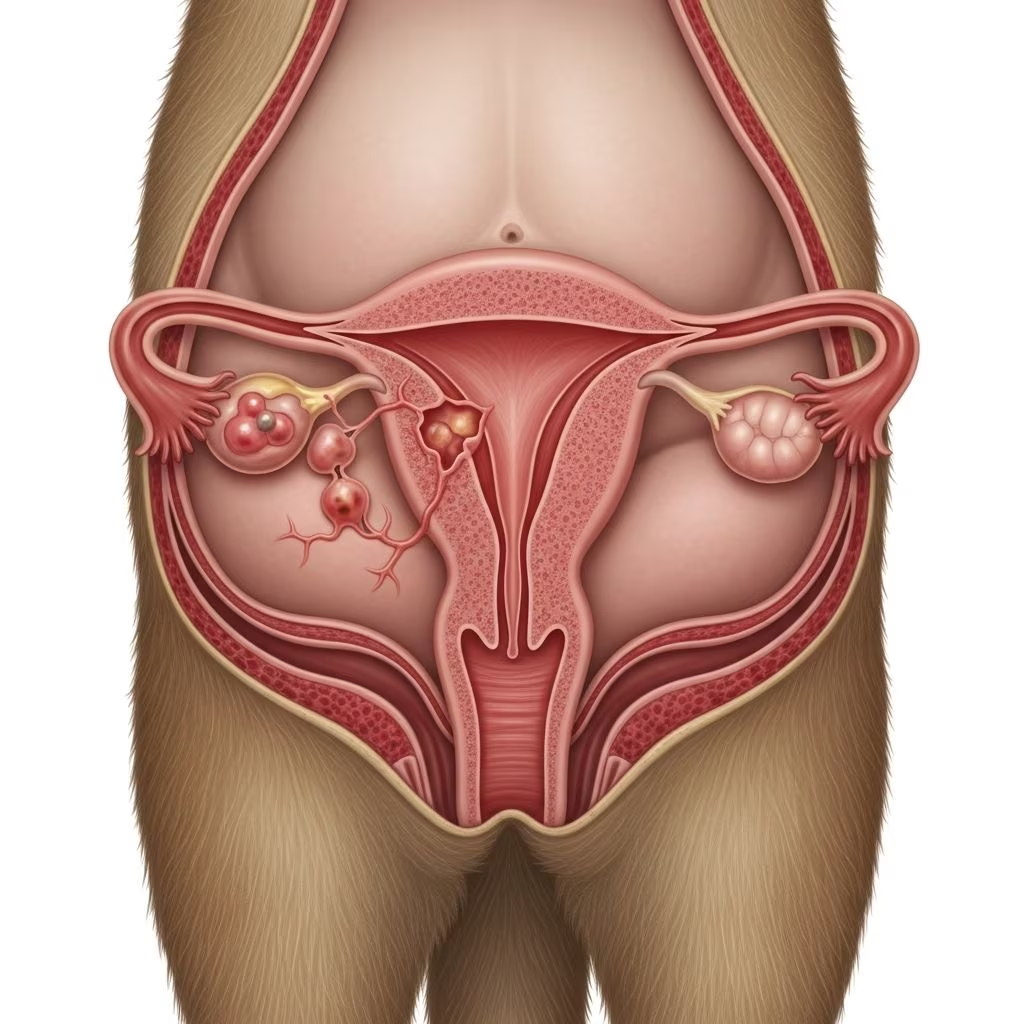
Understanding Ovarian Remnant Syndrome in Cats
Ovarian remnant syndrome (ORS) is a condition where ovarian tissue remains in the abdomen after a cat has been spayed. This occurs when a veterinarian fails to completely remove all ovarian tissue during the initial spaying procedure. While spaying is generally a safe and effective surgery, ovarian remnant syndrome represents a notable complication that can develop months or even years after the original operation. Understanding this condition is essential for cat owners who notice unexpected signs of heat in their previously spayed feline companions.
What Causes Ovarian Remnant Syndrome?
Ovarian remnant syndrome can develop due to several factors during the spaying procedure. Poor surgical technique, difficulty in adequately exposing the ovaries during the ovariohysterectomy, or the presence of extra ovarian tissue in abnormal locations within the cat’s body can all contribute to incomplete removal. Additionally, some cats may have anatomical variations that make complete ovarian removal more challenging for the surgeon. Interestingly, research suggests that the experience level of the surgeon performing the initial surgery may not be a significant risk factor, as both experienced and less experienced surgeons can encounter this complication.
Clinical Signs of Ovarian Remnant Syndrome
Cats with retained ovarian tissue experience hormonal cycles similar to unspayed females, resulting in recognizable signs of estrus. According to the Animal Surgical Center of Michigan, affected cats typically show signs of a heat cycle an average of 15.5 months after spaying, though the timeline can vary significantly. Roughly 17% of spay complications involve ovarian remnants, making this a relatively common issue.
Common Symptoms Include:
- Bloody or serosanguineous discharge from the vulva, though this may be difficult to detect due to cats’ grooming habits
- Vulvar swelling or enlargement, which cats often lick clean before owners notice
- Increased vocalization, with ordinarily quiet cats yowling continuously
- Restlessness and increased activity patterns typical of heat cycles
- Behavioral changes such as increased affection toward owners or unusual aggression
- Attraction to intact males, with affected cats allowing or encouraging copulation (though pregnancy cannot occur)
- Mammary gland and nipple enlargement secondary to hormonal changes
The remaining ovarian tissue becomes hypertrophied over time and continues to secrete reproductive hormones, perpetuating these signs of estrus. Because cats are meticulous groomers, visible discharge or vulvar swelling may not be apparent to owners, making behavioral changes the most noticeable indicator.
Important Considerations Before Diagnosis
Before pursuing a diagnosis of ovarian remnant syndrome, it is crucial to rule out other potential causes of estrous-like signs. Certain medications and topical treatments can mimic ovarian remnant syndrome symptoms. If you use a topical estrogen cream or progesterone treatment in your household, ensure your cat cannot access or lick these products, as dermal exposure can produce clinical signs identical to those of a retained ovarian remnant. This distinction is important because treating the wrong condition would prove ineffective and delay appropriate management.
Diagnosing Ovarian Remnant Syndrome
While a veterinarian may develop a strong clinical suspicion based on history and physical examination, confirmation through diagnostic testing is essential before pursuing surgical intervention. Proper diagnosis prevents unnecessary surgery and ensures appropriate treatment planning.
Diagnostic Methods:
- Vaginal cytology – This test examines cells from the vaginal tract to identify cellular changes consistent with a heat cycle, particularly cornified vaginal epithelial cells that appear during estrus
- Hormone stimulation tests – These use either human chorionic gonadotropin (hCG) or gonadotropin-releasing hormone (GnRH) agonists to stimulate ovarian tissue and measure changes in progesterone or estradiol levels
- Anti-Müllerian hormone (AMH) testing – This test detects AMH, a protein hormone that markedly declines after ovary removal; elevated AMH levels indicate the presence of functional ovarian tissue and represent a highly effective diagnostic method
- Combined AMH and progesterone assays – Currently considered the most accurate method for identifying ovarian remnant syndrome in cats
- Ultrasound imaging – May help detect residual ovarian tissue, though detection can be challenging depending on tissue location and size
- CT scan – Used to precisely locate ovarian remnant tissue, which is important since remnants may not be located in the expected position behind the kidneys
Treatment Options for Ovarian Remnant Syndrome
Unfortunately, ovarian remnant syndrome cannot be managed medically. Surgery remains the only effective treatment, requiring removal of the remaining ovarian tissue. The veterinary team will work with you to determine the most appropriate surgical approach based on your cat’s individual circumstances.
Surgical Techniques:
Laparoscopic surgery represents an advanced approach where veterinarians make a series of small incisions and use a camera to identify and remove ovarian tissue. This minimally invasive technique offers benefits including reduced tissue trauma, smaller incisions, and potentially faster recovery compared to traditional approaches.
Exploratory laparotomy is performed similarly to the initial spay procedure, involving a larger incision to allow thorough examination of both ovarian pedicles. This approach provides excellent visualization of the surgical field and allows comprehensive exploration to locate all remaining tissue. Exploratory surgery is ideally performed within 3 to 6 weeks after ovulation induction, when the presence of corpus luteum makes small remnants easier to identify.
Any tissue removed should be submitted for histological evaluation to confirm that ovarian tissue was indeed present, validating the diagnosis and treatment.
Post-Operative Care and Recovery
Following surgery, proper aftercare is critical for successful healing and preventing complications. This recovery period can be challenging, particularly for active cats requiring behavioral modification.
Recovery Management:
- Activity restriction – Your cat should remain quiet and calm for approximately 10 days following surgery. If your cat is particularly active or has a difficult temperament, your veterinarian may prescribe sedatives to promote rest and healing
- Pain management – Gabapentin may be used as both a pain medication and mild sedative, while anti-inflammatory medications such as Onsior (robenacoxib) provide pain relief and reduce inflammation at the surgical site
- Elizabethan collar use – An e-collar (cone of shame) is essential to prevent your cat from licking or chewing at the incision. Licking can cause inflammation, infection, or incision reopening. Some cats tolerate body suits better than rigid cones, so discuss options with your veterinarian to find the best fit for your cat’s comfort and compliance
- Incision monitoring – Watch for signs of infection, excessive swelling, discharge, or dehiscence (opening of the incision)
- Follow-up appointments – Schedule post-operative check-ups as recommended by your veterinarian to assess healing progress
Prognosis and Long-Term Outlook
The prognosis for cats with ovarian remnant syndrome is generally excellent following successful surgical removal of the remnant tissue. Most cats recover fully and experience complete resolution of estrous signs. The condition does not recur after proper surgical removal, provided all ovarian tissue is successfully identified and extracted. Your cat should return to normal behavior and physiology, allowing you both to enjoy a comfortable life together without the complications associated with hormone fluctuations.
Potential Complications to Monitor
In rare cases, complications can develop secondary to ovarian remnant syndrome. Stump pyometra, an infection of the uterine remnant that may occur alongside ORS, can lead to severe disease and, in cats, has been associated with fatal outcomes if left untreated. Additionally, prolonged exposure to reproductive hormones from retained ovarian tissue may increase the risk of ovarian, mammary gland, or vaginal neoplasia. These potential complications underscore the importance of prompt diagnosis and treatment when ovarian remnant syndrome is suspected.
Frequently Asked Questions About Ovarian Remnant Syndrome
Q: How long after spaying can ovarian remnant syndrome develop?
A: While signs typically appear an average of 15.5 months after spaying, ovarian remnant syndrome can develop years after the initial surgery. Some cats may not show symptoms for several years, making diagnosis challenging when the original surgery is distant history.
Q: Can a cat become pregnant if she has ovarian remnant syndrome?
A: No, a cat with ovarian remnant syndrome cannot become pregnant despite showing signs of heat and attracting male cats. The remaining tissue produces hormones but does not include functional fallopian tubes or a uterus capable of supporting pregnancy.
Q: Is ovarian remnant syndrome more common in young versus older spayed cats?
A: Ovarian remnant syndrome can occur at any age in spayed cats. The condition is not dependent on the age at which the cat was spayed, but rather on the completeness of the initial surgical removal.
Q: How accurate are hormone tests for diagnosing ovarian remnant syndrome?
A: Combined anti-müllerian hormone and progesterone testing is currently considered the most accurate diagnostic method for identifying ovarian remnant syndrome in cats. These tests provide reliable confirmation of functional ovarian tissue presence.
Q: Will my cat need pain medication after surgery to remove ovarian remnants?
A: Yes, pain management is an important part of post-operative care. Medications such as gabapentin and robenacoxib (Onsior) are typically prescribed to manage discomfort and reduce inflammation following surgical removal of ovarian remnants.
Q: How long does recovery take after ovarian remnant removal surgery?
A: Most cats require approximately 10 days of restricted activity and careful monitoring. Full surgical healing typically occurs within 2-3 weeks, though behavioral signs of estrus should resolve immediately as hormone levels normalize.
Q: Can ovarian remnant syndrome be prevented?
A: While proper surgical technique and thorough examination of ovarian tissue during the initial spay help minimize risk, ovarian remnant syndrome cannot be completely prevented. Cats with anatomical variations or extra ovarian tissue may be at higher risk regardless of surgeon expertise.
References
- Ovarian Remnant Syndrome in Small Animals — Merck Veterinary Manual. 2024. https://www.merckvetmanual.com/reproductive-system/reproductive-diseases-of-the-female-small-animal/ovarian-remnant-syndrome-in-small-animals
- Ovarian Remnant Syndrome (ORS) — Cornell University College of Veterinary Medicine, Riney Canine Health Center. 2024. https://www.vet.cornell.edu/departments-centers-and-institutes/riney-canine-health-center/canine-health-topics/ovarian-remnant-syndrome-ors
- Diagnosis and Treatment of Ovarian Remnant Syndrome — Vet Times. 2016-04-04. https://www.vettimes.com/news/vets/small-animal-vets/diagnosis-and-treatment-of-ovarian-remnant-syndrome
- Ovarian Remnant Syndrome — Animal Surgical Center of Michigan. 2024. https://www.animalsurgicalcenter.com/ovarian-remnant-syndrome
- Canine and Feline Ovarian Remnant Syndrome (ORS) — Ansh Labs. 2024. https://www.anshlabs.com/resources/canine-and-feline-ovarian-remnant-syndrome-ors/



