

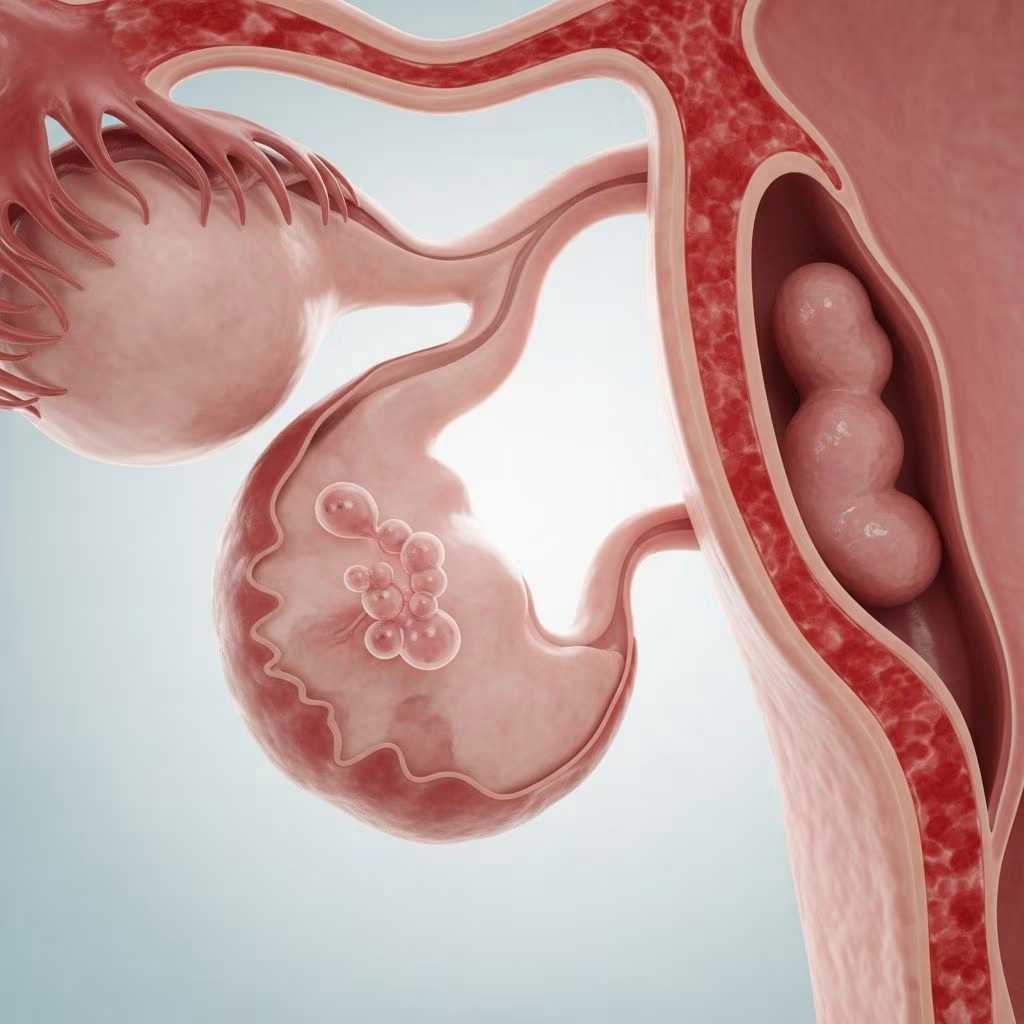
Ovarian cysts in female dogs are fluid-filled sacs that form on or within the ovaries, often disrupting normal reproductive cycles and causing hormonal imbalances. These conditions primarily affect unspayed bitches and can lead to prolonged heat cycles, infertility, or secondary infections if untreated.
Understanding the Formation of Ovarian Cysts
These cysts typically develop from follicles that fail to ovulate or from luteal structures that persist abnormally. Follicular cysts arise when ovarian follicles grow excessively without rupturing to release eggs, while luteal cysts form from the corpus luteum after ovulation, continuing to secrete progesterone inappropriately. Hormonal dysregulation in the hypothalamo-hypophyseal-ovarian axis plays a central role, as noted in recent veterinary research.
Breeds prone to reproductive issues, such as Boxers and German Shepherds, may show higher incidence, though any intact female dog can be affected, especially those over five years old. Environmental factors like irregular breeding cycles or exposure to endocrine disruptors may contribute, but genetics often underlie predisposition.
Recognizing Clinical Signs in Your Dog
Dogs with ovarian cysts often exhibit prolonged estrus, lasting beyond the typical 9-21 days, or split heats where bleeding recurs after a brief pause. Other indicators include:
- Restlessness and frequent vulvar licking due to persistent discharge.
- Attraction of males despite not being in true heat.
- Swollen abdomen from cyst enlargement.
- Behavioral changes like increased aggression or lethargy.
- Infertility or small litters in breeding dogs.
Severe cases may mimic pyometra with vaginal discharge turning purulent, emphasizing the need for prompt veterinary evaluation. Owners might notice these signs months after a heat cycle, as cysts can remain asymptomatic initially.
Diagnostic Approaches for Accurate Identification
Veterinarians start with a thorough history and physical exam, palpating the abdomen for enlarged ovaries. Key diagnostics include:
| Method | Description | Advantages |
|---|---|---|
| Ultrasound | Visualizes cyst size, number, and type (follicular vs. luteal) | Non-invasive, real-time imaging |
| Hormone Assays | Measures progesterone and estrogen levels | Confirms functional cysts via elevated hormones |
| Vaginoscopy | Examines vaginal discharge and cytology | Rules out infections or tumors |
| Biopsy | Tissue sampling post-surgery | Differentiates cysts from neoplasia |
Ultrasound proves most reliable, detecting cysts as small as 1 cm, while blood tests reveal persistently high progesterone in luteal cysts. Differential diagnosis excludes tumors, which may require histopathology for confirmation.
Medical Treatment Options for Managing Cysts
For breeding dogs or those unsuitable for surgery, medications target hormonal reset and cyst regression. Success rates vary by cyst type and timely intervention.
GnRH Agonists and Gonadotropins
Gonadotropin-releasing hormone agonists initially surge then suppress follicle-stimulating hormone (FSH) and luteinizing hormone (LH), prompting ovulation or cyst atrophy. A single intramuscular dose of 50 mcg GnRH induces ovulation in follicular cysts. Human chorionic gonadotropin (hCG) at 22 U/kg daily for three days offers similar efficacy, restoring cycles in 70-90% of cases.
Prostaglandin Therapy
Synthetic prostaglandins like PGF2α cause luteolysis, breaking down progesterone-secreting tissues. Administered in escalating doses over days, this yields 70-80% resolution for luteal cysts, though side effects include panting, salivation, and diarrhea. Monitoring prevents uterine rupture in complicated cases.
Oral Progestins and Contraceptives
Agents like megestrol acetate suppress estrus and stabilize hormones, reducing cyst recurrence. Low-dose regimens prevent endometrial changes but require veterinary oversight to avoid pyometra risk.
Supportive Anti-Inflammatories and Hormone Balancing
Non-steroidal anti-inflammatories (NSAIDs) alleviate pain and swelling, while targeted hormone replacement corrects imbalances. Estrogen or progesterone supplements, dosed precisely, support resolution without suppressing fertility long-term.
Treatment protocols last 7-14 days, with follow-up ultrasounds confirming success. Recurrence prompts reassessment for neoplasia.
Surgical Interventions: The Definitive Approach
Ovariohysterectomy (OHE), removing ovaries and uterus, cures cysts and prevents pyometra or neoplasia, ideal for non-breeding pets. For valuable breeders, ovary-sparing cystectomy preserves fertility, though risks regrowth.
Procedure involves:
- Pre-op stabilization with fluids and antibiotics.
- Laparotomy or laparoscopy for cyst excision.
- Histopathology to exclude malignancy.
Post-op recovery spans 10-14 days, with most dogs resuming normal activity swiftly. Early surgery improves prognosis, especially if cysts exceed 2 cm.
Preventive Measures for Reproductive Health
Spaying before the first heat eliminates risk, averting cysts, mammary tumors, and pyometra. For breeders, annual exams, cycle tracking, and avoiding pseudopregnancies maintain ovarian health. Nutritional balance, stress reduction, and parasite control support endocrine function.
Prognosis and Long-Term Monitoring
With treatment, 80-95% of dogs achieve resolution and fertility restoration if breeding. Untreated cysts heighten pyometra odds, a life-threatening emergency. Lifelong monitoring via check-ups ensures no recurrence or complications like cystic endometrial hyperplasia.
Frequently Asked Questions (FAQs)
Can ovarian cysts resolve without treatment?
Rarely; most persist, disrupting cycles and risking secondary issues. Veterinary intervention is essential.
Is medication safe for pregnant dogs?
No; prostaglandins and GnRH are contraindicated. Consult for alternatives.
How much does treatment cost?
Medications: $100-500; surgery: $500-2000, varying by location and complexity.
Do spayed dogs get ovarian cysts?
No, as ovaries are removed, eliminating the source.
What breeds are most affected?
Large breeds like Boxers, Rottweilers; any intact female risks development.
Early detection through vigilant observation empowers owners to safeguard their dogs’ well-being. Collaborate with veterinarians for tailored plans balancing fertility goals and health.
References
- Ovarian Cysts in Dogs: 5 Essential Medications That Work — The Pet Vet. 2023. https://thepetvet.com/ovarian-cysts-in-dogs/
- Pyometra — Cornell University College of Veterinary Medicine. 2024-02-15. https://www.vet.cornell.edu/departments-centers-and-institutes/riney-canine-health-center/canine-health-topics/pyometra
- Follicular Cysts in Small Animals — Merck Veterinary Manual. 2026. https://www.merckvetmanual.com/reproductive-system/reproductive-diseases-of-the-female-small-animal/follicular-cysts-in-small-animals
- Ovarian Tumors in Dogs — PetMD. 2024. https://www.petmd.com/dog/conditions/reproductive/c_multi_ovarian_tumors
- Disorders of the Ovaries — Veterian Key. 2022-05-10. https://veteriankey.com/disorders-of-the-ovaries/
- Prevalence, Diagnosis, and Treatment of Ovarian Cysts in Bitches — PMC (NCBI). 2024. https://pmc.ncbi.nlm.nih.gov/articles/PMC12524226/
- Ovarian Cysts in the Bitch: An Update — PubMed. 2021-01-05. https://pubmed.ncbi.nlm.nih.gov/33434678/



