

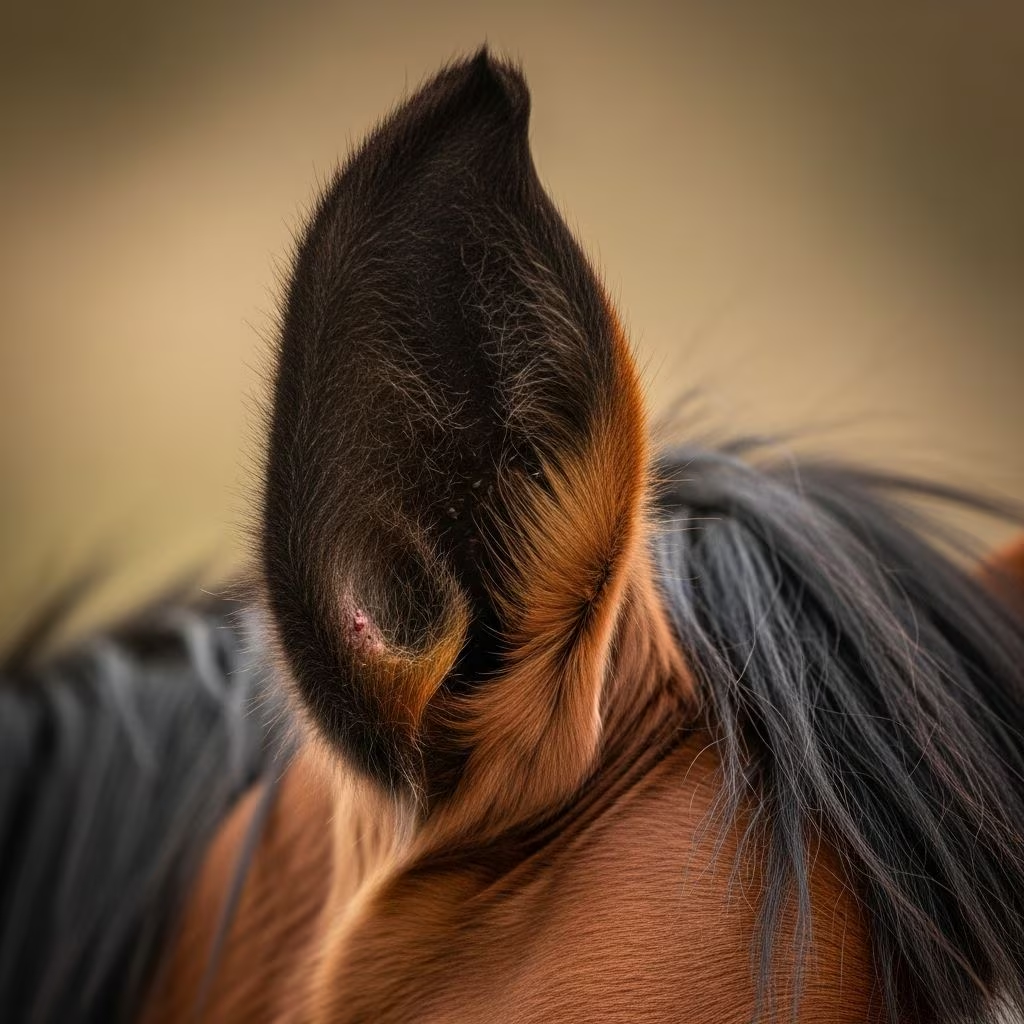
Horses rely on their highly mobile ears not only for acute hearing but also for balance and environmental awareness. Disorders affecting the outer ear, known as the pinna and external ear canal, can lead to discomfort, impaired hearing, and secondary complications if untreated. This article delves into the structure of the equine outer ear, prevalent conditions, diagnostic approaches, treatment options, and proactive prevention measures to help horse owners maintain their animals’ health.
Understanding Equine Ear Anatomy
The equine ear consists of three main sections: outer, middle, and inner. The outer ear includes the visible pinna—a funnel-shaped structure of cartilage covered by skin—and the external acoustic meatus, a long, narrow canal leading to the tympanic membrane. This design amplifies sound waves, directing them inward for optimal detection, crucial for a prey animal’s survival.
The pinna’s flexibility, driven by over a dozen muscles, allows horses to swivel their ears independently, pinpointing sound sources up to 360 degrees. The canal, lined with stratified squamous epithelium, sebaceous and ceruminous glands, and sparse hair, protects deeper structures while funneling audio signals. In horses, the canal’s elongated bony portion transitions from pigmented to non-pigmented skin, making it distinct from smaller animals. Histologically, it mirrors mammalian ears with unique features like prominent tensor tympani muscles and inward rete pegs in the osseous canal.
| Feature | Description | Function |
|---|---|---|
| Pinna (Auricle) | Cartilage frame with skin, highly mobile | Sound collection and directional focus |
| External Meatus | Long canal: cartilaginous then osseous | Sound conduction, debris protection |
| Epithelial Lining | Squamous with glands | Wax production, lubrication |
Common Conditions Affecting the Outer Ear
Several issues target the outer ear, ranging from infectious to traumatic. Early recognition is key, as horses mask pain subtly.
Bacterial and Fungal Infections (Otitis Externa)
Otitis externa arises when bacteria like Pseudomonas aeruginosa or fungi such as Aspergillus proliferate in the moist canal environment. Triggers include poor hygiene, humidity, or fly irritation. Symptoms feature head shaking, ear drooping, foul odor, and dark discharge. Chronic cases cause canal thickening and stenosis, impairing hearing.
Parasitic Infestations
Psoroptic mites (Psoroptes equi) burrow into canal skin, causing intense itching, crusty debris, and hypersensitivity. Horses rub ears against objects, risking secondary trauma. These parasites thrive in warm seasons, spreading via direct contact.
Aural Hematomas and Trauma
Blunt force from kicks or shakes forms blood-filled swellings between pinna cartilage and skin. Frostbite in extreme cold or fly bites exacerbate this. Hematomas distort shape, potentially leading to cauliflower ear if fibrosed.
Glandular Disorders and Ulcers
Overactive ceruminous glands produce excessive wax, trapping pathogens. Ulcers from self-trauma expose tissues, inviting infection. Allergic reactions to insect bites manifest as erythematous, edematous canals.
- Key Signs Across Conditions: Rubbing/scratching, head tilting, sensitivity to touch, discharge variations (waxy, purulent, bloody).
- Risk Factors: Confined stabling, high fly populations, immunosuppression, breed predispositions (e.g., Draft horses with deep canals).
Diagnostic Methods for Outer Ear Problems
Veterinarians employ systematic exams. Visual inspection reveals asymmetry or debris. Otoscopy, using video-endoscopes for the deep canal, visualizes the tympanic membrane—challenging in horses due to length.
Cytology of discharge identifies pathogens: gram stains for bacteria, KOH prep for fungi, skin scrapes for mites. Culture and sensitivity tests guide antibiotics. Imaging like CT scans assesses bony involvement or middle ear extension in severe cases. Biopsies confirm neoplasia or chronic hyperplasia.
- Restrain horse safely, often sedated.
- Clean external debris gently.
- Insert otoscope; note canal narrowing.
- Sample for lab analysis.
Treatment Strategies
Tailored to etiology, therapies aim to alleviate pain, eradicate causes, and restore function.
Topical Therapies: Ceruminolytics soften debris, followed by antimicrobial flushes (e.g., tris-EDTA with silver sulfadiazine). Mite treatments use ivermectin pours or injectable doramectin.
Systemic Options: Antibiotics like enrofloxacin for resistant bacteria; anti-inflammatories (phenylbutazone) reduce swelling. Hematomas require drainage and bandaging, sometimes cartilage tacking.
Advanced Interventions: Canal ablation for end-stage stenosis; surgical debridement for tumors. Supportive care includes fly masks and ear guards.
| Condition | Primary Treatment | Duration | Follow-up |
|---|---|---|---|
| Otitis Externa | Topical antimicrobials + cleaning | 2-4 weeks | Weekly cytology |
| Mites | Ivermectin systemic | Single dose, repeat 2 weeks | Scrape check |
| Hematoma | Drainage + compression | 7-14 days | Ultrasound monitor |
Prevention and Management Tips
Proactive steps minimize risks. Maintain clean, dry environments; use fly repellents and screens. Regular grooming prevents wax buildup—avoid cotton swabs, opt for vet-approved cleaners.
Monitor for early signs during routine checks. Vaccinate against contributing infections; ensure nutrition supports immunity. For stabled horses, provide ventilation to curb humidity.
- Daily ear inspections in fly season.
- Parasite control programs.
- Avoid self-medication; consult vets promptly.
Potential Complications and Prognosis
Untreated issues progress to middle ear involvement, facial nerve paralysis (drooped face, dry eye), or hearing loss. Chronic stenosis demands surgery. Prognosis excels with early intervention—over 90% resolution for acute infections. Breeds with upright ears fare better than lop-eared ones.
FAQs on Horse Outer Ear Health
Why does my horse shake its head excessively?
Often indicates ear irritation from infections, mites, or flies. Vet exam essential to rule out deeper issues.
Can I clean my horse’s ears at home?
Gently remove visible debris with approved solutions, but deep cleaning requires professional tools to avoid injury.
Are ear infections contagious?
Bacterial/fungal no, but mites spread via contact—quarantine affected horses.
What breeds are prone to ear problems?
Drafts and those with narrow canals; vigilance key for all.
How do I know if it’s serious?
Persistent tilting, odor, or neurological signs (circling) warrant immediate vet care.
References
- The Anatomy of the Ear — The Horse. 2014-approx. https://thehorse.com/14457/the-anatomy-of-the-ear/
- The Ear and Eye — Veterian Key. 2016-approx. https://veteriankey.com/the-ear-and-eye/
- Exploring the equine ear — Horse & Hound. 2015-approx. https://www.horseandhound.co.uk/plus/exploring-equine-ear-hh-vip-615676
- Histological Study of the External, Middle and Inner Ear of Horses — PubMed (Anat Histol Embryol). 2014-10-01. https://pubmed.ncbi.nlm.nih.gov/25283481/
- Listen Up: The Fascinating World of Horse Ears — Equimade. 2023-approx. https://www.equimade.com/listen-up-the-fascinating-world-of-horse-ears/
- Vet Guide to Equine Ear Canal Problems in 2025 — AskAVet. 2025-approx. https://askavet.com/blogs/news/vet-guide-to-equine-ear-canal-problems-in-2025-%F0%9F%90%B4



