

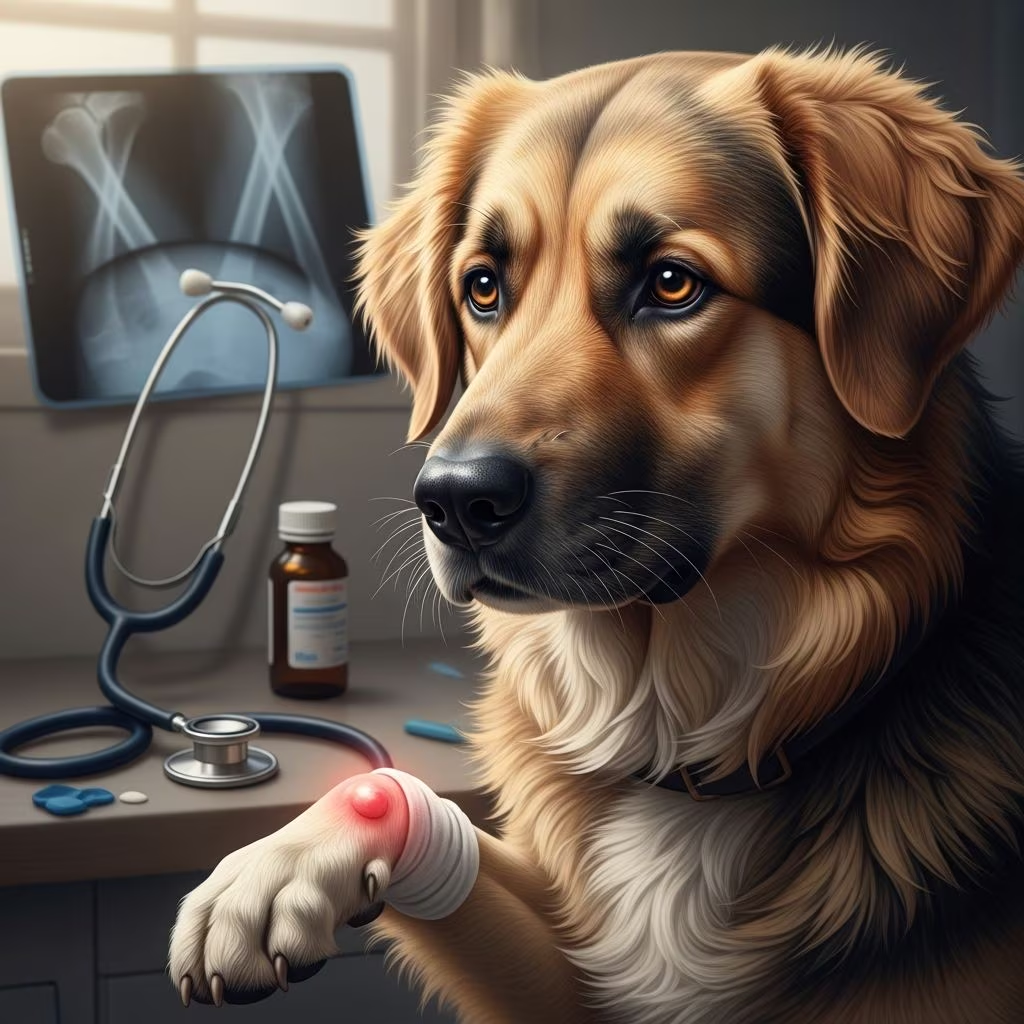
What is Osteosarcoma in Dogs?
Osteosarcoma is an aggressive malignant bone tumor that represents one of the most common types of cancer in dogs. This devastating disease primarily affects the skeletal system and has a high tendency to spread to other parts of the body, particularly the lungs. Understanding this condition is crucial for dog owners, as early detection and prompt treatment can significantly impact a dog’s quality of life and survival time. The disease is characterized by rapid tumor growth and a high metastatic potential, meaning cancer cells can quickly spread to distant organs.
Large and giant breed dogs appear to be at higher risk for developing osteosarcoma, though the disease can affect dogs of any size or age. The condition typically emerges in middle-aged to older dogs, but younger dogs are not immune to this aggressive cancer. When diagnosed, most dogs are classified as stage IIB osteosarcoma, indicating a localized tumor with potential for systemic spread.
Common Locations of Bone Tumors
While osteosarcoma can develop in various locations throughout a dog’s skeleton, certain areas are more frequently affected than others. Understanding where these tumors typically appear can help owners recognize potential warning signs.
The most common sites for osteosarcoma include:
– Distal femur (lower thighbone)- Proximal tibia (upper shinbone)- Proximal humerus (upper arm bone)- Distal radius (lower foreleg bone)- Pelvis- Vertebral column (spine)- Jaw and facial bones- Ribs
Although osteosarcoma frequently affects the front legs and rear legs, it can also develop in the jaw, facial bones, vertebrae, and ribs. The location of the tumor significantly influences treatment options and prognosis, with appendicular tumors (those affecting the limbs) generally having a better outlook than those affecting the axial skeleton or jaw.
Symptoms and Warning Signs
Recognizing the early symptoms of osteosarcoma is essential for seeking prompt veterinary care. Dog owners should be vigilant about any changes in their pet’s behavior or physical condition, particularly regarding mobility and appetite.
Common symptoms of osteosarcoma in dogs include:
– Lameness or limping in the affected limb- Swelling in the ribs, spine, legs, or jaw- Severe pain, especially when the affected area is touched or during walking- A visible mass or lump on the dog’s body- Loss of appetite or decreased food intake- Lethargy or general weakness- Limb asymmetry (one limb appearing larger or abnormal compared to others)- Respiratory distress or difficulty breathing- Nasal discharge or discharge from the nostrils- Elevated heart rate (tachycardia)- Dehydration- Neurological signs if the tumor affects the spine
Lameness is often the first noticeable sign, particularly in large breed dogs where osteosarcoma commonly affects the appendicular skeleton. This symptom may initially be attributed to arthritis or injury, which can delay diagnosis. However, the progressive nature of the pain and the presence of swelling should prompt immediate veterinary evaluation.
When to Contact Your Veterinarian
Urgent veterinary attention is critical when osteosarcoma is suspected. This aggressive cancer spreads extremely quickly, and delayed treatment can rapidly lead to life-threatening complications such as respiratory distress, pathological fractures, or widespread metastasis to vital organs. Dog owners should contact their veterinarian immediately if their pet displays any of the symptoms listed above. Never disregard or delay reporting concerning signs, as the speed at which this cancer progresses cannot be overstated.
If your dog is displaying lameness that doesn’t improve with rest, visible swelling, or signs of pain, schedule an urgent examination with your veterinarian. Early intervention can make a significant difference in treatment outcomes and your dog’s overall prognosis.
Diagnosis of Osteosarcoma
Diagnosing osteosarcoma involves a comprehensive approach combining physical examination, imaging studies, and sometimes biopsy procedures. Your veterinarian will take time to thoroughly evaluate your dog and recommend appropriate diagnostic tests.
Physical Examination: During the initial visit, your vet will perform a thorough physical examination, palpating the affected area to assess pain levels, swelling, and the presence of any masses. They will also evaluate your dog’s overall condition and mobility.
Radiographs (X-rays): X-rays are typically the first imaging modality used to visualize bone lesions. They can reveal characteristic changes associated with osteosarcoma, including bone lysis (destruction) and new bone formation.
Advanced Imaging: Computed tomography (CT) scans or magnetic resonance imaging (MRI) may be recommended to better define tumor margins and assess soft tissue involvement, which is particularly important if limb-sparing surgery is being considered.
Staging: Following diagnosis, your veterinarian will stage the cancer to determine if it has spread to other locations in the body. This typically involves thoracic radiographs or CT scans to check for pulmonary metastasis, bloodwork, and sometimes ultrasound or other imaging studies. Staging helps determine prognosis and treatment eligibility.
Biopsy: A tissue biopsy may be performed to confirm the diagnosis and rule out other bone conditions that can mimic osteosarcoma.
Treatment Options for Canine Osteosarcoma
Treatment for osteosarcoma is multimodal and aims to address both the painful primary tumor and the high likelihood of distant spread. Your veterinarian will discuss the most recent bone cancer treatment developments with you to help understand all available options for your dog’s specific situation.
Surgical Management
Surgery is the cornerstone of osteosarcoma treatment and is considered the first-line procedure when feasible. The primary surgical goal is to completely remove the tumor while eliminating pain and reducing the risk of pathological fractures.
Limb Amputation: For appendicular osteosarcoma (tumors affecting the legs), amputation of the entire affected limb is the standard-of-care treatment. Although amputation may seem extreme, it provides several significant benefits: it completely removes the primary tumor, brings substantial pain relief, decreases the risk of postoperative complications, shortens anesthesia time, and is less expensive than limb-sparing procedures. Most dogs adjust remarkably well to life on three legs and compensate excellently, maintaining quality of life and mobility.
Limb-Sparing Surgery: In select cases where owners wish to preserve the limb and where tumor location permits, limb-sparing surgery may be considered. This procedure involves removing the tumor while preserving limb function. However, not all dogs are candidates for this approach, and it requires specialized surgical expertise.
Other Surgical Approaches: For tumors affecting non-limb locations such as the jaw, facial bones, ribs, or pelvis, surgical procedures may include removal of the affected bone segment (mandibulectomy, rib resection, etc.) or debulking procedures to remove as much tumor tissue as possible.
Chemotherapy
Adjuvant chemotherapy following surgery significantly prolongs survival time after diagnosis. Systemic chemotherapeutic agents are administered to target cancer cells that may have already spread to other parts of the body. Currently, platinum-based chemotherapy agents such as cisplatin or carboplatin, and doxorubicin are considered the standards of care for treating osteosarcoma in dogs. When surgery is combined with chemotherapy, median survival times of 10 to 12 months are reported for patients without visible metastasis at diagnosis.
Radiation Therapy
Radiation therapy may be employed in several scenarios. Traditional radiation therapy is relatively noninvasive and can provide pain relief and help control local tumor growth. Stereotactic radiation therapy is a more advanced form that delivers focused, high-dose radiation to the tumor while minimizing exposure to surrounding healthy tissue. Hypofractionated radiation therapy protocols have shown effectiveness in palliative management, with up to 90 percent of dogs experiencing improved quality of life following treatment.
Pain Management
Effective pain control is paramount in managing osteosarcoma, regardless of the treatment approach chosen. Multimodal analgesia (using multiple pain relief methods) is typically employed and may include:
– Non-steroidal anti-inflammatory drugs (NSAIDs)- Gabapentin- Amantadine- Opioid medications- Bisphosphonate drugs (such as pamidronate or zoledronate), which inhibit bone destruction and decrease pain
Bisphosphonates are often administered intravenously once every three to four weeks and are particularly effective when combined with other analgesic drugs and radiation therapy.
Immunotherapy and Emerging Treatments
Immunotherapy represents a developing frontier in osteosarcoma treatment, involving the use of the body’s own immune system to help combat cancer cells. These newer approaches show promise and may become increasingly available as research progresses.
Treatment Comparison Table
| Treatment Option | Best For | Advantages | Considerations |
|---|---|---|---|
| Amputation | Appendicular tumors | Complete tumor removal, excellent pain relief, most dogs adjust well to three legs | Permanent loss of limb, requires post-operative care |
| Limb-Sparing Surgery | Selected cases where limb preservation desired | Preserves limb anatomy and function | Requires specialized expertise, more complex recovery, not all dogs are candidates |
| Chemotherapy | Adjuvant to surgery | Significantly prolongs survival, targets metastatic disease | Requires multiple treatments, potential side effects, cost considerations |
| Radiation Therapy | Palliative care or limb preservation | Non-invasive, effective pain relief, can preserve limb | Multiple treatments required, specialized equipment needed, variable access |
| Palliative Care | Dogs not suitable for surgery/chemotherapy | Focuses on comfort and quality of life | Limited survival benefit, addresses pain rather than cancer control |
Prognosis and Survival Rates
The prognosis for osteosarcoma in dogs is generally poor, though survival times vary depending on treatment approach and individual factors. Dogs with visible pulmonary metastasis at diagnosis have significantly worse prognoses, with median survival times of approximately three months even with treatment. Dogs with proximal humeral tumors also tend to have poorer outcomes.
For dogs treated with amputation and adjuvant chemotherapy without visible metastasis at diagnosis, median survival times range from 10 to 12 months. Dogs receiving palliative care alone have median survival times of approximately 3 to 4 months. These figures represent median values, meaning individual dogs may live shorter or longer periods depending on their specific circumstances.
What to Expect After Treatment
Following a diagnosis of osteosarcoma, your veterinarian will work closely with you to develop a comprehensive treatment plan tailored to your dog’s specific situation, age, overall health status, and your treatment goals. Regular follow-up appointments will be necessary to monitor your dog’s response to treatment, manage pain, and watch for signs of disease progression or complications.
If amputation is performed, most dogs recover remarkably well and return to normal activities within a few weeks. Physical rehabilitation and controlled exercise during recovery help your dog adapt to using three legs. If chemotherapy is recommended, your dog will require periodic veterinary visits for treatment administration and monitoring for potential side effects.
Frequently Asked Questions
Q: Is osteosarcoma in dogs always fatal?
A: While osteosarcoma is a serious and aggressive cancer with a guarded prognosis, it is treatable with multimodal therapy combining surgery, chemotherapy, and pain management. With appropriate treatment, some dogs can survive 12 months or longer. However, the disease is ultimately not considered curable with current treatment options.
Q: Can dogs live a good quality of life after amputation?
A: Yes, most dogs adapt exceptionally well to life on three legs. Dogs have remarkable compensatory abilities and quickly learn to redistribute their weight and move comfortably. With proper pain management and rehabilitation, amputee dogs can enjoy normal activities and maintain excellent quality of life.
Q: What are the side effects of chemotherapy for osteosarcoma?
A: Common side effects may include nausea, decreased appetite, vomiting, diarrhea, and bone marrow suppression. However, many dogs tolerate chemotherapy well, and side effects are generally manageable with supportive care. Your veterinarian will monitor your dog closely during treatment.
Q: Is osteosarcoma hereditary in dogs?
A: While certain large and giant breed dogs appear to have increased predisposition to osteosarcoma, the condition is not directly inherited in a simple genetic pattern. Environmental factors and individual genetic susceptibility play roles in disease development.
Q: How quickly does osteosarcoma spread?
A: Osteosarcoma is highly aggressive and can spread rapidly, often to the lungs. By the time of diagnosis, microscopic metastases may already be present even if imaging doesn’t show visible spread. This is why prompt treatment is critical.
Q: Are there any emerging treatments for osteosarcoma?
A: Yes, immunotherapy and other novel treatment approaches are being researched and developed. These emerging treatments aim to improve survival times and quality of life. Discuss with your veterinarian whether your dog might be a candidate for clinical trials or newer treatment options.
References
- Osteosarcoma in Dogs—Symptoms, Treatment & Prognosis — Huntersville Carolina Veterinary Hospital. 2023-11-30. https://www.huntersville.carolinavet.com/site/huntersville-veterinary-blog/2023/11/30/osteosarcoma-dog-bone-cancer
- Osteosarcoma in Dogs: Symptoms & Treatment — VRA Veterinary Hospital. 2022-03-15. https://www.vravet.com/site/blog/2022/03/15/osteosarcoma-in-dogs-symptoms-and-treatment
- What do we know about canine osteosarcoma treatment? – review — PubMed Central. National Center for Biotechnology Information. 2015-03-15. https://pmc.ncbi.nlm.nih.gov/articles/PMC4330401/
- Osteosarcoma in dogs — Cornell University College of Veterinary Medicine, Riney Canine Health Center. 2024. https://www.vet.cornell.edu/departments-centers-and-institutes/riney-canine-health-center/canine-health-information/osteosarcoma-dogs
- Osteosarcoma (Bone Cancer) in Dogs – PetMD — PetMD Editorial. 2024. https://www.petmd.com/dog/conditions/musculoskeletal/c_multi_osteosarcoma
- An update on diagnosis and treatment of canine appendicular osteosarcoma — Veterinary Practice. 2022. https://www.veterinary-practice.com/article/diagnosis-treatment-canine-appendicular-osteosarcoma



