

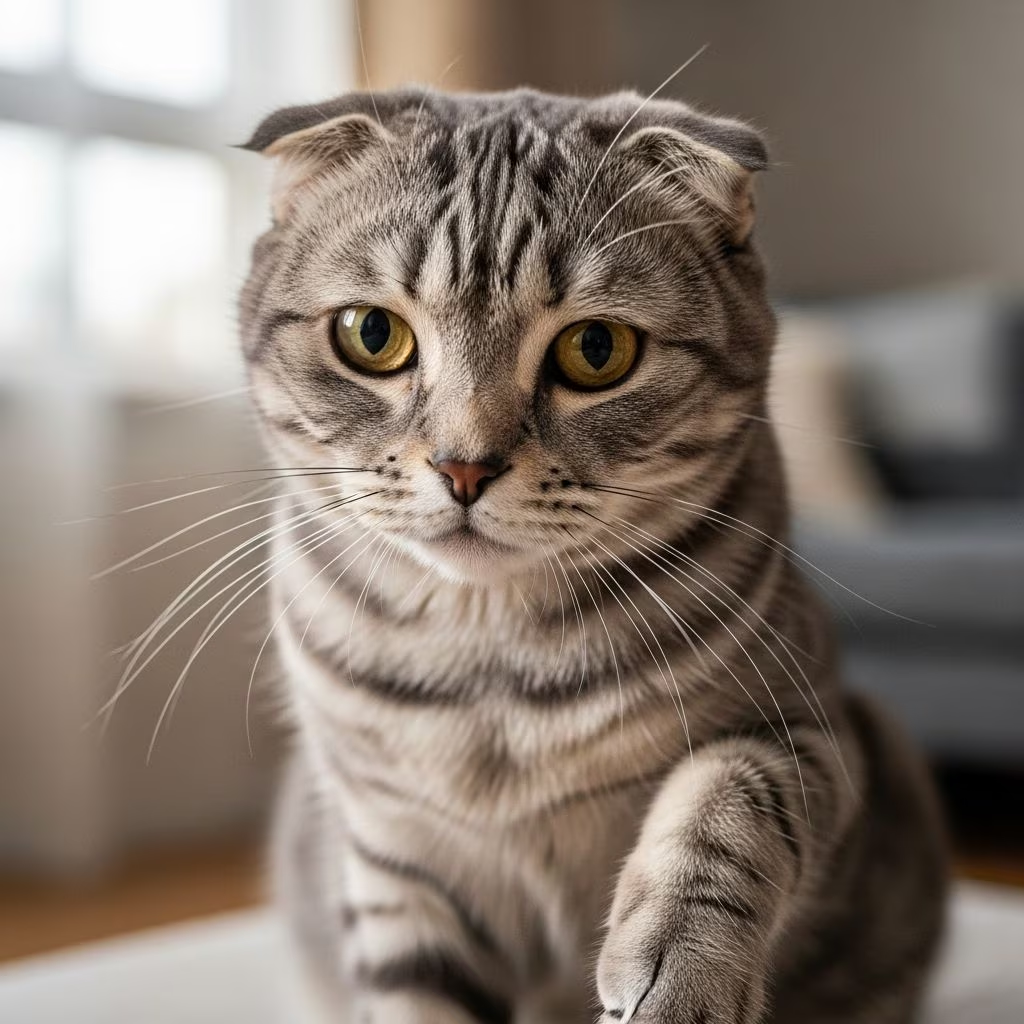
The distinctive folded ears of Scottish Fold cats result from a genetic mutation that disrupts cartilage development throughout the body, leading to osteochondrodysplasia—a condition causing progressive skeletal deformities, chronic pain, and severe mobility limitations. This dominant mutation in the TRPV4 gene affects endochondral ossification, the process by which cartilage turns into bone, resulting in abnormal growth plates and joint instability. While the ear fold appears charming, it signals widespread cartilage dysfunction that manifests as lameness, stiff gait, and arthritis as early as 7 weeks of age, persisting lifelong without cure.
The Genetic Roots of Folded Ears and Skeletal Flaws
Osteochondrodysplasia stems from a single dominant mutation in the TRPV4 gene, which encodes an ion channel crucial for cartilage and bone tissue function. Heterozygous cats (Fd/fd) exhibit folded ears emerging at 3-4 weeks, but homozygous (Fd/Fd) individuals suffer even more extreme deformities, often lethal in utero or shortly after birth. This mutation impairs cartilage resilience, causing it to collapse under normal stresses, particularly in weight-bearing joints like the carpus (wrist), tarsus (ankle), phalanges, and tail vertebrae.
Unlike breed-specific traits selected for aesthetics, this defect alters skeletal development systemically. Limb bones become short and widened, tails stiffen and shorten, and joints swell due to faulty ossification. Severity varies due to modifier genes, but all folded-ear cats develop some degree of pathology, ranging from subtle reluctance to move in mild cases to crippling immobility in severe ones. Veterinary genetic testing confirms the mutation, with labs like UC Davis identifying carriers reliably.
Recognizing Early Warning Signs in Your Cat
Owners often overlook initial symptoms because cats mask pain adeptly, redistributing weight to unaffected limbs. Common indicators include:
- Stiff, stilted “bunny-hop” gait, especially in hind limbs.
- Reluctance to jump, climb, or play, progressing to hiding and reduced appetite.
- Swollen, painful joints—particularly tarsal and carpal—visible by 6-7 months.
- Shortened, deformed paws with splayed toes and thick limbs.
- Short, inflexible tail that fails to curl normally.
Physical exams reveal tenderness on palpation, abnormal postures, and reduced flexibility. Young kittens may appear normal until growth spurts exacerbate distortions around 7 weeks. As cats age, secondary osteoarthritis fuses joints, worsening lameness and causing chronic discomfort that impacts grooming, litter use, and overall welfare.
Diagnostic Approaches: From Exams to Imaging
Diagnosis relies on breed history, clinical signs, and radiographs, which reveal hallmark features by 7 weeks. Key radiographic findings include:
| Feature | Description | Common Locations |
|---|---|---|
| Exostosis | New bone growth around joints | Tarsus, carpus, phalanges |
| Narrow joint spaces | Due to cartilage degeneration | Distal limbs |
| Shortened bones | Irregular size/shape in phalanges, vertebrae | Hind paws, tail |
| Osteopenia | Bone density loss adjacent to joints | Metacarpals, metatarsals |
| Plantar exostosis | Cauliflower-like growth on calcaneus | Hind limbs (advanced cases) |
Skeletal surveys confirm disproportionate dwarfism and polyarthropathy, distinguishing it from trauma or infection. Genetic tests via cheek swabs detect the TRPV4 variant, essential for breeding decisions. Bloodwork rules out metabolic issues, while advanced imaging like CT scans details spinal involvement if needed. Early detection via vet check-ups at 7-8 weeks prevents welfare decline.
Managing Pain and Improving Quality of Life
No treatment cures osteochondrodysplasia; management focuses on pain relief and mobility support. Strategies include:
- Pharmacology: NSAIDs like meloxicam reduce inflammation; oral chondroprotectants (glucosamine, chondroitin sulfate) alleviate joint pain without side effects.
- Environmental adaptations: Ramps, low-entry litter boxes, soft bedding minimize jumping.
- Physical therapy: Gentle massage, hydrotherapy maintain muscle tone.
- Weight control: Obesity exacerbates stress on deformed joints.
- Surgical options: Rare, for severe exostosis or fusions, but prognosis remains guarded.
Owners report improved comfort with multimodal therapy, but severely affected cats may require euthanasia for humane reasons. Regular vet monitoring tracks progression, adjusting protocols as arthritis advances.
Breeding Controversies and Ethical Dilemmas
Breeding Scottish Folds perpetuates suffering, as all folded-ear cats (heterozygous) carry the mutation and pass it to 50% of offspring. Straight-eared kittens from Fold parents can be carriers, necessitating genetic screening. Welfare organizations like UFAW and Cats Protection advocate banning Fold breeding, citing inevitable pain and deformities.
International Cat Care emphasizes the ethical breach: selecting for a trait causing lifelong disability violates animal welfare standards. Reputable breeders pair Folds only with straight-eared non-carriers, but demand for “cute” ears sustains unethical practices. Adopting straight-eared rescues avoids supporting the cycle.
Case Studies: Real-World Impacts
Consider a 2-year-old spayed female Scottish Fold with intermittent hindlimb lameness: radiographs showed tarsal swelling and phalangeal defects; chondroprotectants restored partial mobility. Another 3-year-old presented with quadriparesis—swollen limbs since 6 months, unable to jump; despite therapy, quality of life declined, leading to euthanasia. These illustrate variability: mild cases adapt, but severe ones cripple cats by adulthood.
Longitudinal studies confirm progression: 7-week scans predict severity, with hindlimbs most affected. Owners note behavioral shifts—hiding, poor grooming—as pain indicators.
Preventive Measures and Future Outlook
Genetic testing is pivotal: labs screen for TRPV4, certifying clear lines. Education campaigns urge choosing non-Fold breeds like British Shorthairs, which mimic looks without defects. Research into gene editing holds promise, but current ethics prioritize ending breeding. Vets recommend Fold owners monitor via annual orthopedics exams.
Frequently Asked Questions (FAQs)
Can all Scottish Fold cats develop osteochondrodysplasia?
Yes, every cat with folded ears carries the dominant mutation, leading to varying degrees of the condition.
Is osteochondrodysplasia painful for cats?
Absolutely; it causes chronic arthritis, lameness, and joint pain, often severe enough for euthanasia.
How do you test for the Scottish Fold mutation?
DNA tests from saliva swabs analyze the TRPV4 gene, available from veterinary labs.
Can medication cure osteochondrodysplasia?
No, but pain meds and supplements manage symptoms effectively in mild cases.
Should I breed Scottish Fold cats?
No; welfare experts strongly oppose it due to guaranteed skeletal suffering in offspring.
References
- Scottish Fold – Osteochondrodysplasia — UFAW. Accessed 2026. https://www.ufaw.org.uk/cats/scottish-fold-osteochondrodysplasia
- Osteochondrodysplasia in three Scottish Fold cats — PMC – NIH. 2010-05-12. https://pmc.ncbi.nlm.nih.gov/articles/PMC2868141/
- Scottish Fold osteochondrodysplasia — International Cat Care. 2025-03-07. https://icatcare.org/articles/scottish-fold-osteochondrodysplasia
- Osteochondrodysplasia in Cats: Vet Guide 2025 — Ask A Vet. 2025. https://askavet.com/blogs/news/osteochondrodysplasia-in-cats-vet-guide-2025-%F0%9F%90%BE
- Scottish Folds | Extreme traits — Cats Protection. Accessed 2026. https://www.cats.org.uk/extreme-traits/cats-with-folded-ears
- Osteochondrodysplasia (Scottish Fold) — Labgenvet. Accessed 2026. https://labgenvet.ca/en/disease/osteochondrodysplasia-scottish-fold/
- Scottish Fold — Veterinary Genetics Laboratory – UC Davis. Accessed 2026. https://vgl.ucdavis.edu/test/scottish-fold



