

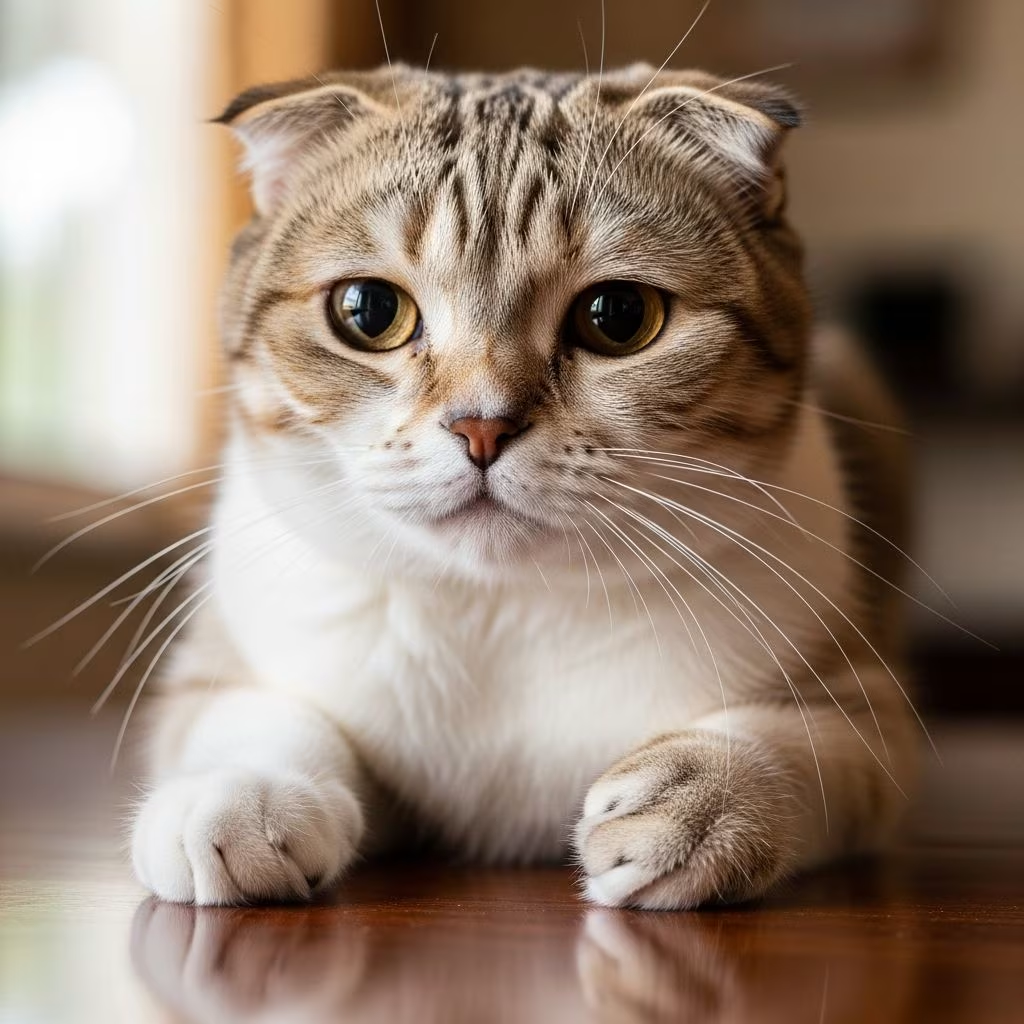
Osteochondrodysplasia represents one of the most significant hereditary health challenges affecting the Scottish Fold cat breed. This genetic condition fundamentally alters how cartilage and bone develop throughout a cat’s body, resulting in progressive skeletal abnormalities and degenerative joint disease that can severely impact quality of life. Understanding this condition is essential for current and prospective Scottish Fold cat owners, as well as breeders who work with this distinctive breed.
The Genetic Foundation of Osteochondrodysplasia
At its core, osteochondrodysplasia emerges from a genetic mutation that disrupts normal cartilage development. The same genetic mutation responsible for the characteristic folded ear appearance in Scottish Fold cats also triggers widespread cartilage abnormalities throughout the skeletal system. This mutation affects endochondral ossification, the biological process by which cartilage transforms into bone during development.
The hereditary nature of this condition means that all Scottish Fold cats carrying the fold gene possess some degree of osteochondrodysplasia, regardless of whether they exhibit obvious clinical symptoms. The severity of expression varies considerably based on the number of copies of the mutated gene each cat inherits.
Gene Dosage and Disease Severity
The manifestation of osteochondrodysplasia in Scottish Fold cats depends significantly on their genetic status. Cats with one copy of the fold gene, known as heterozygous carriers, typically experience milder forms of the disease, though many develop progressive joint complications over time. These cats may have fewer visible skeletal deformities and reduced risk of severely fused joints.
Conversely, homozygous cats—those with two copies of the fold gene—often develop severe, debilitating skeletal and joint problems early in life. Many homozygous Scottish Folds exhibit radiographic evidence of skeletal deformities as early as seven weeks of age, with clinical signs progressing rapidly as they mature. These severely affected individuals frequently experience lameness in childhood and may eventually lose their ability to walk or jump altogether.
Clinical Presentation and Observable Symptoms
The clinical manifestations of osteochondrodysplasia present across multiple body systems and vary widely among affected cats. Early detection of these symptoms enables owners and veterinarians to implement management strategies that may improve comfort and quality of life.
Skeletal and Structural Deformities
Cats with osteochondrodysplasia characteristically develop short, thick limbs with enlarged joints and bowed bone structure. The condition frequently produces splayed or misaligned toes and deformed paws that fail to develop normally. Many affected cats have disproportionately large heads, undershot or misaligned jaws, shortened noses, and crooked dentition.
The tail often becomes visibly affected, appearing short, thick, and completely inflexible, with reduced or absent mobility. Spinal involvement can occur, potentially resulting in curvature or fusion of vertebrae that further restricts movement and comfort.
Mobility and Gait Abnormalities
Progressive limitations in movement represent one of the most distressing consequences of osteochondrodysplasia. Affected cats frequently demonstrate reluctance to move, preferring to remain stationary or in hiding. Their gait becomes distinctly abnormal—characterized as stiff, stilted, and restricted. Some cats develop a distinctive bunny-hopping motion as they attempt to compensate for joint pain and stiffness.
Jumping becomes increasingly difficult and ultimately impossible for severely affected individuals. Cats may struggle to access their litter boxes, reach food and water bowls, or climb onto favorite resting spots. The inability to perform normal feline behaviors significantly impacts psychological well-being alongside physical deterioration.
Pain and Degenerative Joint Changes
Progressive osteoarthritis develops as a secondary consequence of the primary cartilage and bone abnormalities. Inflammation of joint tissues, excessive bone growth around joint margins (exostosis), and eventual joint fusion (ankylosis) cause chronic, often severe pain. This pain becomes apparent when cats react negatively to being petted, handled, or touched in affected areas.
Behavioral changes accompanying pain include reduced grooming habits, loss of appetite, decreased activity levels, social withdrawal, and inappropriate elimination behaviors—particularly reluctance to use the litter box if climbing into it causes discomfort.
Diagnostic Approaches and Imaging Findings
Veterinary diagnosis of osteochondrodysplasia relies on a combination of breed history, clinical examination findings, and radiographic evidence. X-ray imaging provides definitive confirmation, revealing characteristic skeletal alterations and degenerative changes.
Radiographic features include malformation of bones in the limbs and tail, exostosis formation around affected joints, secondary arthritis development, and abnormalities in bone density and shape. Lesions become radiographically apparent by seven weeks of age in severely affected kittens, though mildly affected cats may show less dramatic changes initially.
The distal limb joints—particularly the carpal (wrist) and tarsal (ankle) joints—show the most pronounced pathological changes. Swelling and enlargement of these joints become visually apparent and represent common presenting complaints when owners seek veterinary evaluation.
Comparison Table: Disease Severity by Genetic Status
| Genetic Status | Gene Copies | Typical Severity | Age of Onset | Mobility Prognosis |
|---|---|---|---|---|
| Heterozygous | One fold gene copy | Mild to Moderate | Variable; often later in life | Often maintain mobility with management |
| Homozygous | Two fold gene copies | Severe | Early; evident by 7 weeks | Progressive decline; often lose walking ability |
Management Strategies and Supportive Care
While osteochondrodysplasia has no cure, comprehensive management approaches can significantly improve comfort and quality of life for affected cats. Pain management forms the cornerstone of therapeutic intervention, requiring tailored approaches based on individual symptoms and disease progression.
Pharmaceutical Interventions
Oral chondroprotective agents, including glucosamine and chondroitin sulfate, help alleviate pain and potentially slow cartilage degeneration without causing adverse effects in most cats. These nutraceuticals work by supporting cartilage structure and reducing inflammatory processes within affected joints.
Traditional pain management medications, anti-inflammatory drugs, and prescription supplements may be recommended by veterinarians based on individual cat needs. Some cats benefit from joint injections containing hyaluronic acid or other therapeutic substances that provide localized pain relief and improve joint function.
Environmental Modifications
Creating an environment that accommodates mobility limitations proves essential for affected cats. Providing low-entry litter boxes, elevated food and water dishes, ramps or steps to favorite resting areas, and soft bedding in easily accessible locations reduces physical strain and encourages necessary activities.
Maintaining appropriate body weight prevents additional stress on compromised joints and reduces overall burden on the skeletal system. Gentle, controlled exercise appropriate to individual mobility levels helps maintain muscle mass that supports affected joints.
Quality of Life Considerations
Regular veterinary monitoring allows early detection of complications and adjustment of management strategies as disease progresses. Open communication with veterinarians about pain levels, mobility changes, and behavioral modifications ensures treatment plans evolve with the cat’s condition.
In cases of severe debilitation causing persistent pain, loss of mobility, and inability to perform normal feline behaviors, compassionate end-of-life care discussions become necessary conversations between owners and veterinarians.
Frequently Asked Questions
Can osteochondrodysplasia be prevented?
Prevention requires eliminating breeding of Scottish Fold cats, as all cats with folded ears carry the mutation causing osteochondrodysplasia to varying degrees. Responsible breeding practices that avoid pairing two heterozygous cats, or using homozygous cats for breeding, would reduce disease severity in subsequent generations.
At what age do symptoms typically appear?
Symptom timing varies considerably. Homozygous cats often show clinical signs within their first year of life, with radiographic evidence apparent by seven weeks of age. Heterozygous cats may develop symptoms gradually over several years or remain relatively asymptomatic until middle age.
Is osteochondrodysplasia painful?
Yes, particularly as progressive osteoarthritis develops. The combination of skeletal deformities, inflamed joints, and bone proliferation creates significant chronic pain that affects behavior, appetite, and overall quality of life.
Can affected cats live normal lifespans?
Many cats with mild to moderate osteochondrodysplasia live full lifespans with appropriate management and pain control. However, severely affected cats may experience such compromised quality of life that euthanasia becomes the most humane option.
Breeding Implications and Ethical Considerations
The presence of osteochondrodysplasia in all Scottish Fold cats raises significant ethical concerns about the breed itself. The genetic mutation producing the distinctive folded ears inevitably produces skeletal abnormalities affecting all carriers to some extent.
Responsible breeders increasingly limit breeding to heterozygous Scottish Folds when possible, avoiding homozygous pairings that produce severely affected offspring. Some breed registries have implemented restrictions on homozygous cats in breeding programs. However, the fundamental genetic problem persists: any breeding from Scottish Fold cats perpetuates a hereditary condition affecting skeletal health.
Conclusion: Living with and Understanding the Condition
Osteochondrodysplasia represents a significant hereditary challenge inherent to the Scottish Fold breed, directly linked to the genetic mutation producing their characteristic physical appearance. Understanding this condition’s progression, clinical manifestations, and management options enables cat owners to provide appropriate care and compassionate support for affected animals.
For prospective Scottish Fold owners, awareness of this condition’s inevitable presence in all fold-eared cats should inform decision-making. Existing owners of affected cats can implement comprehensive management strategies to optimize comfort and maintain quality of life. The condition underscores the importance of responsible breeding practices and ethical considerations regarding breed development when desirable traits inevitably link to serious health consequences.
References
- Scottish Fold cats | Help and Advice — The Cat’s Protection. Accessed January 2026. https://www.cats.org.uk/help-and-advice/getting-a-cat/scottish-folds
- Osteochondrodysplasia in three Scottish Fold cats — PMC/NIH. 2010. https://pmc.ncbi.nlm.nih.gov/articles/PMC2868141/
- Osteochondrodysplasia in Scottish Folds: Vet Approved Signs and Symptoms — Catster. Accessed January 2026. https://www.catster.com/cat-health-care/osteochondrodysplasia-scottish-fold-cats/
- Scottish Fold – Osteochondrodysplasia — UFAW (Universities Federation for Animal Welfare). Accessed January 2026. https://www.ufaw.org.uk/cats/scottish-fold-osteochondrodysplasia
- Hereditary Osteochondrodysplasia in Scottish Fold Breed Cats — Club Vet. Accessed January 2026. https://clubvet.com.tr/en/hereditary-osteochondrodisplasia-in-scottish-fold-breed-cats/
- Scottish Fold osteochondrodysplasia — International Cat Care. Accessed January 2026. https://icatcare.org/articles/scottish-fold-osteochondrodysplasia
- Scottish Fold | Veterinary Genetics Laboratory — UC Davis School of Veterinary Medicine. Accessed January 2026. https://vgl.ucdavis.edu/test/scottish-fold



