

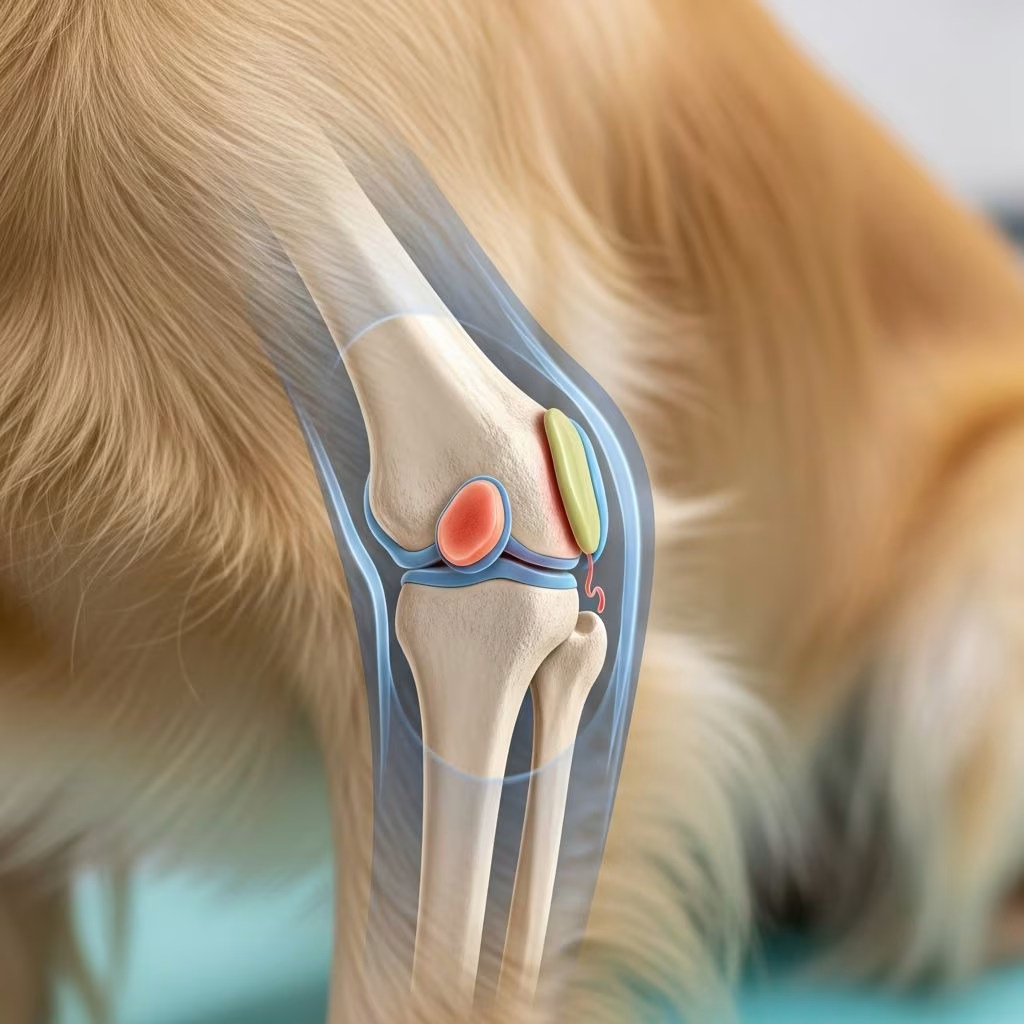
Understanding Osteochondritis Dissecans (OCD) in Dogs
Osteochondritis dissecans, commonly referred to as OCD, is a significant orthopedic condition that affects the cartilage in dogs’ joints. This developmental disease occurs when a fragment of cartilage separates from the underlying bone, causing inflammation, pain, and mobility issues. OCD typically develops during the growth phase of young dogs and can severely impact their quality of life if left untreated. Understanding this condition is essential for dog owners, particularly those with large or giant breed dogs that are more susceptible to this disorder.
What Causes OCD in Dogs?
OCD develops when the cartilage that covers the ends of bones in joints fails to mature properly. During normal skeletal development, cartilage is gradually replaced by bone in a process called ossification. In dogs with OCD, this process is disrupted, leading to thickened cartilage that becomes weakened and prone to separation from the underlying bone. Several factors contribute to the development of OCD in dogs.
Risk Factors and Predisposed Breeds
Large and giant breed dogs are significantly more predisposed to developing osteochondritis dissecans than smaller breeds. This is particularly true for rapidly growing dogs that experience accelerated skeletal development. Breeds most commonly affected include Great Danes, Labrador Retrievers, Newfoundlands, Rottweilers, Bernese Mountain Dogs, English Setters, and Old English Sheepdogs. While genetics play an important role in OCD susceptibility, environmental factors also contribute to disease development. Nutritional imbalances, excessive exercise during the growth phase, and trauma to developing joints can all increase the risk of OCD in predisposed dogs.
Common Sites of OCD
While OCD can potentially affect any joint in the dog’s body, certain locations are more commonly involved than others. The shoulder joint is frequently affected, making shoulder OCD one of the most commonly diagnosed forms of this condition. The elbow, hip, knee, and hock (ankle) joints are also susceptible to OCD lesions. The specific location of the cartilage defect will influence the clinical signs observed and the appropriate treatment approach recommended by your veterinarian.
Clinical Signs and Symptoms
Dog owners should be alert to various symptoms that may indicate their pet has developed osteochondritis dissecans. The presentation of OCD can vary depending on the severity of the condition, the specific joint affected, and the individual dog’s pain tolerance.
Primary Symptoms
Lameness is the most common and characteristic symptom of OCD in dogs. The onset of lameness may be sudden or gradual, and it may involve one or more limbs depending on how many joints are affected by the condition. Many dogs experience a worsening of lameness after exercise or physical activity, as movement and weight-bearing place stress on the damaged joint. In some cases, affected dogs may be unable to bear weight on the affected limb entirely.
Additional clinical signs accompanying lameness include swelling at the affected joints, visible pain in the limb (particularly when the joint is manipulated), and wasting or atrophy of muscles associated with chronic lameness. Dogs with OCD often display reluctance to move the affected limb and may hold the joint in an unusual position. Pain and stiffness in the affected joint can cause the dog to appear uncomfortable or distressed when moving, with some dogs vocalizing through whining or crying when touched or handled in the affected area.
Diagnosis of OCD
Accurate diagnosis of osteochondritis dissecans requires a comprehensive approach combining physical examination, imaging studies, and sometimes advanced diagnostic techniques. Early and accurate diagnosis is crucial for implementing appropriate treatment and preventing long-term joint damage.
Physical Examination
Your veterinarian will begin with a thorough physical examination, assessing your dog’s gait, joint mobility, and pain response. The veterinarian will manipulate the affected joints to identify areas of pain, swelling, or instability. Age is an important consideration in diagnosis, as OCD typically presents in younger dogs, particularly those under one year of age.
Radiographic Imaging
X-rays are often the first imaging modality used to visualize potential OCD lesions. However, in dogs under 6-7 months of age, X-rays can be challenging to interpret due to the presence of growth plates (growth physes), which are areas of developing bone that may complicate radiographic interpretation. In these young dogs, a veterinary radiologist may need to examine the X-rays to reach an accurate diagnosis.
Advanced Diagnostic Tools
In some cases, ultrasound of the joint may provide additional diagnostic information, particularly when X-ray findings are inconclusive. Arthroscopic examination, which involves inserting a small camera into the joint through a minimal incision, allows for direct visualization of the cartilage surface and can both diagnose and treat OCD lesions simultaneously. Your veterinarian may also collect samples of synovial fluid (fluid from within the joint) to confirm joint involvement and rule out infectious diseases that could mimic OCD symptoms.
Treatment Options for OCD
Treatment approaches for osteochondritis dissecans vary based on the severity of the condition, the age of the dog, the specific joint involved, and the extent of clinical signs present. Treatment goals focus on relieving pain, restoring joint function, and preventing progression to osteoarthritis.
Conservative Management
Conservative (non-surgical) management may be considered in specific circumstances. This approach is primarily recommended for dogs less than 6 months of age with minimal clinical signs and no significant radiographic changes. Conservative management includes pain medications, exercise restriction, dietary modifications, and formal rehabilitation therapy. This may also involve body weight management, anti-inflammatory pain medications, and nutraceutical supplements designed to support joint health.
However, for dogs over 6 months of age, conservative management alone is generally ineffective for treating OCD. Non-surgical approaches may provide temporary symptom relief but do not address the underlying cartilage defect, and the condition typically progresses without surgical intervention.
Surgical Treatment
Surgery is the gold standard treatment for osteochondritis dissecans in most dogs, particularly those over 6 months of age. The primary goal of surgical intervention is to remove the diseased cartilage, relieve inflammation and pain, allow the joint surface to remodel, and minimize the development of secondary osteoarthritis.
Arthroscopic Surgery
Arthroscopic surgery is considered the preferred surgical technique for managing OCD because of its minimally invasive nature, superior visualization capabilities, and faster recovery compared to traditional open surgery. This approach allows the surgeon to access and treat the affected joint through small incisions, reducing tissue trauma and leading to faster recovery, less pain, and fewer complications.
During arthroscopic procedures, the surgeon precisely removes damaged or abnormal cartilage, directly addressing the root cause of pain, lameness, and joint dysfunction. By restoring the joint’s normal structure, arthroscopic surgery helps improve mobility and significantly enhances the dog’s quality of life. The minimally invasive approach enables thorough inspection of the remaining cartilage surface, and any areas of defective cartilage are debrided or removed.
Advanced Surgical Techniques
In certain cases, surgeons may employ advanced techniques to optimize healing outcomes. Osteochondral allograft transfer involves transplanting normal cartilage and bone from another joint or from a non-weight bearing area of the affected joint to improve healing. Alternatively, synthetic implants may be placed to help reconstruct a smooth joint surface through a process called synthetic osteochondral resurfacing. In severe cases with significant bone defects, artificial plugs may be inserted into the bone bed to facilitate healing.
Post-Operative Care and Recovery
Following surgical treatment for OCD, careful post-operative management is essential for optimal healing and long-term success. Recovery is typically divided into distinct phases with progressively increased activity levels.
Early Post-Operative Phase (Weeks 1-3)
For the first 2-3 weeks following surgery, your dog will be restricted to short leash walks only—primarily for bathroom breaks and minimal exercise. You will be instructed on how to perform passive range of motion (PROM) exercises, in which you gently move the joint through its normal range of motion while your dog is lying on his side. These exercises maintain the joint’s flexibility and mobility during the critical early healing phase. Anti-inflammatory medications such as meloxicam (brand name Metacam®) and joint supplements will be prescribed to manage pain and support healing.
Intermediate Recovery Phase (Weeks 3-6)
After 3 weeks, the amount of controlled exercise will be gradually increased. Specific rehabilitation exercises such as swimming may be prescribed by your veterinarian or rehabilitation therapist. Swimming is particularly beneficial during this phase because it provides resistance training while minimizing stress on the healing joint. After 6 weeks, your dog may progress to other controlled activities such as light jogging, though exercise should remain carefully monitored.
Long-Term Recovery (6-8 Weeks and Beyond)
Total recovery time typically ranges from 6-8 weeks of exercise restriction to avoid running, jumping, and playing. Throughout the recovery period, weight control measures should be undertaken to decrease stress on affected joints. When taking your dog outdoors for walks, maintain control with a leash to ensure your dog stays to a slow walk and does not engage in jumping or rough play. Physical therapy is also recommended after surgery to help your pet regain its happiest, healthiest self.
Prognosis After Treatment
The prognosis after surgical treatment for osteochondritis dissecans is typically excellent. This favorable outcome occurs because surgical intervention can provide the most effective and long-lasting relief from symptoms such as lameness, pain, and stiffness in the affected joint.
One major reason for the excellent prognosis is that surgery addresses the underlying cause of OCD. By surgically removing damaged or abnormal cartilage from the joint, the surgeon helps restore the joint’s normal function and prevents further damage. This reduction in joint pain and stiffness translates to improved mobility and enhanced quality of life. Timely surgical intervention also helps reduce the risk of long-term joint damage by lowering the likelihood of developing osteoarthritis—one of the major complications of untreated OCD.
Managing OCD: Medications and Supplements
Beyond surgical treatment, various medications and supplements play important roles in managing OCD symptoms and supporting joint health.
Pain Management Medications
Non-steroidal anti-inflammatory drugs (NSAIDs) are commonly prescribed to reduce pain and inflammation in the joint. In mild cases where surgery may be deferred, medications such as NSAIDs or corticosteroids may be recommended to manage symptoms and reduce pain and inflammation. These medications provide symptomatic relief but do not resolve the underlying cartilage defect.
Joint Support Supplements
Nutraceutical supplements and dietary modifications can help limit cartilage damage and degeneration. These supplements often contain glucosamine, chondroitin, and omega-3 fatty acids, which support joint cartilage health. Your veterinarian will explain the available options and make recommendations based on your dog’s specific diagnosis and condition severity.
Frequently Asked Questions About OCD in Dogs
Q: At what age does OCD typically develop in dogs?
A: Osteochondritis dissecans typically develops in young dogs, particularly those under one year of age, during periods of rapid skeletal growth. Large and giant breed dogs are most commonly affected during their growth phase.
Q: Can OCD be prevented in predisposed breeds?
A: While genetic predisposition cannot be prevented, the risk of OCD development may be reduced through proper nutrition, controlled exercise during the growth phase, and maintaining appropriate body weight. Avoid excessive jumping and high-impact activities in young, large breed dogs.
Q: Is surgery always necessary for treating OCD?
A: Surgery is the gold standard treatment for dogs over 6 months of age with symptomatic OCD. Conservative management may be attempted in very young dogs (under 6 months) with minimal clinical signs, but surgical treatment is generally more effective for dogs over 6 months old.
Q: How long is the recovery period after arthroscopic surgery for OCD?
A: Total recovery typically takes 6-8 weeks of exercise restriction. The first 2-3 weeks involve strict rest with only short leash walks, followed by gradual increases in controlled activity and rehabilitation exercises.
Q: Can OCD affect multiple joints?
A: Yes, OCD can affect multiple joints simultaneously or at different times. Lameness may involve one or more limbs depending on how many joints are affected by the condition.
Q: What is the long-term outlook for dogs treated for OCD?
A: The prognosis after surgical treatment is typically excellent. Most dogs experience significant improvement in mobility and quality of life, with proper post-operative care and rehabilitation playing important roles in achieving the best outcomes.
References
- Shoulder Osteochondrosis Dissecans (OCD) In Dogs — SurgiPet. Retrieved from https://www.surgipet.com/article/shoulder-osteochondrosis-dissecans-in-dogs
- Osteochondritis Dissecans (OCD) in Dogs — PetMD. Retrieved from https://www.petmd.com/dog/conditions/musculoskeletal/c_dg_osteochondrosis
- Osteochondritis Dissecans (OCD) in Dogs — VCA Animal Hospitals. Retrieved from https://vcahospitals.com/know-your-pet/osteochondritis-dissecans-or-ocd-in-dogs
- Osteochondrosis Dissecans (OCD) in Dogs — SASH Veterinary Specialists. Retrieved from https://sashvets.com/diseases/ocd-in-dogs/
- Description and Treatment of an OCD Lesion of the Proximal — M Jourdain, Thieme Connect. 2025. Retrieved from https://www.thieme-connect.de/products/ejournals/pdf/10.1055/a-2603-0111.pdf



