

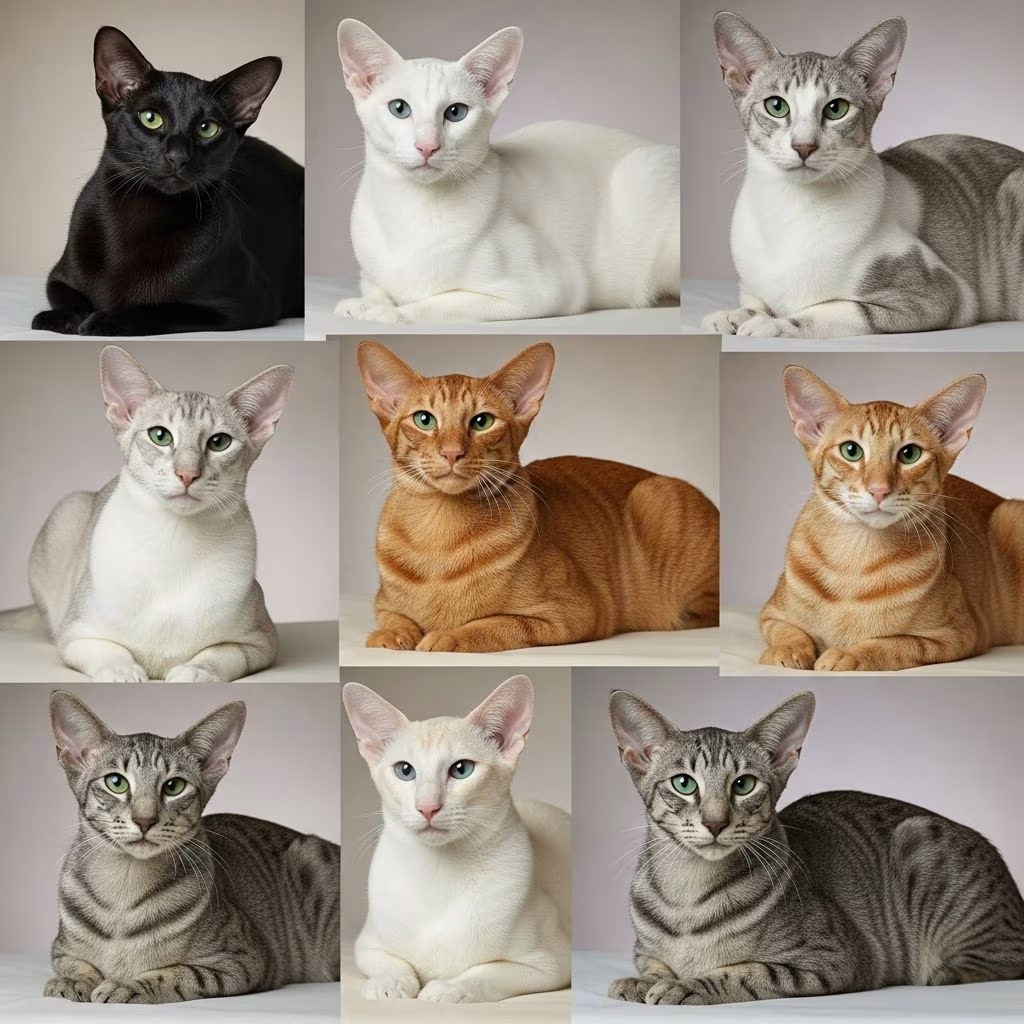
The Oriental Shorthair stands out as a breed celebrated for its extraordinary range of coat colors and patterns, setting it apart even among its Siamese relatives. Unlike the traditional color-pointed Siamese, these cats display a spectrum of hues across their sleek bodies, making each one a visual masterpiece. This guide delves into the specifics of these variations, their genetic foundations, and what makes them so distinctive in the feline world.
Origins and Development of Coat Diversity
Developed from Siamese foundations in the mid-20th century, the Oriental Shorthair emerged as breeders sought to expand beyond the classic seal point. By crossing Siamese with American Shorthairs and other breeds, enthusiasts unlocked a palette of non-pointed colors while preserving the signature elegant physique. This innovation resulted in over 300 recognized combinations, allowing for endless variety in appearance.
The breed’s coat is short, glossy, and close-lying, emphasizing the underlying muscular yet slender frame. This texture not only highlights color purity but also requires minimal grooming, though weekly brushing fosters bonding.
Solid Color Variations
Solid colors represent the purest expressions in Oriental Shorthairs, where every hair is uniformly shaded from root to tip without banding or tipping. These are highly prized for their depth and evenness.
- Ebony (Black): A rich, deep black that gleams under light, often mistaken for the Siamese base but fully extended across the body.
- Red: A vibrant, warm orange-red, more intense in males due to genetics.
- Cream: A soft, pale dilution of red, offering a gentle, creamy glow.
- Blue: Diluted black, presenting as a slate-gray with a velvety sheen.
- Lavender (Lilac): A delicate pinkish-gray, the dilute form of chocolate.
- Cinnamon and Fawn: Rarer warms tones; cinnamon is a light reddish-brown, fawn its softer dilute.
These solids demand genetic precision to avoid ghosting or uneven pigmentation, especially in kittens where full color develops over time.
Tabby Patterns: Striped and Spotted Elegance
Tabby patterns introduce bold markings on the Oriental’s canvas, blending the breed’s sleek lines with dynamic designs. Recognized subtypes include classic, mackerel, and spotted, each adding texture to the coat.
| Tabby Type | Description | Common Colors |
|---|---|---|
| Mackerel (Striped) | Narrow stripes running along the body, with bars on legs and rings on tail; bold ‘M’ on forehead. | Red, brown, blue, silver. |
| Classic (Blotched) | Swirling marbled patterns on sides, resembling butterly wings; thicker, more artistic. | Ebony, chocolate, lavender. |
| Spotted | Distinct round spots instead of stripes, vertically aligned for a wild look. | Silver, golden, red. |
Silver and golden tabbies feature a tipped effect where light undercoat contrasts with darker markings, creating a shimmering quality. Ticked tabbies show minimal stripes with banded hairs for a uniform shimmer.
Bicolor and Particolor Combinations
Bicolors add drama by incorporating white spotting with any solid or tabby base, typically covering the belly, paws, and an inverted ‘V’ on the face. This pattern, accepted by major registries like CFA and GCCF, yields striking contrasts such as black-and-white or red tabby-and-white.
Particolors extend this with tortie (tortoisehell) mixes of red and cream, often patched or brindled. Calico variants blend these with white. These are female-dominant due to sex-linked color genes.
Special Patterns: Smoke, Shaded, and Tipped
Beyond basics, advanced patterns like smoke (white undercoat with colored tips), shaded (color concentrated on back and sides fading to silver), and chinchilla (extreme tipping for a sparkling effect) elevate the Oriental’s sophistication. These require precise breeding to maintain standards.
Eye Colors and Their Relation to Coats
Most Orientals sport brilliant green eyes, almond-shaped to match their wedge heads. White solids may show blue, green, or odd-eyed (one each) variations. Pointed Orientals retain Siamese-blue eyes, but these are distinct from shorthair standards.
This eye-coat harmony underscores the breed’s aesthetic balance, with larger-than-life ears framing the gaze.
Care Tips for Maintaining Vibrant Coats
Despite low shedding, regular brushing distributes oils for gloss. Diet impacts pigmentation; high-quality protein supports color intensity. Avoid overfeeding, as their slim build shows weight quickly.
Environmental enrichment prevents stress-related fading. Interactive toys and vertical spaces suit their athleticism.
Understanding Breed Standards Across Registries
Organizations like CFA accept whites and most solids, while GCCF excludes white bases. WCF bans white entirely. Familiarity with these aids in selecting show-quality cats.
Health Considerations Linked to Coat Genetics
Coat genes tie to Siamese heritage, potentially increasing risks for dental issues or amyloidosis. Routine vet checks are essential, with lifespans averaging 12-15 years.
Choosing Your Oriental Shorthair by Color
Select based on lifestyle: vocal solids for interactive homes, patterned for visual flair. All share affectionate, intelligent temperaments needing companionship.
Frequently Asked Questions
What is the rarest Oriental Shorthair color?
Cinnamon and fawn solids are among the scarcest, requiring specific dilute genes.
Do all Oriental Shorthairs have green eyes?
Most do, but whites can vary, and pointed types have blue.
Are Oriental Shorthair coats hypoallergenic?
No, but their short fur sheds minimally compared to longhairs.
Can males be tortie patterned?
Rarely, only with genetic anomalies like XXY.
How do I groom an Oriental Shorthair?
Weekly brushing and occasional baths suffice for their glossy coats.
Oriental Shorthairs exemplify feline diversity, their coats a testament to selective breeding’s artistry. Whether solid ebony or tabby-spotted, they captivate with beauty and personality.
References
- Cat advice for Oriental Shorthairs — Petplan. 2023. https://www.petplan.co.uk/cat-insurance/cat-breeds/oriental-shorthair.html
- Oriental Shorthair — Wikipedia. 2024-01-15. https://en.wikipedia.org/wiki/Oriental_Shorthair
- Oriental Cat Breed -Temperament, Personality and Characteristics — Hill’s Pet. 2023. https://www.hillspet.com/cat-care/cat-breeds/oriental
- Oriental Short Hair Cat Breed Information — Purina UK. 2024. https://www.purina.co.uk/find-a-pet/cat-breeds/oriental-short-hair
- Oriental Shorthair Cat Breed Health and Care — PetMD. 2023-06-12. https://www.petmd.com/cat/breeds/oriental-shorthair
- 12 Fun Facts About Oriental Shorthair Cats — YouTube (Cat Paws TV). 2022-08-10. https://www.youtube.com/watch?v=gtP9qQeFAyI



