

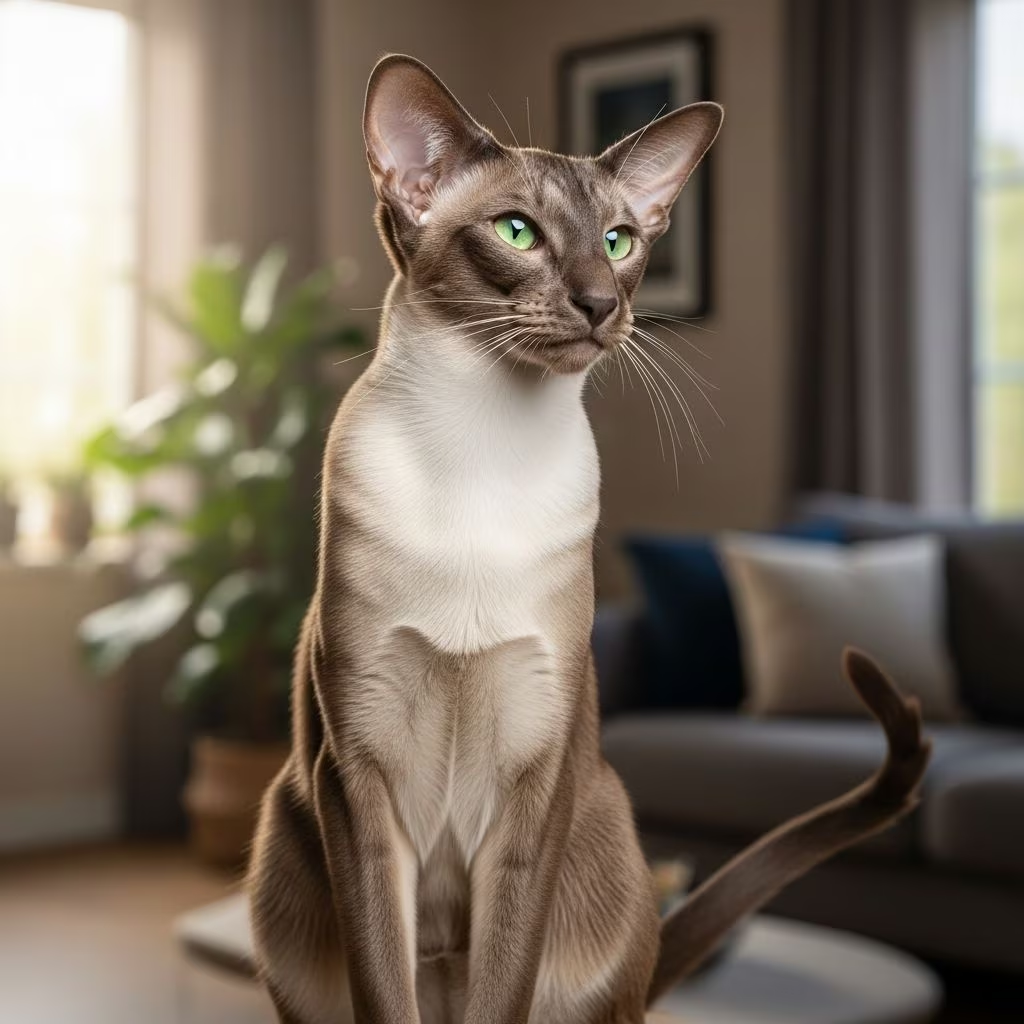
The Oriental Longhair stands out as a captivating member of the Siamese-related breed group, blending athletic elegance with a luxurious semi-long coat. These cats offer a unique mix of striking appearance and engaging personality, making them perfect for owners who crave a deeply interactive pet.
Origins and Development of the Breed
The Oriental Longhair emerged from selective breeding efforts aimed at extending the Siamese lineage with varied coat lengths and colors. Developed primarily in the mid-20th century, breeders crossed Siamese cats with American Shorthairs and other breeds to produce the shorthaired Oriental, then introduced longhaired varieties through crosses with Balinese cats. This resulted in a semi-long coat while preserving the signature slender physique and vibrant temperament.
Recognition by major cat fancier organizations solidified the breed’s status. The International Cat Association (TICA) and The Cat Fanciers’ Association (CFA) both acknowledge the Oriental Longhair, emphasizing its balanced proportions and diverse color palette. Today, over 280 color variations exist, ranging from solids to tabbies and particolors, showcasing the breed’s versatility.
Physical Characteristics and Appearance
Oriental Longhairs possess a distinctive silhouette defined by long, tapering lines and a medium-sized frame that conveys grace and power. Their bodies are tubular, with shoulders and hips aligning seamlessly, supported by fine bones and firm muscles that provide surprising heft beneath the fur.
The head forms a long wedge shape, featuring a straight profile from forehead to nose tip, without any break. Large, pointed ears sit wide at the base, framing almond-shaped eyes that slant toward the nose. Eye colors include vivid blue, green, or odd-eyed combinations, adding to their expressive allure.
Legs are slim and proportionate, ending in dainty oval paws, while the tail extends long and thin, flaring into a plume in the longhair variety. This elegant structure makes them resemble natural athletes, built for agility rather than bulk.
| Feature | Description |
|---|---|
| Size | Medium; 8-12 pounds |
| Body Type | Svelte, muscular, long lines |
| Head | Wedge-shaped, straight profile |
| Eyes | Almond, slanted; blue/green/odd |
| Ears | Large, pointed, wide-set |
| Tail | Long, tapering, plumed |
Coat Varieties and Colors
The hallmark of the Oriental Longhair is its medium-length, silky coat that lies close to the body, with minimal undercoat to prevent matting. The fur feels fine and glossy, longest on the tail where it forms a flowing plume, and may develop a neck frill or ear tufts as the cat matures.
Unlike their shorthaired counterparts, these cats display a vast array of patterns: solids, shaded, smoke, tabby, pointed, bi-color, and parti-color. This diversity stems from the breed group’s expansive genetics, allowing for unique combinations like ebony, red, cream, or lilac in various patterns.
Temperament and Behavioral Traits
Highly social and intelligent, Oriental Longhairs form profound bonds with their humans, often shadowing them room to room in lively conversation. Their vocal nature, inherited from Siamese ancestors, features a repertoire of meows, trills, and chirps to express needs or opinions.
- Extremely affectionate and people-oriented
- Playful and kitten-like throughout life
- Confident with children, dogs, and other cats
- Demanding of attention; prone to mischief if bored
- Excellent fetchers and agile jumpers
These cats excel in active environments, thriving on interactive toys, cat trees, and training sessions. They participate in feline agility sports and enjoy simulated hunts, maintaining their athletic prowess into adulthood. While generally outgoing, some may favor one person, though most warmly greet visitors.
Care Requirements for Optimal Health
Maintaining an Oriental Longhair’s coat requires daily brushing to distribute oils and remove loose fur, especially since the semi-long texture can mat if neglected. Weekly baths may be needed for show cats, but most manage with grooming tools.
Provide high perches, scratching posts, and puzzle feeders to satisfy their curiosity and energy. A diet rich in protein supports their muscular build, with portion control to prevent obesity despite their lean appearance.
Environmental enrichment is crucial: these cats dislike solitude and benefit from companions, whether feline or human. Secure outdoor access via enclosures prevents escapes, given their jumping ability.
Exercise and Mental Stimulation
As natural athletes, Oriental Longhairs need 20-30 minutes of daily play. Interactive wands, laser pointers, and fetch games mimic hunting, while agility courses challenge their agility.
Mental engagement prevents destructive behaviors; rotate toys and introduce novel items like boxes or paper bags to keep them occupied.
Health Considerations and Lifespan
Oriental Longhairs typically enjoy a lifespan of 12-15 years with proper care. Common concerns mirror the Siamese group: dental issues, urinary tract problems, and hypertrophic cardiomyopathy (HCM), though breeding programs reduce risks.
Regular veterinary check-ups, including cardiac screenings and dental cleanings, are recommended. Early spaying/neutering helps manage vocal tendencies and roaming instincts.
- Prone to: HCM, crossed eyes (cosmetic), amyloidosis
- Preventive: Annual exams, balanced diet, dental care
- Average lifespan: 12-20 years with vigilant care
Choosing and Bringing Home an Oriental Longhair
Prospective owners should seek reputable breeders registered with TICA or CFA, prioritizing health testing. Kittens display bold personalities early, often the most vocal in litters.
Adoption from rescues suits experienced owners; these cats adapt well but screen for compatibility with quiet lifestyles, as they prefer bustle. Prepare with tall furniture and interactive setups before arrival.
| Pros | Cons |
|---|---|
| Devoted companion | Needs constant interaction |
| Stunning variety of colors | Very vocal |
| Active and trainable | Daily grooming required |
| Good with families/pets | Not for solo living |
Grooming Routines and Daily Maintenance
Beyond brushing, trim nails bi-weekly and clean ears monthly to prevent buildup. Their fine coat sheds moderately, so vacuuming helps manage fur.
Show preparation involves bathing and blow-drying to highlight the coat’s sheen, but pet owners focus on health over perfection.
Training Tips for Oriental Longhairs
These intelligent cats respond to clicker training and positive reinforcement. Teach tricks like sit, come, and high-five using treats and consistency. Their fetch affinity makes retrieval games easy to master.
Litter training is instinctive, but designate multiple boxes in multi-cat homes to accommodate their fastidious nature.
Why Oriental Longhairs Make Exceptional Pets
For dynamic households, Oriental Longhairs deliver unmatched companionship, blending beauty, brains, and boundless energy. Their adaptability to various living situations, provided interaction abounds, cements their appeal among cat enthusiasts.
Frequently Asked Questions (FAQs)
Are Oriental Longhairs good with children?
Yes, their patient, playful nature suits families; supervise young kids to prevent tail-pulling.
How vocal are Oriental Longhairs?
Very; they “talk” frequently to communicate, a trait from Siamese heritage.
Do they need a companion cat?
Often yes, to prevent loneliness; pairs entertain each other effectively.
What’s the grooming like for their coat?
Daily brushing suffices; minimal shedding with a slicker brush.
Can they live indoors only?
Absolutely, with ample enrichment; enclosures allow safe outdoor time.
References
- Oriental Longhair Facts – Wisdom Panel™ Cat Breeds — Wisdom Panel. 2023. https://www.wisdompanel.com/en-us/cat-breeds/oriental-longhair
- Oriental Longhair – TICA — The International Cat Association. 2024-01-15. https://tica.org/breed/oriental-longhair/
- Oriental – The Governing Council of the Cat Fancy — GCCF. 2023-05-20. https://www.gccfcats.org/getting-a-cat/choosing/cat-breeds/oriental/
- Oriental Long Hair Cat Breed Information | Purina UK — Purina. 2024-02-10. https://www.purina.co.uk/find-a-pet/cat-breeds/oriental-long-hair
- Oriental Longhair Cat Breed: Size, Appearance & Personality — Cats.com. 2023-11-05. https://cats.com/cat-breeds/oriental-longhair
- Oriental – The Cat Fanciers’ Association — CFA. 2024. https://cfa.org/breed/oriental/



