

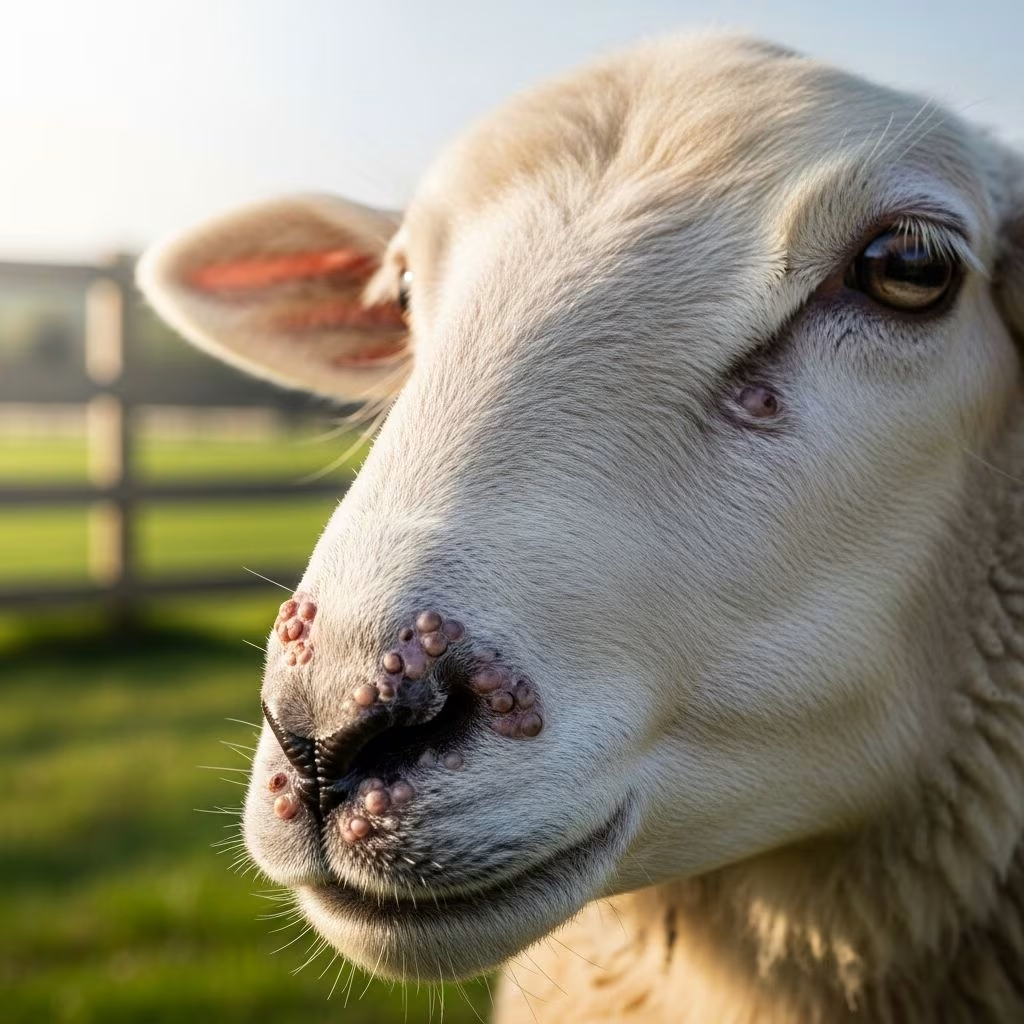
Orf, also known as contagious ecthyma or sore mouth, represents a widespread viral infection primarily targeting the skin of sheep and goats. Caused by a parapoxvirus, this condition manifests as painful lesions around the mouth and other areas, leading to temporary production setbacks in affected herds. While generally self-resolving, severe cases can result in weight loss, lameness, and secondary complications, making proactive management crucial for flock health.
Understanding the Viral Agent Behind Orf
The orf virus belongs to the Parapoxvirus genus within the Poxviridae family. This DNA virus is highly host-adapted to small ruminants like sheep and goats, though it can occasionally infect other species such as deer or camels. Its resilience allows survival in scabs and dried crusts for months in the environment, facilitating persistence between outbreaks. Genetic analysis reveals strain variations influencing disease severity, with goat isolates often more aggressive than those in sheep.
Transmission occurs through direct contact with infected animals or fomites like feeders contaminated with viral particles. Lambs and kids are particularly vulnerable during weaning or when teeth erupt, as minor abrasions provide entry points. Ewes and does contract it via nursing infected offspring, with lesions appearing on teats. Environmental factors, including overcrowding and wet conditions, accelerate spread within flocks.
Recognizing Clinical Manifestations
Initial signs emerge 3-4 days post-exposure as small papules at mucocutaneous junctions, especially lips, gums, and around erupting incisors. These evolve into vesicles, then pustules filled with fluid containing high viral loads. Pustules rupture, forming thick scabs that coalesce into verrucous masses, often 1-3 cm in diameter.
- Mouth and face: Primary site, causing drooling, reluctance to eat, and weight loss in young animals.
- Feet: Coronet lesions lead to lameness; secondary Dermatophilus congolensis infection may cause strawberry footrot.
- Udder: Teat lesions in dams, potentially progressing to mastitis or gangrenous inflammation.
- Rare sites: Ears, vulva, or generalized in immunocompromised animals.
Goats typically experience more proliferative and persistent lesions compared to sheep. Disease duration spans 3-6 weeks, with scabs sloughing off to reveal healed skin without scars. Morbidity reaches 50-90% in naive flocks, but mortality remains under 5% barring complications.
Differential Diagnosis Challenges
Orf’s distinctive proliferative scabs aid identification, but overlaps exist with other conditions. Ulcerative dermatosis causes deeper, crater-like ulcers rather than encrusted masses. Foot-and-mouth disease presents with vesicles and systemic fever, affecting interdigital spaces. Bluetongue involves fever and oral erosions alongside vascular lesions.
| Condition | Key Features | Age Affected |
|---|---|---|
| Orf | Proliferative scabs on lips/feet | Young animals |
| Ulcerative Dermatosis | Crateriform ulcers, less proliferative | Adults |
| Foot-and-Mouth | Vesicles, salivation, fever | All ages |
| Bluetongue | Hemorrhagic oral lesions | All ages |
Definitive diagnosis relies on PCR from lesion swabs, electron microscopy, or histopathology showing intracytoplasmic inclusion bodies. Veterinary consultation is essential for accurate differentiation.
Treatment Approaches For Affected Animals
Orf lacks specific antiviral therapy, as the virus runs its natural course. Focus shifts to supportive care and preventing secondary issues. Isolate affected individuals to curb spread. Provide soft, nutritious feed to ease consumption; bottle or tube feeding sustains severely impacted lambs.
- Antibiotics: Procaine penicillin or oxytetracycline injections combat bacterial superinfections, paired with topical sprays for 3-5 days.
- Wound care: Clean lesions gently; apply udder salves to teats for comfort.
- Parasite control: Larvicides and repellents deter fly strike (myiasis) in scabs.
- Pain relief: NSAIDs if available, though rarely routine.
Experimental antivirals show promise in reducing lesion size, but remain impractical for field use. Most cases resolve without intervention, restoring normal growth.
Zoonotic Risks and Human Health Implications
Orf poses a notable zoonotic threat, transmissible via contact with lesions or fomites. Humans develop painful, proliferative papules on hands, face, or arms, often misdiagnosed as bacterial infections or anthrax. Lesions persist 4-8 weeks, occasionally giant forms in immunocompromised individuals.
Prevention mandates gloves, protective clothing, and handwashing for handlers. Physicians confirm via PCR; treatment mirrors animal care with antiseptics and antibiotics for secondaries. Cryotherapy risks worsening proliferation.
Vaccination Strategies for Prevention
Live attenuated vaccines, applied via scarification on thighs or axillae, induce immunity lasting 1-2 years. Vaccinate lambs at 4-6 weeks, ewes pre-lambing, timing outbreaks 6 weeks ahead. Avoid in naive flocks to prevent introduction.
Segregate vaccinated stock until scabs shed. Dual dosing enhances protection in high-risk areas. Biosecurity complements vaccination: quarantine newcomers, disinfect with iodine (virus resists many agents), and manage stocking density.
Impact on Production and Economic Considerations
Outbreaks disrupt growth, milking, and weaning, costing 10-20% production losses. Lambs lose 0.5-1 kg/week; mastitis slashes milk yield. Cumulative effects strain profitability in intensive systems. Early intervention minimizes downtime, preserving flock performance.
Emerging Research and Diagnostic Advances
Molecular tools like PCR enable rapid strain typing, informing tailored vaccines. Studies explore recombinant vaccines for broader protection. Genomic sequencing tracks evolution, aiding surveillance. Global prevalence underscores need for standardized protocols.
Frequently Asked Questions (FAQs)
Is orf fatal in sheep and goats?
Rarely, mortality is low (<5%) unless secondary infections like mastitis intervene.
Can orf spread to cattle?
Uncommon; primarily sheep/goat-specific, though experimental transmission noted.
How long is immunity post-infection or vaccination?
1-5 years, waning over time; reinfections milder.
What disinfectants kill orf virus?
Iodine-based solutions; avoid phenols as virus is hardy.
Should I vaccinate every year?
Depends on history; annual in endemic flocks, judicious otherwise.
References
- Contagious Pustular Dermatitis (Orf) — NADIS. 2023. https://www.nadis.org.uk/disease-a-z/sheep/contagious-pustular-dermatitis-orf/
- Contagious Ecthyma in Sheep and Goats — Merck Veterinary Manual. 2023-10-17. https://www.merckvetmanual.com/integumentary-system/pox-diseases/contagious-ecthyma-in-sheep-and-goats
- Contagious Ecthyma | Zoonotic Virus Affects Sheep and Goats — The Virginia-Maryland College of Veterinary Medicine. 2023. https://www.tvmf.org/articles/contagious-ecthyma-orf/
- Contagious Ecthyma Factsheet — Center for Food Security and Public Health, Iowa State University. 2023. https://www.cfsph.iastate.edu/Factsheets/pdfs/contagious_ecthyma.pdf
- Sore Mouth in Sheep and Goats — Leatherstocking Veterinary Group. 2023. https://leatherstockingvetgroup.com/sore-mouth-in-sheep-and-goats/



